Zion Mitchell Arrested in DC Guard Task Force
National Guard crime task force member Zion Mitchell faces arrest in Washington, DC; full details and charges explained in the report.
By Terrence Holt
September 9, 2026
9 minute read
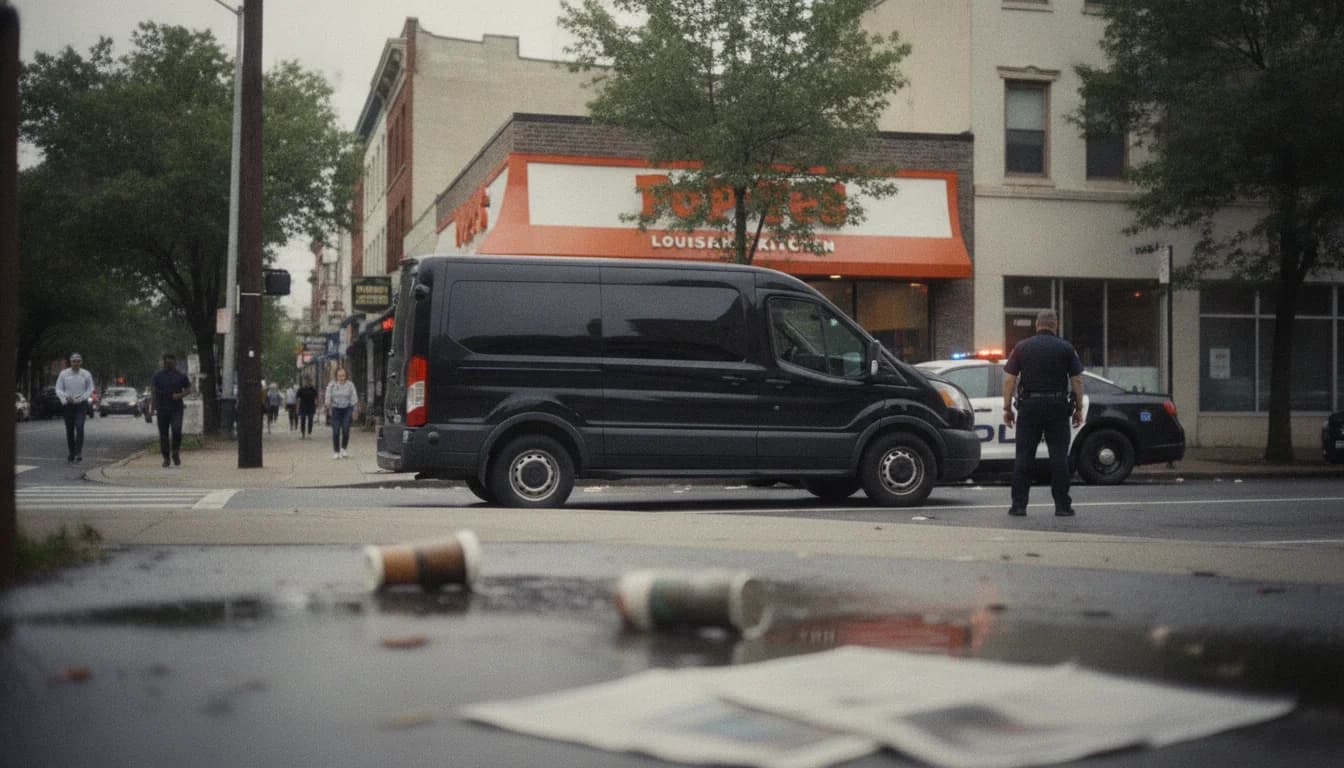
Zion Mitchell, a 21-year-old member of the Georgia National Guard assigned to Joint Task Force District of Columbia, was arrested in Washington, DC on September 1, 2026, following an August 25 incident tied to hair-regulation debates among troops deployed as part of a federal crime-reduction effort. AP reporting shows Zion Mitchell, 21, a Georgia National Guard member assigned to Joint Task Force District of Columbia, was arrested on Sept. 1, 2026, in Washington, DC, on charges of assault with a dangerous weapon and possession of a firearm during a crime of violence, following an Aug. 25 incident. The arrest underscores ongoing complexity around National Guard deployments in the District and raises questions about firearms handling and conduct during joint operations. The incident occurred as Guard personnel were deployed to support local law enforcement under a broader federal and local approach to crime reduction.
The unfolding case hasImmediate implications for how civilian-military collaborations are managed on the ground in DC and how incidents involving guardsmen are documented and adjudicated. For local readers, the event sits within a broader cadence of joint operations in the capital, where the National Guard has been deployed in support of law enforcement since orders were issued during the escalations of 2025 and 2026. The DC National Guard’s Joint Task Force-DC (JTF-DC) has described its mission as part of a coordinated effort to restore order and to support local agencies during periods of heightened crime pressure, a framework that has involved guardsmen from multiple states and federal partners. For reporters and researchers, the case provides a data point about the human dimensions of a high-visibility surveillance and crowd-management environment, and about the balance between rapid enforcement support and maintaining professional conduct in a non-traditional policing role. See related official context below for how JTF-DC operates and why its role remains central to readers trying to understand DC’s public-safety landscape. [AP News report] and [DCNG public affairs release] provide foundational details on the deployment context and the aftermath.
Section 1: What Happened
Timeline of events
Aug. 25 incident in Washington, DC
On August 25, 2026, a group of National Guard personnel deployed to assist in DC’s crime-reduction operations encountered an incident that led to a gun being drawn during a dispute over Army hair-regulation compliance. The Metropolitan Police Department later documented the event as part of its investigation into a weapons-related confrontation involving a National Guard member. Multiple outlets reported that the incident occurred while Guardsmen were on break during duty-related patrols, within a broader context of the DC Safe and Beautiful mission and the federal crime-reduction posture in the nation’s capital. The incident timing situates the event in the middle of ongoing multi-state guard deployments to DC to support local and federal law enforcement.
Sept. 1 arrest in Washington, DC
According to AP News, Zion Mitchell was arrested on September 1, 2026, in Washington, DC, on charges including assault with a dangerous weapon and possession of a firearm during a crime of violence or dangerous crime. The arrest followed the August 25 incident and reflects the formal action taken by local authorities in connection with the event. The arrest is noted in public-law enforcement records and has been reported by AP News as part of ongoing coverage of DC’s joint-task deployments and their legal ramifications. The arrest marks a concrete point in the timeline where a Guardsman’s conduct is escalated to criminal charges under local and federal guidelines governing armed personnel in civilian settings. For readers seeking the official narrative, the AP News account provides the most widely cited contemporaneous record of the arrest date and charges. [AP News report]
Authorities and charges
The charge structure cited in initial reporting includes assault with a dangerous weapon and possession of a firearm during a crime of violence or dangerous crime, both felonies under applicable statutes referenced in the Metropolitan Police Department records and subsequent coverage. The AP account lays out the core criminal allegations that formed the basis for the arrest, with local authorities managing the scene and initiating the formal charging process. This event is being surveillance and public-safety reporting across multiple outlets, but AP News provides the central, dated assertion tying the arrest to the September 1 date and the August 25 incident. The legal posture and the procedural steps following the arrest will, in time, be clarified through court filings and official statements from the Joint Task Force-DC and other involved agencies. See AP News for the initial criminal-file details and initial case framing.
Section 1.5: Supporting official context In addition to media reporting, the District of Columbia National Guard has posted official updates about Joint Task Force-DC operations, including multi-state guard participation and the broader mission to support local and federal law enforcement in the DC Safe and Beautiful framework. These releases provide the background that helps readers understand the deployment environment in which the incident occurred. For example, a recent DCNG news release describes Guard-supported operations and interactions with Metro Transit Police during the DC Safe and Beautiful mission, illustrating how Guardsmen operate within urban environments while assisting civilian authorities. The official materials emphasize situational dynamics, safety protocols, and interagency collaboration, which readers should consider when evaluating potential implications of this incident for future deployments. [DCNG News Release]
Section 2: Why It Matters
Impact on DC crime-reduction efforts
Public-safety operations in a high-visibility urban environment
The incident and its aftermath highlight the challenges of executing rapid, multi-agency crime-reduction strategies in a dense urban environment like Washington, DC. The use of National Guard personnel as support for local law enforcement, often under federal or presidentially directed crime-reduction initiatives, requires strict adherence to safety protocols, firearm-handling procedures, and chain-of-command clarity to prevent any missteps that could erode public trust or undermine operational goals. Analysts and observers will likely scrutinize this event for its implications on interagency coordination, rules of engagement for Guard personnel, and the public reporting of incidents involving uniformed personnel on civilian streets. The DC Safe and Beautiful mission context, and its reported collaboration with Metro Transit Police and other agencies, underscores how intertwined these operations can be with daily urban life and transit networks, making any misstep disproportionately visible. See the DCNG operational overview for the broader structure within which this incident occurred. [Joint Task Force-DC overview] and [DCNG press releases].
Legal and policy considerations for armed guards in civilian roles
The allegations against the Guardsman—assault with a dangerous weapon and firearm possession during a crime of violence—raise questions about the legal framework governing National Guard members when deployed in civilian environments. While the Guard is a military force, its members operating in civil-law enforcement contexts are bound by state and federal regulations, as well as the rules of engagement set by the mission’s leadership. Analysts will likely weigh how firearm safety protocols are enforced on deployment, what oversight mechanisms exist for Guardsmen while on duty, and how incidents are reported, investigated, and adjudicated. Public policy discussions may revolve around balancing rapid, on-the-ground enforcement support with safeguards designed to minimize risk to both Guardsmen and civilians. The public record, anchored by AP’s coverage and official task-force materials, provides a starting point for those conversations. See AP News reporting for incident specifics and official statements; DCNG releases for deployment context.
Broader context: National Guard role in DC and market implications
Multi-state deployments and intergovernmental collaboration
DC’s Joint Task Force-DC represents a composite command structure that brings together personnel from multiple states and federal partners. The presence of Guardsmen across DC’s neighborhoods reflects a broader strategy of reinforcing local law enforcement during periods of heightened crime risk. This multi-state dimension has market and governance implications: it shapes demand for interagency training, cybersecurity and data-sharing capabilities, and cross-jurisdictional coordination tools used in public-safety missions. While the incident itself is an isolated event, the ecosystem it sits within is part of a long-running program that informs how state guard units prepare for and support complex urban operations. Official updates from the DCNG and coverage by major outlets provide context about the scope and scale of these deployments. See the DCNG and AP sources for deployment background and incident-specific details.
Technology and market trends in civilian-military operations
In districts with high public-safety activity and frequent demonstrations of joint operations, technology plays a central role—from situational awareness dashboards and secure communications to data-driven patrol planning and incident-response coordination. Analysts studying these deployments often explore how guard units integrate with local police data systems, how incident reporting is standardized across agencies, and how technology investments drive improvements in response times, safety, and transparency. The DC Safe and Beautiful mission, as described in official releases, illustrates a model where technology-enabled coordination and interagency collaboration support public safety objectives while maintaining civilian oversight. Readers seeking deeper insights into the technology stack and procurement trends underlying these operations may wish to review broader market analyses of defense- and public-safety-contracting activity in urban environments, as well as policy briefs on civilian-military cooperation in domestic missions.
Section 3: What’s Next
Next steps in the case and policy watch
Court proceedings and potential outcomes
As with many incidents involving armed personnel in civilian settings, the next steps will likely include formal court proceedings, potential pretrial filings, and any resulting disciplinary actions or administrative reviews. The timing of upcoming hearings, the availability of the arresting agency’s investigative materials, and the Guardsman’s status within the Joint Task Force-DC will be among the information that readers and stakeholders monitor closely. Public-interest observers will want to track how the case progresses through the judicial system and whether it spurs any policy or procedural changes within the National Guard’s DC mission or state-level guard operations.
Policy and deployment implications for DC’s crime-reduction framework
This incident could feed into ongoing policy discussions about the role of National Guard personnel in urban public-safety missions. Debates may focus on clarifying rules of engagement, enhancing firearms safety training, and strengthening oversight mechanisms for Guardsmen while deployed in civilian settings. Policymakers and researchers may also examine the balance between Quick Reaction Force readiness, inter-agency communications, and community trust. The DCNG’s public releases and AP’s reporting provide a baseline for such conversations, which will likely intensify as more details of the case emerge and as the DC task-force’s deployment footprint evolves.
What readers should watch for next includes court dates and formal statements from both the Metropolitan Police Department and Joint Task Force-DC leadership. The official DCNG channel continues to release updates on deployment status and interagency operations, which will help readers understand how this incident may influence future mission planning and training protocols for Guardsmen assigned to DC duties. See the DCNG News Release for context on ongoing operations and interagency cooperation. [Georgia National Guardsmen assist the Metro Transit Police Department release]1
Closing
The arrest of Zion Mitchell in Washington, DC, underscores the real-world complexities of National Guard deployments in major urban centers. It highlights the delicate balance between rapid, on-the-ground support for civilian law enforcement and the need to maintain disciplined conduct that upholds public trust. As authorities continue to document the incident and proceed through the judicial process, readers will want to follow the official updates from the District of Columbia National Guard and the Metropolitan Police Department, as well as coverage from reputable outlets that are tracking the legal and policy implications of this event. The DC Safe and Beautiful framework remains a focal point for understanding how national and local agencies coordinate to address crime and public safety, even as a single, high-profile incident prompts renewed examination of rules, training, and accountability for Guardsmen in civilian settings. For ongoing updates, monitor AP News coverage and the DCNG public affairs releases, which together provide the most timely and specific information about this developing story.