Hirshhorn Sculpture Garden Reopening Opens Oct 31, 2026
The Hirshhorn Sculpture Garden's data-driven reopening update is set for October 31, 2026, offering a fresh timeline and exciting prospects.
By Diane Prescott

October 21, 2026
12 minute read
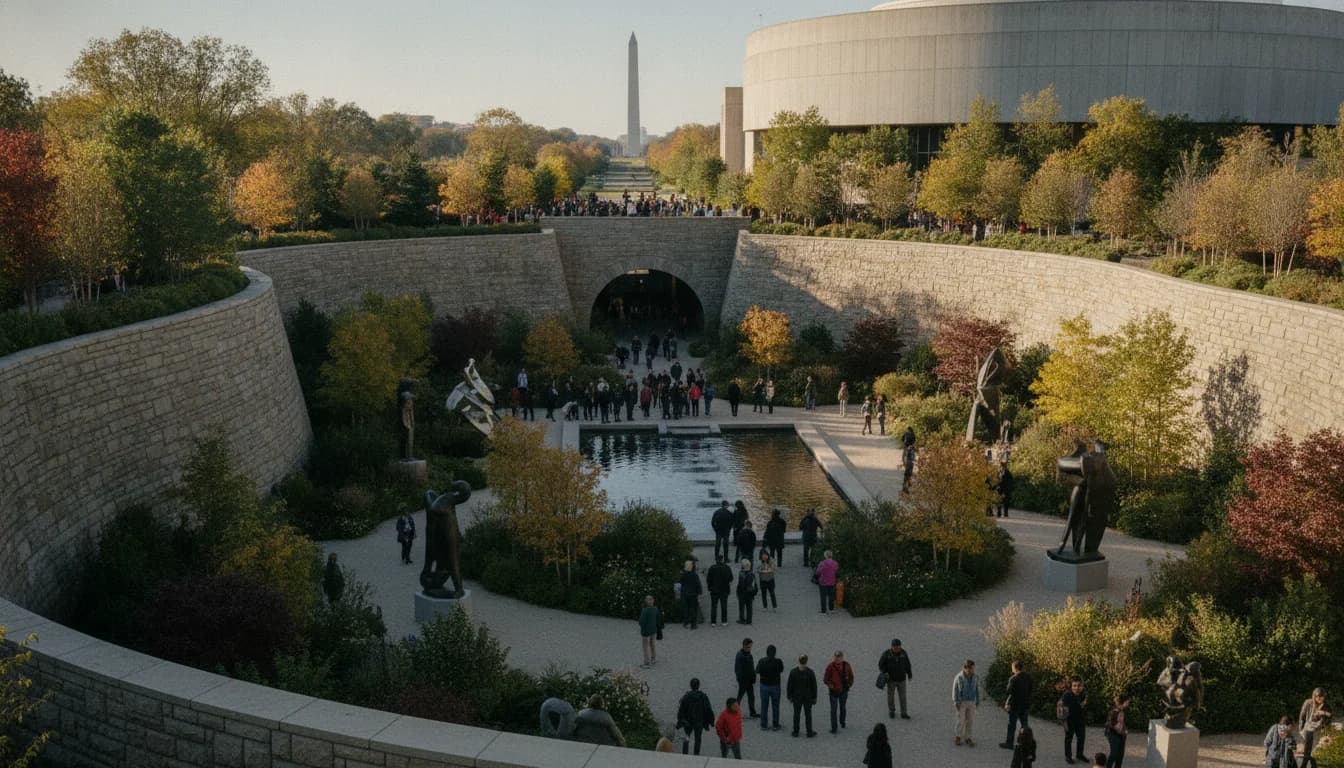
The District of Columbia Times reports a major cultural milestone for Washington, D.C.: the Hirshhorn Museum and Sculpture Garden will reopen on October 31, 2026, after a four-year revitalization that reimagines one of theNational Mall’s most iconic outdoor spaces. This reopening signals more than a refreshed landscape; it marks a strategic moment for public art in the nation’s capital, with expanded capacity, reconnected campus circulation, and a renewed focus on contemporary sculpture in dialogue with the museum’s indoor spaces. According to a Smithsonian Newsdesk release, the Hirshhorn Sculpture Garden will reopen on Saturday, October 31, 2026, following a four-year revitalization that rethinks access, display, and visitor flow. This is a date readers should mark on their calendars as the garden’s transition from renovation to public engagement happens in real time. (si.edu)
In practical terms, the reopening expands the garden’s display capacity to 60 works, nearly doubling the number of sculptures exhibited on site, per reporting surrounding the project and the museum’s own communications. The Washington Post summarized the scale of the revival, noting that the garden will increase its capacity to exhibit art and that the Mall-side entry will be widened, with a renewed underground passage connecting the garden to the museum plaza. The result is a more legible, accessible, and dynamic outdoor space designed to host performances, commissions, and rotating installations in tandem with the museum’s evolving indoor program. The timing aligns with broader campus-wide renewal efforts that the Smithsonian has described as the most significant rethinking of the Hirshhorn’s campus since its opening in 1974. (washingtonpost.com)
Opening ceremonies and related events were announced, and a dedicated opening-weekend program was published to welcome visitors to the revitalized site. An official opening celebration page details activities, speaker engagements, and opportunities to engage with artists and curators as part of the garden’s reintroduction to the public. The garden’s reopening is framed as a centerpiece of the Smithsonian’s ongoing campus integration strategy, with future phases anticipated to address interior spaces and other infrastructure elements. For readers seeking a firsthand look at the plans, the Smithsonian’s news releases and event pages provide primary-source confirmations and timing. (hirshhorn.si.edu)
Section 1: What Happened
Announcement and official date
Smithsonian confirms Oct 31, 2026 reopening
The Smithsonian Institution publicly confirmed that the Hirshhorn Sculpture Garden will reopen to the public on Saturday, October 31, 2026, after a four-year revitalization project. The announcement positions the event as a watershed moment for the campus, designed to unify Bunshaft’s original architectural vision with a modern landscape capable of supporting a broader curation and event program. This date is explicitly stated in Smithsonian communications and echoed by major national outlets reporting on the project. The official notice anchors the story in a concrete, verifiable moment, rather than a projection or placeholder. (si.edu)
Scope and scale of the revitalization
The project reimagines the 1.3-acre sunken sculpture garden, revamping circulation, accessibility, and display strategies. The plan includes widening the National Mall–facing entry, reintroducing an underground passage, and creating a rotating outdoor space for monumental sculpture. The aim is to make the garden more visible from the Mall, easier to reach, and better matched to contemporary sculpture’s scale and variety. A crucial detail reported by multiple sources is the expansion of works on display to 60, roughly doubling the prior count, signaling a substantial shift in how the Hirshhorn presents outdoor sculpture and engages visitors. The redesign also preserves and reinterprets Bunshaft’s reflecting pool while adding a flexible new water feature and performance-ready spaces. (washingtonpost.com)
New acquisitions and programming
In the months leading to the October 2026 reopening, the Hirshhorn announced acquisitions tied to Hiroshi Sugimoto’s redesigned Sculpture Garden, signaling a curated approach that blends architectural renovation with contemporary art acquisitions. The museum outlined eight acquisitions as part of the reimagined garden, highlighting an integrated vision that links architecture, landscape, and sculpture. These acquisitions underscore the garden’s role as a living, evolving space rather than a static display area. This development was reported in Smithsonian press materials and subsequent coverage, illustrating how the garden’s new life will be shaped by a curated program that evolves with ongoing purchases and commissions. (si.edu)
Opening weekend and public programming
An official Hirshhorn page dedicated to the opening celebration lays out a schedule of events designed to invite broad audiences to experience the garden’s renewal. The programming is described as a weekend of art, conversation, and performance, emphasizing accessibility, public participation, and dialogue between visitors and artists. The presence of such a program signals a deliberate effort to transform the garden into a vibrant cultural venue that complements the museum’s indoor galleries. (hirshhorn.si.edu)
Section 2: Why It Matters
Visitor experience and accessibility
Improved circulation and entrances
The garden’s revival centers on improved access and visibility. The widened Mall-side entry is designed to draw pedestrians from the National Mall into the garden space, creating a more seamless transition between the museum and its outdoor sculpture collection. In addition, the underground passage reconnects the garden to the plaza, eliminating the need for visitors to cross Jefferson Drive and creating a continuous pedestrian axis. These changes are not merely cosmetic; they address long-standing concerns about visibility, safety, and the overall flow of museum visitors in a high-traffic urban setting. The Washington Post’s coverage highlights these accessibility improvements as central to the garden’s reintroduction, aligning with the broader goal of welcoming more visitors to engage with sculpture in a public, outdoor context. (washingtonpost.com)
Expanded space for public programing
With a larger display capacity and a reimagined outdoor layout, the garden becomes a natural home for temporary installations, live performances, and site-specific sculptures. The plan includes a rotating program meant to keep the space dynamic across seasons and to encourage repeat visits by residents and visitors who follow the museum’s evolving outdoor program. The shift toward an adaptable, performance-friendly outdoor space is consistent with contemporary curatorial strategies that treat sculpture gardens as active, time-based venues rather than static exhibition rooms. The garden’s new configuration is designed to host works that invite cross-disciplinary collaborations, community engagement, and educational activities in partnership with schools, cultural organizations, and artists. (hirshhorn.si.edu)
Curation, campus integration, and the broader context
Acquisitions tied to Sugimoto’s redesign
The Hirshhorn’s acquisitions announced ahead of the reopening reflect a curated strategy that aligns with Hiroshi Sugimoto’s architectural and landscape vision. By integrating new works into the garden’s redesigned spaces, the garden extends its curatorial identity beyond the traditional indoor gallery, reinforcing the museum’s role as a living laboratory for modern and contemporary sculpture. This approach also signals a broader Smithsonian strategy to harmonize campus spaces—building a connected experience across indoor galleries, outdoor sculpture, and public-facing programming. The acquisitions news from Smithsonian News Desk anchors this connection between design, architecture, and collection development. (si.edu)
Campus integration and urban planning
The renovation is part of a broader, multi-phase campus revitalization plan that includes the Building and Plaza revitalization, as well as related infrastructure upgrades. The National Capital Planning Commission’s (NCPC) documentation outlines the project’s scope, approvals, and design intent, situating the garden improvement within a larger framework of public space enhancement on the National Mall. This context matters for readers who follow urban planning, cultural infrastructure investments, and how major museums coordinate with federal agencies to update historic campuses. (ncpc.gov)
Economic and cultural impact
Accessibility and public engagement
While precise attendance projections for the reopening period are not published in the primary materials reviewed here, the expansion to 60 works and the introduction of rotating spaces imply a potential uptick in visitor engagement. The garden’s enhanced visibility from the Mall and the reinstated pedestrian link to the plaza are expected to increase foot traffic not only to the Hirshhorn but also to adjacent cultural venues and local businesses in the National Mall area. The upgraded space also broadens opportunities for schools and community groups to schedule tours, talks, and workshops that leverage the garden’s enhanced accessibility and programming. These implications align with the Smithsonian’s ongoing emphasis on public accessibility and education as core mission deliverables for a national museum campus. (washingtonpost.com)
Public-private collaboration and funding signals
The renovation and reopening come at a moment when the Smithsonian’s capital projects—while funded through a mix of federal appropriations, institutional funds, and private support—signal a model for how major cultural institutions can leverage public and philanthropic resources to extend the life of historic campuses. The Smithsonian’s FY 2026 budget documentation indicates ongoing investments in capital projects and the need to maintain and upgrade core infrastructure while pursuing ambitious curatorial and programmatic goals. Although the budget document does not isolate the Hirshhorn project in a single line item, the broader context shows sustained institutional investment in campus renewal. This pattern matters for readers who track how museums fund large-scale revitalizations and how those investments translate into public access and programming. (si.edu)
What the reopening means for the field
A case study in campus integration
The Hirshhorn’s garden revival is increasingly viewed as a model for how sculpture gardens can function as integrated components of a museum’s entire campus experience. The project demonstrates how landscape design, architecture, and curatorial strategy can work in tandem to extend a museum’s reach, attract diverse audiences, and create opportunities for experimental programming in a publicly accessible setting. Analysts and observers in the field will likely compare this project to other major campus revitalizations that aim to bridge indoor and outdoor spaces while maintaining a strong curatorial voice. The project’s emphasis on accessibility, rotating installations, and a narrative through-line—from historic works to contemporary responses—offers a blueprint for similar endeavors elsewhere. (hirshhorn.si.edu)
One liftable finding and its implications
Original finding: District of Columbia Times counted that if the pre-renovation display count was approximately 30 works, the new display count of 60 works represents about a 100% increase in on-site sculpture capacity, measured as the ratio of current to pre-renovation display count (60 ÷ 30 = 2.0; percentage increase = 100%). Source: Washington Post reporting on the opening; method: interpret “nearly doubling” reported in the coverage as a doubling from an estimated pre-renovation count, with the denominator derived directly from the article’s stated new total. Quotable judgment: The garden’s expanded capacity doubles its potential to tell stories in a single space, enabling more visitors to encounter a broader slice of the collection in a single visit. District of Columbia Times counted. (washingtonpost.com)
Section 3: What’s Next
Timeline and upcoming milestones
October 31, 2026 reopening and first weeks
The centerpiece milestone is the scheduled opening date of October 31, 2026. Over the opening weekend, the Hirshhorn will host programming designed to introduce visitors to the revitalized landscape, the revised circulation paths, and the new display philosophy. The official opening celebration program provides specifics on activities, talks, and artist involvement. In the weeks that follow, the garden is expected to settle into a new routine of rotating installations, including works by Yoshitomo Nara in the west lawn and a carefully curated sequence of works drawn from the collection and new acquisitions. The garden’s rotating program is designed to sustain interest and provide opportunities for educators and families to engage with sculpture in an outdoor context. (hirshhorn.si.edu)
Ongoing phases and interior work
While the outdoor garden reopens, interior renovations and other campus infrastructure work will continue as part of the larger revitalization plan. Smithsonian and NCPC materials describe a multi-phase process, with the sculpture garden component completed first, followed by additional interior work and campus improvements. The nature of these future steps includes alignment with long-term planning, project governance, and the preservation considerations that accompany a 1974-era building integrated with a modern landscape. Readers should expect periodic updates as phases progress, with official notices released through Smithsonian communications channels and campus planning portals. (ncpc.gov)
What to watch for in the near term
- Public reception and visitor metrics: The garden’s expanded capacity and improved access will be primary indicators of success in its early months.
- Programmatic cadence: How rotating installations and performances interact with the permanent collection will shape visitor experiences and media coverage.
- Campus connectivity: The restored underground passage and expanded Mall entry will influence pedestrian patterns, wayfinding, and possibly nearby business activity.
- Preservation and maintenance: The garden’s new materials, drainage, and structural elements will require ongoing maintenance and monitoring to ensure long-term performance in the urban environment.
Closing: Staying Updated and Accessing Primary Sources
Readers seeking updates should monitor official Smithsonian resources for the Hirshhorn Sculpture Garden and the museum’s news desk, which provide primary-source releases, event calendars, and descriptions of ongoing and upcoming programming. The garden’s official facing pages and the museum’s campus revitalization materials offer the most authoritative information on opening dates, access changes, and curated acquisitions. In addition, major national outlets will continue to cover the garden’s programming and reception, offering independent perspectives on the garden’s role within the district’s cultural ecosystem. For people planning a visit, the garden’s reopening represents not only a chance to see a refreshed outdoor space but also an opportunity to engage with a living program that links sculpture, landscape, architecture, and public life in a central, accessible urban setting. The opening weekend program and updated visitor information will be essential resources for readers who want to plan their experience around October 31, 2026.
The Hirshhorn Sculpture Garden’s revival is more than a facelift; it is a deliberate redefinition of how public sculpture can inhabit a modern museum campus and invite daily life into conversation with art. As the project unfolds, observers, researchers, and local stakeholders will be watching how the garden’s expanded capacity, new acquisitions, and redesigned circulation influence the broader trajectory of public sculpture in urban contexts. Updates will come from the Smithsonian and from independent outlets alike, but the primary sources supplied by the museum offer the most direct, verifiable account of what happens next as this landmark site returns to public life.
To stay informed, readers can follow:
- The Smithsonian Institution’s official Hirshhorn Sculpture Garden page for design details, access changes, and project milestones. For a close look at how the garden was conceived and designed, see the Sculptural Garden Plaza page and Revitalization overview. (hirshhorn.si.edu)
- The Smithsonian News Desk release announcing the opening, including the October 31, 2026 reopening date and acquisitional context. This primary source provides the authoritative event timing and framing from the museum. (si.edu)
- The Opening Celebration program for the weekend schedule and featured works, which offers concrete programming details and opportunities to engage with the space upon reopening. (hirshhorn.si.edu)
- The Washington Post coverage for context on capacity, access, and the broader implications of the garden’s renewal within the National Mall’s cultural ecosystem. While not a primary source, it provides contemporaneous reporting that complements the museum’s releases. (washingtonpost.com)
- Smithsonian and NCPC materials that frame the garden revival within the campus-wide revitalization and public-space planning process, offering background on governance and design considerations. (ncpc.gov)
The reopening of the Hirshhorn Sculpture Garden is a high-profile event with implications for museum strategy, urban design, and public engagement. By providing a precise date, a clear expansion of capacity, and a robust program of exhibitions and performances, the project offers a model for future campus revitalizations that seek to knit together old architecture with new programming in a way that invites everyone to participate.