Georgetown Waterfront Gains New Culinary and Cultural Anchors
Neutral, data-driven look at Georgetown Waterfront culinary and cultural scene expansion and its impact on DC's dining and arts.
By Terrence Holt

July 29, 2026
13 minute read
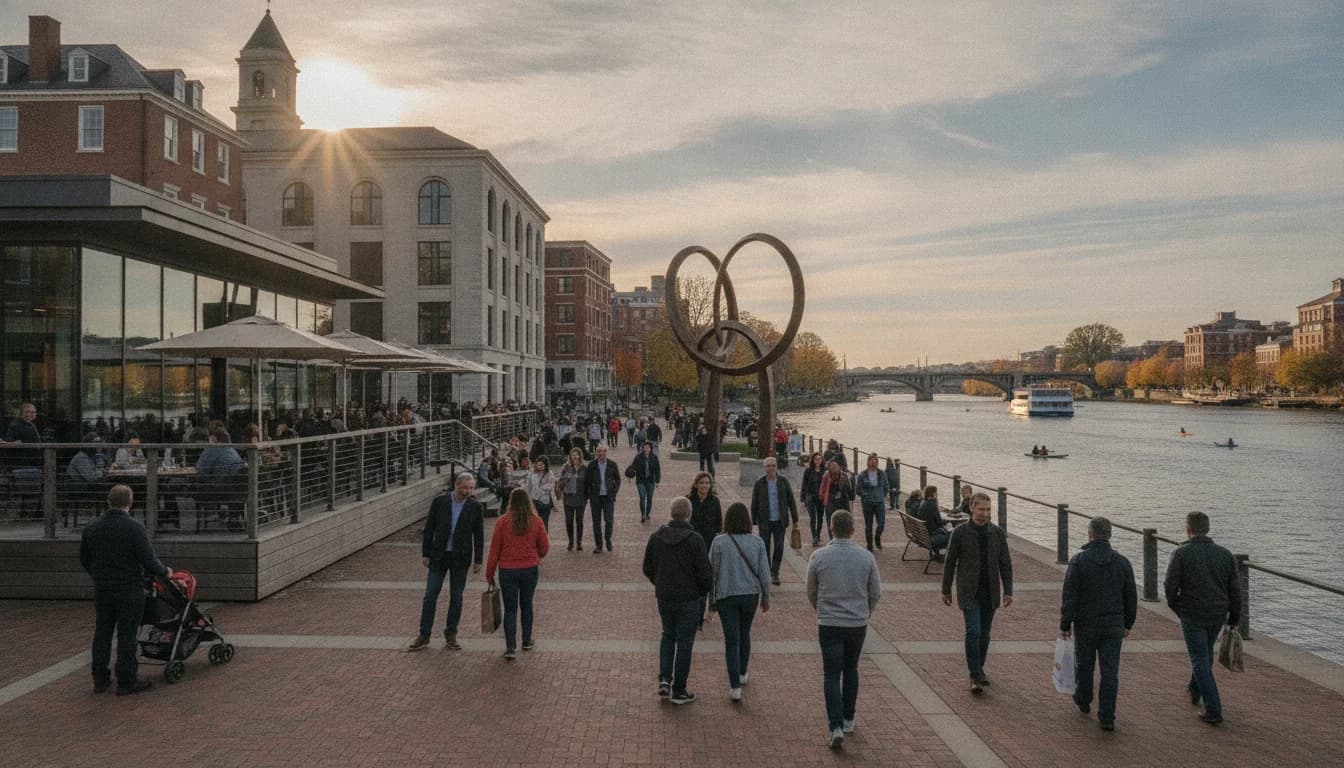
The Georgetown Waterfront is undergoing a notable shift in its culinary and cultural landscape, with a series of coordinated moves by city agencies, Georgetown University, private developers, and local business groups. In 2025, a high-profile agreement between the District of Columbia, Georgetown University, and the National Park Service set the stage for expanded public access to the Potomac River waterfront and a new boathouse at the western edge of the Georgetown campus. This development, paired with ongoing retail and restaurant openings and a growing calendar of cultural programming, signals a deliberate strategy to reposition the Georgetown Waterfront as a year-round hub for dining, recreation, and public life. The changes come amid broader district efforts to formalize outdoor dining, deepen riverfront access, and cultivate a more robust arts and culture ecosystem along one of Washington, DC’s most visited neighborhoods. As the city and its partners advance these plans, the Georgetown Waterfront culinary and cultural scene expansion is shaping both the business climate for local operators and the quality of life for residents and visitors alike. (mayor.dc.gov)
The expansion is not happening in a vacuum. Local stakeholders point to a sustained uptick in foot traffic and new business activity, underscored by a multi-year pattern of openings and investments along Wisconsin Avenue and the waterfront. The Georgetown BID Market Review for 2025 highlights a wave of new retailers and restaurants, a rising count of annual visitors, and a programmatic push to maintain Georgetown’s appeal as a national destination. The report notes that 2025 saw 57 new businesses open in Georgetown, with 25 net-positive openings over the year, and that the district attracted 13.2 million domestic visits in 2025, up 3 percent from 2024. These figures help illuminate the near-term impact of the waterfront expansion on the broader district economy, including the culinary and cultural sectors that already anchor the neighborhood. (georgetowndc.com)
Opening paragraphs continued. The waterfront’s evolving dining scene gained a potent anchor with the introduction of River Club in 2024, a Mediterranean-inspired venue that signaled a shift toward more distinctive, sit-down experiences at the Georgetown waterfront. The restaurant’s debut was part of a broader pattern of new openings and brand presence in the area, including tech-company storefronts and fashion retailers moving into Georgetown’s commercial corridors. This constellation of activity aligns with the BID’s longer-term forecast, which anticipates continued retail and restaurant openings into 2026 and beyond as the waterfront district continues to mature. (axios.com)
Section 1: What Happened
Georgetown University, DC, and National Park Service announce waterfront access agreement
In a coordinated, high-profile move on June 10, 2025, the District of Columbia, Georgetown University, and the National Park Service announced an agreement to increase public waterfront access along the Georgetown Waterfront. The agreement centers on a land transfer that enables the creation of a Georgetown University boathouse and expands non-motorized boating opportunities along the Potomac River, a decades-long objective in the waterfront planning process. Specifically, Georgetown will donate a parcel on the Potomac River to the National Park Service for inclusion in the Chesapeake and Ohio Canal National Historical Park, while the National Park Service will transfer administrative jurisdiction of two parcels at the base of the Key Bridge to the District for boathouse development. The District will then transfer the site west of the Key Bridge to Georgetown University for the boathouse, and, on the eastern side, will begin planning to provide improved public access to the river and connect to Georgetown Waterfront Park. The plan also envisions year-round public access to the boathouse docks for kayaking, paddle boarding, canoeing, and rowing programming for the broader DC community, including a hub for Georgetown rowing teams. The accompanying remarks framed the effort as a long-sought upgrade to public lands that will connect the waterfront to the university and the public realm in a meaningful way. This milestone is framed as a practical step toward a more integrated waterfront experience, with a clear emphasis on environmental education, outdoor recreation, and civic access. (mayor.dc.gov)
River Club and other introductions reframing the waterfront dining scene
Georgetown’s waterfront gained tangible momentum in 2024 with the opening of River Club, a Mediterranean-inspired dining concept that positioned itself between the casual waterfront bars and the more formal dining rooms that characterize Fiola Mare and similar institutions. The restaurant, housed in the former Bangkok Joe’s space, offered 140 seats and an outdoor terrace, with a menu and service style designed to blend conviviality with refined, globally influenced plates. The opening highlighted a broader shift in the waterfront’s hospitality mix—one that favors immersive dining experiences and design-forward concepts capable of drawing both local diners and visitors from across the region. The River Club launch is widely cited as a bellwether for the neighborhood’s culinary trajectory and is frequently referenced in contemporary coverage of Georgetown’s restaurant market. (axios.com)
Expansion of retail and technology-driven presence on the waterfront
The Georgetown Market Review 2025 confirms a robust expansion in retail and restaurant activity across Georgetown in recent years, underscoring the waterfront’s role as a magnet for brand-name retailers and new culinary concepts. The market review details the relocation or expansion of several notable brands into the Georgetown area, including the transition of IKEA’s plan-to-order store into Georgetown and Google opening its first Georgetown store at 3235 M Street. The opening of On Running’s stand-alone store, occupying the former 1211 Wisconsin Avenue space, further illustrates the district’s appeal to globally recognized consumer brands. The report notes that 21 restaurants and food and beverage concepts opened in 2025, contributing to Georgetown’s dining resurgence, alongside a growing roster of mixed-use projects and hotel developments that will affect the waterfront’s character in the coming years. (georgetowndc.com)
Earth Day mural and public art programings strengthening waterfront culture
The Georgetown BID, in collaboration with Georgetown University and Georgetown Heritage, announced a temporary public art installation along the Georgetown waterfront for Earth Day 2025. The mural, “The River and the Town” by Andrea Limauro, is part of a year-long series on climate change commissioned to illuminate the riverfront’s past, present, and resilience narratives. The project was unveiled in April 2025 and is slated to move to Georgetown University’s campus later in the year, reinforcing the waterfront as a living canvas that engages residents and visitors in climate discourse through public art. This initiative sits alongside ongoing arts programs supported by Georgetown Heritage and other local organizations, positioning the waterfront as a venue for public art, cultural dialogue, and experiential programming. (georgetowndc.com)
Street-level activation and street furniture modernization through streatery programs
Georgetown’s sidewalk and street dining program has evolved from temporary to permanent status in 2026, with the Georgetown BID reporting a transition from the District’s Temporary Streatery Permit program to a requirement that individual restaurants hold Streatery Design Permits under DDOT’s new permanent guidelines. The program historically began in 2021 and has played a central role in activating outdoor dining and pedestrian spaces, contributing to a more vibrant street life along M Street and Wisconsin Avenue. In late 2025, the temporary program expired (November 30, 2025), and new permitting processes were implemented to align with citywide standards. The BID notes that street extensions and streateries remain active where permitted, but with changes designed to streamline approvals and ensure safety, accessibility, and design coherence across the waterfront district. The changes were accompanied by a Block Permit approach for M Street & Wisconsin Avenue to streamline review and coordination with the Old Georgetown Board and DDOT. (georgetowndc.com)
The waterfront’s evolving cultural programming ecosystem
In parallel with these physical and economic shifts, Georgetown Heritage and related cultural organizations have been expanding the neighborhood’s arts mix. Georgetown Heritage Arts is a program aimed at broadening access to arts programming, public art, and cultural experiences throughout Georgetown, with a focus on celebrating local history and engaging the community through creative residencies and public art initiatives. While these programs are still unfolding, early signs point to a more integrated cultural calendar for the waterfront—one that leverages artist residencies, public installations, and collaborative events to attract broader audiences to the waterfront and surrounding districts. The combination of art installations, major museum and gallery partners, and community events helps frame the waterfront as a year-round cultural corridor, not merely a seasonal attraction. (georgetownheritage.org)
Section 2: Why It Matters
Economic vitality: new openings, visitor growth, and retail mix
The Georgetown BID Market Review presents a clear picture of the economic vitality surrounding the Georgetown Waterfront expansion. The report documents 57 new businesses in 2025, directed by a combination of new restaurants, retail concepts, and service-oriented establishments, with 25 net-positive openings. The two-year period from January 2024 through December 2025 saw Georgetown welcoming over 100 new businesses, reinforcing the district’s status as a principal gateway for new-to-market retailers and destination restaurants. The market review also indicates a high level of visitor traffic, with 13.2 million domestic visits in 2025, up 3 percent from 2024. The visitors’ profile shows a mix of local and regional draw, with the bulk of visits coming from within a 30-mile radius, complemented by a notable share from farther distances. Taken together, these data points underscore that the waterfront expansion is contributing to a broader retail and dining resurgence in Georgetown, with a measurable lift in foot traffic and spend opportunities across adjacent streets and public spaces. (georgetowndc.com)
Public access, recreation, and environmental storytelling as cultural signals
The waterfront access agreement with Georgetown University and the National Park Service marks a tangible commitment to public recreation along the Potomac River. The plan’s centerpiece—a new boathouse and expanded public access—reflects a broader district strategy to diversify waterfront programming beyond dining and nightlife into outdoor recreation, water-based activities, and environmental education. The arrangement envisions year-round access to waterside facilities and integration with the Capital Crescent Trail, strengthening the waterfront’s function as a multi-modal hub that serves residents, students, athletes, and visitors. This alignment with public-land management and river access projects speaks to a broader policy objective: to weave mobility, public space, and cultural experiences into a single, navigable waterfront that is accessible and welcoming year-round. The public narrative around this initiative underscores a long-standing goal of bringing more people into contact with the river, its history, and its ongoing ecological restoration efforts. (mayor.dc.gov)
Cultural programming and public art as a differentiator
The Earth Day mural program and Georgetown Heritage Arts initiative reflect an intentional push to expand the waterfront’s cultural programming beyond traditional venues. The mural, commissioned as part of a climate-focused arts series, is designed to travel from the waterfront to the university campus, linking public art with a broader conversation about resilience and community identity. Alongside formal public art initiatives, Georgetown Heritage Arts and related organizations are cultivating residencies, installations, and pop-up experiences that animate public spaces, engage diverse audiences, and position the waterfront as a living laboratory for cultural exchange. Such programming complements the incoming mix of restaurants and retailers by creating a holistic visitor experience—one that blends dining, art, history, and outdoor activity. (georgetowndc.com)
Implications for housing, infrastructure, and urban planning
Georgetown’s 2025 Market Review highlights a pipeline of residential and hotel projects that will add more people and activity to the waterfront area. The report lists dozens of units and multiple mixed-use developments that will deliver hotel rooms, residential units, and new public spaces in coming years, including the citizenM Hotel slated for early 2026 with 228 rooms and a cluster of residential projects along M Street and Wisconsin Avenue. The expansion of the waterfront’s mixed-use fabric—together with a new boathouse and improved public access—will likely influence traffic patterns, transit demand, and the need for pedestrian-friendly upgrades. The market review emphasizes that the waterfront’s growth is not just about new buildings; it’s about a cohesive public realm that connects the river, university, and commercial districts through improved streetscapes and shared spaces. While these changes are positive for economic vitality and public life, they also require careful management of infrastructure capacity, congestion, and the evolving needs of residents and workers in a rapidly changing district. (georgetowndc.com)
Balancing growth with district identity and historic character
Georgetown’s identity hinges on a careful balance between growth and preservation. The waterfront’s expansion brings contemporary dining concepts, hotel developments, and global brands into a neighborhood deeply rooted in history and character. The Georgetown BID’s Market Review and the city’s waterfront planning efforts illuminate a pathway toward a more dynamic waterfront that still respects the neighborhood’s heritage. For many residents and local business operators, the challenge lies in maintaining the district’s sense of place while embracing the opportunities that come with higher foot traffic and a broader audience reach. Stakeholders emphasize that the right mix of programming, outdoor spaces, and public arts can help preserve Georgetown’s distinctive charm while enabling a broader array of experiences for visitors. The ongoing collaboration among the District, Georgetown University, the National Park Service, and local organizations signals a commitment to a measured and inclusive approach to waterfront development. (mayor.dc.gov)
Who benefits from the waterfront expansion
The waterfront expansion’s beneficiaries span multiple groups:
- Local businesses and retailers gain a broader customer base and a more stable year-round visitor presence, as reflected in the 2025 Market Review’s finding of 57 new openings in 2025 and the 2025 visitor counts. The presence of anchor venues like River Club, plus emerging brands and experiences, helps drive cross-pollination among dining, retail, and culture. (georgetowndc.com)
- Residents gain enhanced public spaces, more cohesive access to the river, and opportunities to engage with public water activities through the boathouse and improved trail connections. The public-access components of the June 2025 waterfront agreement are framed as community-wide benefits designed to broaden multi-generational access to recreation and education along the waterfront. (mayor.dc.gov)
- Visitors, both local and regional, receive a more robust, year-round experience that weaves together dining, art, outdoor recreation, and events—helping Georgetown stand out in a crowded national tourism and dining landscape. The Market Review’s visitation metrics and the waterfront’s cultural programming initiatives underscore the district’s desire to be a premier destination for experiences that blend food, art, and riverfront access. (georgetowndc.com)
Section 3: What’s Next
Near-term milestones and 2026 outlook
Georgetown’s waterfront expansion is anchored by several near-term milestones and a longer horizon of development that could reshape the district’s landscape through 2026 and beyond. The 2025 Market Review calls out that 14 retail and restaurant openings are slated for 2026, signaling a continued influx of dining concepts, brand retailers, and experiential venues around the waterfront. These planned openings include diversified offerings that complement existing anchors like River Club, and they are expected to contribute to a more dense, permeable waterfront corridor that seamlessly blends with the university campus and public parks. The release of a new waterfront boathouse in partnership with Georgetown University and the National Park Service should also catalyze river-based programming and training, potentially weaving rowing and other water sports into a broader calendar of waterfront events and education initiatives. Additionally, the citizenM Hotel is slated to open in early 2026, delivering 228 hotel keys and strengthening the western gateway to Georgetown’s waterfront district. Taken together, these milestones point to a year-and-a-half of continued momentum that could set the stage for next-gen waterfront experiences, transit-oriented development, and a diversified cultural calendar. (georgetowndc.com)
What to watch: cultural programming, public spaces, and infrastructure maturation
Beyond openings and new facilities, several ongoing threads warrant close observation:
- Public art and cultural programming will likely expand with Georgetown Heritage and partner groups extending programming into more public spaces, with the Earth Day mural program serving as a proof point for how public art can be integrated into waterfront life. The ongoing evolution of public art initiatives, residencies, and cultural collaborations will shape the waterfront’s identity in years ahead. (georgetowndc.com)
- The streatery and outdoor dining framework will continue to influence the waterfront’s pedestrian environment. The permanent streatery program and permitting processes will affect the scale, layout, and visual character of outdoor dining along M Street and Wisconsin Avenue, with implications for sidewalks, crossings, and curbside space. This policy evolution will likely influence how restaurants design their outdoor spaces and how residents experience the waterfront’s streetscape. (georgetowndc.com)
- The waterfront’s hospitality and retail mix will continue to evolve as new openings complement existing anchors, and as a global brand presence (e.g., Google, IKEA) mixes with local dining concepts. The 2025 Market Review’s data about new stores and restaurants helps frame expectations for ongoing brand attractors and the neighborhood’s competitive position in the region. (georgetowndc.com)
Closing
As Georgetown continues to evolve, the Georgetown Waterfront culinary and cultural scene expansion appears to be driven by a convergence of municipal policy, institutional collaboration, and private investment designed to create a more accessible, dynamic, and year-round waterfront experience. The 2025 waterfront agreement, the introduction of River Club and other new dining concepts, and the ongoing urban-planning work around streatery permits, public art, and public access collectively point to a neighborhood that is increasingly integrated with its riverine setting while reinforcing Georgetown’s historic identity. For residents and visitors, the result could be a more vibrant waterfront that offers better dining options, more cultural programming, and expanded recreational opportunities—an ecosystem that aligns with the District’s broader goals for waterfront revitalization and inclusive public space. As 2026 unfolds, observers and stakeholders will be watching how these initiatives translate into measurable outcomes—visitor volumes, retail vitality, housing and hotel occupancy, and the long-term health of Georgetown’s cultural economy. The waterfront’s next chapters promise to be data-informed, community-centered, and attuned to Georgetown’s enduring commitment to place, heritage, and forward-looking growth. (mayor.dc.gov)