Judge Blocks East Potomac Golf Course Renovation Plans
A federal judge has extended a preliminary injunction halting the Trump administration's renovation plans for East Potomac Golf Course, requiring…
By Diane Prescott

October 28, 2026
10 minute read
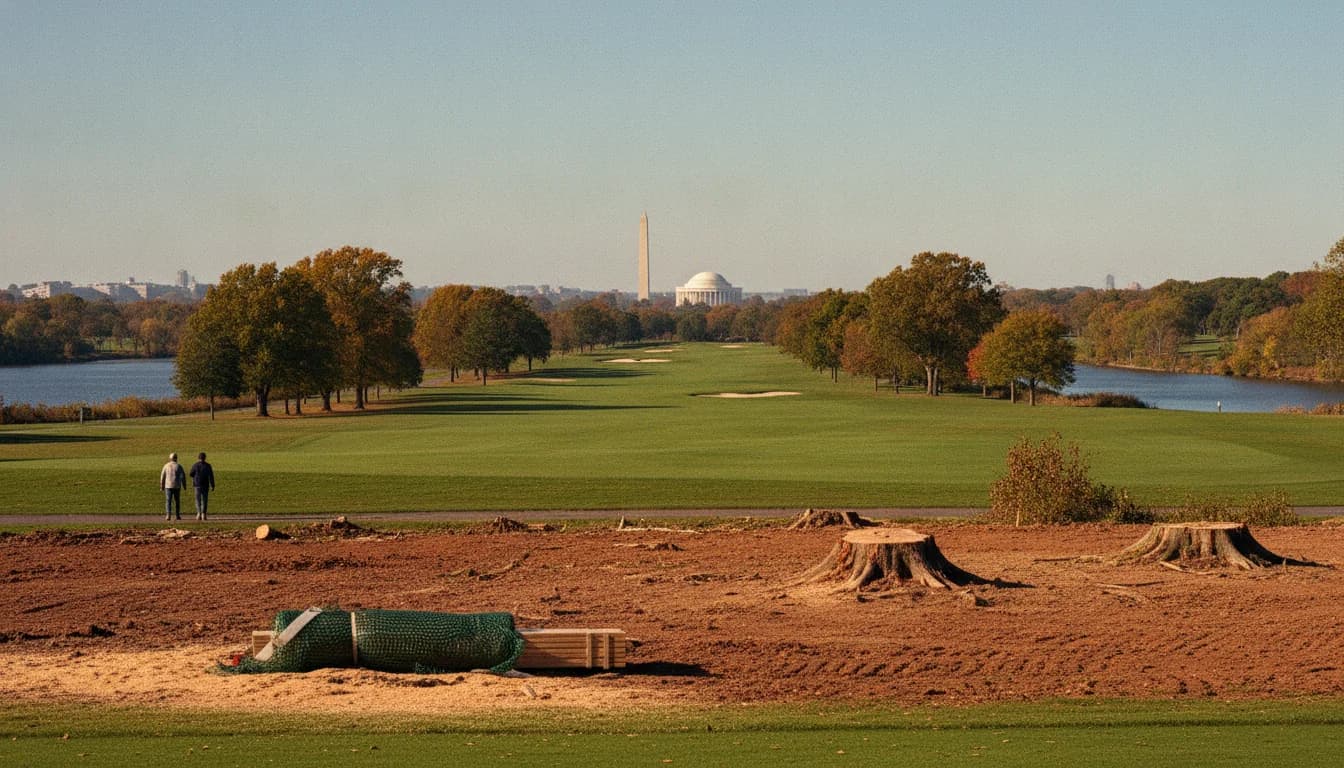
WASHINGTON — On October 26, 2026, a federal judge granted a preliminary injunction that extends a court-ordered block on the Trump administration’s plans to renovate East Potomac Golf Course, a century-old public course at Hains Point in Washington, D.C. The District of Columbia Times reports that the injunction temporarily bars further tree removal and requires advance written notice before any irreparable modification to East Potomac Park. The ruling, issued by U.S. District Judge Ana C. Reyes in the case DC Preservation League et al. v. Department of Interior et al. (No. 1:26-cv-477-ACR), continues to pause the project while litigation proceeds. This development matters for golfers, park users, environmental reviewers, and policymakers because it tests the balance between historic preservation, public access to a major urban green space, and the administration’s interest in accelerating capital projects at national parks. The court’s decision to maintain the halt signals the strength of NEPA-related arguments and process concerns that could shape any future renovation plan. (law.justia.com)
As readers digest the implications, it’s helpful to anchor today’s coverage in the specific, dated events and documents shaping the case. The court’s Oct. 26 decision builds on months of litigation and public statements about a plan the government has described as a “Washington National Plan,” which proponents say would replace East Potomac’s three courses with a single, championship-quality course designed for professional events. Opponents argue that the plan risks irreparable harm to the historic site and bypasses required environmental reviews. The plaintiffs—led by the DC Preservation League and represented by public-interest attorneys—assert that the project requires NEPA compliance and robust public involvement before implementation. The court’s memorandum opinion underscores the tension between a high-profile federal redevelopment proposal and the courts’ obligation to ensure lawful, transparent decision-making on public resources. For readers seeking primary documentation, the court’s decision is publicly available in the DC district court docket and supporting filings; coverage in major outlets confirms the date and practical effect of the injunction. (law.justia.com)
Reader search terms you might use to verify this story quickly include: "East Potomac Golf Course renovation," "DC Preservation League v. Interior 2026 injunction," and "Washington National Plan East Potomac." These phrases map to the same events and documents described here, including the Oct. 26, 2026 memorandum opinion that lock-pinned the injunction in place. The primary source documents and contemporaneous reporting provide a transparent trail for readers who want to trace the decision from initial filings through the injunction order. (law.justia.com)
Section 1: What Happened
Timeline of events
Initial filings and the core dispute
The East Potomac Golf Course—historically a public facility featuring Red, White, and Blue courses—became the subject of a high-profile federal review when the Department of the Interior, via the National Park Service (NPS), announced a plan to redevelop the site into a single 18-hole championship layout as part of what officials described as the Washington National Plan. The plan, disclosed publicly in early 2026, would repurpose an area with deep civic and cultural resonance and raise questions about NEPA review, public access, and the management of historic resources within a federal park. The D.C. Preservation League, along with two local golfers, filed a lawsuit in February 2026, arguing that the proposed changes risk irreparable harm and bypass crucial environmental review processes. The plaintiffs asserted that the Washington National Plan effectively represents a final agency decision to pursue a major redevelopment, which should be subject to NEPA analysis and related public comment. The government defended the plan as a work in progress, noting that statements and postings by government officials did not confirm a final decision to push forward with a complete redesign. The docket and filings in DC Preservation League et al v. Department of Interior et al (No. 1:26-cv-477-ACR) lay out the procedural posture, timeline, and key legal questions that would guide the court’s handling of the injunction request. (law.justia.com)
Court hearing and the injunction motion
A series of hearings and filings culminated in the court granting a preliminary injunction. The judge’s decision enjoined the government from removing or damaging additional trees at East Potomac Golf Course and required ten business days’ written advance notice before any further “irreparable modification” to the course or its surrounding forms and features. The memorandum opinion details the court’s reasoning and the evidentiary posture, including testimony from government officials and the President’s public statements about the renovation timeline. The court also ordered the government to preserve information relevant to the Washington National Plan and to document the timing of tree removal, all as part of ensuring an orderly adjudication of the dispute. The Oct. 26, 2026 memorandum represents a critical milestone in the case, serving as a legally binding interim restraint while the merits are litigated. (law.justia.com)
The decision and immediate impact
The Oct. 26, 2026 memorandum opinion (Document 103) grants the plaintiffs’ preliminary injunction motion and sets conditions to govern the government’s ongoing work on East Potomac Park, pending further court proceedings. The order reiterates that the plan (as characterized by the plaintiffs) appears to be a final agency plan for a dramatic transformation of East Potomac Golf Course and emphasizes NEPA considerations in evaluating environmental impacts and procedural adequacy. The decision explicitly enjoins additional tree removal and requires advance written notice prior to any action that could be deemed irreparable modification to East Potomac Park, acknowledging the risk of irreversible changes in a site with significant historical and ecological value. The memorandum also frames the legal dispute as a matter of balancing administrative efficiency against statutory and public-interest safeguards, a dynamic that could influence how similar park rehabilitation projects are approached in the future. The document’s language underscores the judiciary’s cautious stance when confronted with high-stakes federal plans affecting public spaces. (law.justia.com)
Section 2: Why It Matters
Public access, environmental review, and historic preservation
The governance question: NEPA, process integrity, and public trust
At the core of the East Potomac dispute is how federal agencies conduct environmental reviews when a major redevelopment plan is on the table for a public resource. NEPA requires careful assessment of environmental effects, potential alternatives, and public involvement. The plaintiffs’ filings contend that the Washington National Plan would amount to a substantial alteration to East Potomac Park and Golf Course, and that the agency failed to conduct a comprehensive review before signaling a path toward major construction and redesign. The court’s injunction reflects a judicial determination that, at least on an interim basis, such changes cannot proceed without the safeguards NEPA envisions. The decision clarifies that even high-profile presidential plans are subject to procedural checks and that temporarily halting related work can be a legally appropriate tool to prevent irreparable harm while the merits are resolved. This moment has broader implications for how federal parks and public golf facilities are managed, particularly when proposals intersect with historic preservation objectives and urban public-space needs. (law.justia.com)
Historic significance versus modern redevelopment
East Potomac Golf Course sits at the intersection of sporting heritage and urban redevelopment, with a design history spanning more than a century. Court records emphasize the course’s place in the civic fabric of Washington, D.C., including references to early 20th-century public-golf initiatives and the course’s evolution through various redesigns. The legal record notes the long-standing public accessibility ethos and the moral and cultural value of maintaining public golf facilities as affordable, inclusive spaces. The injunction—by pause or delay—gives stakeholders time to consider whether a single, large-scale renovation is the appropriate response to maintenance and modernization needs, or whether a phased approach with robust environmental review better serves the public interest. The public discourse surrounding the case, as reflected in national outlets and local conservation groups, has underscored concerns about the potential loss of access to a historic resource if environmental review and public input are sidelined. (law.justia.com)
The “Washington National Plan” in legal terms
The court record consistently references the Washington National Plan as a proposed redevelopment framework and as a focal point of the plaintiffs’ allegations that the government sought to “destroy East Potomac Golf Course” in favor of a private or elite facility. The plan’s characterization by both sides—finalized by some statements and still described as conceptual by others—illustrates a classic administrative-law tension: when does a plan cross the threshold from proposed idea to final decision requiring comprehensive statutory review? The memorandum opinion captures this debate, noting that the government’s public communications and testimony have complicated the court’s task of discerning whether a final plan exists and what the environmental implications would be. This dynamic has implications for other public lands where political timelines might intersect with environmental laws and historic preservation mandates. (law.justia.com)
Section 3: What’s Next
Next steps in court and policy discussions
Continued litigation and potential outcomes
With the preliminary injunction in place, the case moves toward further judicial scrutiny of the Washington National Plan’s NEPA compliance and the proper articulation of the plan’s scope and timeline. The court’s decision establishes a framework for the parties to develop a more complete factual record on environmental impacts, alternatives, and mitigation measures, while preserving the status quo at East Potomac Park. Absent a settlement, the litigation could ultimately lead to a ruling on whether the Washington National Plan constitutes a final agency action or whether it remains a subject to expanded environmental review and public participation. The stakes are significant for the local community, the golf community, and national park governance, because they shape how public spaces are upgraded in the capital and how the public’s access rights are protected during major capital projects. (law.justia.com)
Timeline milestones to watch
- Potential early court filings and status conferences: The court’s order to preserve information and to address the Washington National Plan’s existence suggests additional cross-cutting discussions on discovery and evidence preservation. The Oct. 28, 2026 deadline to preserve information indicates that the court intends to maintain a robust factual record as proceedings continue. Public observers should monitor docket updates for new filings that refine the scope of the plan and the environmental review issues at stake. (law.justia.com)
- Regulatory milestones tied to NEPA and public review: If the plaintiffs succeed on NEPA grounds, the government may be required to undertake a full environmental assessment or impact statement, which could delay or reshape the Washington National Plan. The court’s analysis signals the potential for a slower, more deliberate, and more transparent decision-making process around East Potomac Park’s future. (law.justia.com)
- Local stakeholder actions and public comment opportunities: In parallel with the legal process, local governments, park advocacy groups, and community associations may pursue public-comment periods, hearings, or negotiated agreements that address access, heritage preservation, and course design trade-offs. The broader policy conversation around public golf facilities in urban parks could gain momentum as additional stakeholders enter the dialogue. (washingtonpost.com)
What readers should watch in the broader context
- The balance between national park modernization goals and local public-use rights: The East Potomac case has potential repercussions for other urban park renovations where public access and historic-design constraints intersect with presidential or federal priorities. Observers will want to track how federal agencies document environmental effects, manage public input, and address concerns about irreversible changes to historic landscapes. The judicial emphasis on process safeguards could influence how similar plans are advanced in the future. (law.justia.com)
- The role of courts as arbiters of project timelines: The ongoing litigation places a check on executive calendars for major park renovations that might otherwise be rolled out on a tight schedule. The Oct. 26 decision demonstrates that courts can become a pivotal arena for clarifying whether timely deadlines and public participation obligations can be maintained even amid political momentum for redevelopment. This dynamic bears watching as the case evolves. (law.justia.com)
Closing
The East Potomac Golf Course renovation story remains a live, evolving legal and policy narrative in the District of Columbia, with the Oct. 26, 2026 injunction ruling serving as a critical inflection point. The court’s decision underscores the judiciary’s ongoing role in mediating between environmental compliance, historic preservation, public access, and executive-led redevelopment efforts at public resources. As the litigation unfolds, readers should expect further court filings, potential appeals, and new statements from the parties that will illuminate whether a path toward renovation can proceed with thorough environmental review and meaningful public involvement. For updates, follow the official court documents and major outlets that have tracked the case, including the Justia docket and Washington Post coverage linked here. (law.justia.com)
The District of Columbia Times will continue to monitor court actions, environmental-review developments, and community impacts related to the East Potomac Golf Course renovation narrative, delivering data-driven analysis that helps readers understand not only what is happening, but why it matters for the capital’s public spaces, historic resources, and urban golf culture.