Food Halls and Culinary Incubators Spread Through DC Neighborhoods
Explore a data-driven analysis of DC neighborhood food halls and culinary incubators that are shaping technology and market trends today.
By Diane Prescott

July 30, 2026
14 minute read
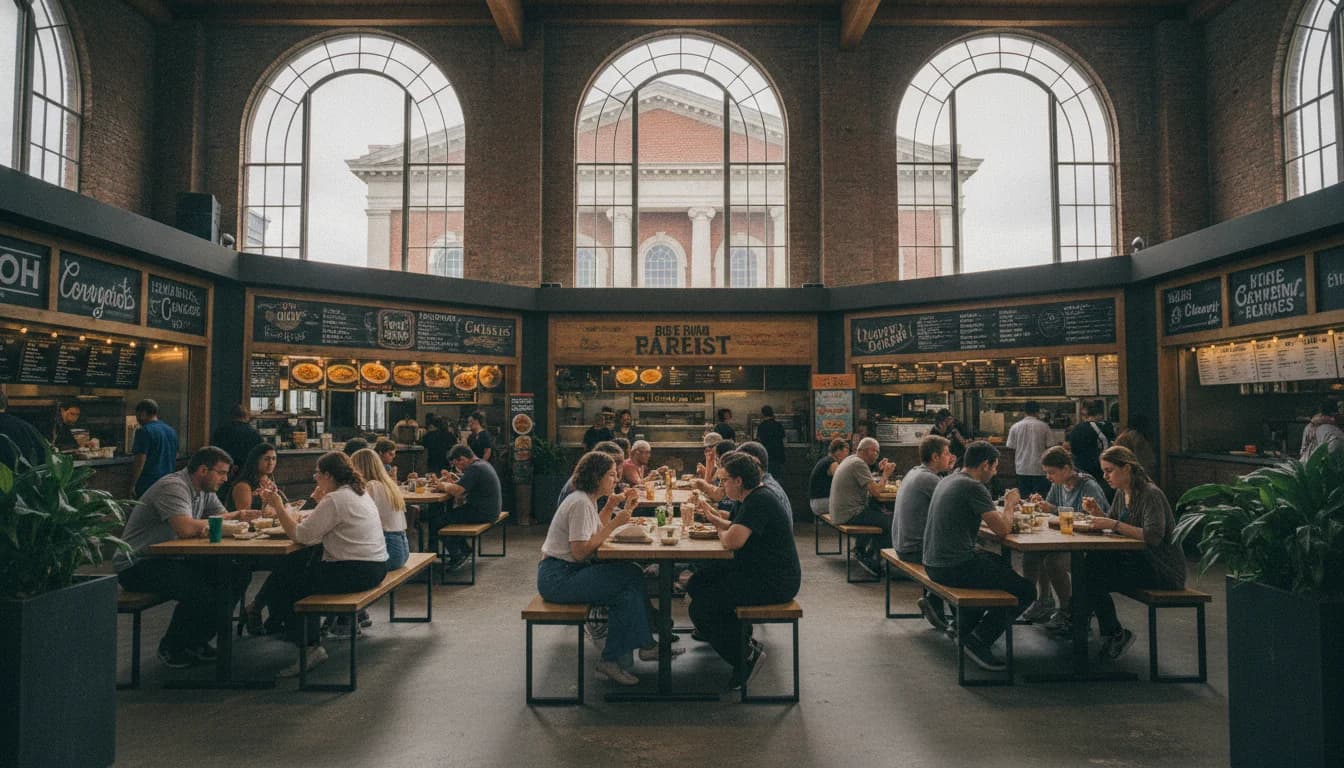
Washington, DC is quietly reshaping its urban dining and small-business landscape through a growing network of DC neighborhood food halls and culinary incubators. In neighborhoods from Capitol Hill to Brookland and Edgewood to NoMa, investors, developers, and policymakers are watching a convergence of upscale market concepts and hands-on kitchen spaces that aim to lift local entrepreneurs, create jobs, and diversify the district’s food economy. This shift matters not just for diners seeking variety but for aspiring restaurateurs and food artisans who now have more pathways to scale—from incubator kitchens and shared spaces to multi-venue, community-centered food halls that anchor neighborhoods. The District’s evolving food economy is closely tied to technology adoption, data-driven management, and a deliberate effort to expand access to affordable space for people launching food businesses. This report provides a clear, data-backed overview of what’s happening, why it matters, and what to watch next as DC’s food ecosystem matures. This overview draws on established examples like Mess Hall in Edgewood, The Roost on Capitol Hill, Tastemakers in Brookland, and Union Market’s broader district ecosystem, along with state and city data on culinary incubators and market trends.
What Happened
Growth in neighborhood hubs: a new era for DC food culture
The District’s food scene is increasingly defined by neighborhood-scale hubs that mix dining, retail, and community programming. In Capitol Hill, The Roost stands out as a 12,500-square-foot food hall and neighborhood gathering place located at 1401 Pennsylvania Ave SE. It brings together a curated mix of local chefs and purveyors, blending coffee, casual fare, craft beverages, and a venue culture designed to foster neighborhood engagement. The Roost is operated by the Neighborhood Restaurant Group in partnership with May Riegler, with a stated aim of “a place created by the DC community, for the DC community.” This model aligns with a broader trend toward multi-vendor, locally anchored food halls that serve as community centers while supporting independent operators. The Roost’s on-site presence, diverse vendor mix, and central location on Capitol Hill position it as a showcase for how neighborhood food halls can function as both food destinations and community hubs. (Source: The Roost official site.) (theroostsedc.com)
In Edgewood and beyond, Mess Hall embodies another facet of the same trend: a dedicated culinary incubator space designed to help food entrepreneurs scale. Mess Hall operates as a 10,000-square-foot facility with four shared kitchens and ample storage, giving up-and-coming food and beverage businesses a place to operate, test ideas, and grow. Importantly, Mess Hall positions itself as more than production space; it provides a comprehensive suite of services—from business consulting to access to equipment and licensing support—that help launch and sustain local food ventures. The Space’s stated purpose emphasizes a tightly knit, supportive community centered on food. This model echoes the district’s broader strategy of using incubation and shared-kitchen resources to accelerate small-business success in the food sector. (Source: Mess Hall FAQ; Mess Hall “The Story.”) (messhalldc.com)
Beyond individual venues, the district’s culinary incubator network has a documented footprint. The city’s Department of Planning and Economic Development (DMPED) notes five culinary incubators operating in the District, focused on providing space, services, and mentorship for food entrepreneurs. The incubator lineup highlighted by DC’s official sources includes EatsPlace, Mess Hall, Tastemakers, Union Kitchen, and TasteLab, illustrating a coordinated system designed to distribute opportunities across neighborhoods and wards. This government framing confirms that DC’s approach to culinary entrepreneurship relies on a distributed network of incubators rather than a single centralized model. (Source: DC DMPED – Incubators, Accelerators and Co-Working Spaces; DC planning and economic development materials.) (dmped.dc.gov)
A longer historical arc helps contextualize current developments. DC’s food incubator ecosystem began with Union Kitchen in 2012, the District’s first dedicated culinary incubator, marking the start of a formalized support system for food startups. By 2018, the DC Food Economy Study documented five operating food incubators in the District—EatsPlace, Mess Hall, Union Kitchen, TasteLab, and Tastemakers—demonstrating steady growth and geographic dispersion across wards. The study also highlighted the potential for further expansion and the need to address uneven distribution across neighborhoods. (Source: DC Food Economy Study, 2018; Table 7 listing incubators.) (planning.dc.gov)
In parallel with incubator-driven growth, the Union Market District has evolved from a traditional food market into a diversified destination with more than 50 independent merchants and purveyors, including a mix of culinary concepts, retail formats, and experiential programming. The district’s evolution reflects a broader DC trend where food halls and incubator ecosystems reinforce each other: incubators feed the pipeline of new concepts that later populate neighborhood food halls, while food halls provide a consumer-facing proving ground for incubator graduates and partner ventures. (Source: Union Market District site; DC press and trade coverage.) (unionmarketdc.com)
The city’s incubator lineup: names, places, and purpose
A key pillar of DC’s culinary economy is its five-pronged incubator network, which the DC government documents and city planning studies trace back to 2012 with Union Kitchen. The incubators—EatsPlace, Mess Hall, TasteLab, Tastemakers, and Union Kitchen—cover a spectrum from kitchen access and equipment to mentorship, training, and market access. Each space has its own flavor: EatsPlace pairs a mission-driven model with community ownership; Mess Hall emphasizes shared kitchens with hands-on business support; TasteLab and Tastemakers offer neighborhood-specific culinary ecosystems; Union Kitchen focuses on scalable culinary manufacturing and distribution. The DC planning and economic development materials emphasize that these dedicated spaces help reduce barriers to entry for new food businesses and provide a platform for local innovation to reach customers in the District. (Source: DC Food Economy Study; DC DMPED incubator pages.) (planning.dc.gov)
Recent private-sector reporting on the District’s evolving food halls reinforces how the physical footprint is expanding. The Roost on Capitol Hill demonstrates the attracting power of a well-designed, multi-vendor hall that serves as a neighborhood clubhouse with a curated mix of dining, beverage, and retail options. Mess Hall demonstrates how a kitchen-centric incubator can scale food concepts while maintaining a strong community ethos. The Tastemakers Brookland project adds another dimension by combining kitchen facilities, a staffed food hall, cooking classes, and a grocery component under one roof, illustrating how DC incubator concepts can broaden their value proposition and community reach. (Source: The Roost site; Tastemakers project details.) (theroostsedc.com)
Market context: a broader, data-driven view of DC’s food economy
Neighborhood food halls and culinary incubators are not isolated curiosities; they sit at the intersection of real estate, labor markets, and consumer demand. The DC Food Economy Study highlights a growing demand for adaptable spaces that can host new concepts while handling the licensing and compliance realities of the local food landscape. The study’s 2012 opening date for Union Kitchen and its 2018 status as one of five incubators illustrate a trajectory toward more formalized support networks and more intentional placement of incubators across wards, addressing distribution gaps documented in the report. As of 2018, the District had five culinary incubators, with the potential for expansion as neighborhoods seek new forms of economic activity anchored by food entrepreneurship. (Source: DC Food Economy Study, 2018; Table 7 listing incubators.) (planning.dc.gov)
The market also shows an appetite for tech-enabled and resource-rich models. Station DC, a tech- and policy-focused incubator initially planned for Union Market space, exemplifies how DC’s neighborhoods are increasingly combining technology, policy, and culinary innovation in shared spaces. Reported by Axios in 2024, Station DC aimed to open in Union Market in 2025 as a private-club style space for startups, with a view toward attracting government and defense-related tech founders to the neighborhood ecosystem. This signals a broader trend: the culinary incubator model in DC is evolving to be part of a larger, mixed-use innovation district where technology, entrepreneurship, and food converge. (Source: Axios DC coverage of Station DC.) (axios.com)
Why It Matters
Economic and employment impacts: incubators as engines for local opportunities
The expansion of DC neighborhood food halls and culinary incubators matters for the local economy in tangible ways. Mess Hall’s own data points to measurable outcomes: it reports the creation of 23 businesses and the growth of 13, with 80% of those businesses owned by minorities and/or women, alongside the broader impact of creating more than 36 jobs in DC as part of its sustainability recognition. These figures, while anchored to a specific program, illustrate how incubator spaces can translate kitchen-time and mentorship into new ventures and employment opportunities in neighborhoods that historically faced barriers to entry for food businesses. The Mess Hall case also highlights the district’s emphasis on inclusive entrepreneurship that prioritizes minority- and women-owned ventures. (Source: Mess Hall sustainability award narrative; 2015 official summary.) (doee.dc.gov)
Other incubator programs document similar outcomes in different districts, underscoring the value of a formalized approach to kitchen-access, business development, and market entry. The 2018 District-wide study’s five- incubator framework reflects a deliberate strategy to diversify the entrepreneurial pipeline across neighborhoods. The presence of five incubators—EatsPlace, Mess Hall, TasteLab, Tastemakers, and Union Kitchen—offers multiple access points for aspiring food entrepreneurs and demonstrates a distributed model intended to reduce barriers to entry, spread risk, and cultivate neighborhood-level food ecosystems. (Source: DC Food Economy Study, 2018.) (planning.dc.gov)
Food halls themselves are economic magnets in their own right. Union Market District’s current profile—more than 50 independent merchants and purveyors under one roof—illustrates how a venue can act as a magnet for retail, food distribution, and experiential programming. This concentration of operators supports consumer foot traffic, job generation, and small-business collaboration, while also providing a test bed for incubator graduates seeking to reach local audiences and build sustainable brands. The district’s growth signals that neighborhood food halls can be a core component of a broader, data-informed urban food economy. (Source: Union Market District site.) (unionmarketdc.com)
Community benefits and access: creating inclusive, locally rooted spaces
A central appeal of DC’s approach is community focus. Mess Hall’s mission emphasizes not only production capacity but also a supportive community that helps launch and grow businesses. The incubator’s FAQ stresses that Mess Hall is more than a shared kitchen; it’s a community that collaborates around food, offering licensing guidance, business consulting, and a path to market for members. This emphasis on community aligns with district-level goals to expand access to culinary opportunity, particularly for entrepreneurs who may lack traditional funding or networks. (Source: Mess Hall FAQ; Mess Hall “The Story.”) (messhalldc.com)
The city’s broader data-driven approach reinforces this emphasis. The DC Food Economy Study notes the importance of supporting incubators “across the District, especially in areas currently underserved,” underscoring a policy intent to distribute opportunity more equitably and to address local workforce needs. The report’s ward-level observations—specifically noting gaps in Ward 7 and 8—signal a continuing area of focus for future expansion. (Source: DC Food Economy Study, 2018.) (planning.dc.gov)
Market dynamics and technology: how tech is shaping the space
Technology is an increasingly important dimension of DC’s culinary incubator and food-hall landscape. Station DC’s model—opening in Union Market and combining a private club-like atmosphere with a tech-forward lineup of startups—points to a trend where incubators embed technology, policy engagement, and bright-line programming into spaces that also host food vendors. The takeaway for readers is that DC’s neighborhood food halls and culinary incubators are part of a broader, tech-enabled transformation of food entrepreneurship, not just a series of storefronts. This trend matters for readers who are tracking how local economies leverage technology to support micro-enterprises and to connect food innovation with capital and policy networks. (Source: Axios coverage of Station DC; Axios follow-up on Station DC membership.) (axios.com)
What’s Next
Near-term developments to watch
Several near-term developments merit close attention as DC’s neighborhood food halls and culinary incubators expand and mature. First, the DC market continues to cultivate a mix of new food concepts within established hubs and incubator spaces. The Tastemakers Brookland model—combining a kitchen, a food hall, cooking classes, and a grocery—illustrates a scalable template that other neighborhoods could adopt, potentially moving more culinary ventures from concept to storefront in a relatively short timeframe. Observers should watch for new tenants, collaborations with local makers, and programming that integrates education with commerce in Brookland and beyond. (Source: Tastemakers project description; Brookland incubator narrative.) (neighborhoodretail.com)
Second, the District’s incubator network remains a data-driven priority for equitable growth. The 2018 study’s finding that five incubators were operating in the District, with a map of ward distribution and recommendations for more balanced coverage, provides a baseline for measuring progress as new incubators or satellite kitchen spaces enter service. Ongoing city and partner reports will be key to understanding how these spaces influence local employment, wage levels, and business formation across wards. (Source: DC Food Economy Study, 2018; Table 7.) (planning.dc.gov)
Third, tech-enabled hubs and private-sector partnerships will likely play an increasing role in shaping DC’s culinary economy. Station DC’s model—built around membership clubs and a tech-forward campus mindset—highlights how future incubator spaces could function as hybrids of kitchen, coworking, investor meetups, and policy-liaison hubs. Readers should monitor not only the occupancy rates and vendor mix in existing halls but also the growth of tech-forward incubation programs that align with federal investment trends and regional economic development initiatives. (Source: Axios coverage of Station DC; Axios follow-up.) (axios.com)
Ward-level planning also remains a live issue. The 2018 study’s ward-distribution findings identified gaps in Wards 7 and 8 and called for targeted growth to improve access to culinary entrepreneurship. As DC continues to plan and finance new spaces, observers should track whether future incubator openings address these gaps and what policy tools are used to facilitate equitable access to commercially licensed kitchens and market opportunities. (Source: DC Food Economy Study, 2018.) (planning.dc.gov)
What to watch for in policy and practice
- Capacity and access: With five incubators documented in 2018 and ongoing expansion in neighborhoods, a crucial question for readers is how many facilities are available in dense, high-demand neighborhoods versus underserved wards. Policy makers and district agencies will likely release updates on capacity, licensing pathways, and workforce development initiatives tied to food entrepreneurship. The DC government’s own pages emphasize the role of incubators in providing kitchen space, technical assistance, and business development support, and they are likely to publish progress updates as new spaces come online. (Source: DC DMPED incubators page; DC Food Economy Study.) (dmped.dc.gov)
- Economic impact: As incubators graduate new concepts and food halls scale, reporters and analysts will track job creation, business formation, and minority- and women-owned business participation across the District. Mess Hall’s sustainability reporting provides a concrete lens on this dynamic, and similar metrics from other incubators would help build a district-wide picture. (Source: Mess Hall 2015 Sustainability Award; Mess Hall FAQ) (doee.dc.gov)
- Market signals: The expansion of Union Market District and the emergence of tech/startup-focused spaces in and around the district’s food economy signal a broader convergence of culinary and technology-enabled business development. Observers should monitor how consumer demand evolves in tandem with the growth of incubator graduates transitioning into permanent, brick-and-mortar or pop-up formats. (Source: Union Market District site; Axios coverage of Station DC.) (unionmarketdc.com)
What’s Next
Timeline and next steps to watch
- Short term (the next 12–24 months): Expect continued expansion of tenant mix across DC neighborhood food halls and incubator spaces, with more concepts leveraging shared-kitchen models to test pop-ups and scale production. The Tastemakers Brookland project, which combines a kitchen, a food hall, and class offerings, offers a blueprint that could be replicated in other neighborhoods. As occupancy and programming evolve, these hubs will likely host more culinary classes, pop-ups, and creator marketplaces that attract both locals and visitors. (Source: Tastemakers project details.) (neighborhoodretail.com)
- Medium term (2–4 years): A more balanced ward distribution of incubator spaces is plausible as the district advances its equity agenda and seeks to reduce barriers for entrepreneurs in underserved areas. The 2018 DC Food Economy Study’s ward-focused conclusions provide a baseline for measuring progress against City goals. (Source: DC Food Economy Study, 2018.) (planning.dc.gov)
- Longer term (beyond 4 years): The infusion of technology-driven, policy-conscious incubator environments—similar to Station DC’s Union Market positioning—could integrate more formal partnerships with federal research, defense, and innovation programs. The 2024 Axios reporting on Station DC and related follow-ups indicate the potential for culinary-adjacent spaces to become hybrid hubs for tech-enabled entrepreneurship in a food-focused district. (Source: Axios coverage.) (axios.com)
What to watch for readers and residents
- Neighborhood identity and programming: How venues like The Roost and Mess Hall shape local identity, and how incubators’ programming (workshops, classes, tastings) deepen connections with residents and visitors. The Roost emphasizes a community-centered mission; Mess Hall emphasizes a collaborative environment with events and public access to quality food options. (Source: The Roost site; Mess Hall page.) (theroostsedc.com)
- Economic health indicators: Job creation, new-business formation, and vendor turnover will be key indicators of whether the incubator-and-hall model delivers lasting economic benefits. The DC sustainability award figures for Mess Hall offer a data point; ongoing district reporting will help gauge broader progress. (Source: Mess Hall sustainability award.) (doee.dc.gov)
- Access and equity: Monitoring ward-level access to incubator spaces and licensing support will reveal whether DC’s expansion is translating into opportunities for residents across the city, including historically underserved areas. The 2018 study’s findings about uneven distribution provide a baseline for ongoing assessment. (Source: DC Food Economy Study, 2018.) (planning.dc.gov)
Closing
DC’s neighborhood food halls and culinary incubators are more than culinary venues; they are catalysts for local entrepreneurship, community engagement, and neighborhood revitalization. From the Capitol Hill energy of The Roost to Edgewood’s Mess Hall and Brookland’s Tastemakers, these spaces demonstrate how shared kitchens, multi-tenant food halls, and incubator ecosystems can combine to support diverse food concepts and small-business growth. The District’s data-driven approach—documenting incubator counts, ward distribution, and program outcomes—provides a solid framework for understanding how this sector will evolve in the coming years. As public and private partners continue to invest in kitchen infrastructure, education, and access, DC’s food economy is positioned to become a more inclusive, innovative, and resilient part of the city’s growth story. Readers can stay tuned to city announcements, incubator program updates, and neighborhood announcements to track how these evolving spaces reshape the culinary landscape of the District.