Canopy Row Walter Reed Development Breaks Ground in DC
Canopy Row Walter Reed development breaks ground on the Walter Reed campus, signaling a new chapter in DC housing and mixed-use redevelopment.
By Terrence Holt

July 31, 2026
9 minute read
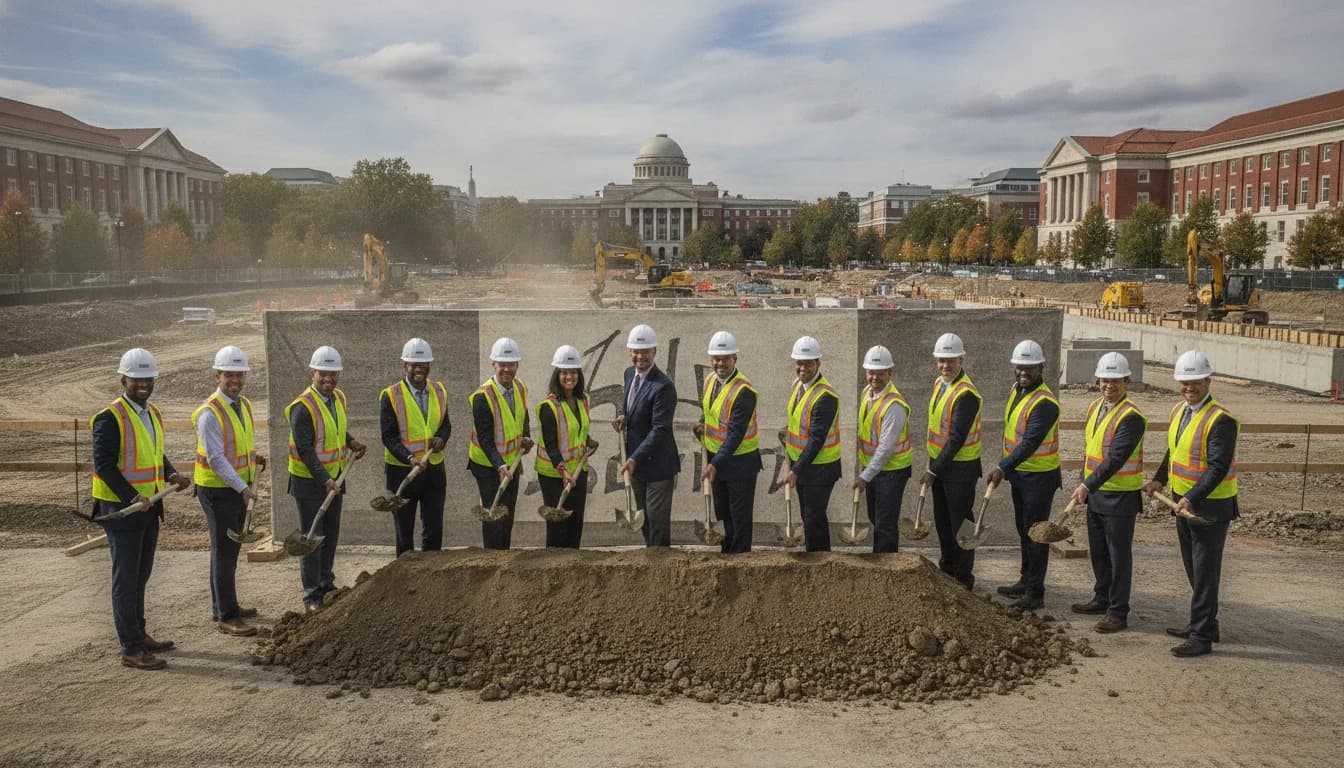
Washington, DC — The Canopy Row Walter Reed development has broken ground on the former Walter Reed Army Medical Center campus, marking a pivotal moment in one of the District’s largest public-private redevelopment efforts. On Monday, June 8, 2026, Mayor Muriel Bowser and community members gathered to celebrate the initiation of Canopy Row, a residential component designed to deliver 141 family-sized homes on Ward 4’s Walter Reed site. The announcement places Canopy Row as a key milestone within The Parks at Walter Reed master plan, a long-running transformation that aims to convert a historic military campus into a vibrant, mixed-use neighborhood. The event and its details underscore the District’s commitment to expanding housing options while integrating retail, parks, and community amenities. (mayor.dc.gov)
Canopy Row Walter Reed development is being built by a joint team of Urban Atlantic Development, NV Homes, and Triden Development Group, with a mix of traditional townhomes and stacked residential units. The project will deliver 47 traditional townhomes and 94 stacked two-over-two homes, all designed to meet growing demand for family-sized housing in the District. An important affordability component accompanies the construction: twelve of the homes will be reserved for households earning at or below 80 percent of the Area Median Income (AMI). Construction is expected to begin this summer and conclude in 2028, according to the official release and subsequent coverage. This staged approach reflects the District’s broader strategy of pairing new housing with pathways to homeownership for District residents. (mayor.dc.gov)
The Canopy Row Walter Reed development sits at the heart of a 66.57-acre site that the City has progressively redeveloped since decommissioning the Walter Reed Army Medical Center and transferring operations to Bethesda in 2011. In a broad overview of the project’s scale, the Mayor’s office noted that the transformation to date has involved demolishing more than 2.5 million square feet of obsolete hospital facilities and delivering approximately 2.2 million square feet of new development, including more than 1,300 apartments, 280 condominiums, 50 townhomes, and a range of affordable housing, retail, educational, and community amenities. The long-term plan also includes retail anchors and educational facilities to support a growing, mixed-use neighborhood. Canopy Row is thus part of a carefully staged enhancement to a District-relevant redevelopment that seeks to balance housing with commercial and public spaces. (mayor.dc.gov)
Background context is essential to understand Canopy Row Walter Reed development within the Parks at Walter Reed framework. The Parks at Walter Reed is the master plan guiding the on-site transformation, a process carried forward by a development team that has guided the campus’s adaptive reuse of historic buildings and the construction of new housing, retail, and parks. The plan has been described in District-level materials as combining historic preservation with modern residential and retail components to create a dynamic neighborhood along Georgia Avenue and near Rock Creek Park. The Parks at Walter Reed is the umbrella initiative under which Canopy Row operates, providing the policy and design context for all future phases. (dmped.dc.gov)
Opening the chapter on Canopy Row Walter Reed development in the broader market narrative, the District’s redevelopment story has included high-profile retail anchors such as Whole Foods Market and the establishment of educational facilities on site. The Parks at Walter Reed site now includes approximately 150,000 square feet of retail space anchored by a Whole Foods Market, and the District’s educational footprint includes the nearby District of Columbia International School, serving students from across wards. These elements situate Canopy Row as a critical piece of a larger urban redevelopment that aims to create a balanced, walkable neighborhood with housing, services, and amenities integrated into a single, cohesive district. (mayor.dc.gov)
What happened
Announcement and Groundbreaking
- The Canopy Row Walter Reed development was officially announced with a groundbreaking ceremony on Monday, June 8, 2026, as part of the ongoing Walter Reed campus transformation. The ceremony featured Mayor Muriel Bowser and Ward 4 community leaders, underscoring the city’s commitment to delivering housing within a broader mixed-use framework. The event announcement highlighted 141 family-sized homes for Canopy Row, emphasizing a mix of housing types and an affordability component. This milestone is framed as a continuation, not the commencement, of a multi-phase redevelopment that has reimagined the Walter Reed campus for modern urban living. The date and event details are corroborated by official city communications and contemporaneous local reporting. (mayor.dc.gov)
Project Details and Timeline
- Canopy Row Walter Reed development will comprise 141 homes, including 47 traditional townhomes and 94 stacked units, with 12 homes reserved for households at or below 80 percent of the Metropolitan Family Income (MFI). Construction is expected to begin in summer 2026 and run through 2028, aligning with the Parks at Walter Reed master plan’s phased delivery approach. The timeline reflects the District’s strategy to accelerate housing supply while coordinating with infrastructure and neighborhood amenities. The development’s housing mix and schedule are documented in official release materials and reporter coverage. (mayor.dc.gov)
Development Team and Location
- The Canopy Row Walter Reed development is being delivered by Urban Atlantic Development, NV Homes, and Triden Development Group, reflecting a collaborative public-private effort to expand near-term housing opportunities on the Walter Reed campus. The project’s location sits on the former Walter Reed Army Medical Center site, within Ward 4, an area that has been the focus of a long-running, District-led revitalization effort. The developers’ involvement and the campus context are described in the official press materials and industry coverage. (mayor.dc.gov)
Contextualizing within The Parks at Walter Reed
- Canopy Row is one of several residential components within The Parks at Walter Reed, a master-planned redevelopment that has guided the transformation of the 66-acre campus for more than a decade. The Parks at Walter Reed combines adaptive reuse of historic hospital buildings with new construction to create housing, retail, and park space, forming a mixed-use corridor that aligns with the District’s broader urban development goals. This structural context is essential to understanding Canopy Row’s role in the ongoing evolution of Walter Reed. (dmped.dc.gov)
Why It Matters
Expanding Homeownership Pathways and Housing Supply
- The Canopy Row Walter Reed development is designed to advance the District’s housing supply goals while offering pathways to homeownership for District residents. The inclusion of 12 affordable homes within a 141-unit project signals a deliberate attempt to blend market-rate and affordable housing within a single community, supporting family-sized living in a transit-accessible area. Officials have framed these units as part of a broader strategy to expand homeowner opportunities in one of the city’s largest redevelopment efforts, reinforcing the District’s annual housing production targets and equity goals. (mayor.dc.gov)
Broader Urban Redevelopment Context and Economic Reach
- The Walter Reed redevelopment has already delivered substantial progress: the city has demolished more than 2.5 million square feet of obsolete facilities and delivered roughly 2.2 million square feet of new development, including more than 1,300 apartments and 280 condominiums, plus townhomes and retail space. The transformation also includes educational institutions such as the District of Columbia International School and major retail anchors like Whole Foods Market, reinforcing the district-wide impact on housing supply, local jobs, and the regional economy. Canopy Row’s introduction extends this momentum by adding more family-sized homes within a transit-rich, mixed-use environment. (mayor.dc.gov)
Retail, Education, and Community Infrastructure Integration
- The Parks at Walter Reed’s retail and community offerings create a living environment where residents can access essential services without long commutes. The on-site retail footprint, anchored by Whole Foods Market, and the presence of educational institutions contribute to the neighborhood’s self-sufficiency and long-term vibrancy. Canopy Row Walter Reed development elevates this dynamic by delivering housing that is closely integrated with existing and planned amenities, supporting walkability and reduced car dependence for residents. The on-site retail scale and the educational anchors are documented in city releases and the Parks at Walter Reed overview. (mayor.dc.gov)
Affordability and Equity Considerations
- The included affordability component—12 homes reserved for households at or below 80 percent AMI—reflects the District’s ongoing emphasis on equitable housing opportunities in major redevelopment efforts. The Canopy Row Walter Reed development’s affordability strategy aligns with the broader portfolio of affordable housing initiatives associated with The Parks at Walter Reed and the Walter Reed redevelopment as reported by city officials and multiple news outlets. This explicit affordability component matters for residents seeking homeownership pathways within the context of a large-scale urban renewal. (mayor.dc.gov)
What’s Next
Construction Milestones and Ongoing Phasing
- With construction slated to begin in the summer of 2026 and a planned completion in 2028, Canopy Row Walter Reed development will unfold in a phased manner consistent with the Parks at Walter Reed master plan. Readers should anticipate updates as phases progress, with future milestones to be announced through the project pipeline and partner communications. While the initial groundbreaking provides a clear start, the subsequent construction and occupancy milestones will be released as the work advances. (mayor.dc.gov)
Monitoring and Community Updates
- The District’s development pipeline and the master plan’s ongoing implementation will provide the public with periodic updates on Canopy Row and related components. The press materials and coverage indicate that the Bowser administration intends to share progress through official channels and partner communications, ensuring transparency and community engagement as the project proceeds. Residents and observers can follow project pipelines for real-time status updates and future milestone announcements. (hoodline.com)
Next Phases within The Parks at Walter Reed Master Plan
- As Canopy Row moves from groundbreaking to construction, observers should monitor how this residential component interacts with other planned phases within The Parks at Walter Reed. The overarching plan envisions a cohesive mix of housing, retail, schools, parks, and employment opportunities, with Canopy Row representing the family-sized housing segment that complements higher-density or townhouse components and more extensive retail and service offerings. The Parks at Walter Reed framework and related project materials provide the context for these advancing phases. (dmped.dc.gov)
Closing
What this means for DC and Ward 4
- The Canopy Row Walter Reed development signals a noteworthy shift in how Ward 4 and the broader District approach large-scale redevelopment around historic campuses. By delivering 141 family-sized homes, including a dedicated affordability component, and anchoring a neighborhood with on-site retail and educational resources, the project reinforces a data-driven, outcomes-focused approach to urban renewal. The Parks at Walter Reed master plan provides the guardrails for this transformation, ensuring that Canopy Row fits within a broader, long-term vision of sustainable growth, housing access, and community well-being. The official timeline and structure of Canopy Row align with the city’s priorities for housing supply, transit-oriented development, and inclusive growth. (mayor.dc.gov)
Readers who want to stay updated should watch for future project pipeline announcements, development milestones, and community notices from the Office of the Deputy Mayor for Planning and Economic Development and the Walter Reed Local Redevelopment Authority. The Parks at Walter Reed remains a living blueprint for the District’s approach to transforming this historic site into a vibrant, inclusive neighborhood with a balanced mix of homes, shops, schools, and parks that reflect the city’s growth agenda and commitment to equitable housing. (dmped.dc.gov)
As Canopy Row moves forward, observers will check back for details on occupancy, homeownership pathways, and how the development’s affordability component materializes in practice. The Canopy Row Walter Reed development is not an isolated project; it is a critical piece of a larger urban renewal narrative that has already reshaped a substantial portion of the Walter Reed site and will continue to shape the District’s housing and economic landscape in the years ahead. (mayor.dc.gov)