Space Festival Washington DC: STEM Weekend Announcement
Experience hands-on space STEM activities at Space Festival Washington DC this weekend, September 12–13, 2026. Join us for the fun!
By Julio Sandoval

September 1, 2026
12 minute read
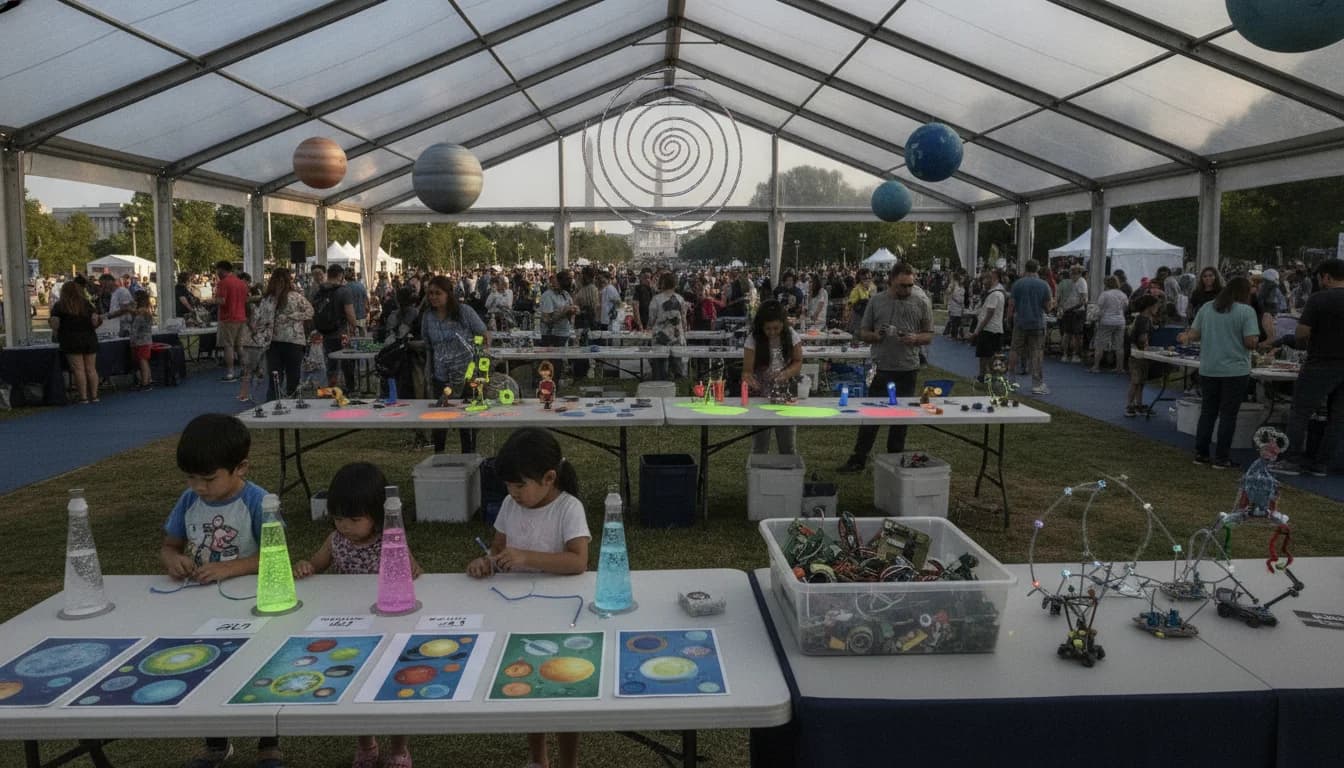
Space Festival Washington DC Set for September 12–13, 2026
Space Festival Washington DC is scheduled to unfold as a two-day, hands-on celebration of space, STEM, science, and creativity. The event is slated for September 12–13, 2026, with daily hours from 12:00 PM to 5:00 PM, and will take place inside the Craft Lab at Because Science, located at 1759 Columbia Rd NW, Washington, DC. This announcement marks the first official disclosure of dates, venue, and format, aiming to attract families, students, educators, and space enthusiasts curious about interactive science experiences. The organizers emphasize accessibility and inclusivity, offering a mix of free activities and ticketed workshops designed to make space education tangible for participants of all ages. According to the Space Festival listing, attendees can expect activities ranging from Take-It-Apart demonstrations to hands-on craft labs, with specific labs priced at a modest level to support hands-on learning. This event is positioned as a data-driven, educationally focused weekend that aligns with DC’s broader emphasis on science, technology, engineering, and mathematics (STEM) experiences for the public. See official pages for exact times and venue details. (becausesciencedc.com)
Opening
Space Festival Washington DC arrives as a timely reminder that informal science education can complement classroom learning by offering experiential, inquiry-driven exploration in a familiar neighborhood venue. The festival’s format, which leans on drop-in activities across two weekend days, is designed to accommodate a wide range of participants, from curious youngsters to adult learners seeking new STEM insights. The event’s emphasis on space-themed experiments, craft activities, and e-waste art suggests an intent to blend creativity with rigorous exploration, a combination that renowned STEM researchers identify as particularly effective for sustaining interest and building practical understanding. In the modern DC metro area, where families and educators alike seek high-quality, locally accessible STEM programming, this festival positions itself as a concrete option that can scale from casual weekend browsing to more structured, workshop-based experiences. The timing—mid-September 12–13, 2026, from 12:00 PM to 5:00 PM each day—is strategically placed to capture after-school hours and weekend family routines, reducing barriers to participation and encouraging steady attendance across both days. This alignment with local schedules helps ensure that the event becomes a repeatable part of DC’s autumn educational calendar, setting expectations for future iterations if the model proves sustainable. The festival’s location in Adams Morgan, at 1759 Columbia Rd NW, places it within a walkable corridor of science-minded shops and cultural spaces, potentially increasing foot traffic for attendees who pair a science day with other neighborhood activities. The official listing describes a spectrum of activities designed to be both educational and entertaining, including free demonstrations and ticketed labs that require small fees, signaling a deliberate balance between open access and revenue-generating experiences that can sustain ongoing programming. The City of Washington, DC’s role in promoting STEM-friendly events, alongside local partners and private organizers, underscores the evolving ecosystem in which museums, science shops, and educational retailers cooperate to provide hands-on learning opportunities outside traditional classrooms. For families navigating this weekend, the event promises to be a concise, immersive glimpse into space science with concrete takeaways—from craft projects to simple, safe experiments that illustrate core astronomical and physical principles. The Space Festival’s two-day structure also supports a staggered attendance pattern, enabling visitors to spread out their activities over the weekend and maximize the learning outcomes of each session. This approach reflects a broader trend in urban science engagement, where multi-session experiences allow participants to revisit concepts, reflect on discoveries, and deepen their comprehension across time. The festival’s logistical details—times, venue, and accessibility features—are publicly posted and designed to be easy to share with teachers, homeschool groups, after-school programs, and neighborhood associations, which increases the likelihood of broad community involvement. In short, Space Festival Washington DC is positioned as a data-informed, community-facing initiative that seeks to deliver clear educational value through structured activities, while preserving the spontaneity and fun of a family-friendly science festival. The event’s public facing materials emphasize inclusivity, hands-on learning, and the practical demonstration of space science concepts, all essential elements for building lasting interest in STEM fields among DC residents and visitors. Our coverage draws from the official festival listing and the organizer’s store page to confirm the core facts and to outline what attendees should expect during the weekend. According to the Space Festival listing and the organizer, Space Festival Washington DC will provide a blend of free and ticketed experiences, with a focus on accessibility for all ages. (washington.org)
What Happened
Announcement Details
Event name and focus: Space Festival Washington DC, a weekend event highlighting space, STEM, science, and creativity, with hands-on activities for all ages. This framing aligns with the organizer’s aim to make science approachable through interactive exploration. The official listing describes an array of activities, from chromatography-based planet artwork to hands-on experiments that illuminate basic physics and space science concepts. Details like the “Take-It-Apart” activities and the concept of craft labs emphasize a practical, do-it-yourself approach to learning rather than passive observation. The organizer positions the festival as a community-oriented opportunity to engage with space science in a casual, accessible setting. (washington.org)
Dates and hours: The festival is scheduled for September 12–13, 2026, with daily hours from 12:00 PM to 5:00 PM. This two-day framework supports a broad audience reach, including working families who may prefer weekend participation and educators planning field trips. The organizer’s event page specifies the dates and hours, while the tourism listing confirms the same window. (becausesciencedc.com)
Location and venue details: The Space Festival will be hosted inside the Craft Lab at Because Science, located at 1759 Columbia Rd NW, Washington, DC. This choice anchors the event in a neighborhood venue known for science-themed retail and experiential programming, which may influence attendance by leveraging a walkable, science-forward environment. The address and venue details are explicit in the organizer’s listing and are corroborated by the festival’s host site. (becausesciencedc.com)
Attendance model and pricing: The festival comprises a mix of free drop-in activities and ticketed workshops. Ticketed workshops carry modest fees (for example, $9 for certain Lab Workshops, such as Planetary Smash! and Rocket Lava Lamps, per the organizer’s store listing). General admission activities are described as free at the event, with workshops offering paid experiences. This pricing structure suggests an intent to maximize accessibility while also creating revenue streams to sustain programming and expand offerings in future years. The pricing details are posted on the organizer’s site and reflected in the listing’s activity breakdown. (becausesciencedc.com)
Timeline and Key Facts
The festival announcement and listing indicate a clear timeline for attendees: build anticipation through online marketing, provide on-site experiences over two days, and offer a balance of free exploration and paid labs that deepen engagement. The dates (Sept 12–13) and hours (12–5) anchor the event in a predictable rhythm that can be factored into school calendars and family planning. The primary source materials explicitly outline the day-by-day structure, including the scheduled activities and the lab workshop slots. (washington.org)
Accessibility and logistics: The event page notes the venue’s proximity to public transit and street parking considerations, highlighting walking, biking, or ride-sharing as viable options. The address placement and near-by transit notes help readers anticipate travel planning, reduce friction, and encourage attendance from a broad cross-section of the DC metro area. These logistics are described in the organizer’s page and echoed on the tourism listing. (becausesciencedc.com)
Competitor and context notes: In the broader DC festival landscape, summer is typically rich with events from a variety of organizers and venues. While Space Festival Washington DC is a distinct offering, it sits alongside science museums and educational retailers that host STEM-related activities, a pattern reflected in the district’s diverse event calendar. Notable DC-area festival context includes a range of cultural, educational, and science-themed programming that attracts similar audiences, underscoring the public interest in hands-on STEM experiences during the fall season as well. This context is consistent with recent DC festival roundups and local event calendars. (washington.org)
Why It Matters
Educational Impact and Rationale
Hands-on, accessible STEM experiences are widely recognized as effective for cultivating long-term interest in science among youth. The Space Festival Washington DC format—free activities complemented by affordable workshops—fosters active participation and experiential learning, which research shows can improve conceptual understanding and retention when compared to passive education. The festival’s craft-lab approach translates space science topics into tangible, memorable activities, enabling participants to connect classroom concepts with real-world applications. This aligns with established findings on the benefits of hands-on STEM activities for learners across age groups. For example, NASA’s ongoing emphasis on hands-on STEM education and public engagement underscores the value of immersive experiences in science learning. (nasa.gov)
The event’s emphasis on space-focused activities has potential ripple effects beyond immediate participation. By exposing families to space science concepts in a community setting, the festival contributes to broader science literacy, a key objective for DC’s education ecosystem. The DC metro area already hosts a variety of science experiences—from aerospace museums to university outreach programs—and Space Festival Washington DC adds a local, neighborhood-accessible option that can complement larger institutions. The event’s location in a walkable neighborhood hub enhances accessibility and can serve as a scalable model for future community-based STEM events. (washington.org)
Stakeholders and Community Context
Attendees: Families with children, educators seeking field-trip ideas, and general space enthusiasts are the primary audiences. The event’s price structure—free general activities with the option for paid labs—appeals to families with varying budgets and encourages broader participation across income levels. The specific pricing for the Labs (e.g., $9) is designed to lower the barrier to entry for more hands-on experiences while enabling organizers to fund more ambitious offerings in subsequent years. (becausesciencedc.com)
Organizers and venue: Because Science serves as the venue host and organizer of the Craft Lab experiences, the festival benefits from a location that already leans into STEM education and maker-style programming. This alignment helps ensure that activities are designed to be both instructive and entertaining, a combination that can drive word-of-mouth interest and repeat attendance if the model proves sustainable. The store’s public listing provides the core details—dates, times, and venue—that anchor the festival’s identity and credibility. (becausesciencedc.com)
Local partners and city ecosystem: The DC area’s vibrant science and education ecosystem includes national institutions, local museums, science retailers, and university outreach programs. The festival sits within this ecosystem as a neighborhood-level extension of DC’s broader emphasis on STEM education and public engagement. While not a museum or federal program, the event complements the district’s active calendar of science and technology programming, contributing to a diversified portfolio of learning opportunities in the region. This context is supported by local event listings and media coverage of the DC festival landscape. (washington.org)
Broader Context: Space and DC’s STEM Culture
Space-focused education has grown as a prominent strand of urban culture in the nation’s capital, aided by proximity to national science hubs and a steady stream of public outreach from NASA, the Smithsonian, and allied organizations. While DC hosts a broad range of science-related events, Space Festival Washington DC specifically frames space exploration through hands-on participation and maker-centered learning, which complements more formal, institution-led programs. This approach reflects a broader trend toward community-based STEM education that blends informal learning with structured activities, expanding the reach of space education beyond classrooms and museums. The festival’s approach sits alongside other DC-area science and film events that emphasize accessible, data-driven programming for diverse audiences. (nasa.gov)
In the larger national conversation about STEM engagement, hand-on experiences are widely cited as a critical component of effective learning and lasting interest in science and engineering careers. NASA’s public engagement initiatives and partnerships emphasize the value of providing the public with accessible, experiential science opportunities. Incorporating this perspective, Space Festival Washington DC explicitly leverages hands-on activities to translate space science into personal, memorable experiences for participants. The mid-body perspective from NASA reinforces this learning model’s legitimacy and relevance to making STEM more inclusive and engaging for a broad audience. > We need the Artemis Generation – young people from all parts of America and all walks of life – to achieve big goals, overcome our greatest challenges, and inspire the world through science and discovery, said NASA Administrator Bill Nelson in a related national STEM education context, illustrating the alignment between public STEM initiatives and local, community-based events like Space Festival Washington DC. (nasa.gov)
What’s Next
Attendee Guidance and Future Planning
How attendees can prepare: Prospective attendees should plan to arrive with time to explore both days’ activities, especially if they plan to participate in ticketed labs. Since some experiences require a small fee, visitors should budget for workshops they want to try while taking advantage of free drop-in activities. The Space Festival’s official listing emphasizes a mix of free activities and accessible paid labs, making it feasible to tailor an itinerary that fits family schedules and educational goals. Those who want to maximize learning might prioritize workshops like Planetary Smash! or Rocket Lava Lamps, which pair hands-on experimentation with space-themed science concepts. The festival’s host provides the schedule and location details to help visitors map their route in advance. (becausesciencedc.com)
Next steps for organizers: If the 2026 edition performs well in terms of attendance and feedback, organizers could consider expanding programming, increasing the number of ticketed sessions, or extending the festival to additional days or other DC neighborhoods. The two-day model provides a framework for iterative improvement, allowing organizers to refine activity tracks, experiment with new space-themed modules, and evaluate logistics, accessibility, and accessibility-related metrics. Local partners and community volunteers could play a larger role in future iterations to ensure sustainable growth and broad-based participation. The current announcement and store listings establish a baseline from which future expansion can be measured. (washington.org)
Monitoring and evaluation: In a data-driven context, the festival could benefit from collecting anonymized attendance data, session feedback, and learning outcomes from participants, then sharing aggregated results to inform future programming. Although the current materials focus on event details and activities, a future update could include a concise post-event brief summarizing attendance ranges, workshop participation, and participant satisfaction (without disclosing personal data). The culture around DC’s STEM events is increasingly data-conscious, which bodes well for a transparent, impact-oriented post-event assessment. This aligns with DC’s overall emphasis on evidence-based programming in education and public outreach. (washington.org)
Competitors and alternative experiences: While not directly couched as competitors, DC hosts a number of science-centered experiences—museums, do-it-yourself maker spaces, and other STEM events—throughout the year. Space Festival Washington DC differentiates itself by focusing on space science and hands-on experiences in a neighborhood setting, rather than a traditional museum environment. This neighborhood-centric angle is a deliberate part of its value proposition, offering an intimate venue that can complement larger, regional offerings. Readers should consider how this event fits into their broader DC STEM itinerary, particularly if they are planning a sequence of science activities across the fall season. (washington.org)
Closing
Space Festival Washington DC marks a purposeful addition to DC’s growing ecosystem of space-themed, hands-on learning experiences. With a two-day window on September 12–13, 2026, from 12:00 PM to 5:00 PM, the festival offers a practical, accessible way for residents and visitors to explore space science in a personal, neighborhood setting. The event’s structure—free activities paired with affordable labs—serves both broad accessibility and targeted depth, enabling participants to dip in for quick discoveries or stay for more immersive workshops. For readers seeking clarity on dates, times, and locations, the organizer’s Space Festival page and the Washington DC tourism listing provide the authoritative details. As the DC science and education community continues to evolve, this festival could become a valued annual touchpoint for families, students, and educators alike, reinforcing the shared goal of expanding space literacy through hands-on, participatory learning.
To stay updated on Space Festival Washington DC, monitor the organizer’s store page for workshop schedules and ticket availability, and check the DC tourism listing for any changes to dates or venue details. For broader context on hands-on STEM education and public engagement, follow national and regional science education outlets that regularly report on community-focused events and how they contribute to a more scientifically literate public.