Capitol Hill Porch Fest Draws 155 Bands
Capitol Hill Porch Fest delivers a data-driven snapshot of DC’s inaugural porch fest and its potential market implications.
By Diane Prescott

October 14, 2026
13 minute read
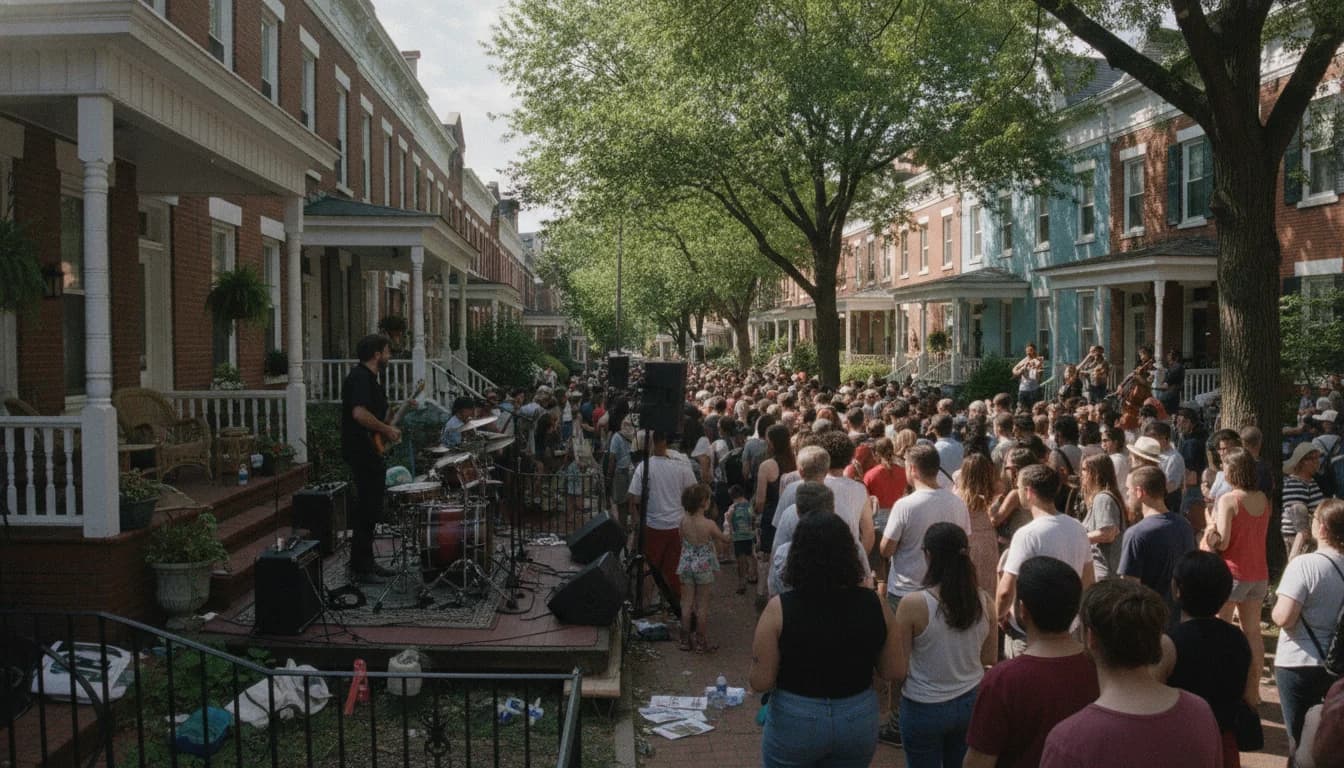
Capitol Hill Porch Fest took over the Hill on October 10, 2026, transforming the neighborhood into a floating concert lineup that turned front porches into intimate stages. The day-long event, held from 12:00 p.m. to 6:00 p.m. in Washington, DC, marked the first major neighborhood porch festival for Capitol Hill, a tradition that has spread to other nearby DC communities in recent years. The festival’s organizers framed it as a celebration of local talent and neighbor-led programming, with a focus on accessibility and community connection. As a data-driven publication, District of Columbia Times is here to lay out what happened, why it matters, and what could come next for this growing form of micro-municipal culture. The date was clear in the planning materials and the public-facing schedule: Saturday, October 10, 2026, from 12 to 6 pm, across Capitol Hill and adjacent pockets of Hill East and Barracks Row. (capitolhillporchfest.org)
Early reporting around the event highlighted a remarkable scale for a first edition. According to local and national outlets, Capitol Hill Porch Fest drew a sizable lineup of performers to the street-side stages. The Washington Post described the inaugural event as featuring more than 150 acts across more than 50 porches, signaling strong community interest and participation from both residents and performers. This framing gives readers a sense of the event’s breadth and its potential impact on the neighborhood as a social and cultural marker. Axios’ DC edition also tracked the fest’s live counts and emphasized the scale, noting 155 bands across 51 porches in its day-of coverage. Taken together, these counts illustrate a festival with a density of performances that stands apart from traditional single-stage concerts, and they provide a baseline for measuring future porch-fest activity in DC. (washingtonpost.com)
Anchor event date and schedule are clearly documented by Capitol Hill Porch Fest organizers themselves. The official site lists the event as Saturday, October 10, 2026, running from 12:00 p.m. to 6:00 p.m. The site also confirms the neighborhood scope—Capitol Hill, Hill East, Lincoln Park, and Barracks Row—with porches identified as the primary venues for performances. This official scheduling confirmation is critical for readers seeking to understand the event’s logistical footprint and the geographic footprint of performances. Organizers also shared the practical detail that foldable schedules and act-location information were accessible via an on-site map and a porch-by-porch lineup, signaling a tech-enabled approach to audience navigation. (capitolhillporchfest.org)
Opening overview: what Capitol Hill Porch Fest aimed to achieve and who was involved
The Drive Behind Capitol Hill Porch Fest Capitol Hill Porch Fest emerged from a community-led desire to create a neighborhood-wide arts event built on peer-to-peer participation rather than centralized staging. The Washington Post profile of the inaugural fest frames the organizers as a group of neighbors who leveraged existing porch spaces to host musicians, turning the street into a distributed stage. The organizers described a strong emphasis on inclusivity—welcoming performers from a broad range of genres and levels of professional experience, reflecting the Hill’s diverse musical ecosystem. This approach aligns with broader porch-festival movements that rely on grassroots participation to create a low-cost, high-participation cultural experience. The Washington Post notes the organizers’ desire to unify residents and celebrate local talent in a manner that feels organic to Capitol Hill’s character. (washingtonpost.com)
Scale and Participation: numbers and what they imply Across the day, the festival touted counts that signaled both ambition and realism for a first-year event. The Washington Post reported “more than 150 acts” on “more than 50 neighborhood porches.” Axios’ DC coverage, which tracked the event closely on the day, cited “155 bands participating across 51 porches.” Those numbers are not merely trivia; they offer insight into how the event engineered scale through a porch-to-porch model, rather than a single festival site. The discrepancy among outlets also underscores a practical truth in live events: counts can shift slightly depending on when you count, whether you include certain late-stage signups, or whether you treat multi-member bands as multiple acts. For readers and researchers, the core takeaway is clear: Capitol Hill Porch Fest managed a dense, multi-venue schedule with hundreds of performers on a single day. (washingtonpost.com)
What the official plans and logistics looked like From a logistical perspective, Capitol Hill Porch Fest relied on neighbor-hosted venues rather than a single festival footprint. The event’s site highlights that hosts must offer outdoor space suitable for a performance and that bands need to coordinate their own lineups. The registration process—open to both hosts and musicians—was designed to be straightforward and volunteer-driven. The official site indicates that registrations for both hosts and bands closed on September 5 at midnight, a detail that reveals the project’s reliance on early signups and community volunteers to create a workable schedule. In addition, the site points users to a digital schedule and a porch-by-porch lineup, underscoring the event’s reliance on digital tools to manage a distributed performance network. Taken together, these elements illustrate a tech-enabled, community-led approach to event production. (capitolhillporchfest.org)
Neighborhood scope and geography Capitol Hill Porch Fest’s geographic footprint includes Capitol Hill proper as well as adjacent DC neighborhoods such as Hill East, Lincoln Park, and Barracks Row. This cross-neighborhood reach expands the event’s impact beyond a single residential block and demonstrates how a porch-based festival can act as a micro-cultural economic corridor—one that draws foot traffic, casual observers, and dedicated music fans into a shared, walkable route. The official site’s neighborhood labeling—Capitol Hill, Hill East, Lincoln Park, Barracks Row—confirms this multi-hood approach, which was a deliberate design choice to maximize accessibility and participation. The DC.gov event listing also reinforces the date and “Capitol Hill Porch Fest” branding in the city’s official events feed, confirming the event’s recognized status within local civic calendars. (capitolhillporchfest.org)
Section 1: What Happened
Inaugural edition and organizational leadership
Founders and organizers
The Washington Post profile identifies Rachel Schiller and a core group of Capitol Hill neighbors as the driving force behind Capitol Hill Porch Fest. The article frames the effort as a neighborhood-led initiative that grew rapidly, driven by a shared sense of community and a desire to celebrate the Hill’s cultural vibrancy. This leadership narrative matters for readers because it signals how such a festival can start with a small network of residents and scale through volunteer coordination, local partnerships, and a distributed layout of venues. The piece also notes the collaboration with neighboring porch hosts and musicians who volunteered to participate, underscoring the event’s reliance on social capital rather than a corporate sponsorship model. (washingtonpost.com)
Timeline and key dates
- May–September 2026: Organizers publicize the concept and begin recruiting porch hosts and performers.
- September 5, 2026: Registration closes for hosts and bands, a logistical milestone that helps stabilize the schedule and field of participants. (capitolhillporchfest.org)
- October 10, 2026: The festival takes place on Capitol Hill, with performances scheduled from 12:00 p.m. to 6:00 p.m. This date is corroborated by the official event page, which also confirms the neighborhood scope and the porch-based format. (capitolhillporchfest.org)
The lineup and how it was organized
The event’s structure—front porches as individual venues—yielded a lineup organized not by a central stage but by a map-like schedule that attendees could follow street by street. The official site’s “The Lineup” and “Schedule by porch” sections demonstrate the distributed architecture of the program, which in turn creates a walkable, exploratory experience for attendees. The lineup was curated through a combination of blind matching and neighbor recommendations, with a focus on inclusivity across genres and levels of experience. This scheduling approach aligns with porch-fest traditions elsewhere, adapted to Capitol Hill’s urban fabric. (capitolhillporchfest.org)
What happened on the ground: a day in the Hill
The ground truth of a porch-to-porch festival
On the ground, porch hosts opened their spaces to audiences who wandered from one makeshift stage to another, often within a few blocks’ walk. The experience is described in local coverage as a walkable, family-friendly event with a daytime vibe that invites casual attendees to stumble upon intimate performances. The Washington Post’s feature includes narrative anecdotes about neighborhood discovery, the spontaneity of street performances, and the sense that porch-fest venues become de facto community living rooms for a few hours. This description matters for readers who want to gauge the social texture of the event and its potential to reshape perceptions of public space in residential districts. (washingtonpost.com)
The tech and logistics behind the event
A critical aspect of Capitol Hill Porch Fest’s modern approach was the use of digital tools to manage complexity. The event’s official site points to a digital map and a live or near-live lineup, along with a centralized form for hosts and performers to indicate details such as power needs and space constraints. The fact that registration closed at a particular time (September 5) and that schedules were distributed through an online system illustrates a tech-enabled planning process that can reduce friction for participants while preserving the spontaneity that makes porch-fest experiences feel intimate and authentic. This approach resonates with broader trends in neighborhood festivals that rely on lightweight digital infrastructure to orchestrate large numbers of micro-events. (capitolhillporchfest.org)
What’s Next: implications for organizers, neighborhoods, and markets
Short-term implications for Capitol Hill and DC neighborhoods
In the near term, Capitol Hill Porch Fest serves as a test case for how distributed, porch-based events can scale in dense urban environments. The festival’s success, measured by actor counts and audience reach, suggests a model that could be replicated or scaled with more formal permit pathways and city coordination. The DC government’s attention to such events—evidenced by a dedicated event listing on DC.gov—signals a willingness to recognize and, when appropriate, facilitate micro-festivals that activate public space and local culture without heavy infrastructure. As policymakers and neighborhood organizers look ahead, questions will center on permitting, cross-neighborhood collaboration, and sustaining attendance without turning porch-festging into a large municipal burden. (beta.dc.gov)
Technology, data, and the growing market of micro-events
From a market- and technology-trend perspective, Capitol Hill Porch Fest illustrates how small, community-driven events are increasingly supported by digital tools for registration, scheduling, and mapping. The official site’s integration of a porch-by-porch lineup and the use of online signups demonstrate a lean but scalable approach to event management that reduces reliance on centralized venues. For readers and industry observers, this signals a broader trend: micro-events can catalyze cultural and social value with relatively modest capital, while still generating data about participation, geographic reach, and genre distribution that can inform future planning and potential partnerships with local businesses. The broader DC ecosystem has already seen porch-fest activity in neighborhoods like Adams Morgan and Petworth, suggesting DC-wide momentum toward distributed, community-led cultural events. (capitolhillporchfest.org)
Section 2: Why It Matters
Broader community impact and cultural value
Social cohesion and cultural capital
Capitol Hill Porch Fest’s inaugural edition offers a real-world case study in how distributed, neighbor-led cultural events can strengthen social ties and foster a shared sense of place. The Washington Post’s coverage frames the event as a potential mechanism for community unity, pointing to the social benefits of neighbors collaborating to create a festival that travels along the Hill’s porches rather than crowding into one central venue. For residents, this implies opportunities to meet new neighbors, discover local talent, and experience a day that is both culturally enriching and accessible to families and visitors alike. The event’s format—a daytime, walkable route with no admission charge—aligns with a growing preference for inclusive, community-based cultural experiences that are approachable for a broad audience. (washingtonpost.com)
Economic and neighborhood-space implications
A porch-fest model can stimulate microeconomic activity by drawing attendees to a walkable route that includes local shops, cafes, and small businesses along the way. While porch festivals are typically low-cost to produce, the cumulative activity can deliver spillover benefits to neighborhood commerce, especially in districts with dense foot traffic and a high concentration of small, independently owned businesses. The Capitol Hill project’s emphasis on neighbor-hosted venues means local residents aren’t outsourcing the entire experience to a single event site; instead, they’re inviting visitors to engage with multiple storefronts, homes, and streetscapes. This pattern aligns with observed trends in urban cultural economies where micro-events complement traditional venues, creating a layered experience that supports small-business vitality and community storytelling. (capitolhillporchfest.org)
Tech-enabled planning and democratic access
The event’s use of digital tools—online registration, porch-by-porch scheduling, walkable routes, and a map-based lineup—illustrates how technology can support inclusive access to the arts while preserving the spontaneity and intimacy that porch performances offer. This model reduces barriers to entry for musicians and hosts alike, enabling broader participation and reducing logistical friction that often accompanies large-scale festivals. The balance of technology and local, place-based participation could serve as a blueprint for other neighborhoods seeking to host similar events without elevating operational costs or creating safety concerns associated with large, centralized venues. (capitolhillporchfest.org)
The policy and governance angle
From a governance perspective, the Capitol Hill Porch Fest experience sits at the intersection of cultural vitality and city administration. The DC.gov event listing and the festival’s own communications indicate a growing readiness to catalog and publicize neighborhood cultural events within official calendars. This signals an opportunity for more structured collaboration between residents, neighborhood associations, and city agencies to streamline permitting, safety, and accessibility considerations for distributed cultural activities. While the first edition demonstrates community-led success, future iterations may benefit from clearer guidelines or templates to support expansion while maintaining the festival’s distinctive, porch-centric character. (beta.dc.gov)
Section 3: What’s Next
Looking ahead to Capitol Hill Porch Fest iterations
Potential year-two planning and scope
As of the event’s date, October 14, 2026, there is no publicly published, citywide plan for a second Capitol Hill Porch Fest. However, the success of the inaugural edition—coupled with coverage from major outlets and the official scheduling and host-registration framework—strongly suggests that growth is possible if organizers decide to continue. The Hill is Home and Hill Rag coverage emphasizes the novelty and excitement around this first edition, while the Washington Post piece hints at the long-term potential for porch-fest culture on Capitol Hill. Observers will want to monitor whether organizers formalize a year-two planning timeline, expand the porch map to include additional corners of the Hill, or introduce new genres and neighbor partnerships to broaden appeal. (thehillishome.com)
Policy and permitting considerations for 2027
If Capitol Hill Porch Fest returns, organizers may need to engage more directly with city authorities to streamline block-party-style permits and address pedestrian safety, noise, and accessibility concerns. Open public discussion around porch-fest permitting has already appeared in local governance forums and public hearing discussions, indicating a trajectory where porch festivals could become part of a broader framework for micro-events in DC. Those following public records and committee discussions may find relevant threads discussing porch-fest permitting and event coordination for 2027, which would help shape a more scalable model for future iterations. (dc.granicus.com)
Audience and participation growth
An essential metric for future iterations will be audience reach and participant diversity. Capitol Hill Porch Fest’s urban, walkable format is inherently scalable to more porches and more neighborhoods if community groups, local businesses, and performers sign on. The event’s distributed model favors incremental growth—adding more porches and more acts over time—while preserving the intimate, neighbor-led character that defines porch-fest culture. If the festival expands, organizers could explore additional channels for attendee signaling, such as neighborhood association newsletters or city-sponsored cultural calendars, while maintaining the grassroots ethos that defined the inaugural edition. The official site’s emphasis on neighbor-hosted spaces and volunteer-driven storytelling provides a durable foundation for careful growth. (capitolhillporchfest.org)
What to watch for in the months after the inaugural Capitol Hill Porch Fest
- Date announcements for potential second editions and any city coordination memos
- Expanded porch mapping and updated schedules on the official site and partner channels
- Media coverage that reports on attendance, genre distribution, and neighborhood spillover effects
- Community feedback from residents, hosts, and performers that could shape improvements to permitting, safety, and accessibility
Closing
Capitol Hill Porch Fest represents a notable moment in DC’s evolving approach to neighborhood culture, technology-enabled event planning, and community-backed arts. The inaugural edition demonstrated that a distributed, porch-based festival can mobilize hundreds of performers and dozens of hosts across a compact urban footprint, creating a day of public life that is simultaneously intimate and scalable. The event’s organizers and supporters have signaled that this is more than a one-off—it's a template for a form of urban festography that relies on neighbor generosity, digital coordination, and a shared sense of place. As Capitol Hill and the District of Columbia consider future iterations, the porch-fest model offers a path to deeper civic engagement, meaningful cultural exchange, and a new category of micro-events that blend art, space, and community in the modern city.
To stay updated on Capitol Hill Porch Fest developments, follow the official festival channels and monitor DC government event listings for any new announcements or changes to the next edition’s planning timeline. The Hill’s neighborhood press, local outlets like CapHill Corner and Hill Rag, and national outlets that cover DC events will likely continue to report on evolution, participation, and impact as the project grows. Readers and researchers can use the festival’s official site as a primary, primary-source anchor for dates, venues, and registration timelines, and cross-check reporting with major outlets for context on attendance trends and neighborhood effects. (capitolhillporchfest.org)