Ro Khanna’s Moderna Trade: What the Filing Shows
A review of Ro Khanna’s Moderna disclosure, the spouse trust behind it, the stock’s 149% rise, and what the filing does not prove.
By Terrence Holt

August 20, 2026
7 minute read
A viral Trade With Congress post says Rep. Ro Khanna bought Moderna stock on June 30, weeks before the biotechnology company announced a landmark cancer-vaccine result. The post is built around a real transaction and a spectacular stock move. Its implied conclusion, however, outruns the public evidence.
The official House periodic transaction report confirms a purchase of Moderna common stock on June 30, 2026. But the same form also says the transaction belonged to the spouse-coded Ritu Ahuja 1994 Trust, fell in the broad $1,001 to $15,000 disclosure range, and was one line in a portfolio-wide batch containing more than 100 purchases dated that day. The House copy is stamped received on July 6, well before Moderna's August 19 announcement.
That context does not make the trade politically unimportant. It does change what can responsibly be claimed about it.
What the House filing actually shows
The Moderna entry appears on page 21 of Khanna's 32-page report. Reading across the row gives six useful facts:
- Owner code: SP, the form's code for a spouse transaction.
- Account: Ritu Ahuja 1994 Trust.
- Security: Moderna, Inc. common stock.
- Action: Purchase.
- Transaction date: June 30, 2026.
- Notification date: July 1, 2026.
- Value range: Category A, or $1,001 to $15,000.
The first page carries a House Clerk receipt stamp dated July 6. Under the House Committee on Ethics reporting rule, covered transactions above $1,000 must be disclosed by the earlier of 30 days after the filer learns of them or 45 days after the trade. A report delivered six days after the transaction was comfortably inside that window.
The dates matter because online discussion quickly produced a false secondary claim that the purchase remained hidden for roughly a month. The official document does not support that claim. The disclosure was available roughly six weeks before the cancer-trial news moved Moderna shares.
Moderna was one purchase in a very large batch
The most important missing fact in the viral caption is the rest of the filing. Moderna was not presented as a concentrated, stand-alone bet.
The Ritu Ahuja 1994 Trust section runs across consecutive pages and lists more than 100 purchases dated June 30. On the same page as Moderna are purchases of Synopsys, IBM, Zoetis, Coherent, Jabil, Raymond James, Accenture, Extra Space Storage, Amgen, Charter Communications, GE HealthCare, News Corp., Advanced Micro Devices, Las Vegas Sands and Tractor Supply. Adjacent pages add dozens more companies across technology, finance, health care, retail, industrials and real estate.
That pattern looks more like a broad portfolio allocation or rebalance than a single high-conviction wager on one clinical readout. It does not prove who selected the securities, what information was available to that person, or why Moderna was included. It does show why isolating one winning line after the fact can mislead.
This is a classic selection problem. If a trust buys more than 100 stocks on one day, some will later have newsworthy gains and others will disappoint. A social post built around the best result can make a diversified batch look like precision market timing even when the underlying document shows something much messier.
Our verdict is straightforward: the Moderna trade is real, but the viral framing is not evidence of an inside-information trade.
How profitable was the timing?
Moderna traded between $69.22 and $73.28 on June 30 and closed at $70.03, according to historical market data. The disclosure does not provide an execution price, share count or exact dollar amount, so no outsider can calculate the trust's precise cost basis or profit from the form.
On August 19, Moderna closed at $174.38 after rising about 177 percent during the session. Using the June 30 closing price as a neutral reference point, rather than pretending it was the actual fill, the stock gained about 149 percent between the transaction date and the August 19 close.
That is an exceptional result. It is also less precise than the chart circulating on X, which labels a single entry point even though the House disclosure supplies no such price. The correct formulation is that the stock rose roughly 149 percent from the trade-date close, not that the filing proves an exact 149 percent return for the trust.
The public record also does not establish that the position was still held when the stock surged. Periodic transaction reports disclose purchases and sales, not live brokerage balances. Unless a later sale appears, a reader can say the reported purchase preceded the rally. A reader cannot convert the disclosure range into a realized profit.
Why Moderna shares exploded on August 19
The catalyst was not routine earnings or a political decision. Moderna and Merck announced positive topline results from INTerpath-001, a Phase 3 trial of intismeran autogene combined with Keytruda in 1,137 patients whose high-risk melanoma had been surgically removed.
According to the companies' announcement, the combination met the trial's primary endpoint of recurrence-free survival and a key secondary endpoint of distant metastasis-free survival. The companies called it the first positive Phase 3 readout for an individualized neoantigen therapy and an mRNA-based cancer therapy.
Intismeran is made from the unique mutations in an individual patient's tumor. Its synthetic mRNA can encode up to 34 neoantigens, with the aim of training the immune system to recognize and attack cancer cells. In this trial, it was added to Keytruda, Merck's established immunotherapy.
The result was undeniably significant, but the announcement was still a topline release. Moderna and Merck did not publish the magnitude of the Phase 3 benefit, detailed subgroup results or overall-survival data. The study is continuing, and the companies said full data would be presented at a medical meeting and discussed with regulators. The Associated Press noted that the companies had not yet said how long patients remained free of recurrence or whether they lived longer overall.
Investors nevertheless treated the result as a major validation of Moderna's platform beyond COVID-19 vaccines. The stock's 177 percent one-day gain turned a previously small congressional disclosure into viral material within hours.
What the timing proves, and what it does not
The timeline supports three narrow conclusions.
First, a spouse-coded trust bought a small-range Moderna position on June 30. Second, the trade was reported to the House on July 6. Third, Moderna announced positive Phase 3 results on August 19, after which the shares surged.
The timeline does not reveal who chose Moderna for the trust, whether the order was generated by a manager or model, whether Khanna discussed the company with anyone, or whether anyone connected to the account possessed material nonpublic information. No evidence in the disclosure answers those questions.
The report's early publication also creates a useful reality check. Anyone following congressional disclosures could have seen the Moderna purchase in July, before the August news. The market did not immediately price it as a signal of a known clinical outcome. In fact, Moderna shares later traded well below the June 30 close before recovering. That path is inconsistent with the clean, risk-free arrow suggested by a retrospective chart.
None of this proves innocence in a legal sense because the filing is not an investigation. It simply means that a claim of insider trading requires evidence beyond a correctly dated purchase and a later price increase. Correlation plus hindsight is not enough.
The conflict-of-interest question remains valid
There is still a serious Washington issue here. Members of Congress and their households can own and trade individual securities while lawmakers receive briefings, shape policy and oversee agencies. Even when every report is timely and every trade lawful, that structure invites suspicion because the public cannot see exact amounts, execution prices, decision makers or investment mandates.
Khanna's own stated policy position sharpens the contradiction. In March 2025 he introduced H.Res. 200, which supports banning members, spouses and dependent children from holding or trading individual stocks during a member's tenure and placing covered investments in qualified blind trusts. The resolution says stock ownership creates conflicts and the possibility of insider trading.
That does not turn this Moderna purchase into a violation. It does make the episode a legitimate test of whether voluntary disclosure can ever quiet concerns that the lawmaker himself says require a statutory ban.
The form also illustrates why disclosure alone has limits. A range of $1,001 to $15,000 spans a fifteenfold difference. The owner code identifies a spouse interest but not the person who placed the order. A trust name does not, by itself, establish a qualified blind trust. And a 32-page filing containing hundreds of lines can be technically public while remaining difficult for ordinary voters to interpret.
Bottom line
The social-media post gets the headline fact right: a Khanna household trust bought Moderna on June 30, and the stock later delivered an extraordinary gain after a major cancer-vaccine announcement.
The stronger insinuation is not established by the record. The purchase belonged to a spouse-coded trust, was disclosed six days later, fell in the smallest reportable value band, and appeared among more than 100 same-day purchases. Those facts are not side notes. They are the difference between documenting a trade and alleging a scheme.
The best public-interest conclusion is therefore narrower and more durable. Congress should adopt clearer rules that remove the conflict instead of asking citizens to infer intent from incomplete forms. Until then, readers should scrutinize these disclosures aggressively, but they should scrutinize viral captions with equal care.
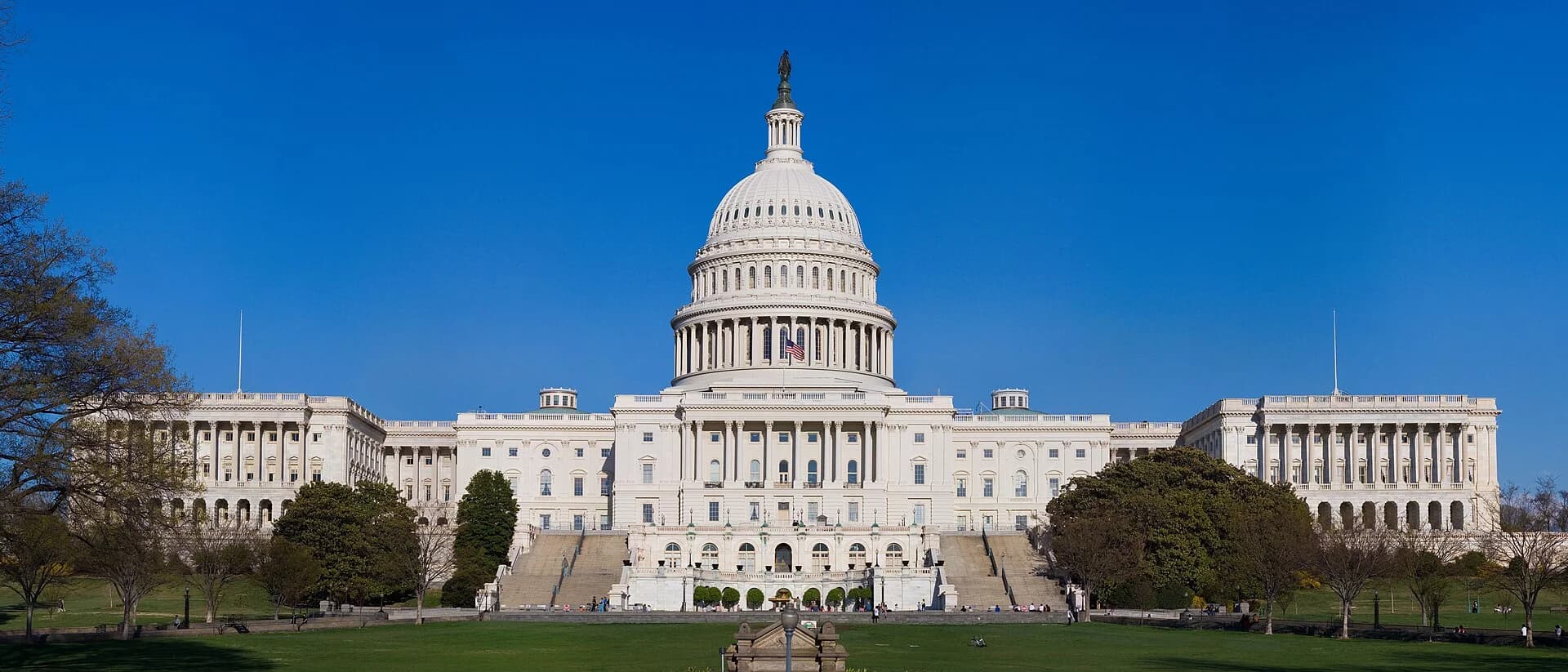
Cover image: United States Capitol, public domain, via Wikimedia Commons.