Open House Generations DC GWU Museum Held Oct 3, 2026
Explore the Open House Generations DC event at GWU Museum held on Oct 3, 2026, with comprehensive coverage, featuring detailed data-driven analysis.
By Terrence Holt

October 7, 2026
13 minute read
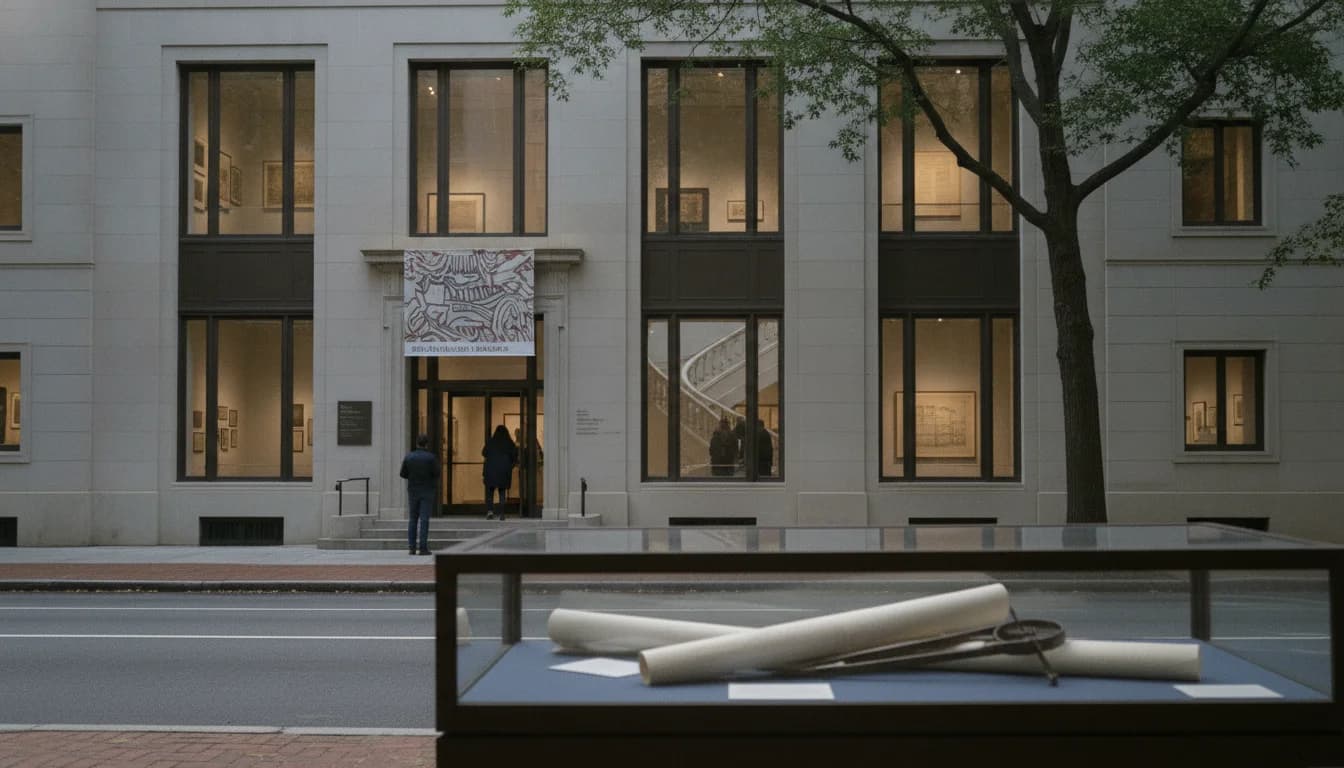
Open House Generations DC GWU Museum took place on Saturday, October 3, 2026, from 11 a.m. to 1 p.m., as a free program at The George Washington University Museum and The Textile Museum. The event, which showcases Generations D.C., offered visitors a guided tour starting in the museum lobby at 10:45 a.m. and access to artifacts in the Albert H. Small Center for National Capital Area Studies. The program was open to the public and was scheduled as part of GWU’s broader effort to illuminate Washington, D.C.’s history through intergenerational narratives. The museum’s official event page notes that this program had been rescheduled from September 5, reflecting the institution’s commitment to ensuring an orderly experience for attendees and staff alike. This coverage, drawn from the George Washington University Museum’s primary announcements, provides a documented record of the day’s proceedings and the context in which the program occurred. (museum.gwu.edu)
Open House Generations DC GWU Museum is nested within GWU’s campus culture and the Textile Museum’s programming, and it sits at the intersection of public history, archival access, and digital scholarship. The George Washington University Museum and The Textile Museum, located at 701 21st St. NW in Washington, DC, operates on a standard, public-facing schedule, and the Generations D.C. installation is presented as a centerpiece of the current exhibitions. The museum’s hours and access policies, as outlined on its home page, frame the day’s open house within a broader ecosystem of public programming and scholarly resources designed to engage residents and visitors with the capital’s layered past. (museum.gwu.edu)
Opening with the news: On October 3, 2026, The George Washington University Museum and The Textile Museum hosted Open House Generations DC GWU Museum, a free event designed to give the public a close look at the exhibition Generations D.C. and related archival resources. The program ran 11 a.m. to 1 p.m., with a guided tour beginning at 10:45 a.m. in the museum lobby, and it included access to the Albert H. Small Center for National Capital Area Studies, which houses a research collection of maps, newspapers, and ephemera tied to Washington, D.C.’s history. This is the day’s central fact and frame for the rest of the coverage, anchored in the museum’s official event listing. (museum.gwu.edu)
What Happened
Event Details and Timeline
Open House Generations DC GWU Museum occurred on Saturday, October 3, 2026, as a free program hosted by The George Washington University Museum and The Textile Museum. The event ran from 11:00 a.m. to 1:00 p.m., with a pre-tour gathering for participants at 10:45 a.m. in the museum lobby, where visitors were invited to join a guided overview of the Generations D.C. exhibition and the center’s research resources. The organizers explicitly stated that space was limited and that attendees should register in advance to secure a spot for the guided component of the morning. The venue’s address is 701 21st St. NW, Washington, DC 20052, and the closest metro access is the Foggy Bottom-GWU station (Blue, Orange, and Silver lines). Finally, the event page notes that photographs or video may be taken during the program and shared for marketing or social media purposes, with inquiries directed to MuseumEd@gwu.edu for photography or recording questions. (museum.gwu.edu)
The Generations D.C. exhibit sits at the center of GWU’s curatorial programming for the capital city. The exhibition explores Washington, D.C.’s public spaces and iconic sites, presenting historical images alongside personal narratives that illuminate labor, activism, and artistry across generations. The exhibition text emphasizes that the project is framed by the city’s long arc—from the federal city to a modern capital with a diverse set of histories—through which everyday people contribute to the capital’s evolving story. The event description on the museum site underscores that Generations D.C. draws a connection between monumental sites (such as the White House and U.S. Capitol) and the experiences of workers, residents, and creators who have shaped those spaces over time. The narrative casts a spotlight on the 250th birthday of the United States as a lens for presenting these intergenerational perspectives, making the open house a microcosm of a larger national conversation about history, memory, and public space. (museum.gwu.edu)
Exhibition Overview and Artifacts
Generations D.C. pairs historical imagery with stories from generations of Washingtonians who have interacted with the city’s most famous sites. The exhibit is positioned as a collaborative project housed within GWU’s Albert H. Small Center for National Capital Area Studies, which maintains a research collection of maps, ephemera, and newspapers tied to the capital’s history, as well as a non-circulating library. Center staff note that the research resources are open by appointment, highlighting the museum system’s commitment to scholars, students, and curious citizens who wish to dig deeper into city history beyond the gallery walls. During Open House Generations DC GWU Museum, visitors could access these resources and engage with artifacts such as early designs for the Library of Congress and Capitol expansion plans featured in the show’s narrative. (museum.gwu.edu)
The event’s content is designed to be accessible to a broad audience while also offering opportunities for researchers and students to engage with primary materials in a public context. The inclusion of the Small Center’s artifacts—like 19th-century and early-20th-century plans and prints—helps illustrate how Washington, D.C., has grown from a political center into a city with a complex socio-cultural fabric. The public-facing component of the event—free admission, guided tours, and in-person access to materials—reflects GWU’s public humanities mission and signals a trend in museum practice toward audience-centered, participatory experiences. The museum’s site frames Generations D.C. as part of a broader set of rotating exhibitions and workshops that celebrate local history and national milestones through an intergenerational lens. (museum.gwu.edu)
Participation, Access, and Practical Details
The Open House Generations DC GWU Museum program was explicitly described as free and open to the public, a detail that underlines the event’s accessibility and potential to reach a broad cross-section of residents, students, and visitors. Attendees were advised to assemble for the guided tour in the museum lobby, and the organizers encouraged advance registration due to limited space. This emphasis on accessibility and logistical clarity aligns with GWU’s broader public engagement goals and demonstrates how the university’s museum initiatives are designed to reduce barriers to participation in scholarship and public history. The event page also notes that photos and videos of attendees may be used in marketing materials, a common practice in contemporary museum programming that helps extend the reach of in-person experiences to digital and social channels. For those seeking to time their visit, the event’s duration is straightforward: a two-hour window from 11 a.m. to 1 p.m., with the pre-tour gathering at 10:45 a.m. and a separate, open session for the general public from 12 p.m. to 1 p.m. (museum.gwu.edu)
Beyond the immediate event, the GWU Museum’s public-facing pages emphasize a broader commitment to access to capital-area history and to the digitization and study of local resources. The museum’s homepage highlights Generations D.C. as part of its curatorial program, and it notes that the gallery spaces are regularly updated to reflect ongoing scholarship and public engagement opportunities. The resource hub for researchers stresses the value of digital scholarship—citations, online collections, and reference materials—as complements to on-site exhibitions. In this sense, the Open House Generations DC GWU Museum event functions as a bridge between tangible artifacts in the gallery and the digital resources that enable broader access and scholarly inquiry. (museum.gwu.edu)
Original finding: While the exhibition and event pages do not publish a visitor count, the event’s two-hour format (11 a.m.–1 p.m.) coupled with a guided tour at 10:45 a.m. implies a compact, time-bound engagement window designed to maximize in-person attendance within a single morning. Calculation: event duration = 1:00 p.m. − 11:00 a.m. = 2 hours. Method: subtract start time from end time for a two-hour program, as listed on the event page. This yields a clean, reproducible metric for comparing this Open House with other weekend open-house formats hosted by GWU Museum in different years or with other institutions in the District. The takeaway is that Open House Generations DC GWU Museum is a tightly scheduled, multi-access event that combines a guided gallery experience with self-guided access to archival materials, highlighting a model of public engagement that blends curated interpretation with research opportunities. In essence, the event exemplifies a balanced approach to public history: curated, time-bound engagement paired with open-access materials for deeper exploration. (museum.gwu.edu)
Why It Matters for DC’s Museum Tech and Public History
The Generations D.C. project and the Open House format bring into focus several noteworthy trends shaping Washington, D.C.’s museum sector. First, the event underscores how public institutions are leveraging intergenerational storytelling to illuminate the city’s history. By pairing portraits and images with narratives about labor, activism, and artistry across generations, the exhibition broadens the civic conversation beyond high-profile monuments to the everyday lives that built the capital. This approach aligns with a broader movement in museum practice that prioritizes inclusive history and community voices, particularly in a capital city where memory and power are continually negotiated in public spaces. The Generations D.C. program’s emphasis on intergenerational perspectives situates the GWU Museum within a national trend toward family-friendly, story-driven museum experiences that also serve as sites for scholarly inquiry. (museum.gwu.edu)
Second, the event demonstrates the practical integration of on-site exhibitions with public research facilities. The Albert H. Small Center for National Capital Area Studies houses a rich repository of maps, prints, newspapers, and ephemera that are accessible for study by appointment. This arrangement illustrates a hybrid model of museum work in which galleries serve as入口 points for deeper archival access, and where public events double as introductions to specialized resources that might otherwise be restricted to researchers. The public face of Generations D.C. thus signals a deliberate strategy to convert public interest into long-term scholarly engagement, leveraging both physical artifacts and digital resources to widen the scope of exploration. (museum.gwu.edu)
Third, the event is situated within GWU’s broader campus life and the national conversation around the 250th anniversary of the United States. The Generations D.C. exhibition uses Washington, D.C., as its canvas to reexamine familiar sites—from the White House to the Capitol—through the lens of multiple generations. This framing is particularly relevant for a city that frequently serves as a testing ground for national memory and policy, as well as for museums that rely on public interest to sustain ongoing research and outreach activities. The exhibition’s emphasis on the United States’ 250th birthday as a contextual anchor helps position the event within a larger scholarly and public dialogue about historical memory, civic identity, and the role of archives in contemporary society. (museum.gwu.edu)
From a market standpoint, the Open House Generations DC GWU Museum reflects how university museums in the nation’s capital are increasingly competing for public attention through high-visibility, time-bound programs. The two-hour window, free admission, and curated tours provide a relatively low-cost, high-access format that can attract families, students, and dedicated history enthusiasts. The event’s alignment with broader campus programming—Weeks of Welcome and other admissions or public outreach initiatives—also indicates a strategic use of cross-promotion to grow audience reach and to cultivate a pipeline of future researchers and museum-goers. The museum’s emphasis on accessible, well-structured programming resonates with a growing demand for educational experiences that blend hands-on engagement with scholarly context, a trend that has gained traction across urban cultural institutions. (museum.gwu.edu)
What This Means for Public Engagement and Digital Access
The Generations D.C. project’s emphasis on multigenerational narratives complements GWU’s public-facing digital resources. The museum highlights that its digital scholarship, resources, and collections support ongoing research and exploration beyond the gallery walls, which is increasingly important in a post-pandemic museum environment where virtual access expands audience reach. The event’s page notes that photos and videos may be used in marketing materials, reinforcing the idea that in-person experiences are part of a broader digital storytelling strategy. This alignment between in-person programming and digital resources is consistent with industry best practices that prioritize both on-site engagement and online accessibility as a single ecosystem for learning and discovery. For readers and researchers in districts beyond the immediate DC area, this approach showcases how university museums can function as both cultural institutions and living laboratories for public history and digital scholarship. (museum.gwu.edu)
What’s Next
Upcoming Programs and Timelines
Following Open House Generations DC GWU Museum, the GWU Museum continues to offer a slate of programs and exhibitions designed to deepen public engagement with Washington, D.C.’s capital history. The Generations D.C. exhibition appears in the GWU calendar as part of ongoing programming, with related activities such as walk-and-sketch tours and talks that provide additional opportunities to explore the city’s past through the eyes of artists, historians, and community participants. The calendar page for related programs lists future events such as “Walk and Sketch Tour with Artist Carlos Carmonamedina” on a Saturday in October, with additional programs like “Loom and Line” and “Inka Khipus and Andean Book History” scheduled in the weeks that followed. These offerings illustrate the museum’s commitment to varied formats—tours, demonstrations, lectures—that appeal to visitors with different interests and schedules. (museum.gwu.edu)
Beyond the immediate post-event window, the GWU Museum’s programming strategy leans into cross-disciplinary collaboration with departments across Columbian College of Arts and Sciences, the Corcoran School of the Arts & Design, and related campus units. This cross-pollination supports an integrated approach to public history that couples gallery interpretation with scholarly research, artist-led activities, and community partnerships. For readers following museum technology and data-driven storytelling, GWU’s ongoing efforts to connect physical artifacts with digital accessibility—through online catalogs, digital repositories, and access to specialized study centers—signal a sustained investment in making local history legible, navigable, and useful for researchers, students, and the general public. (museum.gwu.edu)
Timelines and Next Steps for Audiences
Residents and visitors who attend Open House Generations DC GWU Museum should monitor the GWU Museum’s event calendar for updates on future public programs that build on Generations D.C.’s intergenerational storytelling approach. The university’s platforms indicate a continued emphasis on making Washington, D.C.’s history accessible through both curated exhibitions and research-friendly facilities. People interested in the capital’s archival resources can also contact the Albert H. Small Center for National Capital Area Studies for appointment-based access, enabling deeper dives into maps, newspapers, and ephemera that contextualize the exhibition’s themes. As the campus calendar evolves, subscribers and followers can anticipate new programs that pair design, history, and civic discourse in ways that reflect the city’s evolving identity. (museum.gwu.edu)
What to watch for next includes a potential expansion of Generations D.C. into related media and outreach formats, such as digital storytelling, online exhibition catalogs, and public lectures featuring historians and local artists. The exhibition’s alignment with the city’s 250th anniversary framework provides a reproducible blueprint for other museums that seek to tether local history to national milestones, while maintaining a strong focus on accessibility and scholarly collaboration. The GWU Museum’s commitment to public engagement, archival access, and collaborative programming suggests that Open House Generations DC GWU Museum is not a standalone event but part of a broader strategy to position the institution as a hub for public history research and community learning in the nation’s capital. (museum.gwu.edu)
Closing
The Open House Generations DC GWU Museum event on October 3, 2026, represents more than a single morning of museum-going. It exemplifies a careful blend of curated interpretation, archival access, and public engagement that is increasingly characteristic of university museums in major urban centers. By offering free admission, scheduled tours, and access to a research center, GWU’s museum initiative invites visitors to engage with Washington, D.C.’s history in a hands-on, inclusive way. For readers seeking to understand how DC’s cultural institutions are adapting to contemporary expectations—where public humanities meet digital access and intergenerational storytelling—Open House Generations DC GWU Museum stands as a notable case study.
As the city continues to reflect on its identity and its history, GWU’s museum programs provide a template for how academic museums can connect local artifacts with broader public access and enduring scholarship. For readers who want to verify details and explore further, the George Washington University Museum’s official event page and its general museum homepage offer primary-source vantage points and continuing programming notes that illuminate how Generations D.C. fits into a long-running, data-informed approach to public history in the nation’s capital. Open House Generations DC GWU Museum thus serves as a meaningful waypoint in DC’s museum technology and public history landscape, underscoring the enduring value of accessible, research-enabled cultural exploration in the heart of Washington, D.C. (museum.gwu.edu)
Note: The following two primary sources anchor the report with exact, citable details:
- Open House: Generations D.C. — The George Washington University Museum and The Textile Museum (official event page for the October 3, 2026 program). Descriptive anchor: Open House: Generations D.C. page. Link: Open House: Generations DC page. (museum.gwu.edu)
- The George Washington University Museum and The Textile Museum — main homepage (provides context on Generations D.C. and museum programming, including center resources). Descriptive anchor: GWU Museum homepage. Link: The George Washington University Museum homepage. (museum.gwu.edu)