DC Enacts Emergency Broadband Price Transparency Act
The District of Columbia has enacted the Broadband Price Transparency Regulation Emergency Amendment Act, establishing a 90-day period to align local…
By Terrence Holt

November 21, 2026
12 minute read
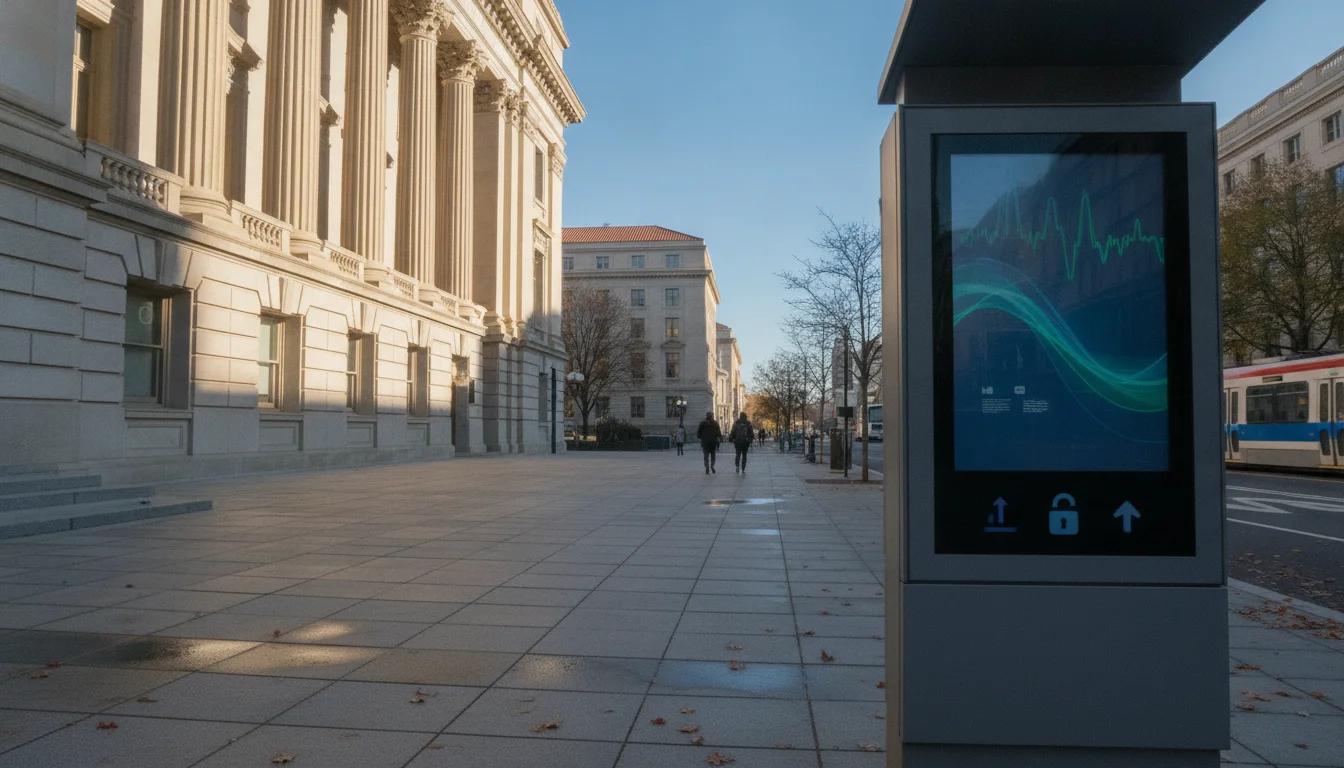
On October 20, 2026, the District of Columbia enacted the Broadband Price Transparency Regulation Emergency Amendment Act of 2026, creating a 90-day emergency window to align local price transparency requirements with federal broadband disclosure rules. This action marks a pivotal moment for how the city regulates the sale of broadband services and how providers must present pricing information to consumers. The central fact of the move is that the emergency legislation adds a new provision, 28-3904a, to the District of Columbia Official Code to harmonize local rules with federal standards on price transparency. This fact comes directly from the enacted act, D.C. Act 26-435. (code.dccouncil.gov)
The decision arrived through the District government’s legislative process and is intended to take effect immediately upon mayoral action, remaining in place for a maximum of 90 days. The emergency framework is designed to ensure rapid alignment with federal labeling requirements while the council considers longer-term consumer protection updates. The emergency framework and the new section 28-3904a are described in the act’s text and accompanying legislative notes, including the note that the emergency provision will expire after 90 days, or on January 18, 2027, whichever comes first. The expiration timing is explicitly stated in the DC Chapter 39 consumer protection procedures context, which references the emergency provision created by the act. (code.dccouncil.gov)
Washington’s and DC’s broadband policy environments are increasingly shaped by federal labeling requirements that aim to make plan costs, fees, and terms transparent at the point of sale. The federal framework, including the FCC’s approach to broadband consumer labels, provides important context for DC’s local adaptation. The federal rulemaking and related disclosures emphasize itemizing monthly fees and distinguishing pass-through costs, among other transparency elements, as part of consumer-facing disclosures. This broader federal backdrop informs why the DC council chose to enact an emergency measure now. (public-inspection.federalregister.gov)
Opening paragraph (expanded): The move to implement D.C. Act 26-435 on October 20, 2026, reflects a district-level strategy to harmonize price transparency in broadband with federal disclosure norms. The act specifically adds a new standard, 28-3904a, to the District’s consumer protection framework, allowing a broadband merchant who complies with the broadband consumer label requirements of 47 C.F.R. § 8.1 as those requirements existed on January 1, 2026, to be deemed compliant with the district’s price transparency rules. The emergency nature of the bill means these rules apply promptly for a 90-day window, after which the council and mayor may determine next steps in a longer-term policy approach. The immediate significance lies in enabling faster alignment with federal labeling practices while preserving district-level oversight. (code.dccouncil.gov)
Section 1: What Happened
Background of the Legislation
The act with the short title “Broadband Price Transparency Regulation Emergency Amendment Act of 2026” was enacted as an emergency measure to amend Chapter 39 of Title 28 of the DC Official Code. The legal text adds 28-3904a, a new section titled “Special price information standard for broadband services complying with federal rules.” In practical terms, the provision deems compliant certain DC price transparency requirements for merchants that also meet the federal broadband consumer labeling standard described in 47 C.F.R. § 8.1 as it existed on January 1, 2026. The purpose is to ensure that DC price transparency rules recognize and align with federal labeling practices, reducing redundancy and consumer confusion in a rapidly evolving regulatory environment. For readers seeking the exact statutory language, the act text is available in the DC Law Library’s act record and code compendium. (code.dccouncil.gov)
The act also includes a clear applicability clause linking its effective date to the “Enhancing Consumer Protection Procedures Amendment Act of 2026,” which was enacted on June 25, 2026. This interplay signals that DC policymakers are situating emergency latitude within a broader framework of consumer protection reforms already underway in the 26th Council session. The transitional language helps explain why the emergency act references existing DC law as the baseline for implementation. (code.dccouncil.gov)
The emergency designation means the act is temporary by design. DC’s legal framework for emergency acts allows a 90-day duration, after which subsequent steps would be taken to determine whether to extend, modify, or sunset the rule. The DC Code commentary confirms the temporary nature of emergency provisions and notes that the emergency section was drafted to expire, allowing time for more thorough, long-form regulatory consideration. This context is important for readers who want to understand the longer arc of DC’s price transparency policy. (code.dccouncil.gov)
Timeline of Action
October 20, 2026: The act becomes law as a council-authored emergency amendment, with the new 28-3904a provision immediately available for enforcement as part of the District’s price transparency regime. The district’s official code and the act page provide the date and the operative sections, establishing the immediate path for compliance discussions with broadband providers. The idea behind the timing is that the district wants to acknowledge federal labeling practices without waiting for a full, longer-term regulatory rewrite. (code.dccouncil.gov)
September 2026 to October 2026: Pre-enactment discussions and committee work in the DC Council show the legislative appetite for timely alignment with federal standards and for addressing concerns from providers and consumer advocates alike. While the act itself codifies the emergency rule, the surrounding council materials provide context for the 90-day window and the intended direction of the policy. The Council’s public records for the week of September 21–25, 2026 capture the legislative activity that culminated in the enacted measure, including references to B26-0782 and related proceedings. (dccouncil.gov)
January 18, 2027 (approximate expiry): The emergency provision, by its design, is expected to expire no later than January 18, 2027. The DC Chapter 39 note explicitly states that the emergency provision can be expected to terminate on that date, creating a hard policy inflection point for lawmakers to decide next steps. This expiry date is a critical data point for readers analyzing the policy’s impact window and for businesses planning pricing disclosures beyond the emergency horizon. (code.dccouncil.gov)
Optional extension or revision: As with most emergency measures, the next stage involves legislative consideration of whether to extend, replace, or sunset the emergency framework with a more permanent standard. While the act itself does not specify an extension mechanism, the council and district regulators typically explore longer-term consumer protections, potentially incorporating feedback from providers, consumer groups, and data on the effectiveness of the emergency framework. The public records and act text indicate that such deliberations are expected to follow the emergency period. (dccouncil.gov)
What Happened: Key Provisions in Plain Language
28-3904a establishes a “special price information standard” for broadband services that comply with federal labeling rules. In practice, this means a merchant providing broadband internet access that adheres to the broadband consumer label requirements of 47 C.F.R. § 8.1 as those rules existed on January 1, 2026, will be deemed compliant with DC’s pricing transparency requirements, at least to the extent DC law and the federal standard overlap. This approach reduces potential conflicts between DC’s local price disclosures and federal disclosures, while still maintaining a DC-specific enforcement framework for other aspects of price transparency. The statutory language and its cross-reference to federal rules are codified in the act text. (code.dccouncil.gov)
The act’s timing and scope reflect a balance between rapid alignment with federal practice and recognition that the DC government intends to revisit, refine, or replace the emergency measures with a more enduring policy once a thorough review is complete. The “effective date” clause ties to another DC consumer protection reform—the Enhancing Consumer Protection Procedures Amendment Act of 2026—indicating a broader reform effort rather than a one-off change. This structural design is important for readers who want to understand how DC philanthropy for consumer protection intersects with real-world pricing disclosures in the broadband market. (code.dccouncil.gov)
Section 2: Why It Matters
Impact Analysis: Consumers, Providers, and Government Oversight
For consumers, the key question is clarity and comparability. By allowing DC to deem compliance for providers who follow the federal broadband label framework, DC aims to ensure that pricing information at the point of sale remains legible and consistent with what customers already see in federal disclosures. The federal framework emphasizes itemized fees and a clear representation of total monthly costs, including disclosures about introductory rates and subsequent charges. In DC, this alignment has the potential to reduce confusion at the point of sale and to streamline the consumer decision process as people compare plans. Experts note that this alignment could lead to more uniform consumer experiences across state lines in the early stages of market maturity for broadband pricing disclosures. The federal standard context is widely documented in the federal rulemaking materials and public notices. (public-inspection.federalregister.gov)
For broadband providers, the emergency amendment creates a transitional path to DC compliance that mirrors federal labeling expectations. Providers that already display the required broadband consumer label under federal rules may be deemed compliant with DC’s price transparency standard during the emergency period. This reduces duplicative reporting burdens in the short term while preserving the district’s ability to enforce price transparency for other non-federal aspects or for plans that do not fall under the federal label framework. The DC act text explicitly ties the local standard to compliance with the federal label requirements, offering a clear incentive for providers to align quickly with federal disclosures to maintain consistency across markets. (code.dccouncil.gov)
For government oversight, the emergency act provides a quick mechanism to synchronize local and federal expectations while the city assesses longer-term policy options. The statute’s temporary nature means policymakers will evaluate outcomes during the 90-day window and consider whether to codify a longer-term approach, modify the emergency trigger, or sunset the alignment in favor of alternative consumer protections. The DC Council document trail around late September 2026 shows the legislative activity leading to the enactment, highlighting the political and administrative drivers behind this rapid adoption. (dccouncil.gov)
Economic and Market Context: Why Now?
The timing aligns with a broader national movement toward enhanced price transparency in essential communications services. Federal regulators have been pushing for standardized disclosures to help consumers understand ongoing costs, service features, and potential price changes. The DC action mirrors this national trend while reflecting local needs and the DC market’s characteristics, including the mix of large national providers and regional players that serve the district. The federal rulemaking materials outline the rationale for transparency, including the need to make price components clear to consumers at the point of sale. DC’s approach demonstrates a willingness to adopt federal best practices quickly while maintaining its own enforcement authority. (public-inspection.federalregister.gov)
Analyst perspectives emphasize that the emergency amendment is a test case for how DC can manage price transparency in a dynamic, evolving market. If the emergency window demonstrates tangible benefits for consumers—clearer pricing, fewer surprise charges, and easier comparison shopping—lawmakers may pursue a more durable framework. If, by contrast, the emergency period reveals gaps or unintended consequences (for example, misalignment with certain innovative pricing structures or promotional models), the city could adjust the approach in subsequent legislation. The week-by-week council records and the Act’s text provide the framework for such a continuous evaluation. (dccouncil.gov)
What This Means for DC’s Tech and Market Trends
The act underscores DC’s intent to keep pace with federal standards while maintaining local governance over consumer protections. This approach could influence how broadband competition and pricing practices evolve in DC, potentially encouraging more standardized disclosures among providers that operate nationally as well as within the district. Observers will watch for any shifts in provider pricing strategies, labeling practices, and consumer responses during the emergency window, which could inform the design of DC’s next steps in tech policy and market regulation. The federal labeling framework and DC’s emergency amendment together create a testbed for price transparency in a high-demand urban market. (public-inspection.federalregister.gov)
In addition to price transparency, the policy intersects with other consumer protections initiatives under the Enhancing Consumer Protection Procedures Amendment Act of 2026. This broader reform effort signals a district-wide push to coordinate rules across consumer services, including those delivered via broadband networks. For readers tracking DC’s tech policy evolution, the interlinking of these acts is a noteworthy signal about the direction of district governance in the digital economy. The connection to the earlier act provides essential context for understanding the policy’s trajectory. (code.dccouncil.gov)
Section 3: What’s Next
Timeline, Next Steps, and Watch Points
The emergency window’s expiration on January 18, 2027, looms as the defining deadline for the next phase of DC broadband price transparency policy. Policymakers will assess the effectiveness of alignment with federal labeling rules, whether consumers have benefited from clearer pricing, and what adjustments may be needed to accommodate evolving broadband business models (such as new promotional pricing schemes or bundled services). Observers should monitor council hearings, amendments, and potential extension or modification proposals as the emergency period progresses. The explicit expiration date is documented in the Chapter 39 notes and the act’s text. (code.dccouncil.gov)
Potential extensions or a longer-term framework: Depending on stakeholder feedback and the observed market outcomes, DC could pursue a more durable price transparency standard that preserves the alignment with federal labels while addressing any gaps unique to the district. The legislative trail, including the Week 9/21/2026 council materials, provides a baseline for what a longer-term proposal might look like and which agencies would be involved in implementation and enforcement. Readers should expect updates from the DC Council as the deadline approaches and as public input is collected. (dccouncil.gov)
Compliance considerations for providers: For telecoms and ISPs operating in DC, the emergency rule emphasizes adherence to federal broadband label requirements as of January 1, 2026, to satisfy DC’s price transparency standards during the 90-day window. Providers should review their DC touchpoints—website disclosures, in-store materials, and any point-of-sale channels—to ensure the label information is presented in a manner consistent with both federal and DC expectations. Given the emergency nature, enforcement activity could be brisk, and DC regulators may issue guidance or case-by-case interpretations as they monitor market responses. The act text and federal labeling context are the best sources for determining exact compliance mechanics during the window. (code.dccouncil.gov)
What to watch for in data and reporting: As with other price transparency initiatives, key metrics to track include the frequency and nature of consumer inquiries, any observed reductions in billing surprises, and the prevalence of price-related misunderstandings in the DC market. District regulators may also publish reports or dashboards to illustrate the policy’s impact during the emergency period. Observers should look for such updates from DC agencies and the Council as the 90-day window unfolds. The legislative trail and the emergency provisions provide the framework for these assessments. (code.dccouncil.gov)
Closing
The District of Columbia’s swift move to implement the Broadband Price Transparency Regulation Emergency Amendment Act of 2026 reflects a pragmatic approach to aligning local price transparency with federal labeling requirements. By design, the act creates a narrow, 90-day window in which DC can evaluate the immediate effects of harmonizing these disclosures while preserving a pathway for longer-term policy development. For readers in the DC technology and policy communities, this moment offers a clear signal: local regulators are actively pursuing clarity in how broadband prices are disclosed, with an eye toward consistency with federal standards and a willingness to adapt as the market evolves.
Staying updated will require following the District’s official publications and legislative records. The primary sources for today’s reporting—the act itself and the DC Council’s legislative materials—offer the most direct pathways to verify the legal text, the timing, and the emergency framework. Additionally, readers should consult federal labeling guidance to understand the baseline expectations providers must meet to align with both DC and federal rules. As DC moves through the emergency period and into the next phase of policy development, the city’s approach to broadband price transparency could become a model or a cautionary tale for other jurisdictions seeking to reconcile local and federal consumer protections in fast-moving technology markets. For ongoing coverage, official DC sources and federal rulemaking documents remain the anchors for accuracy and context. (code.dccouncil.gov)