Olympian Charged with Vandalizing Reflecting Pool
David Hearn, a former Olympic canoeist, was indicted for felony destruction of property related to damage at the Lincoln Memorial Reflecting Pool,…
By Terrence Holt
October 2, 2026
13 minute read
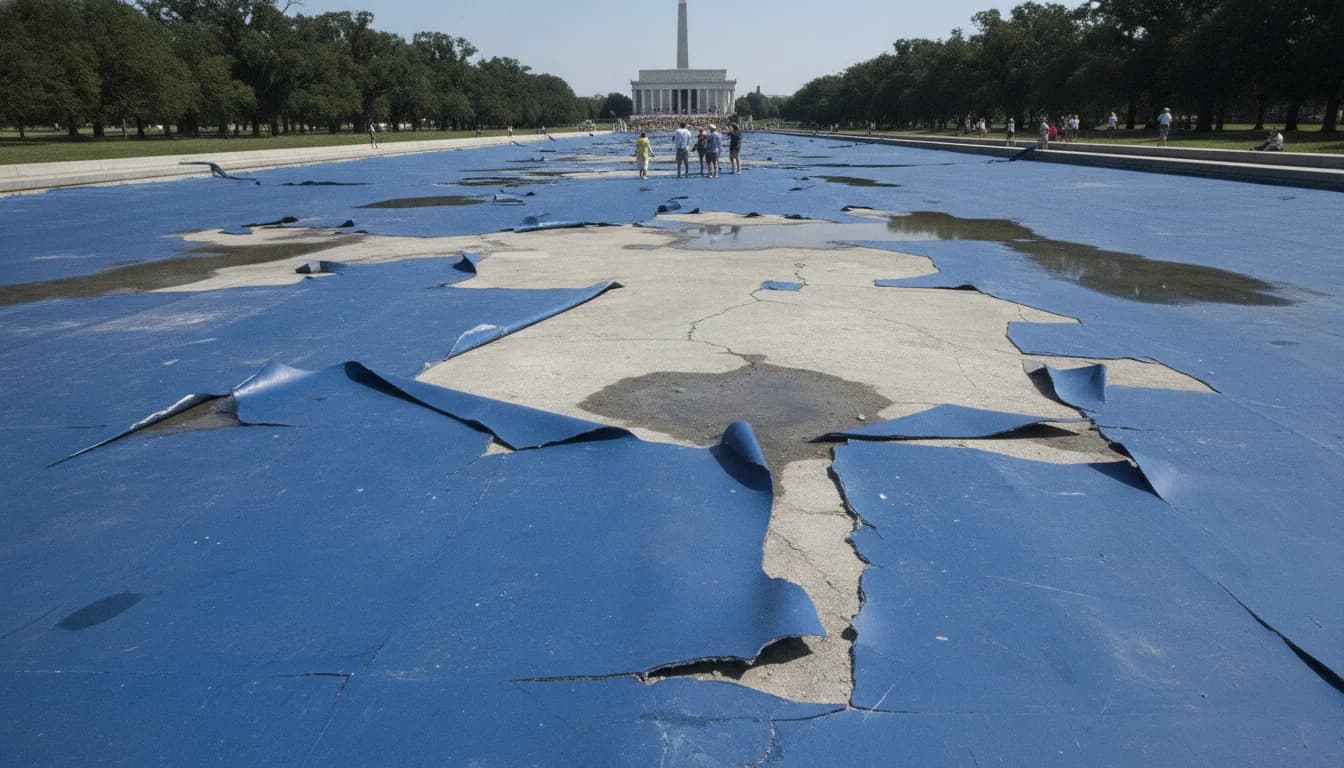
In Washington, D.C., the Reflecting Pool vandalism case took a decisive turn on July 2, 2026, when a District of Columbia grand jury returned an indictment against former Olympic canoeist David Hearn for one count of felony destruction of property in connection with damage to the Lincoln Memorial Reflecting Pool. This development placed the Lincoln Memorial renovation and the broader America 250 effort squarely in the crosshairs of criminal accountability discourse, while also elevating questions about how such investigations are conducted in a high-profile national monument setting. The legal action follows a June 19, 2026 incident at the pool, during a period of heightened public attention surrounding the ongoing maintenance and refurbishment of the pool’s blue liner and surrounding infrastructure. According to the U.S. Department of Justice, on July 2, 2026, a grand jury in the District of Columbia Superior Court returned an indictment charging David Hearn, 67, with one count of felony destruction of property in connection with damage to the Lincoln Memorial Reflecting Pool. This liftable fact anchors the day’s news and provides a concrete starting point for understanding what happened, why it matters, and what comes next. DOJ indictment press release
The Reflecting Pool vandalism case quickly evolved from a headline into a courtroom timeline, with arraignments, motions, and then a series of strategic courtroom decisions that raised questions about how prosecutors frame cases tied to highly visible public works. As the case moved through pretrial proceedings, observers focused on both the legal mechanics of a grand-jury indictment in a local court and the broader policy implications of how government agencies respond when evidence suggests complex maintenance issues rather than deliberate vandalism. This open, data-driven coverage is essential for readers who follow the intersection of public infrastructure, criminal law, and the technology that underpins investigations in high-profile public spaces. The event and its surrounding discussion have immediate relevance for policy makers, contractors, and the public who rely on timely, precise information about the state of national monuments.
What Happened
Indictment Details
The central fact in this section is the formal charging of David Hearn, a former Olympic athlete, in a case tied to damage at the Lincoln Memorial Reflecting Pool. The indictment, issued by a Superior Court grand jury, charges a single count of felony destruction of property under D.C. Code § 22-303, reflecting that the alleged wrongdoing involves property of substantial value and a deliberate acts that damaged the pool’s structural components. The indictment marks the transition from preliminary investigations to formal criminal proceedings, a crucial step in how capital- and landmark-quality maintenance disputes are interpreted through the criminal lens. The specific charge outline states that the property damage was in excess of a threshold that elevates the charge to a felony category, a point frequently reported in the coverage of this case. For readers seeking the formal charging document, the Department of Justice’s press release provides a clear articulation of the indictment’s scope and context. See the official DOJ release for the indictment details. DOJ indictment press release
The Incident Timeline
- June 19, 2026: The incident date associated with the pool damage. Early reporting and subsequent filings describe the pool’s blue liner and adjacent sealing work as focal points of the alleged incident, with authorities noting that the damage occurred in the context of an ongoing refurbishment project. The precise act alleged—destruction of property tied to the pool’s liner—was central to the indictment and subsequent defense arguments. A number of outlets referenced the June 19 date in their initial reports, and court filings later framed the event within the broader renovation project that was formally underway. For reference, the event is described in detail across multiple outlets, including contemporaneous courtroom coverage. See the related docket and press materials for the prosecution’s framing of the June 19 incident.
- The initial indictment followed an investigation that involved Park Police and the U.S. Attorney’s Office for the District of Columbia, and later documents indicated that the investigation expanded to consider other related incidents near the Reflecting Pool during the same period. The DOJ’s release specifically ties the indictment to the June 19 incident and notes that the pool’s condition was a product of a broader construction and maintenance schedule. DOJ indictment press release
- July 2, 2026: Grand jury returns indictment for one count of felony destruction of property. This date is the formal charging moment that set the trajectory for pretrial proceedings, arraignments, and subsequent pretrial litigation. The indictment date is consistently cited across the DOJ release and court-docket summaries. DOJ indictment press release
- July 9, 2026: Arraignment and not-guilty plea. Hearn was arraigned in the local DC Superior Court and entered a plea of not guilty, with a status hearing set for later proceedings. This step reflects standard procedure in DC Superior Court criminal practice for a felony allegation of destruction of property. The docket summary and coverage show the arraignment date and the initial pretrial posture. BrynoDC docket summary
- July 31, 2026: Government moves to dismiss the indictment without prejudice after new information from the Interior Department undermines the vandalism theory. This milestone demonstrates how evolving evidence can shape prosecutorial strategy, particularly when additional documents suggest an alternate explanation for observed pool damage. The docket tracks the government’s motion to dismiss and the arguments surrounding whether the dismissal should be without or with prejudice. BrynoDC docket summary
- August 6, 2026: Judge dismisses the indictment without prejudice. The court’s order granted the government’s motion to dismiss the indictment without prejudice, preserving the option to refile should new evidence warrant recharging the defendant. This decision captured attention for its procedural significance and its implications for how similar cases might be managed when a broader maintenance issue is implicated. UPI coverage of dismissal
- August 6–October 1, 2026: Ongoing filings and consolidation of related matters. In the weeks following the initial dismissal, the judges and parties continued to litigate related motions, and consolidation orders tied together multiple Reflecting Pool cases for management of discovery and related issues. These docket movements are documented in public trackers and DocumentCloud-style repositories that mirror the court’s public docket activity. This phase illustrates how a single incident can cascade into an interconnected set of related cases as agencies reconcile investigative facts and potential liabilities. BrynoDC docket entries; related docket commentary
- October 1, 2026: Final dismissal with prejudice. In a later order, the court permanently dismissed the Reflecting Pool case against David Hearn with prejudice, effectively barring future charges on the same allegations. The ruling was widely reported and interpreted as a turning point in a case that had become a focal point of national attention to the pool renovation and to the accountability question surrounding the regime of enforcement in landmark maintenance. This final disposition is reflected in major outlets and summarized in subsequent legal coverage. AP News summary of dismissal
Official Submissions and Defense
Defendants in this matter contested the government’s rationale for the indictment, arguing that evidence provided by the Interior Department should have been disclosed earlier and that the pool damage resulted from a flawed installation rather than vandalism. The public record shows defense counsel pushing for disclosure of grand jury materials and arguing that the government relied on evidence that did not meet the standard for criminal liability under the DC Code provisions in play. The docket and public filings document these arguments, and several of the court filings were made available through DocumentCloud and court-record repositories. This interplay between the prosecution’s theory and the defense’s counter-arguments is a core aspect of the Reflecting Pool vandalism case’s early-stage dynamics. See the docket page for the case (including listed motions to disclose grand jury materials and related papers). Docket page and filings
Why It Matters
Public Policy and Oversight
The Reflecting Pool vandalism case occurred at the intersection of public monument maintenance, high-profile renovation, and criminal accountability. The Lincoln Memorial Reflecting Pool renovation, a centerpiece of the America 250 celebration, was designed to modernize infrastructure, address long-standing maintenance concerns, and preserve a symbol of national memory. The indictment, followed by rapid discovery and contested evidence, underscored how public policy decisions—especially those tied to national prestige projects—can become entangled with criminal process when questions arise about responsibility for damage and the integrity of the evidence used to prosecute. The case highlighted how courts must balance the public interest in accountability with the need to ensure that prosecutions rest on solid, probative facts rather than political pressure or hurried assessments. As the August 2026 filings and subsequent orders show, the judiciary wrestled with the government’s risk calculus in pursuing charges that later appeared to lack a prosecutable basis. In later judicial orders, the court indicated concerns about political pressure influencing prosecutorial decisions, a point that reverberated through political and legal commentary and sparked discussions about how to guard the independence of prosecutorial decisions in cases involving federal and local authorities.
- The legal narrative here is instructive for policymakers and public administrators who oversee large, high-profile renovation projects. It raises questions about the role of internal government documentation, the timing of disclosure of critical information, and the interplay between maintenance contractors and the responsibilities of public agencies in ensuring that infrastructure projects meet safety and durability standards. The Interior Department’s role in providing documents that challenged the vandalism theory is a substantive thread in this story, illustrating how interagency data-sharing can influence criminal charging decisions. For readers and policymakers, this case reinforces the importance of transparent, timely release of maintenance and incident records to avoid (or at least minimize) confusion and mischaracterization of complex infrastructure issues. See reporting on Interior Department disclosures and related judicial rulings for context. AP coverage of Interior Department disclosures and Washington Post coverage of the interior documents and the ensuing legal questions.
Technology and Investigative Tools
A recurring theme in the Reflecting Pool case is the role of investigation technology and data management in forming prosecutorial strategy. In the early phase of the case, law enforcement relied on standard investigative tools—site inspections, contractor records, and security footage—and later, new information from the Interior Department prompted a reevaluation of the underlying facts. The narrative around the pool’s liner installation and the potential for flawed workmanship demonstrates how technology-driven evidence can influence legal conclusions, particularly when fresh documentation emerges after an indictment. The case has become a touchstone for discussions about how digital documentation, contractor records, and interagency data-sharing shapes the trajectory of a criminal case centered on a high-profile public work. In this light, readers should watch for how technology and data governance practices will continue to influence similar cases tied to national monuments and critical infrastructure. For context on the timing of Interior Department disclosures and the evolving evidentiary picture, see the AP and Washington Post reports detailing how new information emerged after the indictment. AP on Interior disclosures and WaPo context on evidence disclosures.
Market and Budgetary Context
The Reflecting Pool renovation has been a high-profile project with significant public and private investment. While the Indictment itself was a criminal matter, the surrounding coverage repeatedly tied the pool’s upgrades to the broader market dynamic of monument maintenance—contracts, procurement, and oversight. The pool’s liner, painting, and sealing work involved private contractors as well as federal oversight, making it a focal point for questions about how such capital-intensive upgrades are managed, funded, and evaluated for risk. The financial footprint of the project, including contractor bids and the scale of renovation, has been a topic of public discussion and reporting, particularly in the wake of the case’s early reporting and the subsequent developments that questioned the root cause of pool damage. Budgetary and procurement implications are likely to continue evolving as investigations, court rulings, and interagency coordination unfold. Several outlets highlighted the scope of investment into the renovation as part of the broader national celebration and the ongoing maintenance needs of the structure. For readers seeking a sense of the investment scale, coverage around the pool’s renovation and related maintenance contracts offers a baseline for understanding the market environment surrounding such public-work projects. See contemporaneous reporting on the renovation contracts and related spending for context. AP coverage on pool liner and contractor contracts and Washington Post coverage of the pool’s renovation and maintenance costs.
What's Next
Legal Trajectories and Court Proceedings
The Reflecting Pool case saw a rapid sequence of court decisions, including the indictment, a brief period of pretrial activity, a government motion to dismiss the indictment, and a final dismissal with prejudice. The August 6, 2026 dismissal without prejudice allowed for potential recharging if new, admissible evidence emerged, while the October 1, 2026 order dismissing the case with prejudice closed the chapter on this proceeding for the plaintiff and prosecutor in this matter. The juxtaposition of the August dismissal and the October final dismissal underscores the careful, sometimes protracted, evaluative process that attends high-profile cases where evidence quality and political context intersect. For additional context on docket activity and to see the government’s motion to dismiss (and related materials) in their original form, readers can explore the public docket entries and DocumentCloud materials associated with United States v. David Hearn. Docket page and filings and DocumentCloud motion to dismiss.
Repairs, Maintenance, and Future Oversight
With the Reflecting Pool’s renovation and upkeep likely to resume or require additional oversight, expect ongoing discussions about the management of large-scale maintenance projects near iconic public spaces. The final dismissal does not erase the broader public policy lessons about transparency, interagency data-sharing, and the governance of major renovations. In the months ahead, observers will watch for how agencies reconcile contractor performance, quality-control measures, and post-event accountability in the context of national memory sites. The pool remains a focal point for discussions about infrastructure resilience and the role of private contractors in public investment programs, especially when improvements are tied to national commemorations and tourism. As the market for public works contracts evolves, agencies may adopt more robust documentation practices and evidence-management protocols to prevent similar misinterpretations of maintenance outcomes in the future. Readers should monitor updates from the District of Columbia Courts and the U.S. Attorney’s Office for the District of Columbia for any new developments or related cases arising from this incident.
Stakeholder Reactions and Expert Commentary
As the case moved through its phases, stakeholders offered varied interpretations. Supporters of the prosecution argued that the indictment represented accountability for damage to a national landmark and a demonstration that public investment and accountability go hand in hand. Critics contended that the case reflected political pressures affecting prosecutorial discretion and that later evidence pointing to flawed installation undermined the original charge. Expert commentary from legal ethics scholars and civil society organizations highlighted the importance of transparent decision-making in high-stakes public-interest prosecutions and the need to prevent politically motivated or hastily framed charges from persisting in the system. The separation between the initial indictment and the later evidentiary revelations creates a teachable moment about how investigation timelines intersect with legal standards and public policy expectations for landmark preservation.
Closing
The Reflecting Pool vandalism case—starting with an indictment on July 2, 2026, and culminating in a pretrial dismissal and then a final dismissal with prejudice on October 1, 2026—offers a unique lens on how public infrastructure, legal processes, and political discourse intersect in a high-profile national space. While the final courtroom posture resolved the criminal proceeding against David Hearn, the episode leaves a lasting imprint on how investigators and prosecutors handle complex maintenance disputes tied to monuments and public works. Readers seeking ongoing coverage should follow official statements from the U.S. Attorney’s Office for the District of Columbia and the District of Columbia Superior Court, as well as respected national outlets that continue to monitor the implications for monument maintenance, interagency data sharing, and the governance of large-scale renovation projects. The Reflecting Pool remains a symbol of national memory, and the lessons from this case will continue to inform policy, technology application in investigations, and the market dynamics surrounding large public works and their management.
By keeping a close, data-driven eye on the official filings and credible coverage, District of Columbia Times will continue to provide the timely, verifiable reporting that readers rely on when a high-profile public project enters the courtroom arena. The lesson here is not only about the events at the pool, but also about how our institutions respond when new information emerges and how public oversight is exercised in the face of complex engineering challenges and political scrutiny.