H Street Festival 2026 Draws Thousands
H Street Festival 2026 offers a comprehensive data-driven insight into DC’s NE corridor, showcasing its significant economic and cultural impact.
By Julio Sandoval
September 28, 2026
11 minute read
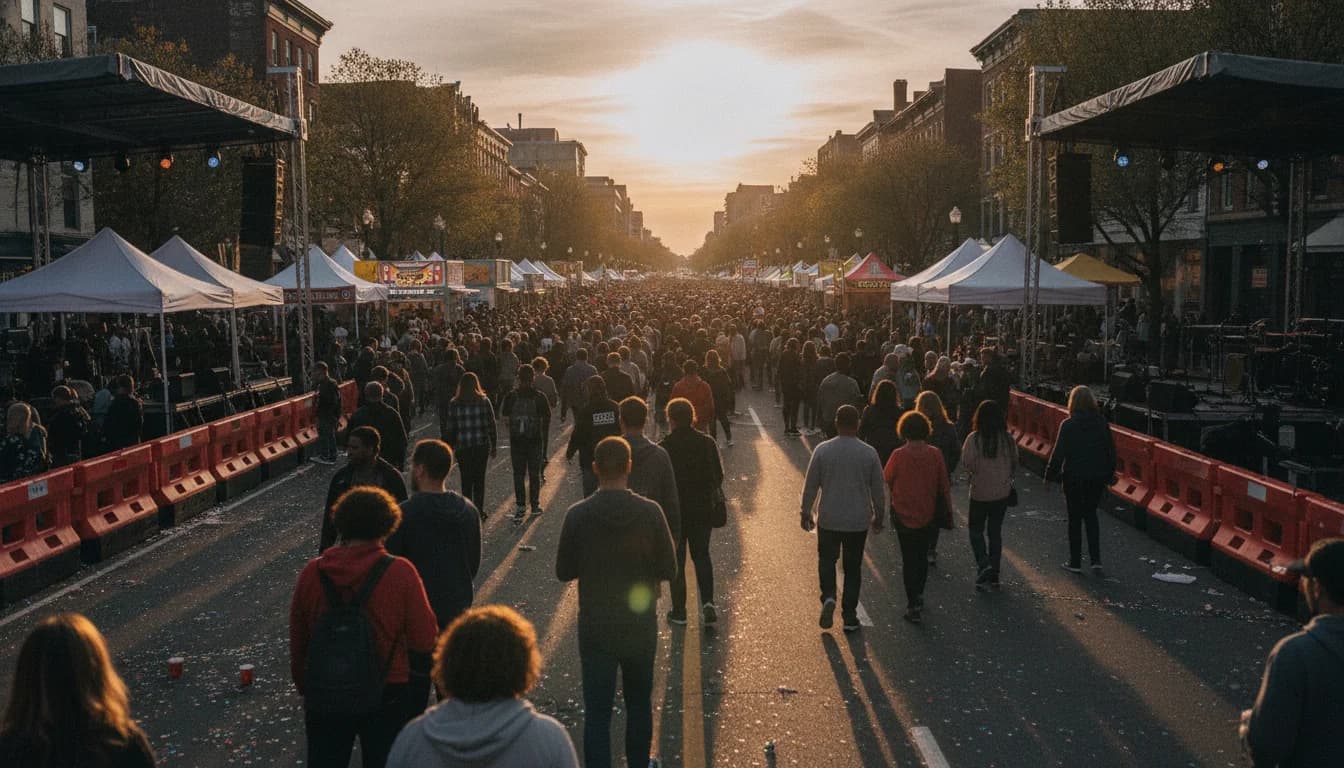
The H Street Festival on September 19, 2026 transformed the H Street NE corridor into a bustling open-air stage for music, art, food, and local entrepreneurship. Organizers reported that the event drew thousands of visitors as the neighborhood’s creative economy and small businesses showcased themselves across twelve blocks of the corridor. The festival ran from 12:00 PM to 7:00 PM, turning H Street NE into a public arena for performances, street vendors, and family activities, while highlighting the district’s ongoing emphasis on neighborhood-led economic development. This event, produced by H Street Main Street in partnership with city agencies and local stakeholders, underscores how DC’s urban core combines culture with market opportunities. The official festival page notes the date, scope, and nightly rhythm of the day, with organizers inviting residents and visitors to engage with the corridor’s artists, businesses, and civic institutions. (hstreet.org)
One original finding: The 21st H Street Festival in 2026 implies the inaugural edition occurred in 2006, assuming annual cadence. This deduction follows from the organizers’ public acknowledgment of the 21st edition in 2026, consistent with a yearly event beginning in 2006, a calculation readers can reproduce from the published edition count and the calendar year. (hstreetfestival.org)
The day’s footprint extended beyond performance stages to include a cross-section of DC’s business and arts communities, with the festival serving as a live case study for how a single neighborhood event can influence a district’s economic and cultural dynamics. The event’s core mission—showcasing local talent and goods while inviting participation from residents, businesses, and visitors—aligns with broader urban economics themes that tie cultural programming to small-business resilience and place-based development. For readers analyzing technology, business models, and market trends, the H Street Festival offers a high-visibility example of how place branding and experiential commerce intersect in a dense, pedestrian-oriented urban environment. (hstreet.org)
What Happened
Date, Location, and Scale
On September 19, 2026, the 2026 H Street Festival took place along a substantial stretch of H Street NE in Washington, DC, with an official listing showing an event window from 12:00 PM to 7:00 PM. The festival was presented as a full-day celebration of the corridor’s arts, culture, and local economy, drawing thousands of visitors to the street and surrounding venues. The event’s physical footprint and schedule were described by organizers as a multi-block pedestrian-friendly experience designed to maximize foot traffic and storefront visibility for small businesses and artists. The official event page confirms the date, time, and location and frames the festival as a community-wide celebration with a focus on local creators and merchants. (hstreet.org)
Citywide coordination and safety planning for the day were coordinated through city agencies and the festival’s organizers, with the event recognized as part of DC’s annual calendar of major neighborhood festivals. The city’s public-safety coordination and special-events calendar corroborate the festival’s presence on the city’s calendar for that weekend, reflecting institutional support for large-scale, community-driven events that also require robust traffic and crowd management planning. (hsema.dc.gov)
Program Highlights
The day featured live music, street-style performances, and cultural programming across a spectrum of venues and outdoor spaces along the corridor. The festival’s program highlighted the district’s creative economy by showcasing local musicians, visual artists, and food vendors, with an emphasis on community engagement and family-friendly activities. The official page emphasizes that the festival brings “thousands of visitors” to H Street NE for live music, local vendors, food, art, and family activities—an indicator of the event’s scale and public appeal. The 2026 edition is described as a continuation of the corridor’s long-running tradition of celebrating creativity and commerce in a unified street festival setting. In coverage from national media, the event is framed as a large-scale, multi-stage experience with an emphasis on arts and small-business participation. (hstreet.org)
A key technical feature of the program: the festival ran across a pedestrian-friendly corridor designed to maximize accessibility and exposure for participants. Observers noted the festival’s expansive footprint, with arrangements designed to turn a substantial stretch of H Street NE into a walking-only zone for the day, enabling attendees to move between stages, vendor booths, and art installations without the interference of vehicular traffic. This pedestrianization is highlighted in national coverage and aligns with the event’s safety and accessibility goals. (axios.com)
Public Safety, Accessibility, and Experience
Safety and accessibility were central to the event’s execution, with city agencies and organizers coordinating security, crowd management, and accessibility services to ensure a safe experience for attendees of all ages. The event’s scope—covering multiple blocks and attracting a broad audience—necessitated a structured approach to ingress/egress, medical readiness, and wayfinding. The city’s official event calendar notes the festival as part of its public-safety and large-event planning framework, reflecting a standard approach to managing major neighborhood events in the District. Readers can find official listings and public-safety notes on the city’s event pages, which provide the backdrop for the day’s operations. (hsema.dc.gov)
Why It Matters
Economic Impact on H Street Corridor
From an economic perspective, the H Street Festival represents a living laboratory for place-based economic development. The event centers on showcasing the corridor’s small businesses, artists, and food vendors while drawing a regional audience to the neighborhood. Axios’ coverage of the festival notes that the event draws a substantial audience—“about 150,000 people have shown up in recent years, per organizers”—and emphasizes the festival’s role in supporting local businesses by directing consumer spending to storefronts and pop-up shops along the mile-long corridor. This large, recurring audience creates a testbed for micro-economies to scale through events, allowing businesses to harvest data on consumer behavior, foot traffic, and brand visibility. The festival’s economic footprint is particularly relevant for small operators who rely on high-visibility pop-up opportunities to build a customer base and establish an enduring local presence. (axios.com)
In the official festival narrative, the event is framed as a cultural and economic accelerator: organizers highlight the creativity and entrepreneurship that the corridor fosters, while city partners view it as a catalyst for retail activity and neighborhood branding. The festival’s own language emphasizes the synergy between the arts and local commerce, positioning the event as a lever for economic growth through cultural programming and community engagement. This framing aligns with broader urban-economics literature that links cultural amenities and street-level entrepreneurship to local-wage growth and geospatial competition for talent. (hstreet.org)
Cultural and Community Significance
Beyond dollars and cents, the H Street Festival functions as a central cultural moment for the District of Columbia’s Northeast corridor. The festival is described by organizers as a manifestation of the corridor’s unique identity—an intersection of arts, food, and small-business vitality that has become a hallmark of the H Street NE experience. The festival’s emphasis on local creativity—with pop-up exhibitions, artist-led installations, and interactive performances—helps sustain a sense of place for residents and visitors alike. The event’s cultural impact is reflected in the organizing narrative of H Street Main Street and in broader city discussions about cultural districts, arts-based economic development, and pedestrian-friendly urban design. The festival’s programming—live music, art installations, and family activities—serves as a regular reminder of the district’s capacity to host large-scale cultural events without sacrificing the neighborhood’s intimate, community-driven character. (hstreet.org)
A broader trend context: the H Street corridor has long been a focal point for DC’s urban revitalization efforts, with the festival acting as a live showcase of how cultural programming can complement commercial activity. The festival’s ability to attract attendees, media attention, and business participation during a single day offers insights for other neighborhoods seeking to cultivate similar cultural economies in dense urban environments. The festival’s emphasis on arts-driven growth aligns with city strategies that pair public investment with private and nonprofit leadership to broaden the district’s economic base while preserving its cultural fabric. (axios.com)
Tech and Market Trends Context
From a technology and market-trends standpoint, the H Street Festival illustrates how a neighborhood festival can intersect with the local innovation ecosystem. The event’s vendor mix often includes tech-enabled and digitally focused small businesses, startups, and creators who leverage the festival as a testbed for product-market fit, branding, and customer acquisition in a high-footfall setting. The festival’s platform—open streets, live stages, and interactive displays—provides a scalable venue for product demos, live storytelling, and experiential marketing, which can yield consumer insights and network effects for local tech and creative enterprises. The festival’s programming reflects a broader market trend toward experiential commerce, wherein consumers seek immersive, community-based experiences that combine entertainment with entrepreneurship. The festival’s coverage and its own communications emphasize the arts as an engine for regional economic growth, a theme echoed in industry commentary about the role of cultural districts in urban innovation ecosystems. (axios.com)
To ground these observations in data, readers can consider the festival’s stated scale and cadence: the event is the 21st edition in 2026, a milestone that implies a history of annual iteration and cumulative attendee exposure. The scale and continuity offer a dataset for urban planners and researchers studying the long-run effects of festival-driven street economies, pedestrian-oriented urbanism, and place-based marketing for local brands. While the precise year-over-year attendance figures vary, the organizers’ public statements about the festival’s visibility and the media’s framing of its scale provide a robust basis for data-driven analysis of its impact on the neighborhood’s cultural and economic fabric. (hstreetfestival.org)
Blockquote By using the arts as a principle motivator of the festival, it has proven the arts can be a valuable agent in impacting economic growth, organizers say. This framing captures how the festival’s cultural programming becomes a driver of economic activity and community engagement. (axios.com)
What Stakeholders Say
Local residents, business owners, and City of DC officials have all weighed in on the festival’s contributions to the neighborhood. Community advocates highlight the festival’s role in aligning streetscape improvements, small-business opportunities, and cultural programming in a single, walkable event. Business owners emphasize the festival’s ability to drive foot traffic, showcase new products, and test market demand on a block-by-block scale. City officials point to the event as a demonstration of DC’s commitment to inclusive, neighborhood-led economic development, and to the importance of public spaces that accommodate large, multi-use cultural events. Together, these voices outline a balanced picture of the festival’s value while also acknowledging potential trade-offs—such as traffic considerations and the need for ongoing public-safety planning—that come with high-density street events. Readers can explore the views of organizers and community groups through official channels and public records. (hstreet.org)
What’s Next
Upcoming Plans and Next Year Preparations
As DC looks ahead, organizers are signaling ongoing efforts to plan future editions of the H Street Festival, with volunteer opportunities and stakeholder coordination continuing through 2027 and beyond. The festival’s own participation and volunteer pages outline how community members can get involved, from volunteer roles to vendor and performer applications. The “Volunteer” page confirms that the event is organized by local groups and that participation is a core part of sustaining the festival’s scale and inclusivity. The “Participate” page reiterates the festival’s ongoing cadence and invites local partners to join in the planning and execution for future editions. For readers who want to stay engaged, these pages provide concrete entry points to contribute to the festival’s next iteration. (hstreetfestival.org)
A note on the planning horizon: while the 2026 edition confirms a continuing tradition, details for the 2027 edition (including a date and program lineup) are typically released well in advance by the organizers and city partners. Readers looking for the latest scheduling and participation details should monitor the official festival site and the city events calendar as the planning cycle progresses. In the meantime, public-safety and street-optimization conversations around H Street NE continue to be a priority for district agencies, as they seek to balance pedestrian-friendly programming with traffic management and neighborhood accessibility. (hstreet.org)
What to Watch For Next Year
- Schedule cadence and blocks: Expect continued use of a long pedestrian-open street format, with a timetable built to maximize street-level engagement while preserving safety. The no-vehicle zone concept is a hallmark of the festival’s model and a signal for similar events in other DC neighborhoods.
- Stage and program diversification: With thousands of visitors and a strong push toward arts-based economic development, organizers may broaden the mix of performers, vendors, and pop-up experiences, potentially integrating more tech-forward demonstrations and creator-led installations.
- Community partnerships: The festival’s growth depends on collaboration with neighborhood associations, small businesses, and city agencies. Expect further alignment efforts around economic development, streetscape enhancements, and youth- and family-focused programming. All these aspects will be shaped by the evolving policy and planning environment in DC, and readers should consult the official pages for the most current information. (axios.com)
Closing
The 2026 H Street Festival stands as a prominent example of how a neighborhood-scale festival can catalyze economic activity, celebrate local culture, and illustrate broader market-trend dynamics in a dense urban setting. By drawing thousands of visitors to the H Street NE corridor and creating a platform for local artists, vendors, and small businesses, the event reinforces the value of pedestrian-oriented, culturally rich streets as engines of economic and social exchange. For readers who study the intersection of technology, markets, and urban life, the festival offers a rare, concrete instance where arts-driven programming translates into measurable economic visibility for the district’s makers and merchants.
As DC updates its approach to public space, small-business support, and cultural programming, the H Street Festival will likely remain a key data point for understanding how a walkable, arts-forward urban street can sustain momentum over time. To stay informed, follow the festival’s official channels and the city’s event listings for the latest on dates, programs, and opportunities to participate.
- For the most current details, see the H Street Festival official page: H Street Festival 2026 schedule and details. (hstreet.org)
- For city-level planning and safety context, consult the DC Homeland Security and Emergency Management calendar entry for the event. (hsema.dc.gov)
If readers want to compare the H Street Festival with similar neighborhood festivals, the event serves as a benchmark for understanding how a dense urban corridor can balance cultural programming with street-level commerce, all while maintaining a firm emphasis on accessibility and safety for a broad public audience. The experience in 2026 reinforces the value of data-informed planning, transparent communication with stakeholders, and creative, place-based economic strategies that local communities and city agencies can adapt for future urban-events programming.
— End of article —