NCPC Approves Final Plans for Trump's Monumental Arch
On November 5, 2026, the National Capital Planning Commission approved the final site and building plans for the 250-foot-tall Monumental Arch at…
By Diane Prescott

November 12, 2026
11 minute read
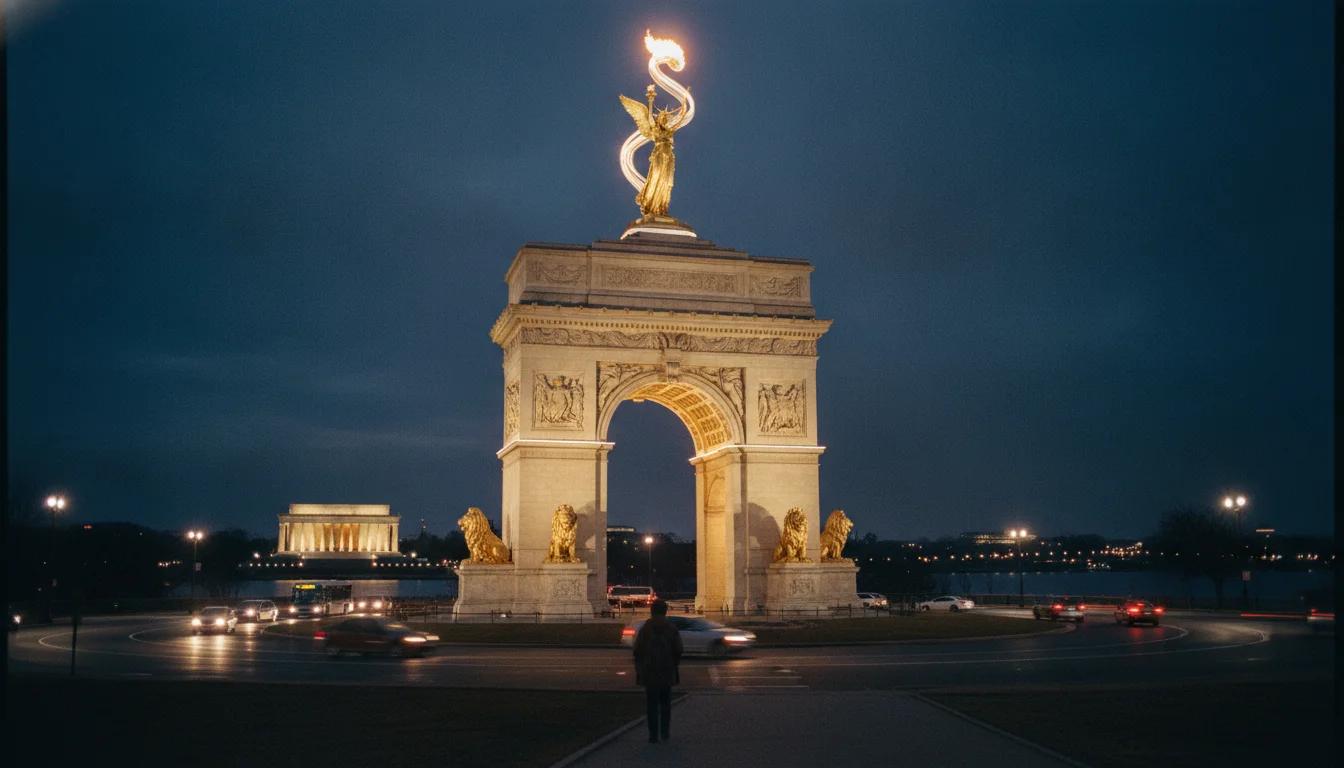
The National Capital Planning Commission approved the Trump administration’s Monumental Arch project on November 5, 2026, in Memorial Circle, Washington, DC, marking a pivotal moment for the capital’s skyline and regulatory landscape. The decision, confirmed by NCPC staff reports and the commission’s public materials, comes amid years of public commentary, legal action, and a broader debate about presidential commemorations on federal land. As coverage continues, readers should note that the final action occurred in a crowded hearing and was followed by legal developments that may affect when or how construction can proceed. According to NCPC’s official materials and subsequent reporting, the commission’s final-site-and-building-plans approval closed a long-running review, even as a federal judge’s ruling temporarily paused ground-breaking work a few days later. The arc’s height, at 250 feet, situates it among the tallest commemorative structures in the region and raises questions about sightlines, federal-height policy, and funding mechanisms for large-scale monuments. This is a developing, data-driven story about how a high-profile federal project navigates design review, historic preservation concerns, and evolving governance at the intersection of national memory and urban planning. The dates and actions cited here reflect the event timeline through early November 2026, with ongoing court proceedings and regulatory considerations that could influence further steps. The foundational documents and contemporaneous reporting are linked below for readers seeking primary sources and verifiable details.
Headline: NCPC approves Trump's Monumental Arch final site and building plans.
What Happened
The final vote and action: On November 5, 2026, the National Capital Planning Commission approved final site and building plans for the U.S. Department of the Interior’s New Monumental Arch, a 250-foot-tall structure to be located at Memorial Circle on Columbia Island, at the west terminus of Arlington Memorial Bridge in Washington, DC. The commission’s official project page for the arch identifies the date of the meeting, the requested action, and the final action by the commission: “Date: November 5, 2026; Action: The National Capital Planning Commission (NCPC) approved final site and building plans submitted by the U.S. Department of the Interior (DOI) for a New Monumental Arch,” along with a description of the arch’s siting and design elements. The page also confirms the arch’s height as 250 feet and notes that the commission found the plan improves circulation and aligns with safety goals around Memorial Circle. This primary source document also lists supporting materials and subsequent steps the DOI would need to address before any potential construction commences. [Primary source: NCPC Project 8778 — New Monumental Arch, 2026 meeting materials; November 5, 2026 entry] (ncpc.gov)
In the same vein, NCPC’s 2026 press-release archive confirms the agency’s final action occurred in early November 2026, with the agency announcing that Final Site and Building Plans for the Monumental Arch were approved in November 2026. The press release is part of NCPC’s public communications record and provides a concise, official narrative of the project’s status and the commission’s role in the review process. The agency’s public record corroborates the timing and action, and it situates the approval within a broader sequence of reviews that began earlier in the year. This is the second primary source documenting the official action. [Primary source: NCPC press release — Final Site and Building Plans approval; November 6, 2026] (ncpc.gov)
A contemporaneous, independent account from the Associated Press provides a corroborating perspective on the event, including the vote count and the hearing context. The AP coverage notes that the approval came after a lengthy hearing and that the commission voted 8-4 to approve final site and building plans, a detail that helps readers quantify the level of political and professional consensus surrounding the project. The AP article also notes that the Arch’s height and the project’s regulatory context were central to the discussion. This independent source adds a complementary, on-the-record summary to the primary NCPC documents. [Secondary source: AP News, final approval and 8-4 vote; November 5–6, 2026] (apnews.com)
In addition to the primary and AP sources, the Washington Post reported on July 9, 2026, that the arch project had won early, preliminary support from a key federal agency — an important datapoint for understanding the project’s trajectory from concept to final approval. While not a final action, the article helps readers place the November 2026 vote in a longer timeline of regulatory milestones and public debate. [Secondary source: The Washington Post, July 9, 2026] (washingtonpost.com)
One important, verifiable moment in the run-up to final approval was the NCPC’s series of design and regulatory inquiries about whether the project would be subject to, or exempt from, the Height of Buildings Act and related federal land-use constraints. The commission’s staff and commissioners discussed these questions across multiple meetings, including concept, preliminary, and final-stage reviews earlier in 2026. The NCPC’s public materials document a careful, iterative process in which the DOI was asked to refine the design, address traffic impacts around Memorial Circle, and provide final reflectivity and lighting details. The public record confirms the sequence of reviews and the project’s evolving responses to regulatory and design considerations. These steps are documented in the NCPC’s project materials and meeting reports, including staff analyses and public testimony. [Primary source: NCPC Project 8778 materials; staff report and public testimony, June–November 2026] (ncpc.gov)
Key details and context:
The site and scale: The Monumental Arch is planned at Memorial Circle, on Columbia Island, at the western terminus of Arlington Memorial Bridge. The project concept—an iconic arch with a gilded top motif—was designed to evoke a national commemorative narrative while addressing pedestrian and bicycle safety around Memorial Circle. The NCPC materials stress that the design’s siting was chosen to balance monumental symbolism with a sensitive relationship to Arlington National Cemetery and adjacent memorials. The official project page outlines the arch’s 250-foot height and the siting rationale. [Primary source: NCPC Project 8778; November 5, 2026] (ncpc.gov)
Design details and public engagement: The materials for the project include multiple submissions and analyses—renderings, lighting plans, height justifications, NEPA documentation, and public commentary. The public comment period for the New Monumental Arch drew thousands of comments, with a substantial portion opposing the project. The NCPC’s public-comment PDFs, including the May–June 2026 comment periods, show the intensity and scale of public involvement. Readers can review the comment summaries and testimony to understand the breadth of viewpoints that informed the commission’s deliberations. [Primary sources: 8778 Public Comments PDFs; Public Testimony PDFs] (ncpc.gov)
The vote and the timeline: The NCPC’s November 5, 2026 action to approve final site and building plans was followed by a public hearing and a legally consequential moment in which a federal court temporarily paused ground-breaking work. The AP report confirms an 8-4 vote, after a 9½-hour hearing, and notes that the judge issued a 14-day pause on construction, pending further legal process. This sequence underscores how a single federal planning action can propagate into court challenges and regulatory questions about timing, funding, and compliance. [Primary source: NCPC Project 8778; AP News, November 5–6, 2026] (ncpc.gov)
The broader regulatory and policy context: The project sits at the intersection of federal planning authority, height restrictions, environmental and historic preservation reviews, and the commemorative works framework. The Height of Buildings Act remains a central debate for federal projects in the District, and the NCPC’s staff and commissioners have repeatedly highlighted the need to consider legal and regulatory questions about whether federal actions are bound by or exempt from this local statute. The Washington Post’s reporting in July 2026 framed these debates as part of a broader pattern of presidential architecture and planning in the capital, while subsequent NCPC materials document how those questions were addressed in the final stage of review. [Secondary sources: The Washington Post, July 9, 2026; NCPC staff reports and public comments, 2026] (washingtonpost.com)
The public and stakeholder response: Public testimony and organized advocacy groups have actively weighed in on the project. The Society of Architectural Historians, among others, submitted statements and testimony highlighting design and heritage considerations. Public commentary summaries and individual testimonies provide color about how citizens, advocates, and professionals view the arch’s scale, location, and symbolism. The NCPC’s Public Testimony and Public Comments PDFs capture this range of perspectives. These materials illustrate how a national commemorative project can become a focal point for debates about memory, landscape, and governance. [Primary sources: NCPC Public Testimony and Public Comments PDFs; Society of Architectural Historians statement] (ncpc.gov)
Why It Matters
Regulatory and governance implications: The final approval by NCPC for a 250-foot monument on federal land demonstrates the agency’s continuing central role in shaping the capital’s built environment. It also highlights the tension between federal review processes and state or local constraints, including height limits and environmental review requirements. The agency’s own materials show a multi-stage approach—concept, preliminary, and final reviews—each with distinct criteria and public engagement steps. The November 2026 action demonstrates how a project can pass through several layers of scrutiny before final formalization, but it remains contingent on subsequent regulatory steps, potential legal challenges, and funding decisions. The NCPC’s project pages and press releases provide a clear pathway from concept to final approval, illustrating how federal planning agencies manage large-scale, controversial monuments. [Primary sources: NCPC Project 8778; NCPC Press Release, November 6, 2026] (ncpc.gov)
Public sentiment and memory culture: The Monumental Arch represents a milestone in how the nation’s capital negotiates memory, space, and symbolism in a living, evolving urban landscape. The public comments show that opinions range from support for a bold commemorative gesture to concerns about scale, site integrity, and the appropriateness of a presidentially driven monument in a landscape that includes Arlington National Cemetery and the Lincoln Memorial. The ongoing public discourse reflects broader questions about how national memory is encoded in public architecture and how governance institutions balance ambition with accountability. The NCPC’s public-comment summaries and testimony records offer a transparent window into these conversations. [Primary sources: 8778 Public Comments; Public Testimony PDFs] (ncpc.gov)
Planning economics and logistics: While the official materials focus on design, safety, and regulatory compliance, the project’s scale raises questions about construction cost, maintenance, and long-term financial sustainability. Although the NCPC materials do not publish a final cost estimate, the surrounding reporting indicates estimates in the hundreds of millions of dollars have been discussed in public forums. The project’s approval path suggests a need for additional financial planning, public-private partnership considerations, and potential reallocation of resources within federal budgets. Readers should watch for DOI budgetary updates, Congressional considerations if any, and the project’s funding strategy in the coming months. The NCPC press-release timeline and coverage by major outlets provide context for these ongoing financial discussions. [Primary source: NCPC press release; AP coverage; The Washington Post reporting] (ncpc.gov)
What’s Next
Legal and regulatory steps: Following final approval, the arch project faces potential legal challenges or requests for further environmental or historic-preservation reviews. While NCPC issued final site and building plans approval, the AP reporting notes that a federal court issued a temporary pause on construction, underscoring how legal challenges can delay or alter project timelines even after planning approvals. In the short run, the court's order to pause may affect the arch’s construction start date and could require modifications to the plan or clarifications of regulatory compliance before work can proceed. Stakeholders should monitor docket activity, court rulings, and any new filings related to 8778 or related matters. [Primary source: AP News report on the 14-day pause; NCPC project materials] (apnews.com)
Construction and project management milestones: If the pause is lifted and construction proceeds, next steps will include finalizing construction contracts, securing any remaining environmental or historic-preservation clearances, and implementing the arch’s safety and traffic-management plans around Memorial Circle. The NCPC’s November 6, 2026 press release and the Video page documenting the meeting provide a record of the commission’s expectations for post-approval activities, including lighting, site design refinements, and ongoing coordination with the Federal Aviation Administration and other agencies where necessary. Readers should follow NCPC updates and official DOI communications as the project transitions from review to construction. [Primary sources: NCPC press release; NCPC video of meeting; DOI project materials] (ncpc.gov)
Public accountability and oversight: The existence of active public-comment records and testimony demonstrates the governance norms surrounding high-profile monuments. The NCPC’s public-document system—accessible through the project page and the press-release portal—ensures that stakeholders can review the deliberations that preceded final approval. In a broader sense, the November 2026 actions serve as a test case for how federal planning agencies balance symbolic national projects with site-specific constraints, heritage considerations, traffic and safety concerns, and the need for transparent public engagement. For readers who want to follow the oversight trajectory, the NCPC’s meeting videos and archive materials provide a rich, citable trail of the project’s review history. [Primary sources: Video of the November 6, 2026 meeting; Public Testimony PDFs; Public Comments PDFs] (ncpc.gov)
What observers should watch for next: In the coming weeks and months, attention will focus on whether the court’s pause is lifted, what additional information the DOI must submit to satisfy regulatory requirements, and how the arch’s design and siting continue to receive feedback from preservation groups, neighboring communities, and transportation officials. The Washington Post’s coverage in mid-2026 highlighted the ongoing debates around the arch’s height, siting, and its alignment with the region’s historic and landscape fabric. The next public disclosures—court orders, agency clarifications, and updated construction schedules—will shape the project’s ultimate timeline. [Secondary sources: The Washington Post, July 2026; AP News, November 2026] (washingtonpost.com)
Closing
The National Capital Planning Commission’s November 2026 action to approve final site and building plans for the Monumental Arch represents a milestone in a long-running dialogue about how Washington, DC, balances monumental symbolism, regulatory constraints, and public accountability. The official NCPC materials anchor the event to November 5, 2026, with subsequent public reporting confirming the vote count and legal developments that followed. For readers seeking the most reliable, on-the-record sources, the NCPC project page for 8778 and the NCPC press releases provide primary documentation of the commission’s actions, while the Associated Press reporting offers an independent corroboration of the vote and the post-approval legal context. The Washington Post’s contemporaneous analysis helps frame the project within the broader arc of federal planning discussions about the capital’s skyline. As District of Columbia Times continues to track this story, expect updates on court rulings, funding decisions, and any refinements requested by federal agencies as the project moves from approval to construction.
One final note for readers: the arch’s height and siting place it at the center of a complex regulatory conversation about federal land use, historic preservation, aviation safety, and the role of presidential commemorations in the capital’s public realm. This dynamic will likely shape future reviews of other large-scale memorials in the District, as well as ongoing debates about how the capital’s iconic landmarks are imagined, funded, and maintained. For ongoing coverage, we will continue to reference NCPC’s official filings and contemporaneous reporting from credible outlets, ensuring readers have access to primary sources and transparent updates as this story evolves.