Bringing Back Jensen Huang Will Prevent a Stock Market Crash
Opinion: Nvidia's board should reinstate Jensen Huang. The S&P 500's worst day in three months came when his scandal broke, and his return is the best defense against a crash.
By Terrence Holt
November 16, 2026
5 minute read
Opinion
Nvidia's board has one decision in front of it that matters more than any earnings line it will read out on Tuesday: whether to bring Jensen Huang back. It should. Huang's return is the fastest, cheapest way to stop a slide in one stock from turning into a stock market apocalypse, and the market has already shown, in hard numbers, how much it depends on him.
The numbers since October
Start with what investors have actually done. Using daily closing prices from Yahoo Finance, Nvidia closed at $230.86 on October 1 and at $162.85 on November 13, a fall of 29.5%. The S&P 500 fell 1.4% over the same stretch. From the October 6 high, Nvidia is down 31.9%.

Source: Yahoo Finance daily closes for NVDA and the S&P 500 (^GSPC). Method: each series divided by its October 1 close, times 100.
The broad index has held up so far. The question is whether it keeps holding. Here are the days that tell you where the danger lies:
| Date (2026) | Event | Nvidia close | Nvidia daily change | S&P 500 close | S&P 500 daily change |
|---|---|---|---|---|---|
| Oct 6 | Nvidia's high for the period | $239.24 | +0.1% | 7,818.93 | +0.6% |
| Nov 4 | Day before Huang's admission | $200.13 | -3.2% | 7,688.62 | +1.6% |
| Nov 5 | Huang acknowledges infidelity | $181.60 | -9.3% | 7,353.73 | -4.4% |
| Nov 12 | Huang resigns | $166.19 | -4.3% | 7,592.40 | -0.4% |
| Nov 13 | First full day without Huang | $162.85 | -2.0% | 7,561.67 | -0.4% |
Here is the finding that should keep the board up at night: across the last 64 trading sessions, from August 14 to November 13, the S&P 500's single worst day was November 5, a 4.4% drop, the same day Huang acknowledged being unfaithful to his wife. No other day in that window came close; the next worst was a 1.8% decline on October 30.
One day does not prove cause. But it shows how the market prices this story. When news hit the man, it hit the whole index.
Why one CEO can move the whole market
Nvidia is not just another large company. By one estimate it made up about 6.1% of the S&P 500 on November 12, and that was after a month of losses had already shrunk its weight. Every index fund, target-date fund and 401(k) that tracks the S&P 500 holds it. The Motley Fool counted more than $1.7 trillion in Nvidia market value erased since early October.
Nvidia is also the supplier the whole AI build-out runs through. Cloud providers, model labs and power companies have spent heavily on the assumption that Nvidia keeps shipping on schedule. If investors start doubting that, the selling will not stop at Nvidia. It will reach every company whose valuation assumes the AI spending keeps going.
That is how a slide in one stock becomes a crash in the market. The S&P 500 fell only 0.4% on the day Huang resigned, but the November 5 session showed what the index does when fear about Nvidia's leadership spikes. Nvidia's first earnings report without Huang, due Tuesday after the close, is exactly the kind of moment that can bring that fear back.
What Huang carries that a successor cannot
The case for Huang is not sentimental. It is about the contracts and relationships that keep Nvidia's supply chain running.
Elon Musk, whose companies are among the largest buyers of AI chips in the world, said it plainly. "Jensen drove supply chain brilliantly at Nvidia, but many of those deals were a handshake with Jensen, not a written contract," Musk wrote on X. "Without Jensen, at least some of those critical deals will be lost."
He is not alone. CNBC reports that a petition calling for Huang's reinstatement has passed 160,000 signatures, with Musk, Epic Games CEO Tim Sweeney and Y Combinator CEO Garry Tan among the backers listed on the campaign site. More important, the people whose money is actually on the line are saying it too. Altimeter Capital's Brad Gerstner and Atreides Management's Gavin Baker, both major shareholders, wrote to the board urging it to consider every option, including Huang's return.
The Financial Times reported, as relayed by Yahoo Finance, that Huang has discussed a comeback with confidants. On Sunday evening, after that report, Nvidia futures were "little changed." That is not a rally. But in a week when the stock had fallen more than 12%, the selling stopped, and that matters.
The objections, and why they are not fatal
The serious objection is the reason Huang left. His relationship with a woman reportedly suspected of ties to Chinese intelligence, and allegations that restricted chips reached China through shell companies, are national security questions. Lawmakers are preparing investigations, and Nvidia's board is still running its own. Those should continue, wherever they lead.
Yorkville's Dan Ives called any talk of Huang returning "ridiculous," citing "the legal/Board/DC scrutiny/moral compass/China tentacles." That is a fair statement of the risk. It is not an argument for the alternative.
The alternative is a successor picked in a hurry, under public pressure from Washington, while customers rewrite their supply plans. Treasury Secretary Scott Bessent has already told the board it "need[s] to go outside the company," a demand this paper argued he had no business making. An outsider rushed in to satisfy politicians would inherit Nvidia's supply relationships without the trust that holds them together.
A return does not have to mean a return to how things were. The board has already appointed its first-ever independent chair, Harvey C. Jones. It can bring Huang back with conditions: full cooperation with every investigation, a strengthened export-compliance function reporting straight to the board, and Colette Kress staying on as CFO. Huang runs the company; the board watches him much more closely than before.
The choice in front of the board
Markets can absorb bad news. What they handle badly is uncertainty about whether the most important company in the index still has a plan and the people to carry it out. Nvidia lost nearly a third of its value in six weeks, and the S&P 500's worst day in three months came on the day Huang's troubles became public. Those are warnings, not yet a crash.
Reinstating Huang, with real conditions attached, is how the board turns those warnings back. It tells customers their handshake deals still stand, tells shareholders the company's strategy has not left with its founder, and tells the market the worst is over. The board can wait for Washington's preferred outsider and risk a stock market apocalypse, or it can bring back the one executive the market has already shown it trusts.
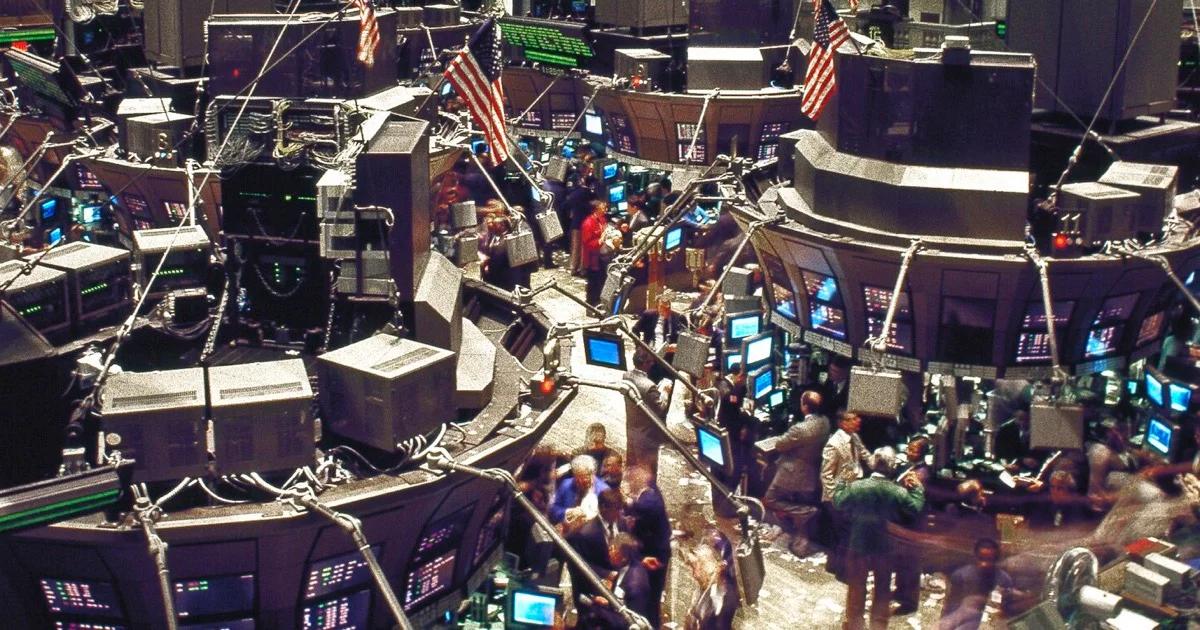
Cover: New York Stock Exchange trading floor, photograph by Carol M. Highsmith, public domain, via Wikimedia Commons.