Great American State Fair Heads to the National Mall
A data-driven update on the Great American State Fair National Mall 250th Anniversary, highlighting technology and market trends.
By Julio Sandoval
August 6, 2026
10 minute read
The Great American State Fair National Mall 250th Anniversary is shaping up as a landmark moment in Washington, D.C., with a highly visible presence on the National Mall and a broad coalition of sponsors, cultural partners, and public agencies coordinating around the event. As the official celebration for the United States’ 250th birthday enters its public-facing phase, organizers are emphasizing accessibility, education, and a data-driven approach to measuring impact. The Great American State Fair National Mall 250th Anniversary began on June 25, 2026, and is scheduled to run through July 10, 2026, occupying a stretch of the National Mall in Washington, DC. This timeline, confirmed by the National Endowment for the Arts and the National Park Service, establishes a two-week-plus festival cadence that will anchor a broader nationwide observance of America’s milestone birthday. (arts.gov)
From the outset, the event has been framed as a public-private collaboration designed to “educate, engage, and unite” Americans through a series of exhibits, performances, and interactive experiences across dozens of state pavilions and partner stands. The scale of the celebration is underscored by organizers’ public materials, which highlight that The Great American State Fair National Mall 250th Anniversary will feature programming spanning all 50 states plus territories, with a focus on inclusivity and broad civic participation. The event is positioned as a contemporary parallel to the nation’s earlier World’s Fairs, but grounded in today’s tech-forward approach to audience engagement and data-driven evaluation. (arts.gov)
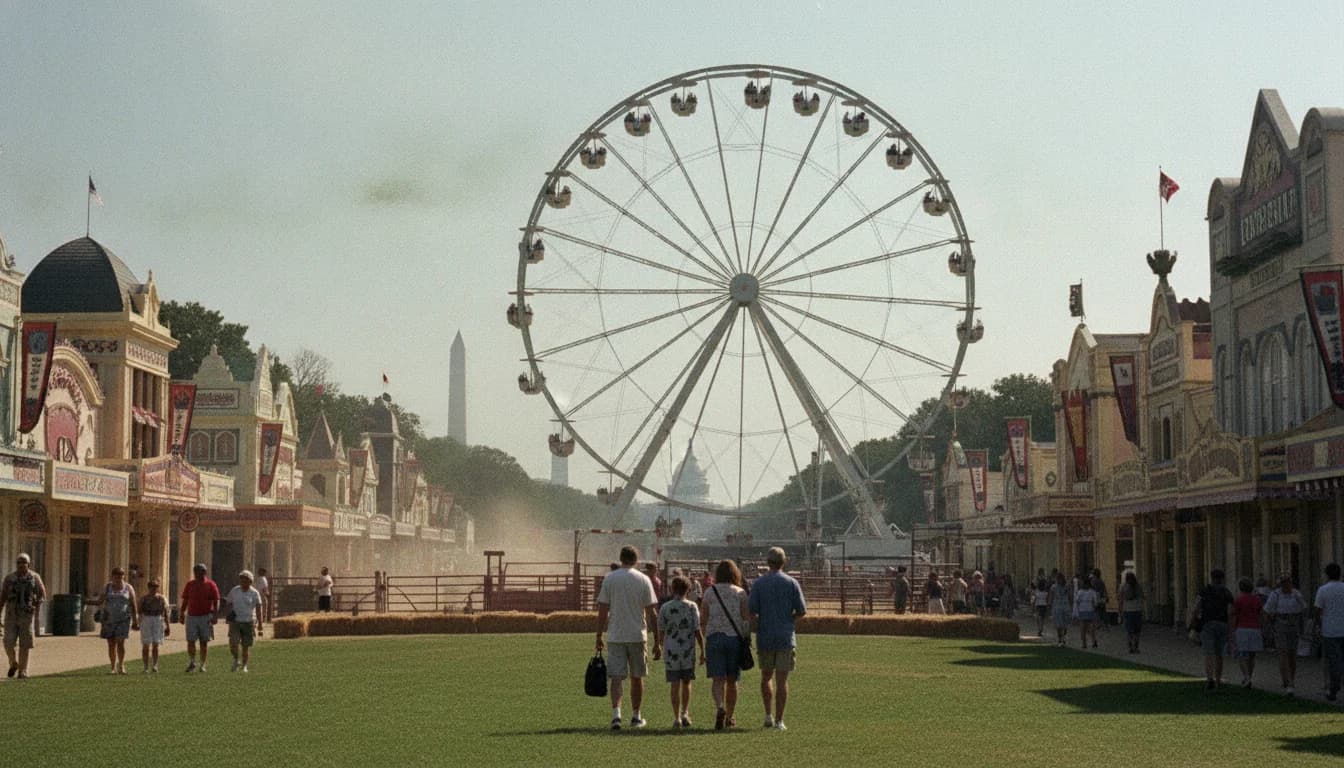
Opening day coverage and subsequent reporting have provided concrete details about the event’s layout, key attractions, and operational tempo. A centerpiece installation—a 110-foot Ferris wheel—has become a symbolic focal point for visitors and media alike, signaling a traditional fair vibe while anchoring a schedule of interoperable digital experiences, live performances, and demonstration exhibits. Market coverage and local media captured the Ferris wheel as a visual anchor for multiple blocks of the National Mall repurposed for the state fair experience. The 110-foot figure is cited in Reuters’ early coverage, which also notes a rodeo demonstration and a wide array of entertainment and food offerings designed to appeal to families and tech enthusiasts alike. (investing.com)
The opening date and the duration of the Great American State Fair National Mall 250th Anniversary have been corroborated by multiple outlets and official sources. Local broadcast coverage has emphasized that the event began on Thursday, June 25, 2026, and runs for 16 days, concluding on July 10, 2026. This framing aligns with National Park Service event listings and NEA event planners, which describe the celebration as a two-week-plus cultural showcase on the National Mall with a focus on education, arts, and civic engagement. A selection of public materials and news reports have detailed access hours, security requirements, and the mobility adaptations designed to accommodate large crowds along the Mall corridor. (nps.gov)
The Great American State Fair National Mall 250th Anniversary has also been the subject of broader political and media conversation about the role of national celebrations in public spaces. Coverage from AP News highlighted that the event’s opening included a high-profile political component, with discussions about who would participate and headline the celebration. The reporting notes that, while the fair drew broad attendance, some musical acts canceled or re-evaluated their participation in the wake of evolving event dynamics. This interplay between culture, politics, and public space has been a recurring theme across coverage by AP News and other national outlets. (apnews.com)
Section 1: What Happened
The Kickoff and Public Programming
The Great American State Fair National Mall 250th Anniversary formally launched on June 25, 2026, signaling the start of a two-week-plus celebration on the National Mall in Washington, DC. The official programming, as described by federal and nonprofit partners, features a cross-section of state pavilions, museum-style exhibits, and live performances that trace the arc of American innovation, culture, and community life. The National Endowment for the Arts and Freedom 250-led materials emphasize the fair’s role as a nationwide collaboration—inviting states, territories, and institutions to participate in curated experiences that explore different facets of American society. The event sits at a critical intersection of education, civic pride, and technology-enabled public engagement. (arts.gov)
Key Attractions and Infrastructure
A defining feature of the Great American State Fair National Mall 250th Anniversary is the convergence of traditional fair elements with modern, tech-infused experiences. A marquee Ferris wheel—tall enough to offer panoramic views of the Mall and surrounding monuments—serves as a high-visibility anchor for visitors. Coverage indicates that the wheel and related attractions are part of a broader system of interactive displays, digital signage, and data-driven visitor experiences designed to inform attendees about the 250th anniversary while showcasing innovations in transportation, energy, and public life. Media reports describe road closures and security planning intended to maintain flow and safety across the Mall during peak hours, reflecting a sophisticated approach to large-scale event management. (investing.com)
Political and Cultural Dynamics
Media coverage of the opening period also captured the event’s intersection with national politics. Reports indicated that a high-profile figure publicly associated with the event would headline the celebration, prompting broad attentiveness from national audiences and local stakeholders alike. While this involvement drew attention, the event’s organizers consistently framed the Great American State Fair National Mall 250th Anniversary as a civic project with broad participation and educational aims. The live reporting from major outlets and local stations reflects the moment’s heightened public interest and the event’s potential to shape conversations around national identity, heritage, and shared future. (apnews.com)
Public Response and Operational Realities
Initial attendance patterns and on-the-ground observations have shown a mix of enthusiasm and logistical complexity typical of a large-scale national observance. Local outlets highlighted crowds, traffic detours, and the need for real-time information dissemination as part of a modern, data-driven approach to event management. The Great American State Fair National Mall 250th Anniversary is functioning within a broader ecosystem of media coverage, public safety planning, and nonprofit partnerships intended to maximize accessibility and civic participation while safeguarding the Mall’s historical and cultural assets. (nbcwashington.com)
Section 2: Why It Matters
Economic and Technological Implications
The Great American State Fair National Mall 250th Anniversary sits at the nexus of culture, technology, and market dynamics. Analysts tracking large-scale public events note that such observances can serve as real-world laboratories for experiential technology, data collection, and civic engagement platforms. The event’s scale—spanning all 50 states plus territories and featuring a suite of interactive pavilions—provides a testing ground for digital ticketing, visitor analytics, crowd management software, and live-event advertising ecosystems. Early reporting from the National Endowment for the Arts and affiliated makers suggests that technology-enabled storytelling, immersive installations, and data-driven interpretation are central to the fair’s strategy for audience reach and educational impact. This approach aligns with broader trends in urban events where technology augments participation, accessibility, and measurable outcomes. (arts.gov)
Public Space, Civic Participation, and National Identity
Beyond economics and technology, the Great American State Fair National Mall 250th Anniversary is being evaluated through the lens of public space usage and national storytelling. The National Mall serves as a symbolic stage for national narratives, and the fair operates within an important historical continuum of cultural and civic events held in the capital. Observers note the fair’s potential to broaden access to museum-like experiences, science and technology showcases, and arts programming that reflect diverse American experiences. At the same time, coverage has highlighted debates around how national celebrations are organized, who participates, and how different communities perceive the event’s symbolism and inclusivity. As with any high-profile national observance, the balance between celebration, education, and political optics will continue to shape public discourse. (nps.gov)
Market Trends, Sponsorship, and Media Ecosystem
From a market-trends perspective, the Great American State Fair National Mall 250th Anniversary exemplifies a convergence of sponsorship models, experiential marketing, and content partnerships that leverage the capital’s strategic significance. The event’s leadership—bolstered by Freedom 250 and allied organizations—has pursued a broad coalition of institutional partners, corporate sponsors, and cultural institutions. This ecosystem is designed to generate cross-promotional opportunities, digital engagement metrics, and lasting impressions that extend beyond June and July 2026. Analysts watching science and technology demonstrations, transportation exhibits, and educational programs for future industries note that the fair could influence perceptions of American innovation pipelines, public-sector collaboration, and the role of federal support in large-scale cultural projects. (freedom250.org)
Audience Reach and Demographic Dynamics
The event’s audience strategy combines mass-appeal activities with targeted programs designed to reach students, researchers, educators, and industry professionals. KPBS’ primer on the Great American State Fair provides a snapshot of who is participating, what to expect, and how the event’s scale translates into real-world engagement for diverse communities. The coverage underscores that the fair is not only a display of states’ cultural identities but also a platform for knowledge transfer, public science communication, and regional innovation showcases that could influence local economies and workforce development. The emphasis on inclusive representation and educational value is consistent with the broader aims of the 250th-anniversary observances across the country. (kpbs.org)
Security, Logistics, and Public-Private Collaboration
From a risk management and operations lens, the Great American State Fair National Mall 250th Anniversary requires sophisticated coordination among federal agencies, city authorities, and private event operators. Reports describe security screenings, traffic management, and contingency planning as integral components of the event’s execution. The collaboration model—bridging public institutions with private and nonprofit sectors—reflects a growing trend in megascale urban events where cross-sector partnerships aim to deliver safe, accessible, and measurable experiences for attendees. Observers and practitioners in public administration and event management are watching for lessons on governance structures, data sharing, and performance metrics that could inform future national observances. (nps.gov)
Section 3: What’s Next
Timeline and Milestones
With the Great American State Fair National Mall 250th Anniversary running from June 25 to July 10, 2026, the next phase involves sustaining momentum through mid-July and transitioning to a post-event phase focused on legacy programs, educational partnerships, and digital archives. Official materials indicate that the event will continue to deliver state-based exhibits, performances, and exhibits across the Mall’s campus, with closing ceremonies and commemorative programming designed to capture the nation’s reflections on the 250th birthday. The precise schedule for the final days, including any special performances or keynote moments, has been communicated through official channels and is subject to real-time updates as logistics teams respond to crowd flow and safety considerations. (arts.gov)
Post-Event Initiatives and Long-Term Impact
Looking beyond July 10, 2026, observers expect several outcomes tied to the Great American State Fair National Mall 250th Anniversary. First, there will likely be a comprehensive assessment of visitor data, program reach, and educational impact—data that can inform future national celebrations and urban cultural programming. Second, the event’s artifacts, exhibits, and digital experiences may be curated into a lasting public-facing archive that supports ongoing educational outreach and research on American innovation and history. Finally, the fair’s partnerships—federal agencies, museums, universities, and private sector participants—could influence future collaborations around large-scale public events, with lessons about stakeholder alignment, funding models, and measurement frameworks. While the specifics of post-event programming will emerge over the coming months, the foundational elements are being designed to ensure enduring visibility for the 250th anniversary and lasting value for participants and communities. (arts.gov)
What’s Next for Readers and Stakeholders
For readers of District of Columbia Times and other regional outlets, the upcoming weeks offer opportunities to observe how technology and market dynamics intersect with a nationwide observance. Expect continued reporting on visitor experience innovations, transit and infrastructure adaptations, and the economic ripple effects of a two-week-plus event hosted in the nation’s capital. As December 2026 approaches, analysts will also be watching for long-term indicators such as sponsorship retention, digital engagement metrics, and how the Great American State Fair National Mall 250th Anniversary informs future policy discussions about public celebration in urban spaces. The event’s organizers have signaled a commitment to transparency in data sharing and public communication, which will be critical as stakeholders seek to understand the full scope and impact of this historic observance. (nbcwashington.com)
Closing
The Great American State Fair National Mall 250th Anniversary marks a defining moment in the intersection of culture, technology, and public life in 2026. As the National Mall becomes a living laboratory for education, entertainment, and civic participation, the event offers a data-driven window into how a nation commemorates its milestones while exploring the practical implications of large-scale public programming. For residents, visitors, and industry observers alike, the coming weeks will reveal not only the symbolism of America’s birthday but also the tangible ways in which technology, policy, and markets converge on a single, historic platform.
To stay updated on developments related to the Great American State Fair National Mall 250th Anniversary, follow District of Columbia Times coverage and check official releases from Freedom 250, the National Endowment for the Arts, and the National Park Service. Local broadcasters and national outlets are also tracking daily progress, providing ongoing context on visitor experience, safety, and the evolving narrative surrounding America’s 250th birthday on the National Mall. The Great American State Fair National Mall 250th Anniversary thus stands as a milestone for data-driven reporting, transparent public communication, and thoughtful reflection on how communities celebrate shared history while looking toward a technologically enabled future.