Inside Georgetown's Climate Center and Earth Commons
District of Columbia Times reports on Georgetown University climate resilience center initiatives shaping urban adaptation through policy and technology.
By Terrence Holt

August 7, 2026
11 minute read
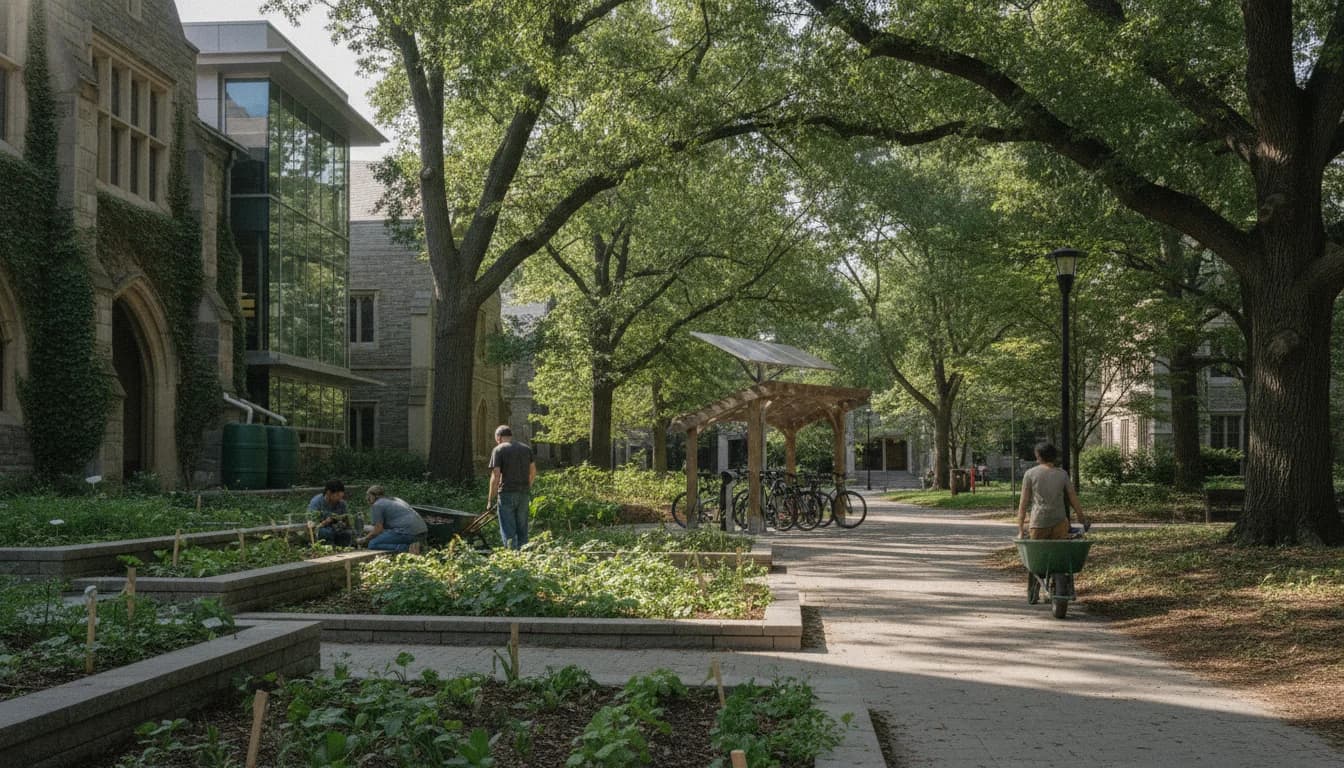
Georgetown University climate resilience center concepts are increasingly shaping how the district models urban adaptation, reflecting Georgetown’s broader climate research ecosystem anchored by recognized centers like the Georgetown Climate Center and the Earth Commons. In recent years, Georgetown has formalized its environmental work into distinct hubs—most notably the Georgetown Climate Center, a nonpartisan policy research center founded in 2009, and the Earth Commons, inaugurated in February 2022 as an interdisciplinary institute designed to fuse research, education, and real-world practice. The District of Columbia Times is reporting on how these structures, together, drive resilience policy, energy transition planning, and community-based adaptation efforts within a city uniquely positioned to influence federal and local climate decision-making. This coverage examines what happened, why it matters for residents and policymakers, and what lies ahead as Georgetown expands its climate resilience portfolio. (global.georgetown.edu)
This evolving ecosystem matters because it situates climate resilience work at the intersection of law, policy, science, and community engagement. Georgetown’s climate research footprint draws on proximity to policymakers in Washington, D.C., and a campus-wide commitment to environmental justice and sustainable governance. The university’s environment-and-sustainability efforts are not limited to isolated programs; they are embedded in a broader strategy that connects the Law Center, the Walsh School of Foreign Service, and the College through cross-disciplinary centers. The result is a more coordinated approach to climate adaptation and resilience that can influence urban planning, infrastructure investment, and emergency preparedness not only on campus but across the region. (global.georgetown.edu)
Opening paragraph aside, readers should note that Georgetown’s climate resilience activities have deep roots and ongoing momentum. The Georgetown Climate Center, established in 2009, has long been a cornerstone of policy-focused climate work at Georgetown Law, providing nonpartisan guidance to governments and communities seeking practical adaptation and decarbonization strategies. In 2022, Georgetown launched the Earth Commons, an institute designed to catalyze multidisciplinary research and education around environmental challenges, including climate change, energy transitions, environmental justice, water and food security, and biodiversity. Together, these components form a landscape in which a “Georgetown University climate resilience center” concept could emerge as a coordinating hub or umbrella initiative, even as the university emphasizes collaboration across a network of programs and centers. (global.georgetown.edu)
What Happened
Foundational pillars: Georgetown Climate Center and Earth Commons
Georgetown’s climate resilience work rests on two major pillars. The Georgetown Climate Center (GCC), housed at the Law Center, was founded in 2009 to advance climate, energy, and transportation policies in the United States with a focus on resilience and practical implementation. This center has historically served as a bridge between policymakers and communities, offering legal and policy analysis that informs local, state, and federal decision-making. The GCC’s mission as a nonpartisan research center underscores Georgetown’s commitment to evidence-based climate governance. (global.georgetown.edu)
In 2022, Georgetown expanded its environmental footprint with the creation of Earth Commons, an umbrella institute designed to integrate the university’s environmental work across campuses and disciplines. Earth Commons emphasizes climate change, energy transitions, environmental justice, environmental health, food and water security, and biodiversity conservation, with a cross-cutting approach that unites faculty, students, and external partners. The institute positions Georgetown as a national and global hub for environmental knowledge, research, and engagement. (georgetown.edu)
Timeline and key milestones
- 2009: Georgetown Climate Center founded as a nonpartisan center at Georgetown Law Center, focusing on policy and practical climate resilience. This landmark established Georgetown as a policy-oriented hub for climate adaptation and energy transition work. (global.georgetown.edu)
- February 2022: The Earth Commons is inaugurated as Georgetown’s institute for environment and sustainability, designed to broaden campus-wide collaboration and real-world impact on environmental challenges. The launch signals a formal organizational home for cross-disciplinary climate work beyond the Law Center. (georgetown.edu)
- February 22, 2022: Earth Commons and the Georgetown community hosted an Environment and Sustainability Town Hall, signaling an inclusive, campus-wide planning process to shape the institute’s trajectory and goals. This event demonstrates the university’s commitment to stakeholder engagement and transparent strategic planning. (georgetown.edu)
- March 18, 2022: A notable artistic and cultural component of Earth Commons’ program, “We Hear You — A Climate Archive,” premiered as part of the institute’s broader engagement strategy, illustrating the blend of science, policy, and public-facing dialogue. (georgetown.edu)
- 2020–2021 onward: Georgetown has continued to embed sustainability across its campuses, including governance actions like divestment from fossil fuels and partnerships to advance renewable energy — reflecting an integrated approach to climate resilience that includes governance, operations, and education. (georgetown.edu)
Beyond these dates, the university’s public materials emphasize ongoing expansion. In 2022, Earth Commons’ leadership underscored that the institute would develop new master’s programs, undergraduate offerings, a Ph.D. program in the Environment, and a postdoctoral fellowship program in the coming years, highlighting a deliberate push to provide a pipeline of talent and research capacity to address climate challenges. The timeline and commitments reflect Georgetown’s intent to institutionalize climate resilience as a core element of its scholarly and outreach mission. (georgetown.edu)
What players are involved and where the work happens
Key players in Georgetown’s climate resilience ecosystem include the Georgetown Climate Center, the Earth Commons, the Office of Sustainability, and the broader Georgetown community of schools and centers. The DC location of Georgetown — with proximity to federal agencies, policy shops, and a dense network of NGOs — is frequently cited as a strategic advantage, enabling researchers to engage directly with policymakers and practitioners. The Earth Commons, specifically described as Washington, DC–based and positioned to partner with NGOs, corporations, and federal policy-making institutions, reinforces this strategic proximity. This arrangement supports applied research, policy dialogue, and practice-based education. (georgetown.edu)
The ecosystem’s interconnections are visible in Georgetown’s formal pages and external communications. The university’s environment-focused resources note that the Earth Commons “will be composed of multiple focal areas” including climate change and energy transitions, and that the GCC serves as a policy-oriented anchor. University-wide environment pages further position Georgetown as a center of climate research and policy, with the Earth Commons serving as a bridge across campuses and a hub for cross-disciplinary collaboration. (georgetown.edu)
A snapshot of ongoing programs and engagement
In practice, Georgetown’s climate resilience work includes policy clinics, research collaborations, and community engagement. For example, georgetown’s Policy Clinic materials and GCC-related policy work illustrate how university resources translate into practical guidance for city and state governments on resilience and climate adaptation. The Center’s work with coastal communities and adaptation policy demonstrates how academic research informs real-world decisions in a climate-vulnerable context. While those materials predate 2026, they illustrate the continuity of Georgetown’s approach to climate resilience through policy analysis, legal frameworks, and technical assistance. (law.georgetown.edu)
In addition to formal centers, Georgetown’s broader sustainability programs and its Earth Commons colleagues emphasize experiential learning and partnerships with external stakeholders. The Earth Commons’ leadership has highlighted the importance of connecting academic inquiry with on-the-ground practice, including collaborations with the Office of Sustainability and other campus units to translate research into tangible campus and community benefits. These efforts showcase how a Georgetown University climate resilience center concept could function as a coordinating umbrella, integrating research, policy, and practice across the university and the wider Washington, DC region. (georgetown.edu)
Why It Matters
Urban resilience and policy impact
The Georgetown Climate Center’s mission to advance climate, energy, and transportation policies in the United States places the center at a critical nexus for resilience planning. Its policy-oriented work helps governments design adaptive strategies that reduce vulnerability to climate hazards while supporting equitable outcomes. The GCC’s presence at Georgetown Law Center anchors climate resilience in legal and policy analysis, enabling the center to contribute to rulemaking, regulatory design, and implementation pathways that cities and states can adopt. As urban areas face flood risk, heat stress, and other climate-related hazards, the GCC’s legal and policy lens can accelerate the adoption of resilient, just solutions at multiple jurisdictional levels. (global.georgetown.edu)
Earth Commons adds a complementary dimension to Georgetown’s resilience agenda by layering environmental science with humanities, arts, and public engagement. By focusing on environmental justice, sustainability education, and cross-disciplinary research, Earth Commons helps translate policy insights from GCC into broader cultural and civic understanding. The DC location further enhances access to policymakers and practitioners, increasing the likelihood that research findings inform real-world decision-making and public discourse. In short, Georgetown’s climate resilience ecosystem matters because it blends law, policy, science, and community voice to shape more resilient cities and healthier environments. (georgetown.edu)
Community impact and equitable resilience
A central theme in Georgetown’s climate resilience narrative is equity. The Earth Commons’ emphasis on environmental justice and inclusive engagement aligns with broader national and local imperatives to ensure resilience benefits reach underserved communities. The Georgetown Climate Center’s policy work often emphasizes equitable adaptation and resilience planning, recognizing that climate hazards disproportionately affect vulnerable populations. As resilience planning becomes more centralized in urban governance, Georgetown’s integrated approach—spanning policy analysis, environmental science, and community partnerships—offers a model for how a university-driven resilience center can support more just and effective climate responses in cities like Washington, DC, and beyond. (georgetown.edu)
Washington, DC as a resilience lab
Georgetown’s DC location is not incidental. The city’s proximity to federal agencies, Congress, and a broad set of environmental and energy stakeholders creates a unique environment in which university research informs public policy. Georgetown’s climate resilience work benefits from this geography, enabling rapid translation of research into policy discussions, as well as the opportunity to observe pilot programs and governance experiments in real time. The Earth Commons’ DC-based focus and its stated intent to partner with NGOs and federal institutions reinforce the idea that Georgetown’s climate resilience activities are not just academic exercises; they are embedded in the policy ecosystem that shapes urban resilience in the nation’s capital. (georgetown.edu)
The role of partnerships and governance
Georgetown’s climate resilience strategy also highlights the importance of partnerships across sectors. The university’s environment and sustainability centers routinely collaborate with government agencies, the private sector, and civil society to test, scale, and disseminate resilience innovations. This collaborative approach is essential for turning research findings into implementable solutions, whether in flood risk management, heat mitigation, or climate-resilient infrastructure design. By organizing around shared goals—equity, science-based policy, and practical impact—Georgetown’s climate resilience ecosystem can accelerate the transfer of knowledge from campus to community. (sustainability.georgetown.edu)
What’s Next
Next steps for the climate resilience ecosystem
Georgetown’s public materials emphasize ongoing expansion of its climate resilience capacity. The Earth Commons leadership outlined plans to develop additional master's programs and undergraduate offerings, a Ph.D. program in the Environment, and a Postdoctoral Fellowship Program, reflecting a clear trajectory toward deeper research depth and broader educational reach. This expansion would help generate a steady pipeline of researchers, practitioners, and policymakers who can contribute to resilience planning and implementation at the local, national, and global levels. The roadmap signals a sustained commitment to climate resilience as a core element of Georgetown’s academic and public service mission. (georgetown.edu)
Near-term engagements to watch
Several near-term indicators will help observers gauge momentum in Georgetown’s climate resilience agenda. First, ongoing collaborations and policy clinics associated with the Georgetown Climate Center are likely to intensify as local and state governments seek guidance on adaptation and resilience policy. Second, Earth Commons’ focal areas, including climate change and energy transitions, environmental justice, and biodiversity, are expected to produce new research papers, policy analyses, and student-focused programs that connect campus scholarship to city and regional needs. How that output gets presented is changing almost as quickly as the research itself: many graduate researchers now use an AI research poster generator to turn a submitted abstract into a conference-ready A0 poster, leaving more preparation time for the findings than for the formatting. Finally, Georgetown’s broader sustainability initiatives—such as the energy and climate programs linked to the university’s operations—will continue to align with the Earth Commons’ mission, reinforcing a holistic approach to climate resilience across campus. (sustainability.georgetown.edu)
A potential roadmap for a Georgetown University climate resilience center
If Georgetown were to formalize a singular “Georgetown University climate resilience center” as an umbrella for its resilience-related activities, it would likely draw on the GCC’s policy expertise, the Earth Commons’ cross-disciplinary research, and the Office of Sustainability’s campus operations. Such a center could serve as a convening entity for researchers, policymakers, and community partners, coordinating research agendas, applied projects, and education programs. It could also provide a centralized portal for resilience data, case studies, and best practices, helping to standardize metrics and monitor outcomes across Georgetown’s various initiatives. While no specific center with that exact name is publicly cataloged as of 2026, the university’s existing institutions lay a robust foundation for such a coordinating hub if and when the administration chooses to formalize it. (global.georgetown.edu)
What to watch in the months ahead
- New research collaborations and joint programs between GCC and Earth Commons that advance resilience policy and practice, including projects that involve local governments and community organizations.
- Updates to Georgetown’s educational offerings related to climate, energy, health, and environment, including potential graduate and postdoctoral opportunities under the Earth Commons umbrella.
- Public-facing events, town halls, and publications that translate academic findings into actionable guidance for urban planners, policymakers, and residents in the District of Columbia and surrouding regions.
- Continued integration of sustainability and resilience into campus operations, with progress reports and dashboards that demonstrate real-world improvements in energy efficiency, emissions reductions, and community engagement.
Closing
Georgetown University’s climate resilience work sits at a pivotal intersection of policy, science, and community action. The Georgetown Climate Center and Earth Commons together illustrate how a university can cultivate an ecosystem that informs public policy, advances resilience in cities, and educates the next generation of leaders in climate, energy, and sustainability. While the exact label “Georgetown University climate resilience center” does not appear as a standalone entity in current public materials, the university’s ongoing investments in policy analysis, interdisciplinary research, and regional partnerships reflect a clear trajectory toward a more integrated, campus-wide approach to climate resilience. For readers seeking updates, Georgetown’s official channels, including campus news releases, sustainability initiatives, and policy-center announcements, remain the best sources for timely information as Georgetown continues to navigate the challenges and opportunities of urban climate resilience. The District of Columbia Times will continue to monitor and report on how these efforts unfold and what they mean for residents, businesses, and policymakers in the region. (global.georgetown.edu)
As the climate landscape evolves, Georgetown’s climate resilience work — anchored by established centers and collaborative institutes — will likely influence urban resilience strategies not only in the nation’s capital but across the broader Northeast and mid-Atlantic corridors. Readers can stay informed by following Georgetown’s official news and climate-related program updates, and by watching how a potential future umbrella center could coordinate the university’s most consequential resilience research and outreach activities for the public good. (georgetown.edu)