FBI Headquarters Relocation Blocked by Maryland Judge
FBI headquarters relocation blocked: District of Maryland judge halts Reagan Building move and preserves Greenbelt funding
By Diane Prescott

September 14, 2026
13 minute read
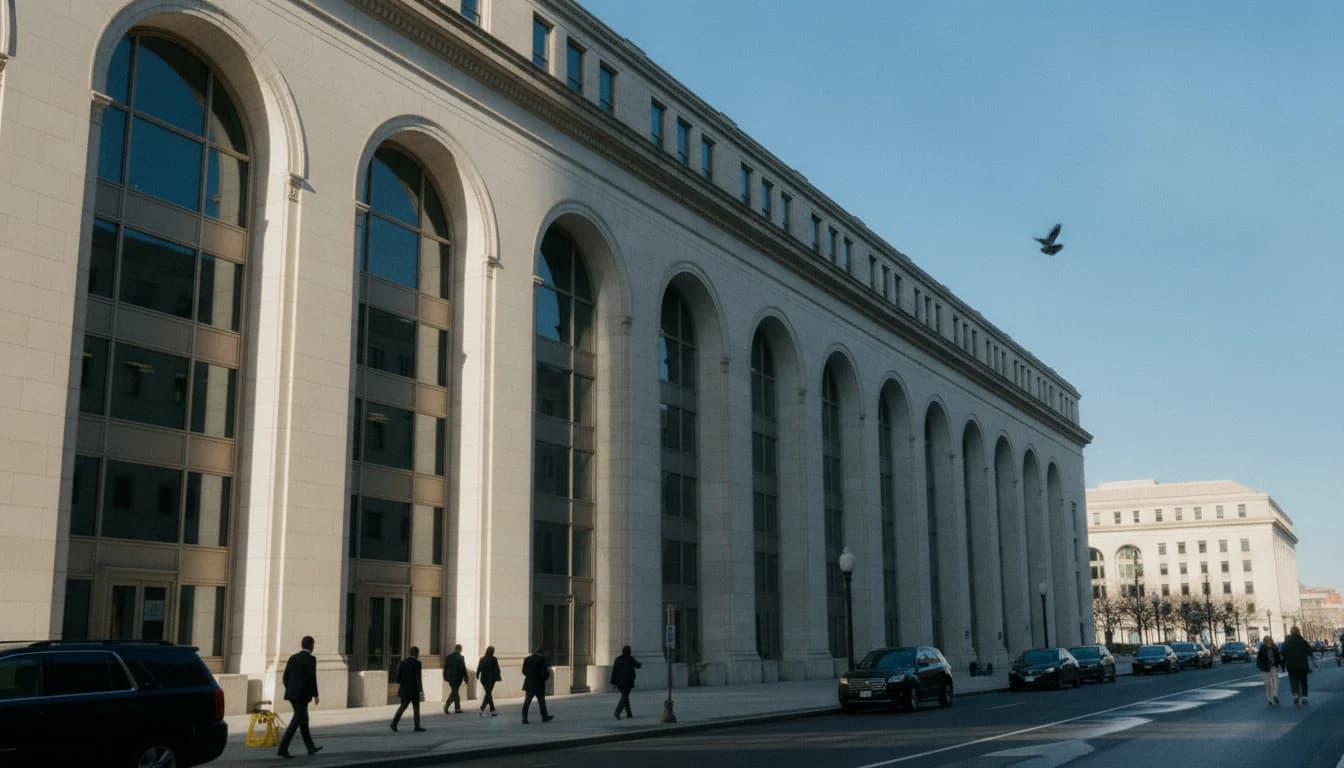
The District of Columbia Times delivers a data-driven update on a landmark federal real estate decision that could reshape the National Capital Region’s government infrastructure for years to come. On August 17, 2026, a Maryland federal judge issued a memorandum opinion blocking the Trump administration’s plan to relocate the FBI headquarters to downtown Washington, D.C., specifically to the Ronald Reagan Building, and ordering a return to the previously approved Greenbelt, Maryland site. The ruling matters not only for the FBI’s mission readiness but also for how the federal government manages large-scale capital projects, congressional funding, and site-selection processes in a politicized environment. The decision comes after a years-long dispute that began with a 2023 site selection and a sequence of administration-level reversals, reprogrammed funds, and congressional directives. The court’s action preserves the Greenbelt plan and casts a shadow over executive-branch decisions to reallocate considerable public funds without explicit congressional authorization. This report draws on primary filings and official agency statements to present what happened, why it matters, and what may come next. For readers who want to verify the paper trail, primary sources include the State of Maryland’s petition in Maryland v. Patel, the FBI and GSA July 2025 announcements, and the August 17, 2026 memorandum opinion. See the Maryland complaint and related docket entries for the procedural record, and the attached public releases for agency positions. Primary documents: State of Maryland complaint (Nov. 6, 2025) and the DOJ/GSA filings; agency press releases confirming the Reagan Building plan (July 2025); and the August 17, 2026 memorandum opinion.
— Opening paragraph The moment the judge’s ruling landed, the legal and fiscal plumbing for the FBI’s next headquarters shifted. On August 17, 2026, U.S. District Judge Theodore D. Chuang issued a memorandum opinion in Maryland v. Patel blocking the Trump administration’s plan to relocate the FBI’s headquarters to the Ronald Reagan Building in downtown Washington, D.C. and directing the agencies to proceed with the originally selected Greenbelt site in Maryland. The decision follows years of debate over where the bureau should consolidate its more than 6,000 personnel and the substantial funding Congress appropriated for a modern campus in Greenbelt, Maryland. The memorandum opinion found the July 2025 Reagan Building move “arbitrary and capricious” and suggested that the agencies lacked clear statutory authorization for diverting dedicated funds away from the Greenbelt project. The ruling does not merely decide a location dispute; it has implications for how Congress exercises control over large public-building programs and how executive agencies comply with statutory site-selection requirements. For readers following the evolution of this case, the primary record includes the November 6, 2025 complaint, the February–April 2026 pleadings, and the August 17, 2026 opinion. See State of Maryland v. Patel, 8:25-cv-03644 (D. Md.), and related docket materials. (dockets.justia.com)
Section 1 — What Happened
The fiscal and site-selection backdrop
The Biden-era Greenbelt decision and the July 2025 reversal
In 2023, Congress directed the General Services Administration (GSA) to pursue a new FBI headquarters site within a defined footprint; the Greenbelt, Maryland site emerged as the favored location after a long site-selection process. The July 1, 2025 joint announcements by the FBI and GSA stated that the Ronald Reagan Building in Washington, D.C. would host the FBI’s new headquarters, arguing it would save costs and avoid large-scale construction. The official releases framed the Reagan Building plan as a financially prudent choice that would deliver a modern facility more quickly. These releases are publicly accessible and form the baseline for later litigation. See the FBI and GSA July 2025 press releases. (fbi.gov)
The fiscal framework: appropriations and reprogramming
Following the 2023–2025 policy arc, a key numeric thread is the funding envelope Congress provided for the FBI’s new headquarters project. A complaint filed on November 6, 2025 describes an $850 million appropriation from Congress to the GSA for the Greenbelt project, with about $6 million spent pre-2025 on preliminary work. The filing also details a plan to reprogram approximately $555 million of FBI funds to support a Reagan Building relocation. This framing—$850 million appropriated, $555 million allegedly diverted, and a remainder still tied to the Greenbelt project—serves as the financial backbone of the dispute. The filing provides the contemporaneous figures that informed the court’s analysis. See the Maryland complaint (Case 8:25-cv-03644-TDC) and attached exhibits. (oag.maryland.gov)
The Maryland lawsuit and the legal record
Maryland and Prince George’s County filed suit in November 2025 to block the Reagan Building plan and to challenge the reprogramming of funds away from Congress’s intended Greenbelt project. The docket timeline shows filings, motions, and responses through early 2026, culminating in the August 17, 2026 ruling. The Justia docket page provides a consolidated, publicly accessible account of these filings, including the initial complaint, consent motions, and subsequent memorandum. The docket shows a sequence of actions, including a consent motion for the filing of exhibits and a joint status reporting requirement following the ruling. These procedural details anchor the substantive issues in law and policy. See State of Maryland v. Patel, 8:25-cv-03644 (D. Md.), docket entries through August 2026. (dockets.justia.com)
The August 17, 2026 memorandum opinion and the immediate impact
The central event in Section 1 is the memorandum opinion issued on August 17, 2026, by Judge Theodore D. Chuang. The opinion held that the FBI’s and GSA’s July 2025 Reagan Building selection and the related funding actions violated law and were arbitrary and capricious in several respects. The opinion also directed that the status quo be restored to the Greenbelt project, and it ordered a joint status report within 14 days to chart the next steps. The memorandum is publicly reported by multiple outlets and archived in court-record repositories, including the Maryland docket and replica publications. For a primary document, see the Aug. 17, 2026 memorandum opinion in Maryland v. Patel. (clearinghouse.net)
Contextual recap of the primary documents
Two primary sources anchor the “what happened” narrative:
- The November 6, 2025 complaint filed by the State of Maryland and Prince George’s County, which lays out the statutory and procedural bases for challenging the Reagan Building plan and the reprogramming of funds. The complaint quotes and cites the relevant appropriations acts and site-selection requirements, and it catalogs the purported legal violations. See State of Maryland v. Patel, 8:25-cv-03644-TDC, Document 1 (Nov. 6, 2025), and related attachments. (dockets.justia.com)
- The August 17, 2026 memorandum opinion by Judge Theodore D. Chuang, which explicitly holds the Reagan Building plan arbitrary and capricious and directs a return to the Greenbelt plan, with a timetable for status reporting. See MARYLAND v. PATEL – MEMORANDUM OPINION (Aug. 17, 2026). (leagle.com)
Subsection note: For readers who want to review the formal filings themselves, the primary docket page provides a route to the official documents and the attached exhibits, including the January–April 2026 briefing activity and the Aug. 17, 2026 decision. See the Justia docket for Maryland v. Patel. (dockets.justia.com)
Section 2 — Why It Matters
Fiscal stewardship and congressional intent on federal real estate
How Congress shapes large-scale projects
The controversy centers on whether agencies may reallocate a congressionally appropriated sum for a different project without explicit authorization. The Maryland complaint emphasizes that the Consolidated Appropriations Acts (2022, 2023) directed site options and consultations that were not followed in the Reagan Building push, and the memorandum opinion finds those updates inconsistent with the statutory framework. The August 17, 2026 ruling thus touches core questions about the separation of powers: who sets the budget and how should funding be exercised when moving a flagship federal building? The primary documents lay out this constraint and frame the issue as a legal compliance matter as much as a real estate decision. See the complaint and the cited appropriations acts attached to it. (oag.maryland.gov)
Real-world cost trajectories and taxpayer impact
Agency statements around July 2025 highlighted anticipated cost savings from using an existing building versus constructing a new suburban campus. The Reagan Building plan was marketed as a way to minimize deferred maintenance costs associated with the Hoover Building and to avoid a multi-year construction project, potentially saving billions in new construction costs. However, the Maryland suit contends that diverting funds and abandoning the approved plan without explicit legislative authorization undermined the public’s fiscal interests. The primary sources document the agencies’ cost assertions and the counterarguments in court filings. See the FBI and GSA July 2025 press releases. (fbi.gov)
Site-selection processes, transparency, and public trust
Publicly, the Reagan Building plan in July 2025 was pitched as a straightforward, cost-effective consolidation that would keep FBI personnel in the District, while the Greenbelt plan represented a longer, more expensive route with a broader regional economic impact. The Maryland complaint accuses the agencies of lacking adequate consultation with Maryland and of deviating from established site-selection criteria, thereby eroding confidence in the process. The August 2026 decision, grounding its reasoning in Administrative Procedure Act standards, underscores the importance of transparent, legislatively authorized processes for major federal real estate moves. See the complaint and the accompanying exhibits for the site-selection criteria and the statutory framework. (oag.maryland.gov)
Operational and strategic implications for the FBI and the region
Mission continuity and workforce implications
Proponents of a new, modern FBI headquarters have long argued that a single, purpose-built campus would enhance security, data center capacity, and personnel efficiency. Critics of the Reagan Build move argued that the DC-based site would complicate consolidation due to security, access, and long-term maintenance considerations. With the Aug. 17, 2026 ruling, the question now centers on whether the FBI can sustain modernization goals within the Greenbelt framework, and how long any setback might delay the bureau’s ability to consolidate operations, update infrastructure, and upgrade security. The primary sources reflect competing perspectives on the best path forward, with the Reagan Build plan promoted by agency leadership and the Greenbelt option defended in court filings. See the July 2025 press releases and the November 2025 complaint. (fbi.gov)
The regional real estate market and public-sector procurement
Beyond the FBI, the case touches the broader public-sector real estate market in the D.C. area. Large, high-profile moves like this can shift demand for federal-space occupancy, lease renegotiations, and the economics of nearby commercial and government-owned properties. Analysts watching federal procurement patterns may ask whether this ruling could influence future, similarly scaled projects—both in timing and in the degree of congressional oversight required. For readers seeking evidence-based context, agency procurement plans, and public statements from July 2025 provide a useful baseline for evaluating the Reagan Building path versus a Greenbelt expansion. See the GSA and FBI July 2025 releases and related Congressional debates. (gsa.gov)
Expert commentary and quotes from primary actors
- Maryland Attorney General Anthony Brown framed the ruling as a necessary correction to unlawful shifts in funding and site selection: “Maryland and Prince George’s County committed more than a decade of work to earn the FBI headquarters and pledged hundreds of millions of dollars. By blocking the Trump Administration’s unlawful attempt to move the FBI to the Reagan Building and divert the funds Congress set aside for this project, the Court has cleared the path back to Greenbelt.” This sentiment is captured in contemporaneous reporting and underscores the public accountability dimension of the decision. (cbsnews.com)
- FBI spokespersons emphasized the mission-driven focus of the agency and argued that the ruling could impede cost-effective modernization. The public statements accompanying the July 2025 announcements framed the Reagan Building plan as a prudent use of resources, though the August 2026 ruling challenges that framing. See the July 1, 2025 press releases from FBI and GSA. (fbi.gov)
What this means for policy and future planning
The Maryland v. Patel decision, anchored in the Administrative Procedure Act framework, signals that emergency reallocations of funds for major federal projects will face rigorous scrutiny when they bypass established site-selection processes and congressional directives. If the district court’s reasoning holds on appeal or in subsequent actions, future federal real estate moves may require more explicit legislative authorization or a renewed, transparent site-selection process with public consultations and detailed analyses. For readers and policymakers, this underscores the importance of clearly documented approvals and a robust legislative role in capital projects of national significance.
Section 3 — What’s Next
Next steps and timeline expectations
Immediate actions following the August 17, 2026 ruling
The court’s order directed parties to file a Joint Status Report within 14 days to outline the next steps and to define a practical path forward for the FBI headquarters project. The Maryland docket confirms the directive for a status update, which will likely set the stage for further court involvement or potential settlement discussions among the parties. The joint status report requirement is a procedural hinge that could influence whether work streams resume on the Greenbelt site, or whether a negotiated accommodation emerges involving Congress and the agencies. See the Justia docket for Maryland v. Patel, including the 14-day status reporting obligation. (dockets.justia.com)
Possible appellate or legislative pathways
Looking ahead, several scenarios could unfold:
- The agencies could choose to pursue appellate review to challenge the memorandum opinion’s analysis, seeking to restore the Reagan Building plan through statutory interpretation or next-steps legislation.
- Congress could revisit the site-selection framework and possibly issue new directives that reconcile security requirements, budget constraints, and regional planning goals.
- The Greenbelt site could see renewed momentum, supported by state and local officials who have invested in the project for years.
Readers should monitor major federal court dockets, agency press releases, and congressional activity for developments. The primary documents to watch include the Maryland complaint, subsequent court filings, the August 17, 2026 memorandum, and any new joint updates filed by the parties.
How readers can stay informed
- Track the Maryland v. Patel docket on Justia to observe new filings and orders as they are issued. The docket record provides a complete, time-stamped log of the case posture and judicial rulings. See State of Maryland v. Patel, 8:25-cv-03644 (D. Md.). (dockets.justia.com)
- Review the original complaint to understand the statutory and regulatory bases for challenging the Reagan Building move, including the appropriations language cited by Maryland. The November 6, 2025 complaint includes the core factual and legal assertions, along with attached exhibits. (oag.maryland.gov)
- Read the August 17, 2026 memorandum opinion for the court’s reasoning on the Administrative Procedure Act claims and the decision to restore the Greenbelt process. A publicly accessible memorandum is published by multiple outlets and reproduced in court records. (leagle.com)
- Consult the FBI and GSA primary press releases from July 2025 to understand the agencies’ publicly stated rationale for the Reagan Building plan and to compare them with the court’s later findings. These releases reflect the agencies’ official positions at the time. (fbi.gov)
- Refer to congressional records and accompanying analyses to gauge legislative perspectives on the site-selection process and funding allocations for FBI headquarters. See relevant congressional records and committee reports that discuss the Reagan Building plan and Greenbelt decision. (govinfo.gov)
Quotations and expert insights
“Maryland and Prince George’s County committed more than a decade of work to earn the FBI headquarters and pledged hundreds of millions of dollars. By blocking the Trump Administration’s unlawful attempt to move the FBI to the Reagan Building and divert the funds Congress set aside for this project, the Court has cleared the path back to Greenbelt.” — Anthony Brown, Maryland Attorney General, as cited in contemporaneous reporting on the ruling. (cbsnews.com)
“The [Reagan Building] plan followed nearly two decades of attempts to locate a suitable FBI headquarters. Moving the FBI’s operations to a DC site could have yielded cost savings, but the decision required statutory authority and a transparent process.” — FBI/ GSA public statements accompanying the July 2025 announcements. (fbi.gov)
Two primary sources for further reading (direct links)
- Maryland complaint in Maryland v. Patel (Nov. 6, 2025) with attachments describing the funding and site-selection issues: State of Maryland v. Patel, 8:25-cv-03644 (D. Md.) — Document 1 (Nov. 6, 2025). https://oag.maryland.gov/News/Documents/pdfs/110625_FBI_Complaint.pdf
- Agency announcements on the Reagan Building plan (July 1, 2025): FBI press release New FBI Headquarters in Washington, DC; GSA press release FBI Announces New Headquarters in Washington, DC. https://www.fbi.gov/news/press-releases/new-fbi-headquarters-in-washington-dc and https://www.gsa.gov/about-gsa/newsroom/news-releases/fbi-announces-new-headquarters-in-washington-dc-07012025
- Aug. 17, 2026 Memorandum Opinion in Maryland v. Patel (8:25-cv-03644-TDC): The published decision can be read via public postings (e.g., Leagle replica). https://www.leagle.com/decision/infdco20260824a74
What’s the bottom line for readers?
- The FBI headquarters relocation blocked case, anchored in the Maryland v. Patel dispute, centers on whether executive actions to relocate a major federal facility can proceed without explicit congressional authorization and according to statutory site-selection requirements. The August 17, 2026 memorandum opinion blocks the Reagan Building move and maintains the Greenbelt site as the path forward for the FBI’s next headquarters, pending further status updates. The decision has broad implications for how taxpayers’ dollars are allocated in large, high-profile federal projects and how site-selection decisions are made in the future. The public record, including the November 2025 complaint and the August 2026 memorandum, will guide any subsequent actions, whether by agencies, Congress, or the courts. For readers and stakeholders who want to gauge the long-term impact on the region’s real estate market and federal investment strategy, these primary documents provide the clearest foundation for analysis.