
Pennsylvania Avenue redevelopment NCPC 2026 Capitol Makeover

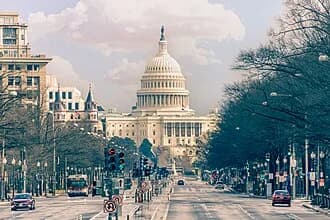
The National Capital Planning Commission’s ongoing Pennsylvania Avenue Initiative is moving toward a formal public review in 2026, signaling a landmark shift for the corridor between the White House and the U.S. Capitol. The effort, officially framed as a New Pennsylvania Avenue Plan, aims to modernize aging infrastructure, redesign the roadway, and beautify public spaces while establishing a streamlined governance model to manage operations, maintenance, and programming. The plan is being developed by a federal-local partnership led by NCPC in collaboration with the General Services Administration, the National Park Service, the District of Columbia government, Events DC, and the DowntownDC Business Improvement District, with two consultant teams at the helm: DAVID RUBIN Land Collective and HR&A Advisors. This coordinated effort, rooted in the vision of Pennsylvania Avenue as a high-profile public stage and destination, is designed to support national celebrations in 2026 and 2027 while enhancing daily street life for residents and visitors alike. The work comes as the city approaches America’s 250th birthday in 2026, a context that NCPC argues underscores both the urgency and opportunity to refresh the Corridor’s public realm and civic function. (ncpc.gov)
In a February 2026 briefing, NCPC staff summarized the current status and near-term milestones, noting that public comment opportunities are planned for April 2026 and that plan submissions and reviews will unfold over the next year and a half. The Commission indicated that the process will advance through distinct review phases: concept review in early spring 2026, preliminary review in early fall 2026, and final review in early 2027, with the aim of delivering a fully defined plan and governance framework before implementation begins in earnest. These dates position Pennsylvania Avenue redevelopment NCPC 2026 as a high-profile, multi-year effort, with a formal plan expected to guide design, construction, and operation for decades. (ncpc.gov)
Opening
The Pennsylvania Avenue Initiative represents a renewed, government-wide effort to restore and reimagine the corridor that runs from the Capitol to the White House. NCPC has framed the Avenue as a Venue in its vision, envisioning a public realm that can host nationally significant events while also serving daily civic life. The plan emphasizes modern infrastructure, resilient design, and a governance model that makes stewardship—covering design, construction, operations, maintenance, fundraising, and programming—more efficient and sustainable. The Initiative’s scope includes a revamped public space master plan, strengthened security and transportation integration, and an improved experience for pedestrians, cyclists, transit users, and drivers alike. The engine behind this transformation is a public-private partnership embracing a broad set of stakeholders and a pair of design teams charged with translating the vision into tangible concepts. (ncpc.gov)
As part of the broader national context, NCPC has tied the Avenue’s redevelopment to significant milestones such as the 2025 Presidential Inaugural events and the 2026 anniversary year, positioning the corridor as both a symbolic gateway and a functional venue that can accommodate large-scale programming with contemporary standards for safety, accessibility, and maintenance. The planning work underscores a dual objective: restore the Avenue’s grandeur and civic role while ensuring the Administration can administer, animate, and fund a world-class public realm for decades to come. The planning team has signaled that while exact costs will be determined in later phases, the path forward includes a clear governance structure and phased design development to ensure timely progress and public accountability. (ncpc.gov)
Section 1: What Happened
Partnerships and governance align to reshape a historic corridor
A formal partnership formed in July 2023 brings together NCPC, the General Services Administration, National Park Service, the District of Columbia government (through DMPED), Events DC, and DowntownDC BID to guide the New Pennsylvania Avenue Plan. This coalition is designed to unify federal and local interests and to provide a coherent framework for design, maintenance, events, and programming. The early 2020s collaboration culminated in a shared vision and a plan for implementing a modernized, better-managed Avenue that can host major events while supporting local economies along downtown Washington, D.C. The partnership underscores a long-term commitment to a unified public realm strategy that respects the Avenue’s historic character while enabling contemporary uses. (ncpc.gov)
Two design teams translate vision into design concepts and implementation paths
DAVID RUBIN Land Collective leads the public space master plan, shaping corridor, parks, and plazas, as well as the physical layout and urban room concept that would choreograph the Avenue from west to east. HR&A Advisors focuses on events programming and long-term stewardship, ensuring the Avenue can host a robust schedule of national and local events and that there is a sustainable financial and operational model to support ongoing programming. The two firms collaborate to deliver a unified plan that balances public space with event capacity, security, and daily use. Their joint work is framed around the “Avenue as a Venue” concept, which envisions a sequence of high-quality civic spaces along the corridor and a dynamic, year-round calendar of uses. The plan is expected to include both a master plan for public space and an implementation program designed to streamline governance and funding. (ncpc.gov)
The vision builds on prior concepts that shaped public input in 2022
NCPC’s public engagement in 2022 introduced three early design concepts—Urban Capital, Linear Green, and Civic Stage—each proposing different configurations for how Pennsylvania Avenue could be reimagined to balance multi-modal transport, social space, and ceremonial use. The 2022 concepts also highlighted the idea of “urban rooms” along the Avenue, a concept that continues to influence the New Pennsylvania Avenue Plan’s approach to a connected series of high-quality spaces and programmed uses. The 2022 public comments helped calibrate what a modern, adaptable Avenue might look like and provided a baseline for consultant teams to translate into a 2025–2027 design and implementation schedule. While the 2022 period concluded with public comment, NCPC has carried those ideas forward into a more detailed, phased plan with a formal 2026 public review window. (ncpc.gov)
Detailed timeline and near-term milestones
The 2025 Year in Review notes that the Pennsylvania Avenue plan entered a new phase in which the consultant teams advanced design studies and implementation strategies to prepare for a public review process in 2026. NCPC’s February 2026 briefing reiterates this trajectory, with plans to submit the concept for Commission review in early spring 2026, followed by preliminary and final reviews in later 2026 and early 2027, respectively. Public involvement is scheduled to continue through this period, with formal comment opportunities anticipated in April 2026. The timeline reflects a structured, multi-year governance and design cycle designed to produce a credible, fundable plan and a clear stewardship model. (ncpc.gov)
Project deliverables and the path to implementation
The New Pennsylvania Avenue Plan comprises two major components: a public space master plan that guides physical changes along the corridor and an implementation program that improves governance, stewardship, and operations. The vision explicitly calls for a transformed Avenue that can host spectacular events, deliver a beautiful public realm, modernize critical infrastructure, and streamline administration. When complete in 2027, the plan is intended to establish a new steward to oversee design and construction, operations and maintenance, fundraising, and event programming long into the future. The current design process deliberately aligns with these deliverables, providing a clear path from vision to execution and a mechanism for ongoing public involvement. (ncpc.gov)
What the plan could mean for the corridor’s character and uses
The Avenue as a Venue concept is anchored in the idea of a flexible, multi-use public realm that can accommodate both large-scale national events and everyday street life. The three core ideas from the vision—Urban Capital, Linear Green, and Civic Stage—each emphasize different configurations that balance pedestrian space, transit access, vehicle lanes, and green/public realm features. The aim is to right-size the street to accommodate modern urban needs while preserving the Avenue’s civic symbolism. This approach envisions a future where the Avenue serves as a premier outdoor stage for celebrations and commemorations, while also supporting daily commerce and local neighborhoods through improved sidewalks, plazas, and programming. The integrated design and programming strategies seek to unify security, mobility, and maintenance under a single governance framework, potentially improving resilience and long-term cost effectiveness. (ncpc.gov)
Section 2: Why It Matters
Broader implications for the District’s economy, mobility, and public life
The New Pennsylvania Avenue Plan is positioned as a catalyst for economic growth, tourism, and civic pride by creating an enhanced public realm capable of hosting nationally significant events and daily urban life. NCPC emphasizes that the Avenue’s redevelopment is not just about aesthetics; it is about modernizing infrastructure, improving safety, and providing a robust platform for events programming and private investment in adjacent districts. The Initiative’s alignment with the 250th-anniversary celebrations and major public events signals a strategic opportunity to leverage DC’s status as a global capital, attracting visitors, supporting local businesses, and elevating the city’s image on the world stage. While the specifics of cost and funding will emerge in later design phases, the overarching goal is to deliver a plan that is both economically viable and symbolically powerful. (ncpc.gov)
Civic space, design excellence, and public engagement
A core rationale for the Pennsylvania Avenue redevelopment NCPC 2026 is to restore grandeur to the Avenue while introducing contemporary accessibility, safety, and environmental features. The Vision describes a “City-wide stage” and a public realm that improves maintenance efficiency and operations, ensuring that the Avenue can host events of national significance while remaining a welcoming, livable street for pedestrians and residents. The plan’s emphasis on public spaces, plazas, and parks, along with the “urban rooms” concept, suggests a future where the Avenue is experienced not only as a ceremonial route but as a sequence of public entertainment, cultural, and community spaces. Public engagement remains a central component, with NCPC planning to reopen comment opportunities in 2026 and maintain channels for ongoing input as design alternatives are developed. (ncpc.gov)
Governance, stewardship, and long-term maintenance
A notable aspect of the plan is the aspiration to establish a new steward tasked with overseeing design and construction, operations and maintenance, fundraising, and event programming. This governance structure is intended to create continuity across administrations and budgets, ensuring that the Avenue remains a well-managed and financially sustainable public asset. The implementation program is expected to address not only the physical footprint but also the organizational framework required to sustain programming, security upgrades, and ongoing capital improvements. This shift toward centralized stewardship reflects a broader trend in major corridors where long-term viability depends on coordinated governance and stable funding streams. (ncpc.gov)
Comparative context: how Pennsylvania Avenue redevelopment fits DC’s broader growth agenda
Within Washington, DC, the Penn Ave initiative sits alongside other major planning and redevelopment efforts aimed at strengthening the city’s core, such as street beautification programs and district-scale economic development projects tied to the 250th anniversary celebration and anticipated events in 2026–2027. NCPC’s 2025 Year in Review highlights the Avenue as a flagship project alongside other high-profile corridors and districts, signaling a coordinated approach to revitalizing federal assets, public spaces, and gateways in the Nation’s Capital. The initiative represents an integrated strategy that connects federal planning, local governance, and private-sector participation to achieve a shared objective: a more vibrant, safer, and economically resilient downtown with a public realm capable of hosting world-class events and daily city life. (ncpc.gov)
Section 3: What’s Next
Near-term milestones and ongoing public engagement
Public engagement is a notable near-term focus, with NCPC planning to announce public comment opportunities in April 2026. This marks a key inflection point in the design process, enabling residents, businesses, and visitors to weigh in on preferred design approaches and programming opportunities as the plan moves toward conceptual reviews. The Commission’s February 2026 briefing also notes that public input will be sought again during subsequent design reviews as the teams present preliminary design alternatives and refined concepts. For readers and stakeholders, this phase represents an opportunity to shape the Avenue’s future by contributing to discussions about public space, safety, access, and event programming. (ncpc.gov)
Spring 2026: Concept review and design exploration
The plan calls for NCPC to submit the concept for Commission review in early spring 2026, signaling the transition from vision to more formal design proposals. The concept review will be informed by the 2022 vision ideas and the 2025–2026 design studies conducted by Land Collective and HR&A Advisors, with an emphasis on producing a public space master plan and a detailed implementation program. The reviews will be complemented by public presentations and comment periods, continuing NCPC’s commitment to transparency and public involvement as the Avenue’s future takes shape. This phase is crucial for testing design options, evaluating trade-offs among transportation modes, public access, and event capacity, and identifying early implementation steps that can proceed with federal and local support. (ncpc.gov)
Fall 2026: Preliminary review and design refinement
Following the initial concept review, the plan moves into preliminary design, with a focus on refining the corridor layout, parks, plazas, and potential event spaces, as well as articulating a governance and funding strategy. The preliminary design phase serves as the bridge to final design and NEPA/Section 106 processes, ensuring that environmental, cultural resource, and security considerations are integrated early in the design development. NCPC’s emphasis on NEPA and Section 106 in late 2025/early 2026 for designing alternatives—documented in the 2022 Vision narrative and the 2022–2026 planning cadence—suggests that environmental review will be an ongoing, parallel process as design evolves. (ncpc.gov)
Winter 2026–2027: Final design, governance, and preparation for implementation
The final review is slated for early 2027, culminating in a comprehensive plan that includes both design maps and a governance/implementation framework. With a completion target of 2027 for the New Pennsylvania Avenue Plan, the corridor would enter a period of phased implementation, subject to funding and political support. NCPC’s public-facing materials emphasize that the final plan will establish a steward organization to guide design, construction, maintenance, and programming for decades to come. Readers should anticipate additional public briefings and commission actions as the plan transitions from concept to action. (ncpc.gov)
Staying informed and how to participate
For readers who want to follow the Pennsylvania Avenue redevelopment NCPC 2026 journey, NCPC maintains an active initiative page, regular public meetings, and opportunities to subscribe for updates. The Commission’s site indicates ongoing public involvement and encourages residents to stay engaged as the plan evolves toward formal reviews and potential project milestones. Updates, briefing materials, and recordings from Commission meetings are typically posted to the initiative’s page, with new public comment windows opening during key phases. The Avenue plan’s momentum depends on sustained public input and interagency coordination. (ncpc.gov)
Closing
The Pennsylvania Avenue redevelopment NCPC 2026 initiative represents a landmark moment for Washington, DC’s urban landscape. By combining a public space master plan with an efficient governance framework, the project seeks to restore the Avenue’s grandeur while ensuring it remains a vibrant, safe, and economically productive corridor for generations. The plan’s success hinges on timely design milestones, robust public engagement, and durable funding and stewardship arrangements. As NCPC prepares to invite public input in 2026 and advances through concept and preliminary design phases, observers will be watching not only the aesthetic transformations but also the operational architecture that will sustain Pennsylvania Avenue as a premier civic venue and daily urban street. Readers who want to stay informed can monitor NCPC’s Pennsylvania Avenue initiative page and attend forthcoming public meetings and briefings. (ncpc.gov)