
Nick Cave Mammoth Smithsonian American Art Museum Opens

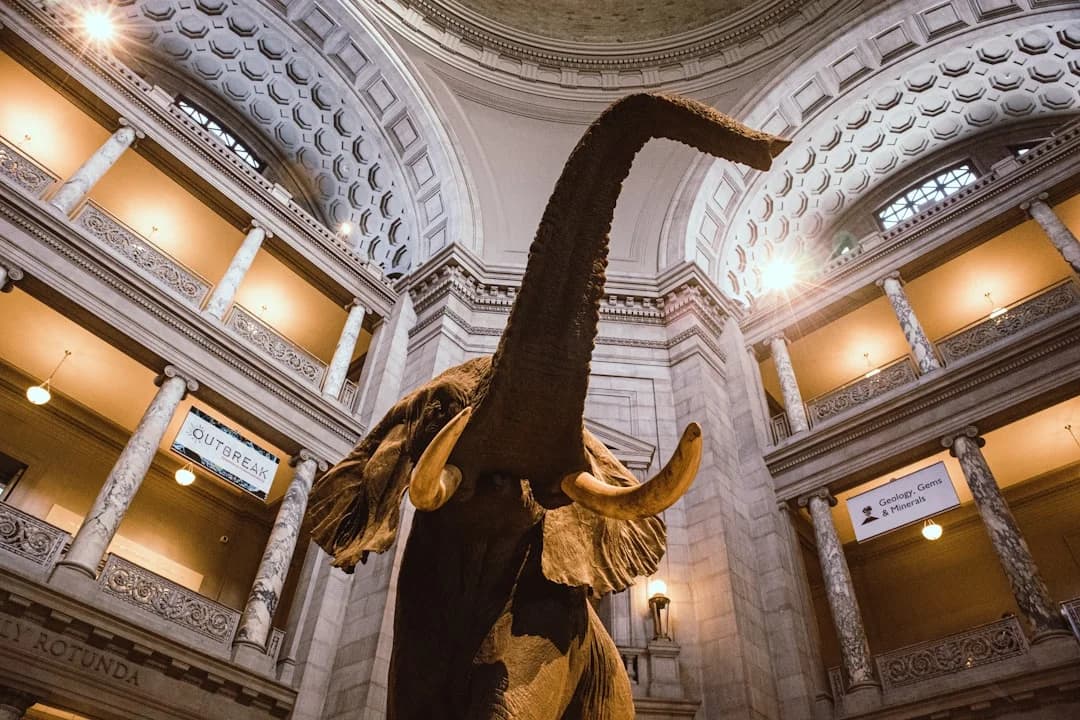
Photo by Alejandro Barba on Unsplash
In Washington, DC, the Smithsonian American Art Museum has opened Nick Cave: Mammoth, a major new installation that reframes the galleries as an immersive environment built around mammoth imagery, everyday objects, and Cave’s distinctive multidisciplinary practice. Debuting on February 13, 2026, the show runs through January 3, 2027 and invites visitors to walk among crafted hides, bone-inspired forms, and a sweeping light-table display that rethinks how memory, history, and material culture intersect in a contemporary art setting. This opening marks a significant moment in the DC museum season, aligning with a broader push to present large-scale, cross-media installations that engage diverse audiences with complex, data-rich storytelling. The exhibition is organized by Sarah Newman, the James Dicke Curator of Contemporary Art, with support from a broad network of donors and endowments, underscoring the Smithsonian American Art Museum’s commitment to presenting ambitious, thematically intricate projects. (americanart.si.edu)
The museum has scheduled a slate of public programs to accompany the opening period, including a Gallery Talk on Friday, February 13, 2026 at 11:45 a.m. and a Mammoth Family Day on Saturday, February 21, 2026 from 11:30 a.m. to 3:00 p.m. Both events are designed to engage families and casual visitors while offering deeper dives for scholars and enthusiasts, reflecting the institution’s ongoing emphasis on accessibility and education. Admission to the exhibition remains free, a policy that aligns with the Smithsonian’s mission to provide universal access to culture and learning. The approach mirrors a broader cultural moment in which major museum openings are paired with robust, audience-friendly programming intended to broaden participation in contemporary art. (americanart.si.edu)
As the DC Times helms its coverage, the Nick Cave: Mammoth installation is already drawing attention in national outlets for its expansive scope and intimate themes. A Washington Post feature highlights the show as a “staggering, deeply personal” commission that merges installation, sculpture, video, and performance, using Cave’s signature multi-material vocabulary to examine memory, identity, and history through both personal and collective lenses. The piece situates Cave’s practice—long noted for soundsuits that blur race, gender, and cultural signifiers—within a new, reflective frame that emphasizes the environmental and ancestral dimensions of human creativity. For readers tracking how museums translate late-20th and early-21st century art into immersive, participatory experiences, Nick Cave: Mammoth offers a data-driven case study in curatorial risk-taking balanced by public-accessibility. > Creative dialogue around the show continues to grow as DC audiences encounter the first long-running, mammoth-themed installation at SAAM in recent years. (washingtonpost.com)
Section 1: What Happened
Announcement Details
Exhibition title and scope
Nick Cave: Mammoth is the Smithsonian American Art Museum’s newest major installation, inviting visitors to step into Cave’s reimagined museum environment. The centerpiece features mammoth-inspired motifs—crafted hides, bone-like textures, and a video projection animating long-deceased creatures—interlaced with hundreds of transformed found objects, from vintage tools to a family keepsake collection. The experience is presented on a monumental light table that rearranges everyday materials into a paleontological-like display, turning ordinary objects into artifacts of memory and meaning. This multi-sensory approach reflects Cave’s broader artistic language, which blends sculpture, performance, fashion, and storytelling to examine identity, community, and history. The exhibition foregrounds material culture as a living archive, a technique that offers visitors a tangible way to reflect on how objects carry memory across generations. (americanart.si.edu)
Dates, location, and official schedule
The exhibition opened on February 13, 2026, and will be on view through January 3, 2027 at the Smithsonian American Art Museum in Washington, DC. Public hours are listed in alignment with the museum’s seasonal schedule, and the installation is designed to accommodate a range of visitor needs, from school field trips to weekend family programs. The exact dates and a full list of public programs are published by SAAM and updated on the museum’s site as programming evolves. The enclosure of dates helps readers understand the show’s pace and the opportunity window for school groups, tourism planners, and local residents to engage with this major contemporary-art installation. Exhibition-specific program dates include a Gallery Talk on February 13, 2026 at 11:45 a.m. and a Mammoth Family Day on February 21, 2026 from 11:30 a.m. to 3 p.m., with free admission. (americanart.si.edu)
Production and curatorial leadership
The Nick Cave: Mammoth installation is organized by Sarah Newman, James Dicke Curator of Contemporary Art, with support from Anne Hyland, curatorial associate. The curatorial leadership notes the project’s ambition to traverse personal memory, family history, and broader environmental concerns through a curated sequence of rooms and objects that evoke both fossil record and everyday life. This leadership structure aligns the show with SAAM’s historical emphasis on cross-disciplinary practices and its ongoing commitment to presenting contemporary voices within the context of a national collection. The exhibition’s credit lines also acknowledge a constellation of donors and endowments that enabled the production, with particular thanks to the Fisher Arts Impact Fund and other supporters who helped realize the immersive environment. (americanart.si.edu)
Exhibition components and visitor experience
What makes Nick Cave: Mammoth distinctive is not only the material richness but the way the installation invites movement, memory, and interpretive play. The gallery layout transforms the space into a field of “living fossils”—a descriptor that captures Cave’s use of relic-like objects and narrative objects as if unearthed from a family attic or a regional fossil bed. The video projection of ancient mammals coexists with an abundance of thrifted objects presented as paleontological specimens on a large light table, creating a visual dialogue between past and present. The mammoth motif also references Cave’s broader interest in lineage, ancestry, and the human impulse to record, preserve, and reinterpret memory through craft. In this sense, the show serves as both a historical meditation and a contemporary call to consider how communities value and interpret objects that surround daily life. (americanart.si.edu)
Public programs and accessibility
Public programs surrounding Nick Cave: Mammoth are designed to be inclusive, with a Gallery Talk and a dedicated Family Day among the early-episode programs. The events are scheduled to accommodate families, students, and general visitors, and museum leadership emphasizes accessibility through free admission to the exhibition. The combination of free access and a structured program lineup reflects SAAM’s broader commitment to expanding engagement with modern and contemporary art among a diverse audience. The public program lineup is designed to foster dialogue around themes of memory, identity, and the environment, with accessibility features and family-friendly activities integrated into the immersive experience. (americanart.si.edu)
Catalogue and scholarly resources
To complement the exhibition, SAAM published a companion catalogue, Nick Cave: Mammoth, which features essays by Sarah Newman, Cherise Smith, and Gwendolyn DuBois Shaw, with a poem by J Drew Lanham and a foreword by Jane Carpenter-Rock. The catalogue explores themes of identity, environmental crisis, and institutional critique, and includes process photography, sketches, and in-process material documenting Cave’s approach to the Mammoth project. The publication reflects the show’s scholarly depth and provides a lasting resource for researchers, students, and general readers seeking a deeper understanding of Cave’s methods and thematic concerns. The publication is listed for 2026 with a hardcover edition available for pre-order. (americanart.si.edu)
Why It Matters
Cultural significance and thematic depth

Nick Cave: Mammoth advances a conversation about memory, material culture, and the relationship between people and their landscapes. The Mammoth project situates Cave’s practice—centered around memory, ritual, and the transformation of discarded materials—within a larger dialogue about how communities preserve histories, construct identity, and respond to environmental concerns. This approach resonates with Cave’s broader career, which has consistently used found objects and performative elements to interrogate racial, social, and political themes while maintaining a sense of communal optimism. The show’s emphasis on family history and the world of relics invites visitors to consider how objects—whether thrift-store finds or grandmother’s keepsakes—become vessels for memory and meaning when placed in an art context. Cav e’s oeuvre, as described by credible sources, is deeply connected to the idea that personal and shared histories can be remade through craft and performance, a concept that Nick Cave: Mammoth brings into a museum setting with a powerful, contemporary resonance. (britannica.com)
The Washington Post’s coverage of Nick Cave: Mammoth highlights the show as expansive and deeply personal, identifying its fusion of installation, sculpture, video, and performance as central to the visitor experience. The article frames the show as a thoughtful meditation on memory and identity, anchored in Cave’s decades-long exploration of how materials and objects carry social and political significance. This perspective helps readers understand the exhibit not merely as an object-based display but as a narrative environment that invites sustained contemplation. (washingtonpost.com)
Economic and audience implications
From an audience-access perspective, Nick Cave: Mammoth reinforces the Smithsonian American Art Museum’s role in delivering high-profile, cross-disciplinary contemporary art that also engages broad publics through free admission and targeted programming. The inclusion of specific public programs—such as a Gallery Talk and a Family Day—helps demystify contemporary art for first-time visitors while offering depth for more experienced museum-goers. The format demonstrates how major museum exhibitions can balance scholarly rigor with audience accessibility, a model that has been increasingly influential in city museum ecosystems that aim to maximize attendance while preserving curatorial integrity. The exhibit’s public programming, alongside the companion catalogue, enhances the overall educational value, turning a single installation into a multi-platform learning experience. (americanart.si.edu)
The broader arts and museum context in DC
This exhibition arrives at a moment when Washington, DC, is expanding its spring cultural calendar with a mix of innovative, immersive art and traditional museum programming. The DC arts scene has been documented for its focus on identity, memory, and social themes, with major spring shows highlighted across national outlets as part of a broader trend toward thematically ambitious presentations. Nick Cave: Mammoth places SAAM at the center of this momentum, illustrating how museums are retooling their spaces to accommodate interactive, concept-heavy installations that require substantial resources, cross-disciplinary collaboration, and audience-centric programming. The coverage also aligns with ongoing discussions about how museums curate experiences that are as educational as they are emotionally resonant, a strategy that is increasingly central to public-facing museum practice. (britannica.com)
Academic and curatorial implications
From a scholarly vantage point, Nick Cave: Mammoth functions as a significant case study in how contemporary artists translate personal memory and public history into immersive environments. The exhibition’s design—combining tactile objects, mammoth imagery, and multimedia projections—offers a model for future exhibitions exploring memory, material culture, and identity. For researchers, the accompanying catalogue provides a curated set of perspectives that link Cave’s practice to broader conversations in environmental humanities, material culture studies, and performance art. The scholarly apparatus surrounding the show invites readers to examine how museums can pair aesthetic risk with rigorous critical inquiry, producing a holistic experience that appeals to both lay audiences and academic communities. The publication and the show together contribute to the scholarly record surrounding Nick Cave’s evolving practice and its resonance with contemporary museum pedagogy. (americanart.si.edu)
Audience diversity and accessibility implications
Nick Cave: Mammoth’s emphasis on accessibility—free admission, family programming, and inclusive design—illustrates a growing trend toward making complex contemporary art approachable to a wider audience. This strategy aligns with broader museum goals to democratize access to cultural experiences and to ensure that critical, challenging art remains reachable for people across different age groups and socioeconomic backgrounds. The Mammoth installation, with its combination of ritual objects, performative references, and interactive elements, offers entry points for diverse audiences—students studying memory and material culture, families seeking hands-on engagement, and general visitors curious about contemporary art’s capacity to address memory, identity, and the environment. The public programming surrounding the show helps operationalize these goals, offering curated experiences that enhance learning outcomes while maintaining a dynamic, experiential exhibit design. (washingtonpost.com)
Section 3: What’s Next
Timeline and next steps
Short-term milestones
- February 13, 2026: Official opening of Nick Cave: Mammoth at SAAM, including a Gallery Talk at 11:45 a.m. This initial event serves as a formal entry point into Cave’s immersive environment and provides visitors with expert context on the show’s themes and construction. (americanart.si.edu)
- February 21, 2026: Mammoth Family Day from 11:30 a.m. to 3:00 p.m., offering hands-on activities, live demonstrations, and family-focused programming to help younger audiences engage with the materials and ideas presented in the installation. The event is designed to complement the main exhibition spaces with interactive scales of interpretation and participation. (americanart.si.edu)
Medium-term program development
Following opening week, SAAM is expected to roll out a series of talks, gallery conversations, and educational workshops that explore Cave’s methods, the historical references embedded in Mammoth, and the broader implications for memory and identity in contemporary art. These programs will likely feature curators, scholars, and visiting artists who contribute a multi-faceted interpretation of the installation, including perspectives from environmental humanities, anthropology, and design. The catalogue’s release this year further augments these programs by providing a scholarly companion that expands on the installation’s themes and documentarian components, making the show accessible to researchers and curious readers who cannot visit in person. (americanart.si.edu)
Longer-term expectations
The Mammoth installation is scheduled to run through January 3, 2027, which provides a substantial window for school partnerships, touring groups, and international visitors to experience the show. The long run also enables SAAM to stage mid- and late-season public programs, respond to audience feedback, and possibly host updated performances or related workshops that reflect evolving scholarship and community engagement opportunities. Given the scale and ambition of Nick Cave: Mammoth, it is reasonable to anticipate continued media coverage and scholarly interest that will position SAAM as a focal point for critical discussion around memory, material culture, and contemporary practice in the coming months. (americanart.si.edu)
What to watch for next
- Additional publications and press coverage expanding on the exhibition’s themes, with perhaps a focus on the interplay between Cave’s iconic Soundsuits and the Mammoth installation’s material language.
- New public programs and collaboration with local schools or community organizations to leverage the installation’s memory-work for educational outcomes.
- Cross-institutional conversations about immersive installations and how museums can balance conceptual depth with audience accessibility in a way that is scalable and replicable across venues. The Smithsonian American Art Museum’s ongoing engagement with contemporary practice suggests a pattern of future shows that emphasize cross-disciplinary collaboration and accessible public programming. (washingtonpost.com)
Closing
Nick Cave: Mammoth marks a landmark moment for the Smithsonian American Art Museum and for Washington, DC’s cultural calendar. As the show engages visitors with a tactile, memory-laden environment, it invites a broader dialogue about how museums interpret personal and collective histories through material culture, performance, and multimedia installation. The combination of a robust public program, free admission, and a scholarly catalogue provides a comprehensive framework for understanding Cave’s work within both a historical continuum and a contemporary, globally informed art scene. For readers looking to stay updated on Nick Cave: Mammoth and related programs at SAAM, the museum’s official pages and the accompanying catalogue offer the most reliable, up-to-date information. (americanart.si.edu)
Stay tuned as the DC Times continues to monitor Nick Cave: Mammoth and other spring programs shaping the city’s museum season, providing data-driven, objective analysis of attendance, engagement, and the changing dynamics of audience experience in major cultural institutions.