Autonomous Vehicle Regulation 2026: Federal and DC Impacts

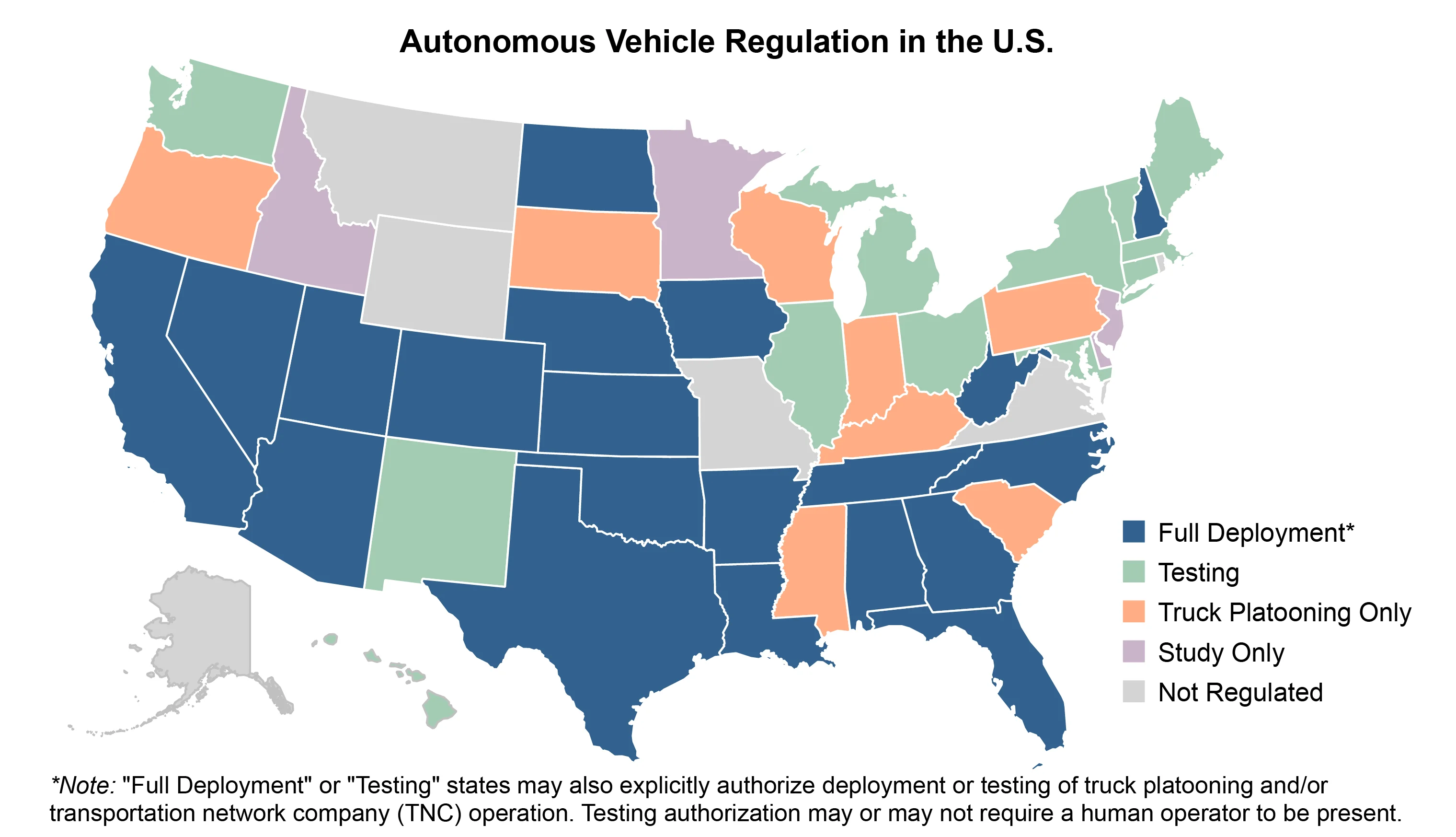
The evolution of autonomous vehicle regulation 2026 is not just a policy story; it is a data-driven marketplace dynamic that will shape safety, investment, and consumer options across the District of Columbia and beyond. As lawmakers, regulators, and industry players navigate a rapidly maturing technology, the tension between nationwide standards and local testing regimes will determine how quickly new mobility models can scale. The latest wave of activity—spanning federal modernization efforts, state-level reporting, and DC’s cautious permitting framework—offers a unique lens into how regulation and markets co-evolve. For readers seeking to understand what this means for safety, business strategy, and everyday commuters, the landscape is becoming clearer, but the details still matter a lot. In the period ahead, the question is not only whether autonomous vehicles can be safe at scale, but whether a cohesive, predictable regulatory framework can unlock that safety without throttling innovation. This trend analysis uses the latest public data and regulatory developments to illuminate where the market stands today and where it is likely headed in the next 6 to 12 months. The topic at hand—Autonomous vehicle regulation 2026—will continue to influence decisions from boardrooms to city council hearings.
The District of Columbia Times analyzes how policy choices intersect with the technology and the market. The data and cases below illustrate growth in regulated testing, ongoing federal modernization debates, and DC-specific steps toward a more permissive, safety-first regime. As federal agencies pursue a more unified national standard, local jurisdictions like DC face a decision point: accelerate pilot programs to attract investment and improve mobility, or tighten safeguards to ensure public confidence and safety. The coming year will reveal whether a more harmonized approach emerges, or if the United States continues to operate with a patchwork of state and city rules. In either case, stakeholders should prepare for greater transparency around safety data, more predictable permitting processes, and a broader set of participants entering the market. This is the core logic behind Autonomous vehicle regulation 2026 and its implications for safety, investors, and everyday users.
Regulatory Landscape in 2026
Federal standards evolve
Federal safety policy for automated driving systems is undergoing a deliberate modernization. The National Highway Traffic Safety Administration (NHTSA) announced plans to modernize Federal Motor Vehicle Safety Standards (FMVSS) for vehicles with automated driving systems, signaling a shift away from rules written for human drivers toward safer, driverless design paradigms. The agency described three rulemakings aimed at aligning FMVSS with ADS-equipped vehicles and removing outdated or redundant requirements. The overarching objective is to reduce costs, remove unnecessary barriers to innovation, and move toward a single national standard that supports safe deployment of autonomous vehicles. The AV Framework emphasizes safety as the core priority while enabling commercial deployment and innovation. (nhtsa.gov)
A few months later, NHTSA released its multi-year research project on modernizing safety standards for automated vehicles, issuing the final volume of a multi-volume work and inviting public comment. The effort surveyed 81 FMVSS standards to determine how they apply to automated driving systems and to identify where standards hamper or enable safe ADS deployment. The agency framed the effort as a forward-looking, safety-first modernization that could reduce regulatory friction while maintaining robust safety baselines. This work underscores a long-term move toward harmonized, technology-appropriate standards rather than ad hoc, state-by-state rules. (nhtsa.gov)
Table stakes for federal policy include the balance between preserving essential safety controls and removing “patchwork” requirements that create compliance complexity for manufacturers operating nationwide. The discussion around exemptions—such as how many vehicles a manufacturer can sell under a partial FMVSS exemption—highlights how federal policy can shape the pace of testing and deployment while still maintaining guardrails. (nhtsa.gov)
State disparities and local tests
Across the states, testing and deployment continue to unfold with notable differences. California stands out as a data-rich example where disengagement reports and mile counts are publicly released, providing a window into real-world performance and testing intensity. Between December 1, 2022 and November 30, 2023, California permit holders drove more than 9 million miles on public roads in autonomous mode (with a mix of safety-driver-assisted and driverless miles). The report notes 5.8 million miles with a safety driver and 3.3 million miles in autonomous mode, totaling 9,068,861 miles for that period. This data, while not a direct apples-to-apples comparison across companies, offers a baseline for testing activity and disengagement patterns. (dmv.ca.gov)
In the subsequent period (Dec 1, 2023–Nov 30, 2024), California disclosed a different trajectory: a total of 4,498,066 miles with a breakdown of 3,945,171 miles in safety-driver mode and 552,895 miles in driverless mode. The annual disengagement reports also detail how often the system disengaged and under what testing conditions, providing a crucial data source for regulators, insurers, and potential customers to gauge reliability. The California reports also show ongoing changes in permit activity, including some firms ceasing testing and others not testing in a given period. (dmv.ca.gov)
DC’s regulatory posture takes a different path. The District currently permits AV testing with a human operator behind the wheel and requires advance notification for testing on District roadways. The District Department of Transportation (DDOT) lists the entities that have notified the city of their testing activities—Waymo, Zoox, Beep, Nuro, and Perrone Robotics (short-term, currently inactive)—and notes the emphasis on safety oversight, crash reporting, and road access limitations to District-owned streets. The framework reflects a cautious, safety-first approach tailored to a smaller, dense urban area where pedestrian traffic and complex road networks create unique risk profiles. (ddot.dc.gov)
DC’s policy landscape was further shaped by transitional legislation in 2024. The Autonomous Vehicle Testing Permit Requirement Temporary Amendment Act of 2024 (DC Law 25-168) tightened the permit regime by prohibiting driverless testing on District roadways without an AV testing permit and by requiring notice to DDOT before testing commences. This law highlights how local governments can tighten oversight pending a more permanent regulatory framework. (code.dccouncil.gov)
Real-world examples and stakeholders
A high-profile case study is Waymo’s push to broaden its DC footprint. In 2025, Waymo announced plans to launch a robotaxi service in Washington, DC, in 2026, after years of testing with drivers and a pushing campaign to relax driverless testing rules. This move illustrates how a major operator seeks regulatory alignment at the local level to enable commercial operations. Policy friction remains, however, as DC authorities evaluate safety data and the appropriate permitting structure. Technically, the district’s current status requires a safety driver during testing, and the path to driverless operation hinges on legislative and regulatory actions at the city level. (washingtonpost.com)
A contemporaneous signal from media outlets underscores the broader regulatory mood: the District’s regulatory process can effectively determine whether a market-leading operator can launch driverless service in the capital. Coverage of regulatory limbo and lobbying efforts in DC highlights how local politics, public safety concerns, and the pace of demonstrations can shape entry timelines for robotaxi services. These dynamics matter to insurers, local businesses, transit agencies, and residents who stand to gain or lose from shared mobility options. (planetizen.com)
Why regulation is changing, and why now
Market and policy drivers

Policy evolution in 2026 is shaped by both market maturity and public safety concerns. On the market side, the influx of capital into autonomous mobility, the emergence of ride-hailing partnerships, and the push to unlock new service models (robotaxis, driverless shuttles, last-mile fleets) create strong incentives for a more coherent regulatory framework. Federal modernization efforts are designed to reduce the risk of state-by-state patchworks that complicate scaling, while local regulators seek to tailor oversight to the city’s unique safety and mobility objectives. The federal AV Framework explicitly connects safety, innovation, and deployment, signaling a deliberate shift toward a streamlined national standard. (nhtsa.gov)
On the safety front, federal rulemaking discussions around modernizing FMVSS for ADS are not merely technical—they have practical implications for how quickly vehicles can be tested and deployed, how companies design vehicles to comply, and how regulators measure and enforce safety outcomes. The upcoming and ongoing rulemakings, alongside public-comment solicitations, reflect a forward-looking approach that attempts to balance risk with innovation. (nhtsa.gov)
Technology maturation and safety metrics
As ADAS and ADS technologies evolve, disengagement data remain a critical diagnostic metric for regulators and the public. California’s disengagement reporting provides the most visible, year-over-year data set on how often automated systems require human intervention and under what conditions. The 2023–2024 disengagement data show that even as miles traveled in autonomous mode rise, safety drivers continue to play a central role in ensuring safe operation. This pattern informs both risk assessments and policy debates about the appropriate safety margins for permitting fully driverless operation. (dmv.ca.gov)
In DC, safety remains a central theme but the pathway to full driverless operation is contingent on local legislative action and regulatory clarity. The District’s emphasis on testing oversight, crash reporting, and notification requirements demonstrates a risk-averse but fiscally motivated approach to urban mobility. As Waymo and other operators press for regulatory updates, DC’s decision-making timeline will influence where the company can invest next and how quickly residents might access autonomous rides in the city. (ddot.dc.gov)
What the industry is watching
The broader industry is watching three pivotal levers: (1) federal standardization that reduces the cost and complexity of compliance across multiple markets; (2) credible, consistent safety data that regulators and insurers can rely on when granting broader deployment permissions; and (3) local regulatory acceptance that determines whether a given city becomes a growth hub for autonomous mobility or remains a testing ground with limited scale. The federal push to modernize FMVSS, combined with state and local refinements, signals a multi-year transition from a patchwork of rules to a more predictable regulatory framework. (nhtsa.gov)
What It Means for Businesses, Consumers, and the Industry
Business impacts and market signals
For mobility providers, the shift toward a unified regulatory framework can unlock scalable models, reduce time-to-market for driverless services, and attract investment by reducing regulatory risk. At the same time, safety-focused reforms—such as updated FMVSS and enhanced testing requirements—add complexity and cost, which may influence vehicle design, insurance, and per-mile pricing. The ongoing federal rulemakings and the AV Framework’s emphasis on safety and innovation suggest that the next wave of product development will be shaped by clearer, technology-appropriate standards rather than generic safety rules. (nhtsa.gov)
For DC-based operators and suppliers, the local permitting regime remains a gatekeeper to entry, but DC is also a potential growth corridor for robotaxi pilots and micro-mobility integrations. The District’s current configuration—requiring a safety driver during testing and a formal AV testing permit—means pilots must engage with local regulators early, aligning service plans with the city’s safety and accessibility goals. The DC policy environment could become a differentiator for operators that invest in robust safety data sharing, community engagement, and transit integration. (ddot.dc.gov)
Consumer implications and mobility outcomes
For consumers, the key questions revolve around safety confidence, service availability, and price parity with traditional transit and ride-hailing. California’s disengagement statistics provide a practical lens on what “driverless” miles look like in reality and how frequently a human operator is still required to maintain safety. In urban markets, consumer acceptance hinges on transparent reporting and visible safety performance. The DC context highlights potential consumer benefits if the regulatory framework advances to allow controlled driverless operations while preserving safety guardrails. Public communication about safety outcomes, accident reporting, and pilot performance will be critical to building trust. (dmv.ca.gov)
Industry structure and competitive dynamics
As federal standards converge and DC updates its permitting, competition among AV developers—Waymo, Zoox, Nuro, Perrone Robotics, and others—will intensify around regulatory access, fleet operation models, and partnerships with transit agencies or ride-hail platforms. The push to harmonize standards could reward developers who invest in safety data ecosystems, simulation-based validation, and cross-state regulatory readiness. The DC context, with its high-density environment and concerted public-safety focus, will likely reward operators that demonstrate robust risk mitigation, effective community engagement, and a clear plan for service integration with existing transit and pedestrian networks. (techcrunch.com)
Looking Ahead: 6–12 Month Predictions and Opportunities
Short-term outlook for 2026

- Federal modernization of FMVSS will continue to unfold through rulemakings and the AV Framework’s implementation efforts, with emphasis on safety, cost reduction, and deployment readiness. Expect further public commentary and draft regulatory language in early 2026 as NHTSA moves toward a more unified national standard. The 2025–2026 window is likely to include additional steps toward clarity on exemptions and compliance pathways for ADS-equipped vehicles. (nhtsa.gov)
- DC regulatory dynamics will be shaped by ongoing discussions around permit frameworks and safety requirements. With Waymo’s public interest in driverless deployment and DC’s cautious stance, stakeholders should anticipate a high-profile regulatory decision in 2026 that could set the tone for other urban markets. Plan for a potential policy outcome that either accelerates driverless testing with robust oversight or reinforces the need for a more rigorous permitting process before full driverless operation is allowed. (washingtonpost.com)
- Investor and operator activity will increasingly hinge on the availability of reliable safety data and predictable timelines for driverless operation in DC and other major cities. CA disengagement and mileage data will continue to inform risk models and pricing strategies, while federal modernization efforts may influence cross-state expansion plans and capital allocation. (dmv.ca.gov)
Opportunities for District of Columbia, operators, and suppliers
- DC-specific opportunities include collaboration with DDOT to design data-sharing frameworks, safety-performance dashboards, and community outreach programs that can improve public trust and acceptance. The city’s focus on testing oversight and permit clarity provides a framework for piloting pilot-to-commercial transitions with appropriate guardrails. Operators that bring transparent safety data, local workforce opportunities, and transit integration plans could gain a competitive edge in 2026. (ddot.dc.gov)
- For technology developers, the convergence of federal standardization and local permitting signals an opportunity to invest in unified compliance toolchains, safety validation across multiple markets, and scalable business models that align with anticipated FMVSS updates. A technology-focused approach that emphasizes safety metrics, failure mode analysis, and simulation-based validation will be particularly valuable as regulators seek to balance innovation with accountability. (nhtsa.gov)
How to prepare for stakeholders
- City leaders and regulators: Develop clear, public-facing safety performance dashboards and testing-rate disclosures to support informed consent and community confidence. Establish a predictable permitting cadence that aligns with pilot deployments and any anticipated driverless launch windows.
- Operators and insurers: Build robust data-sharing agreements and risk models around disengagement data, incident reporting, and emergency response plans. Prepare for potential FMVSS alignment tasks by investing in modular vehicle designs and safety-critical software architectures that can adapt to evolving standards.
- Vendors and suppliers: Align product roadmaps with the anticipated standards and reporting requirements, focusing on interoperability, cybersecurity, and safety verification tooling that can scale across jurisdictions.
What DC-Based and Industry Stakeholders Should Do Now
- Engage with regulators early and document safety performance with rigorous data reporting to support the case for expanded testing or deployment.
- Invest in simulation and real-world validation to demonstrate safety under diverse urban conditions, especially in dense districts with mixed-use streets, pedestrian activity, and high bike traffic.
- Build partnerships with transit authorities to explore integrated mobility solutions that enhance last-mile access while ensuring compliance with local rules and safety expectations.
Closing
The trajectory of autonomous vehicle regulation 2026 suggests a United States moving toward more coherent safety standards and more data-driven decision-making at local levels like the District of Columbia. Federal modernization efforts aim to harmonize standards and reduce regulatory complexity, while California’s disengagement and mileage data underscore the ongoing learning process embedded in real-world testing. DC’s permitting framework and legislative actions in 2024–2025 reveal how local governance can both constrain and catalyze innovation, depending on the regulatory design and stakeholder engagement. For readers, the key takeaway is simple: progress in autonomous mobility hinges on transparent safety data, predictable regulatory timelines, and collaborative efforts among policymakers, industry, and the public to balance safety with the economic and mobility benefits that autonomous technology promises. As 2026 unfolds, the DC region’s policymakers, operators, and suppliers have a singular chance to shape a practical path to driverless mobility that other cities may follow.

Sources and data points referenced in this article include federal modernization plans from NHTSA, California DMV disengagement reports and mileage data, and DC/DDOT guidance on autonomous vehicle testing and permitting. These sources provide a data-driven foundation for understanding the current state and near-term trajectory of autonomous vehicle regulation 2026. Specific items cited include NHTSA’s AV Framework and FMVSS modernization efforts, California’s disengagement reports and mileage tallies for testing, and District of Columbia regulatory actions and testing requirements. (nhtsa.gov)
Comparison table: Regulatory regimes at a glance
| Regime | Key Focus | Recent Data/Actions | Implications |
|---|---|---|---|
| Federal FMVSS Modernization (NHTSA) | Update safety standards for ADS and no manual controls; streamline exemptions | AV Framework rulemakings; FMVSS Considerations research across 81 standards; exemption policy discussions | Aims for a unified national standard to reduce patchwork rules and accelerate safe deployment. (nhtsa.gov) |
| California Autonomous Vehicle Program | Public reporting on testing and disengagements; miles driven on public roads | 9,068,861 autonomous miles (Dec 2022–Nov 2023); 4,498,066 autonomous miles (Dec 2023–Nov 2024); disengagement reports | Demonstrates testing scale and safety data transparency; serves as a benchmark for other states. (dmv.ca.gov) |
| District of Columbia AV Testing Rules | Permit-based testing with operator present; local oversight | DDOT AV testing list; 2024 temporary amendment to testing permits; 10-business-day notice requirement | Sets the gatekeeping framework for pilot programs; impacts the timing of driverless deployments in DC. (ddot.dc.gov) |