Trayon White Federal Corruption Trial Opens
Explore in-depth, data-driven coverage of Trayon White's federal corruption trial and its significant implications on politics and governance.
By Julio Sandoval
September 20, 2026
11 minute read
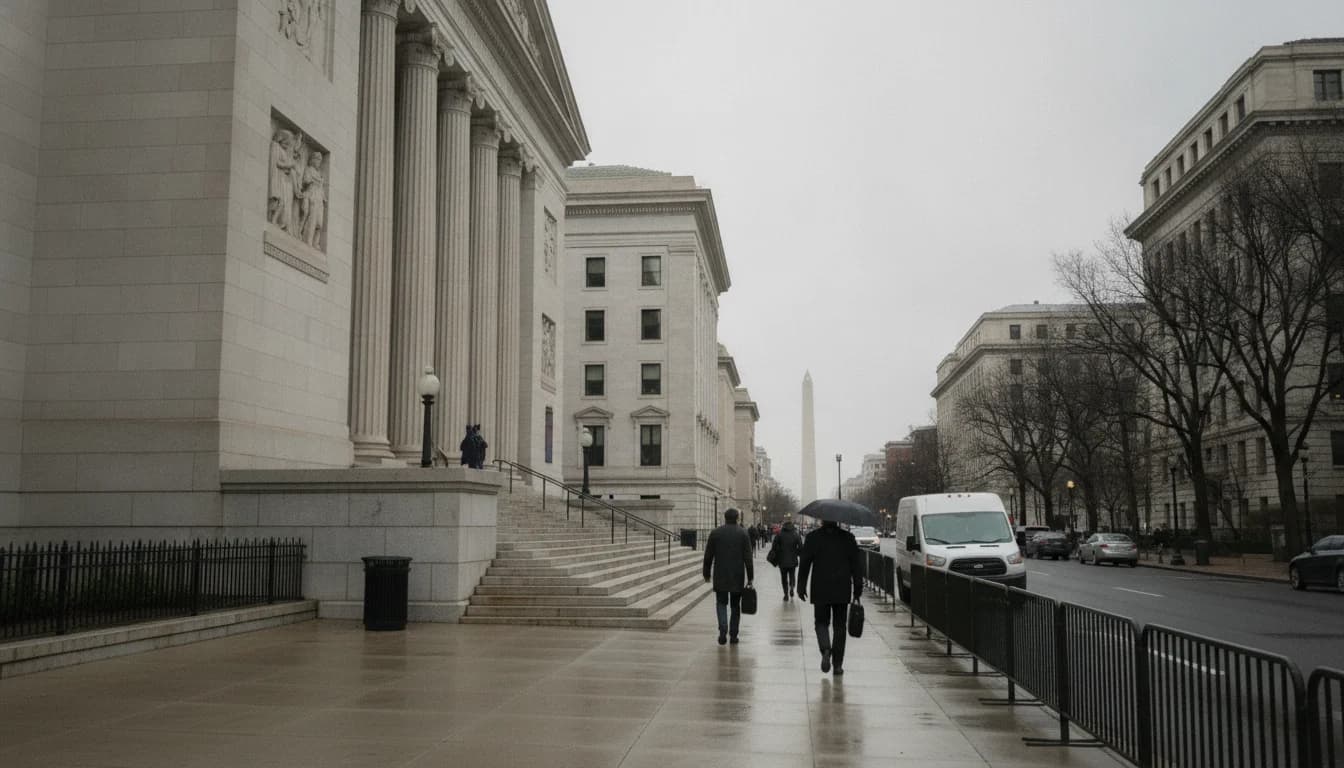
On September 15, 2026, federal bribery proceedings against District of Columbia Council member Trayon White Sr. opened in the U.S. District Court for the District of Columbia. The opening marked a milestone in a case that has drawn sustained attention from local residents, city officials, and national observers focused on how public contracts are awarded and regulated in the nation’s capital. The day’s proceedings centered on the government’s presentation of evidence gathered through court-authorized records and undercover-style surveillance, including videos of meetings in which White is alleged to have accepted cash in return for influence over DC contracts. The opening underscored a broader question about governance, transparency, and accountability in a city where public contracts touch millions of dollars and directly affect neighborhood outcomes. (The Washington Post, September 15, 2026) (washingtonpost.com)
The case’s backdrop stretches back to a federal investigation that began years earlier and culminated in 2024 with the council member’s arrest on bribery charges. The U.S. Attorney’s Office for the District of Columbia announced on August 19, 2024 that Trayon White Sr., then-chair of a DC Council committee with oversight of several agencies, was charged with accepting cash payments tied to efforts to extend certain violence-intervention contracts. The press release framed the allegations as a scheme in which White would use his official position to press for contract renewals, with the total alleged cash payments listed as $156,000 and specific cash payments to White totaling $35,000 across four separate occasions. The release also noted the involvement of a confidential human source (the business owner) who was cooperating with authorities. The initial arrest and charges were publicly described by the U.S. Attorney’s Office, FBI, and other partners, signaling an escalation in federal efforts to police public contracting. This information, drawn from the Justice Department’s official announcement, anchors the public timeline in 2024 and provides the baseline for understanding the trial’s pivotal issues. (DOJ press release, August 19, 2024) (justice.gov)
What Happened
Indictment and Charges
The legal action at the heart of the Trayon White case centers on a single count of bribery under 18 U.S.C. § 201(b)(2), as alleged in the federal indictment. The indictment describes a scheme in which White, a DC Council member, accepted payments in exchange for using his official position to influence the renewal of contracts tied to violence-intervention services. The core allegation is that White stood to gain financially through a 3 percent kickback arrangement tied to those contracts. (Indictment language summarized in court filings; see May 15, 2026 memorandum regarding pretrial motions in United States v. White) (app.midpage.ai)
The federal filings also trace the timeline backward to a 2019 incident in which a CHS-1 entity had previously contracted with the District of Columbia and later settled disputes tied to that contract; the later sum of bribe-related activity is described as occurring in the summer of 2024, with four cash payments totaling $35,000. The charging documents specify that those payments were connected to the CHS-1 entities’ hopes of extending contracts for Violence Intervention services. (Case materials discussed in the May 15, 2026 memorandum) (app.midpage.ai)
The government’s broader narrative—outlined in the indictment and accompanying filings—emphasizes the relationship between White’s official duties on the Council and the actions taken to steer contract decisions toward CHS-1-affiliated entities. The memorandum notes that the indictment was returned by a grand jury in September 2025 and that a jury trial was scheduled to begin in September 2026. (May 15, 2026 memorandum) (app.midpage.ai)
Timeline and Key Facts
June 2024 to August 2024: The government alleges that White received multiple cash payments from a confidential source in exchange for using his official influence to extend contracts. The payments are described in the government’s charging documents and corroborated by FBI-recorded meetings. (DOJ press release and related court filings) (justice.gov)
2019–2020: The narrative timeline in the indictment traces earlier interactions and transactions involving the CHS-1 entities and White, including a separate set of negotiations around a DC contract, which provides context for the later 2024 events. (Indictment and related court filings) (app.midpage.ai)
August 19, 2024: White is arrested on a criminal complaint charging bribery in connection with the grant and extension of DC contracts. The DOJ press release describes the scope of the alleged scheme, including the total amount ($156,000) White was said to have agreed to accept and the four cash payments ($35,000) that were observed. (DOJ press release, August 19, 2024) (justice.gov)
September 2025: A grand jury returns the Indictment; the defense and prosecution prepare for trial with pretrial motions. The case docket indicates the timeline for trial and related evidentiary proceedings. (May 15, 2026 memorandum) (app.midpage.ai)
September 15, 2026: The federal bribery trial of Council member Trayon White Sr. opens in federal court in DC, marking the earliest public phase of the case in which jurors are instructed to evaluate the government’s evidence and White’s defense. The Washington Post’s live reporting confirms the opening and describes the testimony and focus on a video-proven sequence of meetings. (The Washington Post, September 15, 2026) (washingtonpost.com)
Mid-September 2026: Reports indicate that jurors had been selected and sworn, and that the government would present video and documentary evidence from the FBI sting operation and CHS-1’s arrangement. The jury’s composition and the defense’s focus on credibility of the CHS-1 witness are highlighted in contemporary coverage. (The Washington Post, September 15–16, 2026) (washingtonpost.com)
Why It Matters
Public Governance and Transparency
The Trayon White case sits at the intersection of local governance and federal public-corruption enforcement. When a DC Council member stands accused of leveraging official authority for private gain in the context of city contracting, observers scrutinize not only the charges but the adequacy of internal controls and oversight across agencies involved in the procurement process. The case’s focus on ONSE (Office of Neighborhood Safety and Engagement) and DYRS (Department of Youth Rehabilitation Services) underscores how contract extensions can influence a range of services intended to improve neighborhood safety and social well-being. The DOJ’s description of a three-percent kickback tied to a multi-million-dollar contract pool provides a numerical lens through which readers can assess potential impact. (DOJ press release, August 19, 2024) (justice.gov)
Legal experts have noted the high bar that prosecutors must clear in public-corruption cases, especially when contested acts hinge on votes, official acts, or quasi-official actions. The May 2026 memorandum detailing the defense and prosecution’s arguments in advance of trial highlights the complexity of proving an “official act” in a bribery case and the role of evidence such as video recordings in establishing intent. While the memorandum is a procedural document, it reflects the persistent tension between prosecutorial theory and defense strategy in contemporary public-corruption prosecutions. (May 15, 2026 memorandum) (app.midpage.ai)
Impact on Local Policy and Perceptions
- The trial’s trajectory—opening in September 2026, with jurors seated in the following days—has the potential to influence public confidence in DC’s contracting processes and in the council’s capacity to oversight the agencies involved. Coverage by major outlets indicates that the case is not only a matter of criminal accountability but also of governance norms. For District readers, the case foregrounds questions about how procurement decisions are reviewed, how conflicts of interest are managed, and what constitutes appropriate impact from a public official’s influence on contract outcomes. (The Washington Post coverage, September 15, 2026) (washingtonpost.com)
Contracting System and Accountability
The underlying dynamic—contracting for violence-intervention services in DC—touches on the efficiency and outcomes of social programs designed to reduce crime and support vulnerable residents. The indictment’s context, including prior interactions dating back to 2019–2020 and the 2019 contract dispute, illustrates how long-running relationships in the procurement ecosystem can become focal points in federal investigations. The case thus has implications for contracting practices, vendor vetting, and post-award oversight mechanisms that districts rely on to ensure compliance and cost-effectiveness. (Indictment and related court filings) (app.midpage.ai)
The tension between rapid procurement and rigorous accountability is a recurring theme in modern urban governance. As DC’s public-contracting landscape evolves in response to legal scrutiny, policymakers and oversight bodies may consider strengthening internal controls, whistleblower protections, and post-award audits to detect and deter improper influence. The current case will likely be cited in discussions about procurement governance, both within DC and in comparable jurisdictions, as a case study of how alleged improper influence can intersect with public service delivery. (Washington Post and DOJ reporting) (washingtonpost.com)
What’s Next
Trial Trajectory and Next Steps
With the opening on September 15, 2026, the trial is expected to proceed through witness testimony, cross-examinations, and closing arguments over a period of weeks. The court documents indicate that the defense and prosecution will present a mix of documentary evidence, recordings, and live testimony from witnesses connected to the CHS-1 entities and the government’s informant. Juror deliberation, if the case reaches that stage, would follow; the timing will hinge on the complexity and volume of evidence introduced. (May 15, 2026 memorandum; Washington Post reporting) (app.midpage.ai)
A critical early indicator will be how jurors respond to the FBI-recorded conversations and the CHS-1 witness’s credibility. The defense’s approach—focusing on credibility of CHS-1 and potential entrapment defenses—will be a defining thread in the trial’s early weeks. The memorandum notes anticipated evidentiary disputes and the need for careful handling of disclosures, which will shape the pace and focus of the proceedings. (May 15, 2026 memorandum) (app.midpage.ai)
Potential Testimony and Witnesses
The prosecution is expected to rely on recordings from the FBI sting operation and on testimony from the confidential informant (CHS-1) and FBI agents involved in the case. The defense is anticipated to challenge the credibility of CHS-1, seeking to counter the extent to which CHS-1’s statements and payments establish criminal intent. The Washington Post’s live reporting emphasizes the dynamic between witness credibility and juror perception, highlighting how early arguments and cross-examinations can frame how jurors view the evidence. (Washington Post, September 15, 2026) (washingtonpost.com)
The case’s scope and the potential breadth of the government’s witness list have spurred local legal observers to anticipate whether other city contractors, aides, or witnesses might be called to testify about the procurement process and related communications. As with many high-profile public-corruption trials, the outcome could influence how public officials, bidders, and contracting officers approach disclosures, disclosures of conflicts, and compliance with procurement rules. (Washington Post coverage) (washingtonpost.com)
How the Next Weeks Could Shape DC’s Public Conversation
As the trial unfolds, District residents and stakeholders will likely monitor not only the verdict but also the public discourse around governance, ethics, and the integrity of city contracting practices. The case’s profile—given White’s long tenure on the DC Council and his prior reelection in a special election after expulsion—will contribute to a broader debate about accountability, transparency, and the safeguards that cities deploy to protect public resources. Media coverage across national and local outlets will frame this as a moment of reckoning for public officials and the contracting ecosystem in the District. (AP News and The Washington Post reporting) (apnews.com)
In parallel, independent watchdogs and oversight bodies may examine DC’s procurement policies and internal controls to identify gaps that could be addressed through policy updates, enhanced audits, or more robust monitoring mechanisms. The case can serve as a catalyst for policy discussions that connect governance, data-driven monitoring, and the practicalities of ensuring contract integrity in a dense urban environment. The data points that emerge from the trial—contract values, timing of extensions, and the chain of communications—will be of interest to researchers, reporters, and policymakers seeking to understand how well procurement safeguards function under pressure. (DOJ press release; Indictment materials) (justice.gov)
Closing
The Trayon White federal corruption trial represents a pivotal moment for discussions around governance, contracting, and accountability in the District of Columbia. As jurors hear testimony and evaluate documentary evidence, District readers will be watching to see how the jury weighs the specifics of the alleged scheme against the broader questions about public trust and the standards that guide public service. This coverage will continue to emphasize data-driven analysis, bridging ongoing court developments with observable effects on city contracting, neighborhood outcomes, and the policy conversations that shape DC’s governance landscape.
For readers seeking to verify the core events and the foundational documents behind the case, two primary sources anchor the public record: the U.S. Attorney’s Office press release announcing the arrest and charging of Trayon White Sr. in August 2024, which details the alleged bribe structure and the cash payments observed, and the court’s May 15, 2026 memorandum describing pretrial proceedings and the indictment’s framework. These documents provide the official narrative and procedural context for the ongoing trial. (DOJ press release, August 19, 2024; May 15, 2026 memorandum) (justice.gov)
Readers who want to stay updated should follow authoritative outlets continuing coverage of the trial’s proceedings, including live updates from local and national reporters, and should consult the linked primary documents for the most precise, unfiltered information as the case progresses.
Note on sourcing and transparency: The central facts cited here reflect the statements and documents released by the U.S. Attorney’s Office and the court, including the indictment’s description of the alleged bribery scheme and the cash-payment details observed by law enforcement. The narrative also incorporates contemporary reporting from The Washington Post to provide context on opening proceedings, witness credibility, and the broader governance implications for DC. The two primary sources anchor the timeline and evidentiary landscape of the case. (DOJ press release; Indictment materials; Washington Post coverage) (justice.gov)
Important note about dates and event anchoring
- Arrest and charges announced: August 19, 2024. (DOJ press release) (justice.gov)
- Indictment returned: September 2025 (per court filings referenced in the May 15, 2026 memorandum). (app.midpage.ai)
- Trial opens: September 15, 2026, in DC federal court. (The Washington Post coverage) (washingtonpost.com)
- Juror selection and live testimony phases followed in the days after opening, with ongoing reporting throughout the trial. (The Washington Post, ongoing coverage) (washingtonpost.com)
Primary-source anchors for readers
- U.S. Attorney’s Office press release: D.C. Councilmember Arrested on Bribery Charge. https://www.justice.gov/usao-dc/pr/dc-city-councilmember-arrested-bribery-charge
- May 15, 2026 memorandum in United States v. White (court proceedings and pretrial rulings). https://app.midpage.ai/document/united-states-v-white--5c7fcdaa-c441-4895-99c7-426c1dd10e89
Two searches a reader might run
- Trayon White federal corruption trial
- Trayon White bribery trial September 2026
- DC Council corruption Kamara White indictment