DC Streetcar Service Ends March 31, 2026
The DDOT announces the DC Streetcar will cease operations on March 31, 2026, marking the end of a decade-long project aimed at enhancing transit in the…
By Terrence Holt

September 19, 2026
15 minute read
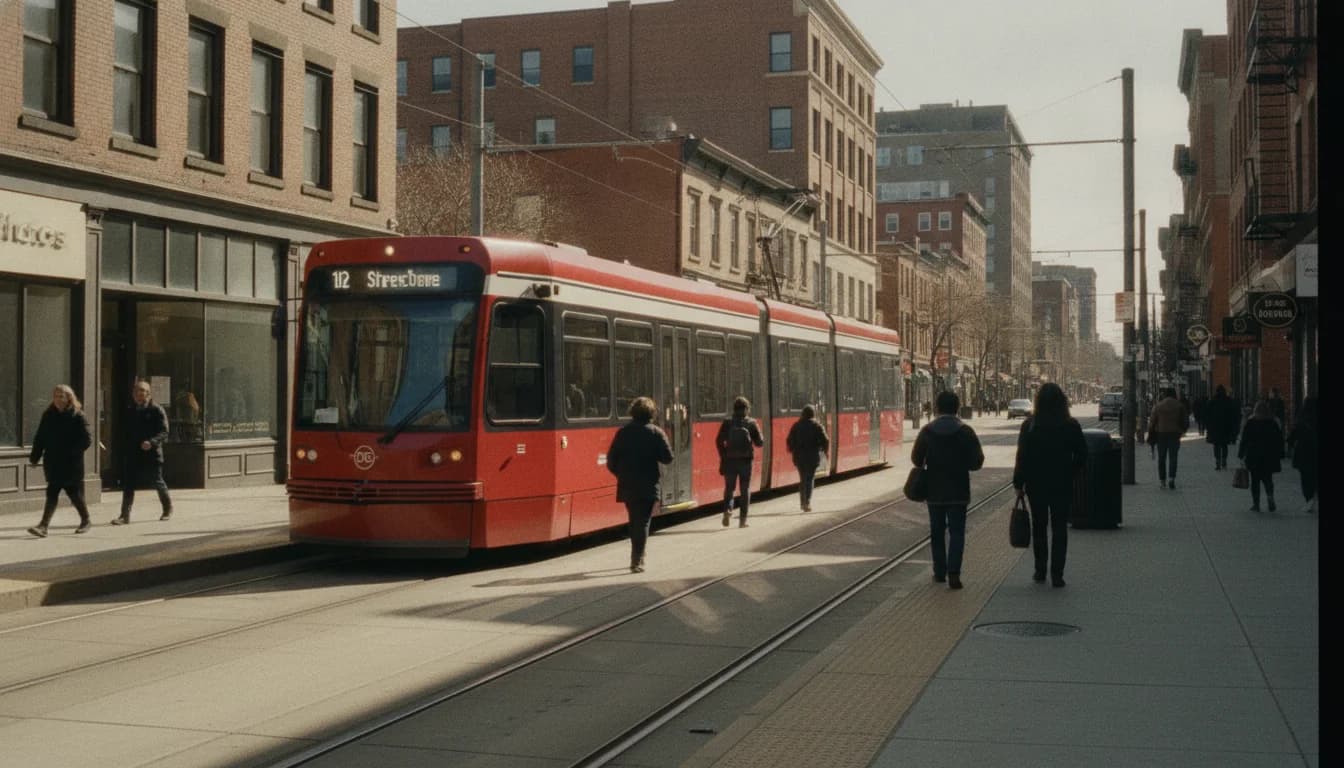
The District of Columbia’s transportation landscape has entered a new era as the District Department of Transportation (DDOT) confirms the DC Streetcar will end service on March 31, 2026. The official DDOT announcement came in a public release dated October 28, 2025, explaining that the line along the H Street Corridor will cease operations at the end of March 2026 and outlining coordinated transition options for riders. This milestone closes a decade-long chapter for a project that began with high ambitions to stitch together neighborhoods with a modern, fixed-rail link and, in doing so, reshape how residents move through the city’s northeast corridor. The date is not simply a line on a calendar; it marks the point at which DDOT shifts from operating a limited, two-mile streetcar to exiting the service with implications for transit planning, urban redevelopment, and budgetary prioritization in the District. DDOT’s decision and the dates surrounding it are the focal point for this analysis, and readers should note that the end-date announcement has already been posted publicly by the agency. The end date is now a fixed data point in the city’s transit record. The DDOT announcement states clearly that the DC Streetcar end of service will occur on March 31, 2026, and that the DC Streetcar will no longer operate after that date, with riders encouraged to use WMATA’s D20 bus and other travel options during the transition. This is the agency’s formal closure plan and a signal to the wider market about the district’s evolving multimodal strategy for the H Street Corridor. The formal outline of post-closure travel options, including connections to Capital Bikeshare and WMATA services, is designed to facilitate a smooth transition for riders who depended on the DC Streetcar for daily trips. (ddot.dc.gov)
In a complementary historical context, the DC streetcar project launched in 2016 represented a significant investment and a long-term bet on fixed-rail transit in a neighborhood corridor with an expanding dining, retail, and residential mix. The official opening of the H/Benning Road streetcar line occurred on February 29, 2016, with the then-mayor and DDOT leadership announcing the milestone and detailing the line’s scope and operating plan. The inaugural service marked a high point in the District’s streetcar ambitions, with the initial line advertised as a 2.4-mile segment connecting Union Station to Benning Road and RFK Stadium, signaling a broader plan to extend the streetcar network over time. As the city now transitions away from this fixed-rail asset, the road from vision to realization—and now to decommission—serves as a case study in how ambitious transit infrastructure interacts with budgeting, ridership, and urban development. The opening date was publicly announced by Mayor Muriel Bowser and DDOT leadership, underscoring the project’s municipal significance and timing. (mayor.dc.gov)
One of the most important, data-grounded takeaways from this transition is a calculated look at the lifecycle and timing of the DC Streetcar, anchored by official dates. The DC Streetcar operated for roughly 121 months between February 29, 2016, and March 31, 2026. This calculation uses the publicly reported opening date of February 29, 2016, and the official end date of March 31, 2026, as published by the city’s transportation agency and city leadership. The calculation itself is a data point intended to ground policy discussions in the streetcar’s actual operating window, rather than in aspirational timelines. The opening date is documented in the Mayor’s release announcing the District Streetcar’s launch, while the end date is stated in DDOT’s official end-of-service release. In other words, what began with a highly publicized launch in 2016 reaches a formal close in 2026, at a defined point in the city’s transit history. (mayor.dc.gov)
Section 1: What Happened
Announcement of End Date
In late October 2025, DDOT formally announced the end of the DC Streetcar service. The agency’s news release, dated October 28, 2025, stated that the DC Streetcar service would end on March 31, 2026. The release also noted that DDOT would oversee a transition plan that includes coordination with WMATA to provide rider alternatives and ensure a smoother shift for residents and travelers along the H Street Corridor. The key message was clear: the DC Streetcar will cease operations on the date specified, and riders should begin preparing for alternative routes well in advance of the closure. This end-date announcement established a fixed terminal point for the streetcar’s nearly decade-long run in the District and framed the subsequent pre-closure adjustments. The press release also emphasized appreciation for riders, employees, and community members who supported the DC Streetcar over its ten years of service. (ddot.dc.gov)
Pre-Closure Adjustments and Public Notice
As part of the transition planning, DDOT implemented service adjustments in early January 2026 to reflect a scaled-down operation ahead of the March 31, 2026 end date. The agency announced the elimination of Sunday service and a revised operating schedule with 20-minute headways during the weekdays and Saturdays. The January 4, 2026 adjustments were designed to align operating hours with anticipated demand during the closure period and to optimize resource allocation in the final weeks of operation. These adjustments were documented in the official end-of-service information hub and linked press materials, which detailed the precise hours and service changes riders could expect in the months leading up to closure. The DDOT portal indicates that these changes were part of the formal closure plan. (ddot.dc.gov)
Public Engagement and Next Steps
DDOT also organized a public briefing to discuss the scope and expectations surrounding the end of DC Streetcar service. A virtual public meeting was held on December 9, 2025, to present the elimination plan and to discuss the implications for riders, residents, and local businesses along the H Street Corridor. The meeting provided an opportunity for stakeholders to ask questions, hear about alternative transit options, and understand the transition timeline. The existence of this public meeting, documented on the DDOT site, underscores the city’s attempt to engage the public in a major shift in its transit network and to improve transparency around a high-profile project sunset. (ddot.dc.gov)
What Happens After Closure
In the wake of the DC Streetcar end of service, riders will be steered toward alternative modes of travel. DDOT’s closure communications emphasized coordination with WMATA to support riders via the D20 bus corridor and other multimodal options, including Capital Bikeshare and DDOT-managed transit alternatives. The emphasis on interagency coordination and feeder services aligns with the District’s broader strategy to preserve mobility options even as a fixed-rail asset leaves the network. The official end-of-service materials explicitly point readers to WMATA resources and to the District’s alternative travel information, ensuring that riders remain informed during the transition. (ddot.dc.gov)
The Final Push: What Was Learned About Operations
A broader takeaway from DDOT’s end-of-service communications is the change in how the District manages fixed-rail ambitions within a constrained budget and evolving mobility landscape. The end-date announcement, the pre-closure adjustments, and the public engagement efforts collectively reflect a disciplined, data-informed approach to a difficult decision. The city’s approach—emphasizing a clear end date, a supportive transition, and explicit guidance for riders—offers a test case for other municipalities facing similar questions about beginning, sustaining, or terminating ambitious transit investments. The date-stamped end of service represents not just a transit schedule change, but a policy inflection point with implications for how the District evaluates capital-intensive projects against ongoing operating costs, ridership trends, and urban revival aims. (ddot.dc.gov)
Why It Matters
Rider and Community Impact
The DC Streetcar’s end of service has direct consequences for riders who relied on the H Street Corridor line for daily commutes, shopping, and access to the RFK area. With the end date fixed, riders must transition to alternative routes, which may affect commute times, trip planning, and accessibility. DDOT’s communications underscore a commitment to minimizing disruption by coordinating with WMATA to route customers toward the D20 bus and other options, and by providing information about Capital Bikeshare and other District services. For neighborhood businesses along H Street, the closure introduces a transitional period that could influence foot traffic patterns and the corridor’s activity levels as redevelopment momentum continues. The agency’s messaging around rider alternatives and travel guidance is designed to help residents make informed choices during the transition. (ddot.dc.gov)
Budget and Policy Context
The end of the DC Streetcar service sits within a broader city budgeting context and the District’s evolving transportation priorities. While the DDOT notices focus on the closure date and rider alternatives, observers in the transit policy space have highlighted the high operating costs associated with fixed-rail lines and the difficulty of sustaining such projects in the face of budget pressures and competing priorities. A widely circulated post-closure analysis from national trade media noted that fixed-rail projects of this scale carry substantial annual operating costs, and that the market sometimes views them as high-risk bets when ridership targets or integration with other services do not meet projections. While the DC Streetcar’s end of service is a local decision, it resonates with ongoing debates about how cities finance, operate, and eventually retire fixed-rail assets in a multimodal network. For readers seeking to understand the economics behind these decisions, the public narrative points to a need for robust, data-driven cost-benefit analyses and a transparent plan for asset disposition. (axios.com)
Civic and Urban Development Implications
Beyond immediate rider impact, the end of service raises questions about the corridor’s long-term development trajectory. The DC Streetcar line has been framed as part of a broader East-West transit vision, with proponents arguing that fixed-rail options can catalyze neighborhood investment, stimulate density, and anchor economic growth. Opponents have pointed out that the streetcar’s cost and the complexities of implementation did not fully deliver the anticipated ridership gains or the promised urban renewal benefits. As the city transitions away from this fixed-rail asset, observers will be watching for how developers, local politicians, and community groups recalibrate expectations for the H Street Corridor. The end of service thus becomes an important data point in a larger conversation about how cities balance transformative transit ambitions with the realities of operating costs, capital budgets, and neighborhood-level impacts. (mayor.dc.gov)
Industry Context: What Other Cities Are Doing
Looking at the broader urban transit landscape, several cities have faced similar decisions about whether to maintain, scale back, or retire fixed-rail projects in the face of budget constraints and shifting mobility patterns. In some cases, cities have transitioned fixed-rail assets to alternate operational models or repurposed rolling stock for other uses, while others have negotiated partial closures with continued service on a reduced footprint. The DC Streetcar end of service illustrates a nuanced approach to ending a single fixed-rail line within a larger multimodal system, emphasizing stakeholder engagement, careful timeline management, and clear communication about alternatives. It also prompts a reevaluation of public investment strategies, the role of fixed-rail options in a city’s long-term transport mix, and how to measure success beyond initial hype. (ddot.dc.gov)
The Human Element: Riders, Workers, and Businesses
The end of the DC Streetcar also has a human dimension. Riders who relied on the line every day will need to adjust routines; transit workers associated with the streetcar program will transition to new roles or be reassigned within DDOT or other city agencies; and local businesses along the H Street Corridor may experience short-term shifts in customer flows. While DDOT’s plan emphasizes alternative travel and urban mobility options, it is reasonable to expect a period of adaptation as the corridor absorbs the absence of a fixed-rail link. As with any major transportation transition, the true test will be how smoothly the system integrates alternative transit options and whether the market can absorb the shift without long-term negative effects on neighborhood vitality. The city’s public-facing materials emphasize a structured transition rather than an abrupt withdrawal, which is a critical factor in the perceived legitimacy and effectiveness of the plan. (ddot.dc.gov)
What This Says About Data-Driven Transit Governance
From a governance perspective, the DC Streetcar end of service embodies a data-driven approach to a challenging decision: set a clear end date, publish a transparent transition plan, engage the public, and coordinate across agencies to minimize disruption. The sequence — October 28, 2025 announcement of the end date; January 4, 2026 service adjustments; December 9, 2025 public meeting; March 31, 2026 final day of service — demonstrates an approach that prioritizes accountability, predictability, and continuity of service through alternatives.
The city’s official materials identify the end date, the pre-closure steps, and the collaborated approach with WMATA as the pillars of the post-streetcar transition. For readers and researchers, this sequence provides a clear case study in how a city communicates the sunset of a fixed-rail asset and what metrics, constraints, and stakeholder actions shape the outcome. The end-of-service decision is thus not just a single line on a schedule; it is a lens into how a midsize city negotiates the difficult balance between bold transit ambitions and practical fiscal reality. (ddot.dc.gov)
Section 2: What’s Next
Timeline and Milestones to March 31, 2026
- October 28, 2025: DDOT publicly announces the end date of March 31, 2026, for the DC Streetcar service and outlines the transition plan to riders via WMATA and other alternatives. This event anchors the official sunset timeline for the streetcar. (ddot.dc.gov)
- January 4, 2026: DDOT implements pre-closure service adjustments, eliminating Sunday operations and revising weekday and Saturday hours to align with the final phase of streetcar operations. This step serves as a managed wind-down designed to conserve resources while maintaining service on core days. (ddot.dc.gov)
- December 9, 2025: A virtual public meeting is held to discuss the scope, expectations, and rider impacts of ending DC Streetcar service, providing a forum for questions and clarifications and for sharing transition guidance. The meeting’s existence reflects the city’s commitment to public engagement in a high-stakes transit decision. (ddot.dc.gov)
- March 31, 2026: Final day of DC Streetcar operations as scheduled by DDOT, marking the formal end of the service. The end-date press release explicitly confirms that the DC Streetcar will no longer operate after this date. Riders are urged to use alternative transit options during the last days of service. (ddot.dc.gov)
Post-Closure Disposition and Asset Management
What happens to the DC Streetcar assets after service ends? Reports from national transit observers indicate that, in similar cases, authorities may auction or repurpose streetcars and related equipment, particularly where a fixed-rail asset does not have a ready reapplication within a city’s evolving mobility strategy. In the DC context, early reporting by national outlets noted that transporting and disposing of streetcars can be part of the broader budgeting and asset-management process following a fixed-rail sunset. While this piece will not presuppose the exact disposition plan for DC Streetcar equipment, the market’s expectation of an orderly conclusion is consistent with standard practice in similar urban systems. Readers should monitor DDOT’s communications for any official statements about asset disposition, recycling, or auctioning, which would be released via the agency’s public-facing channels or through official notices. (axios.com)
What to Watch For in the Transit Market
The streetcar sunset in Washington, DC, is likely to influence conversations about fixed-rail projects in other cities and to prompt more granular analysis of transit economics, ridership dynamics, and the tradeoffs between fixed-rail ambitions and flexible bus or micro-mobility networks. Analysts will want to assess how the District reallocates resources and whether lessons from the DC Streetcar experience inform future multimodal investments or corridor revitalization projects. The shift to bus-based services and other transit modes could alter the overall transport mix in the H Street Corridor and could have ripple effects on traffic patterns, parking demand, and business vitality. Observers will also be looking for updates from WMATA about bus route adjustments, schedule synchronization, and rider communications as the DC Streetcar’s legacy continues to influence corridor planning and regional mobility strategies. (ddot.dc.gov)
What This Means for Local Journalism and Public Accountability
For local journalism, the DC Streetcar end of service provides a rich case study in how a city documents a major transit sunset, communicates the timing to the public, and lays out the practical steps for riders and businesses affected by the decision. It is an opportunity to analyze not only the numbers behind the decision but also the narrative around public engagement, interagency coordination, and the path forward for a corridor long discussed as a catalyst for growth. District readers deserve reporting that tracks the end-date confirmation, the pre-closure adjustments, and the transition options with the same rigor that characterized the streetcar project’s earlier phases. This coverage should connect the policy decisions with the changes people experience in daily life, and it should remain attentive to updates from DDOT and WMATA as the transition unfolds. (ddot.dc.gov)
Section 3: What’s Next
Timeline, Next Steps, and What to Watch For
- Ongoing communications: Expect DDOT to continue updating riders on transition logistics through its official channels, with a likely emphasis on travel planning resources, alternative routing, and, where applicable, trip-planning tools. The end-of-service hub and the DDOT press release provide the baseline for these updates. (ddot.dc.gov)
- Asset disposition process: The District will outline the disposition approach for DC Streetcar assets, including potential auction or repurposing steps, in subsequent official notices should they occur. While no firm disposition plan is stated in the current releases, the market will monitor DDOT’s announcements for clarity on next steps. (ddot.dc.gov)
- Corridor redevelopment signals: As with many long-planned urban corridors, developers and community groups will track how the H Street Corridor evolves in light of the streetcar’s sunset. The city’s post-closure actions will likely influence redevelopment timelines, zoning considerations, and transportation-oriented development plans along the corridor. Analysts will look for indicators of how the city reallocate the streetcar footprint, reimagine bus circulation, and adapt to changing commuter patterns. (mayor.dc.gov)
How Readers Can Stay Informed
- DDOT updates: The District’s transportation agency maintains a dedicated page for DC Streetcar end-of-service updates. This page consolidates announcements, public meeting details, and transition resources, making it the primary source of truth for timeline changes and rider guidance. Readers should bookmark the DDOT DC Streetcar End of Service page and follow official posts for the latest information. (ddot.dc.gov)
- WMATA and local transit guidance: As riders shift away from the DC Streetcar, WMATA’s bus and rail information portals will provide updated route options, schedules, and trip-planning tools that reflect the corridor’s evolving mobility landscape. The DDOT release explicitly directs riders to WMATA's D20 bus and related transit resources as part of the transition. (ddot.dc.gov)
- Local coverage and data-driven analysis: Journalists and researchers will continue to track the transition’s effects on ridership patterns, local business activity along H Street, and the broader question of how fixed-rail investments fare in the District’s multi-modal strategy. Readers should seek coverage that places the end-of-service decision in the context of capital budgeting, operating costs, and long-term mobility planning.
Closing
The DC Streetcar’s end of service on March 31, 2026 marks a definitive milestone in Washington, DC’s transit story. It closes a decade-long chapter in fixed-rail transit along the H Street Corridor, while simultaneously inviting policymakers, riders, and local businesses to reimagine mobility options for a vibrant urban neighborhood. As DDOT and WMATA coordinate the transition, readers can expect ongoing updates about alternative routes, service adjustments, and the corridor’s longer-term development trajectory. The story of the DC Streetcar is not just about a timetable; it’s about how a city responds to the realities of budgeting, demand, and urban growth when a flagship transit project reaches its sunset.
If you’d like ongoing coverage, I’ll keep watching DDOT’s official updates, WMATA’s route changes, and any post-closure plans for the streetcar assets, so readers have a clear, data-driven view of what comes next for the District’s multimodal transportation network.