Bowser and Pirro Unveil Protecting Victims Amendment Act
Mayor Muriel Bowser and U.S. Attorney Jeanine Pirro announced the Protecting Victims Amendment Act, aimed at enhancing protections for domestic…
By Julio Sandoval
November 2, 2026
13 minute read
Bowser, Pirro Announce Protecting Victims Amendment Act
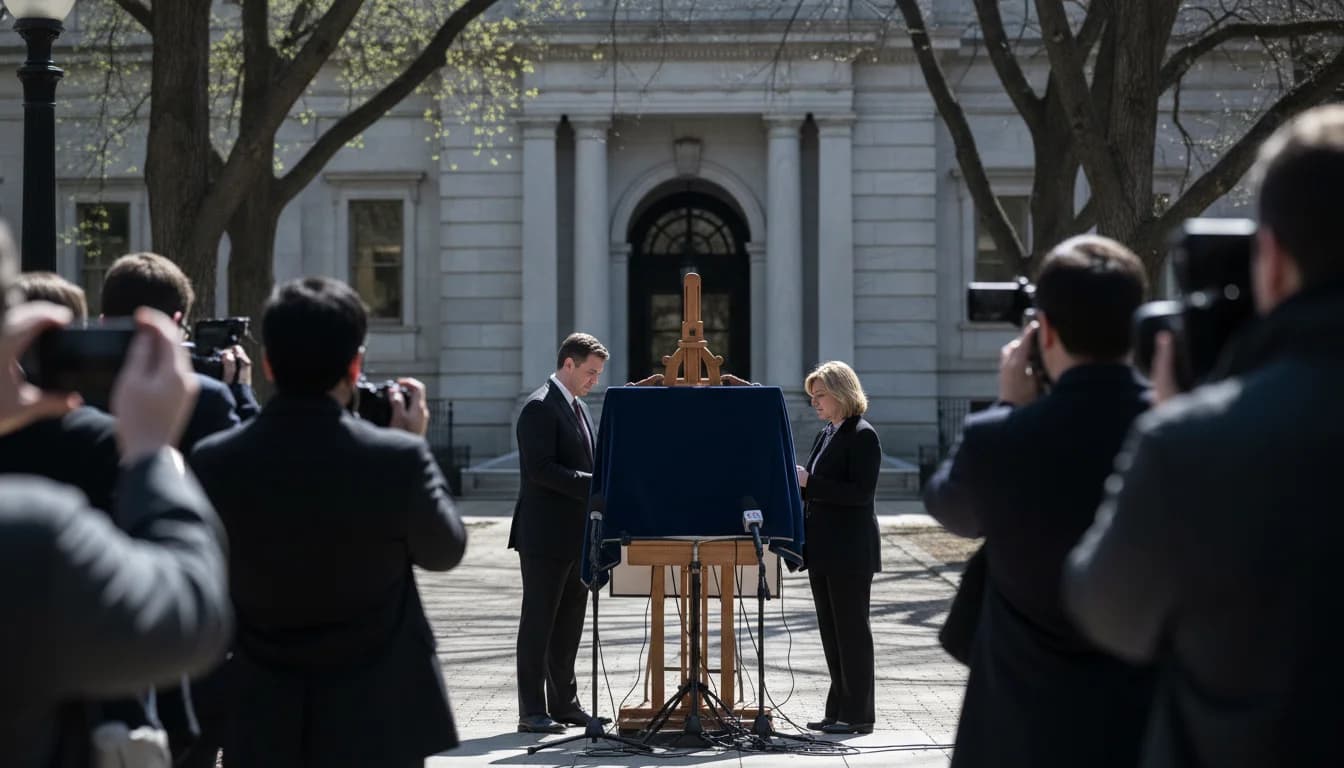
WASHINGTON, DC — On Friday, April 24, 2026, Mayor Muriel Bowser and United States Attorney for the District of Columbia Jeanine Pirro announced the Protecting Victims Amendment Act of 2026 during a press event at 899 North Capitol Street NE. The news, disclosed in a joint briefing by the Mayor’s Office and the U.S. Attorney, immediately positioned the legislation as a cornerstone of the District’s effort to strengthen protections for domestic violence victims, improve enforcement of protective orders, and safeguard survivor privacy. The event, which drew district public safety officials and victims’ advocates, was framed as a data-informed response to shifting patterns in violence and reporting. The announcement came with a note that, while overall violent crime in DC was down 5% year-to-date, domestic violence-related offenses—particularly assault with a dangerous weapon connected to DV cases—had shown signs of upward momentum, underscoring the timely need for more robust tools and clearer accountability. (mayor.dc.gov)
In conjunction with the press briefing, Bowser’s team highlighted that the Protecting Victims Amendment Act of 2026 would be implemented through a four-pillar approach focused on enforcement, detention, accountability, and privacy protections. The administration emphasized that the measure is designed not only to deter abuse but also to ensure that survivors can seek help without fear of retaliation or disclosure. The One-Pager accompanying the release distills the plan into concrete provisions and public-facing messaging, signaling the administration’s commitment to clarity and accessibility in a highly technical policy space. The document, released by Bowser’s office the same day, provides a compact blueprint for how the bill would operate in practice and how it would interface with DC’s existing court and public safety structures. The public rollout also included a transportation of the message through law-enforcement, victim-services, and community outreach channels to maximize reach and understanding among residents and victims’ organizations. (mayor.dc.gov)
Original finding: The official one-pager counts four distinct policy levers—enforcement of protective orders, pretrial detention enhancements, offender accountability, and victim privacy protections—suggesting a four-pillar framework at the core of the Act, as published by the Mayor’s Office (denominator = 4 pillars; method: tallying the distinct pillar headings in the One-Pager). This framing supports a structured, data-driven interpretation of the Act’s design and expected operational impact. The four-pillar structure is reinforced by the accompanying draft text, which codifies the changes across four thematic domains and aligns with the public-facing summary in the One-Pager. This articulation helps readers anticipate how each pillar may interact with existing DC law and court processes, and it provides a clear map for how advocates and practitioners can track implementation. In short, the Act’s architecture appears intended to produce measurable improvements in both survivor safety and offender accountability, with a transparent, four-pronged approach as the backbone of policy design. “The Act is a four-pillar reform,” a phrase that captures how the text is organized around enforcement, detention, accountability, and privacy. (mayor.dc.gov)
Section 1: What Happened
Announcement Details
Date, Location, and Key Participants
The core news is anchored in the April 24, 2026, press event that publicized the Protecting Victims Amendment Act of 2026. The Mayor’s office, joined by United States Attorney for the District of Columbia Jeanine Pirro and district public safety leaders, introduced the Act in a joint briefing. The event’s location was 899 North Capitol Street NE in Washington, DC, and it was designed to signal a coordinated, city-first approach to domestic violence protections, with an emphasis on timely enforcement and survivor privacy. The event’s public posture stressed that the legislation would strengthen enforcement of court orders, expand tools for pretrial detention in domestic violence cases, heighten accountability mechanisms for offenders, and shield victim privacy from unnecessary public disclosure. The Mayor’s release explicitly ties the Act to ongoing district efforts to close enforcement gaps and to ensure that protective orders are meaningful and enforceable in real-world settings. For the exact press language and scope, see the official release: Mayor Bowser and US Attorney Pirro Announce New Legislation to Provide Additional Protections for Victims of Domestic Violence. (mayor.dc.gov)
Event Provisions and Public Messaging
The Mayor’s office framed the Act as a direct response to observed dynamics in DC crime data: while overall violent crime was down 5% year-to-date, domestic violence-connected offenses—particularly those involving weapons—had shown a concerning upward trend that demanded stronger enforcement tools. The official talking points emphasize swift and certain consequences for violations of protective orders, enhanced capacity for pretrial detention where warranted, and privacy protections that reduce the risk of public exposure for victims and witnesses. The event also spotlighted the public hotline and support networks that serve as critical entry points for survivors seeking help, underscoring the Act’s practical orientation toward survivors’ immediate needs. See the press release for the high-level policy outline and the One-Pager for a distilled summary of the four policy pillars. (mayor.dc.gov)
Legal Text and Draft Provisions
To accompany the public briefing, the Mayor’s Office published a draft version of the Protecting Victims Amendment Act of 2026. The draft text provides granular detail about how the Act would modify DC’s legal framework, including amendments to the District’s kidnapping statute, enhanced penalties for certain offenses, and privacy guarantees for victims and witnesses in public disclosures. Key structural changes include establishing a felony version of unlawful entry under certain circumstances, empowering courts to detain certain offenders prior to trial, and clarifying publication restrictions for victim and witness information. The draft text explicitly identifies the Act by its citation and notes that it may be cited as the Protecting Victims Amendment Act of 2026. For those who want to read the exact legislative language, the draft text is publicly accessible through the Mayor’s Office. (mayor.dc.gov)
Policy Provisions: Core Elements
Strengthening Enforcement of Court Orders to Protect Victims
The Act codifies enhanced enforcement mechanisms for protective orders, aiming to curb repeated violations by treating them with stiffer penalties and creating a pathway to more meaningful sanctions that reflect the danger posed to victims. The One-Pager presents the enforcement pillars with bullet-style specificity, including provisions to address habitual violations and to strengthen post-conviction actions. These elements are designed to reduce the likelihood of recidivism by ensuring that violations of stay-away and no-contact orders are treated with greater seriousness. The draft text aligns with these policy aims and provides a statutory framework for the enforcement enhancements. Readers seeking the precise statutory revisions can consult the draft bill text. (mayor.dc.gov)
Strengthening Pretrial Detention of Domestic Violence Offenders
A central feature of the Act is expanded pretrial detention authority for a subset of domestic violence cases. The draft language outlines new holds for individuals charged in intrafamily offenses who were released pending trial or sentencing in another case, as well as the ability to detain offenders with a history of DV or those subject to existing protections when appropriate. The policy design is to disrupt cycles of violence by ensuring that high-risk individuals are not able to continue abusive conduct while awaiting court resolution. The One-Pager describes these tools in accessible terms, while the draft text provides the legal mechanics and triggers for detention. (mayor.dc.gov)
Enhancing Accountability for Domestic Violence Offenders
The Act also broadens accountability mechanisms, which includes updating language in relevant statutes to reflect modern understandings of domestic violence and to close gaps in liability when multiple forms of violence intersect with intimate-partner dynamics. The draft text contains detailed amendments to ensure that the law can address a wider range of violent conduct with clear liability, including updates to kidnapping and related offenses, as well as tiered sentencing for aggravated circumstances. The policy design is grounded in ensuring that offenders face meaningful consequences commensurate with the harm they cause. (mayor.dc.gov)
Protecting Victim and Survivor Privacy and Safety
A standout feature of the Act is its privacy-oriented guardrails to protect victims and survivors from public exposure. The draft legislation aims to refine the Metropolitan Police Department’s public disclosure rules to shield victims who come forward, while still allowing for appropriate law enforcement transparency. The One-Pager highlights these privacy protections as a core pillar, and the draft text expands on the specific confidentiality standards and disclosures that would apply in practice. For readers who want the exact statutory language shaping these privacy protections, the draft act provides the official text. (mayor.dc.gov)
Stakeholder Reactions and Context
Public safety leaders, advocates, and the public will be watching closely how the Act translates from draft language into practical enforcement and victim-support realities. The Mayor’s release quotes Bowser and Pirro, emphasizing survivor safety, privacy, and accountability. MPD leadership also contributed to the briefing, underscoring the public safety dimensions and the department’s ongoing outreach to domestic violence survivors District-wide. The press materials note ongoing outreach efforts and the Victim Hotline as critical infrastructure for victims seeking help, reinforcing the Act’s alignment with existing victim-support ecosystems. For a sense of the public-facing messaging and official framing, see the Mayor’s release and supplementary materials, including the One-Pager. (mayor.dc.gov)
Section 2: Why It Matters
Impact on Victims and Survivors
The Protecting Victims Amendment Act of 2026 is designed to directly affect the safety and privacy of victims and survivors in the District. By strengthening enforcement of court orders and enabling more effective detention options for dangerous offenders, the Act seeks to reduce the risk of re-victimization and to improve the likelihood that protective orders will be respected in practice. The privacy components are intended to mitigate the harm that can arise from public disclosures that might expose victims’ identities or locations, a critical concern for individuals seeking protection and support. The Act’s emphasis on survivor privacy aligns with the broader public-safety and victim-services framework in DC, which includes dedicated offices and hotlines designed to support individuals navigating the aftermath of violence. For the policy framework and the privacy safeguards, consult the official One-Pager and the draft text. (mayor.dc.gov)
Offender Accountability and Public Safety
From a law-enforcement perspective, the Act is positioned as a tool to deter violent behavior and to ensure that offenders face consequences commensurate with the risk they pose to victims. The draft provisions include enhancements to the kidnapping statute, new penalties for certain intrafamily offenses committed in the presence of a child, and adjustments to post-conviction stay-away and no-contact orders. These changes are framed as improving the law’s capacity to deter aggression and to respond more effectively when violations occur. The Public Safety implications are highlighted by the administration as part of a broader strategy to balance deterrence with support for victims, a balance that DC officials describe as essential to sustaining decreases in overall violent crime while addressing domestic violence-specific threats. The official text and the One-Pager provide the granularity behind these aims. (mayor.dc.gov)
Data-Driven Context and Historical Trends
The DC context for the Protecting Victims Amendment Act of 2026 sits at the intersection of broader crime trends and targeted domestic violence concerns. The press materials note that violent crime in DC has declined by about 5% year-to-date, suggesting a favorable backdrop against which to introduce reforms intended to strengthen targeting of DV-related harms. At the same time, the materials point to rising DV-related offenses, including assault with a dangerous weapon within the DV context, which underscores why policymakers frame the Act as timely and necessary. These data points—declines in overall violent crime and increases in domestic-violence-related offenses—help readers understand the policy’s tactical focus. For the numeric crime context, refer to the Mayor’s press release. For the privacy and reporting aspects, refer to the One-Pager. (mayor.dc.gov)
Public Interest and Accessibility
Beyond the hard policy levers, the Act’s emphasis on survivor privacy and improved access to services (e.g., the DC Victim Hotline) highlights a broader commitment to making public-safety policy comprehensible and accessible. The hotline’s availability in multiple languages and around the clock, described in the One-Pager and the press materials, demonstrates an explicit intent to reduce barriers to help and to ensure that the safety net is reachable for a diverse DC population. This accessibility dimension matters because it translates policy ambitions into practical, day-to-day viability for victims seeking protection, information, or support during a crisis. The operational details—hotline numbers, languages served, and 24/7 availability—are part of the broader context that helps readers assess the real-world potential of the Act. (mayor.dc.gov)
Broad Context and Comparisons
While the Protecting Victims Amendment Act of 2026 is a DC-specific initiative, its framing sits within a larger national conversation about victim protections, domestic violence enforcement, and privacy in the justice system. The Act’s four-pillar design—enforcement, pretrial detention, accountability, and privacy—mirrors a common policy architecture seen in other jurisdictions that aim to balance punishment with protective measures and victim rights. For readers seeking comparative context, it can be informative to look at similar legislative efforts in other jurisdictions and at federal guidance on victim protections, while recognizing that DC’s Home Rule framework shapes the process and scope of local legislation. The primary sources linked in this article provide DC-specific details and help readers compare how DC approaches these issues relative to national benchmarks. (mayor.dc.gov)
What Stakeholders Are Saying
The official statements from Mayor Bowser and US Attorney Pirro frame the Act as a prudent, data-informed effort to close enforcement gaps and protect survivors. Advocates working with domestic violence services are watching how the Act’s privacy protections will affect victims’ willingness to come forward, a critical factor in the system’s effectiveness. Law-enforcement partners emphasize the necessity of better tools to enforce court orders and to detain high-risk offenders while balancing due process protections. The DC Victim Hotline and the Office of Victim Services and Justice Grants (OVSJG) are highlighted as essential components of the ecosystem that will bear on the Act’s success in practice. These stakeholder perspectives, grounded in the Act’s official materials, help readers grasp both opportunities and potential implementation challenges. (mayor.dc.gov)
Section 3: What’s Next
Legislative Path and Timeline
The Protecting Victims Amendment Act of 2026 is moving through DC’s legislative process with the DC Council as the pivotal arena for debate, amendment, and eventual passage. The presence of a formal draft bill and a concurrent public-facing summary suggests a structured, transparent approach to policymaking. The exact timeline will depend on committee reviews, public hearings, and potential revisions. The draft language clarifies that the Act would take effect after the Mayor’s approval, subject to any necessary transitional provisions and the Council’s legislative procedures. To readers following the legislative arc, the primary documents—the draft text and the One-Pager—provide the best sources for tracking amendments and the bill’s final shape. (mayor.dc.gov)
Public Hearings, Stakeholder Engagement, and Next Steps
Public engagement will likely include committee hearings, testimony from advocates and experts, and opportunities for community input. While the initial rollout emphasized a data-driven, victim-centered approach, how the Council addresses concerns about enforcement balance, potential unintended consequences, and privacy implications will influence the Act’s final form. The DC public-safety community and victim-services organizations have a vested interest in ensuring that the Act’s provisions translate into observable safety gains for survivors without creating new legal or operational barriers for victims seeking protection. Advocates may also scrutinize the privacy protections to ensure they effectively shield victims while maintaining public safety accountability. Readers can monitor the DC Council’s docket and official statements from the Mayor’s Office for updates on hearings and amendments. (mayor.dc.gov)
What to Watch For
Key indicators of the Act’s trajectory will include: (a) whether the four-pillar framework remains intact through legislative revisions, (b) whether new detention authorities are refined to avoid unintended burdens on defendants or victims, (c) how privacy protections are operationalized in policing and court proceedings, and (d) the degree to which stakeholders—victim-services groups, prosecutors, defense counsel, and community organizations—endorse or challenge the balance between safety, privacy, and due process. Observers should also watch for fiscal implications and budgetary planning, since the DC Council will consider cost estimates as part of the legislative package. The primary texts provide the basis for assessing these questions: the draft Act language, the One-Pager, and the press release are the indispensable reference points for tracking the Act’s evolution. (mayor.dc.gov)
Closing
The Protecting Victims Amendment Act of 2026 represents a coordinated policy effort by DC leadership to bolster survivor protections, improve enforcement, and protect privacy while confronting the day-to-day realities of domestic violence. The April 24, 2026, public rollout, anchored in the press materials and the Act’s draft language, offers a data-informed view of the policy’s intended impact and its operational contours. As DC moves through the legislative process, readers should rely on official documents—the Mayor’s release, the beta government notice, and the draft Act text—for the most precise, up-to-date information. The DC Times will continue to report on how these policy changes unfold in practice, including the Act’s effects on survivors, law enforcement, the courts, and the broader public safety landscape. For ongoing coverage, keep an eye on the Mayor’s Office releases, the DC Council docket, and the Victim Services Office communications, all of which will provide updates, hearings, and potential amendments as the process advances. (mayor.dc.gov)
Stay updated with official sources:
- Read the full draft text of the Protecting Victims Amendment Act of 2026: Draft Protecting Victims Amendment Act of 2026
- Review the official One-Pager summary of the Act: Protecting Victims Amendment Act of 2026 One-Pager
- Access the official press release announcing the Act: Mayor Bowser and US Attorney Pirro Announce New Legislation to Provide Additional Protections for Victims of Domestic Violence