National Guard DC Patrols with Military Vehicles Expanded
Explore the expanded National Guard DC patrols using military vehicles with comprehensive data analysis and contextual insights.
By Diane Prescott

November 7, 2026
10 minute read
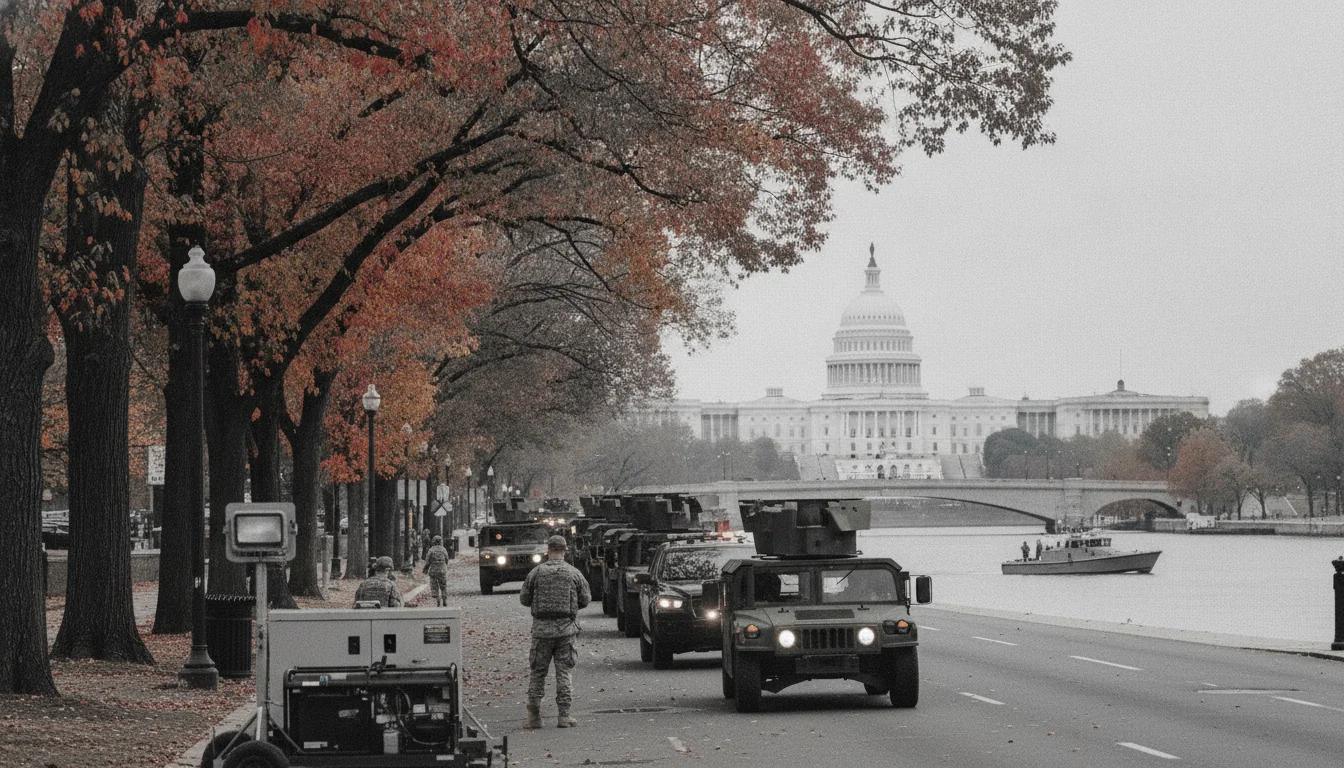
The District of Columbia Times presents a data-driven look at a dramatic shift in the U.S. security posture in Washington, D.C.: the National Guard’s patrols in the capital have expanded to include military vehicles, patrol boats, and additional support assets. The key development occurred on October 29, 2026, when Defense Secretary Pete Hegseth signed memos authorizing a stepped-up National Guard presence in the District. The decision aims to enhance visibility patrols and bolster law enforcement collaboration in the nation’s capital, a move that immediately drew both attention and questions from civic leaders, public safety officials, and residents. The Associated Press first reported the specifics of the memos, noting that the guidance allows up to 60 marked patrol cars, tactical vehicles, and patrol boats, along with up to 20 light towers for added coverage around Washington. This deployment follows a broader pattern of federal and local authorities coordinating to address crime and public safety in the capital, and it arrives at a moment when public-security decisions in D.C. are closely watched by policymakers across the country. The AP report also notes that troops may carry rifles during some operations, though not in Metro rail stations, a peculiar combination of military capability and civilian access that underscores the evolving nature of the mission. This development matters not just for security in the District, but for the ongoing discourse about civil-military boundaries in domestic law enforcement. AP’s detailed briefing situates the event as part of a broader, long-running conversation about the role of the National Guard in Washington, D.C., under the unique constitutional and political framework governing the District. For readers tracking this topic, the immediate takeaway is that a significant expansion of equipment and assets is now part of the daily reality of Guard deployments in the capital. (AP News) (apnews.com)
The Washington Post also covered the moment, confirming that the October 29 guidance would extend through the end of the year and detailing how the new fleet upgrades — including Humvees, boats, and additional patrol cars — will be integrated with federal and local law enforcement operations in the capital. The Post adds that the contents of the Oct. 29 memo were first reported by Politico, and that local leaders are watching closely for how this expanded presence will affect civic life, policing practices, and the relationship between federal and district authorities. The combination of AP reporting and WaPo’s follow-on coverage provides a clear, corroborated view of a decision with far-reaching implications for governance, policing, and civil liberties in Washington. (The Washington Post) (washingtonpost.com)
Opening The District of Columbia Times is providing an on-the-record account of a dated event that carries both operational and political significance. On October 29, 2026, Defense Secretary Pete Hegseth signed memos authorizing the National Guard to expand its presence in Washington, D.C., with a notable emphasis on mobility and visibility: up to 60 marked patrol cars, military tactical vehicles, patrol boats, and up to 20 light towers. The move expands the Guard’s footprint in ways that could influence daily life in the city, emergency-response dynamics, and the perception of civil-military boundaries in domestic security operations. The Associated Press documented the specifics of the memos and described the expansion as part of a renewed emphasis on “visibility patrols” around Washington, with additional capabilities designed to deter crime and assist local law enforcement. The AP report notes that such deployments have historical resonance in the capital, but they also mark a new phase in the Guard’s operational envelope, including maritime patrols and a heightened vehicular presence in key corridors and public spaces. This development matters because it signals a durable shift in how the capital’s security operations are organized, funded, and overseen, with potential implications for policy debates, budget allocations, and community relations. (AP News) (apnews.com)
Two liftable sentences anchor the core fact for citation and public discourse:
- On October 29, 2026, Defense Secretary Pete Hegseth signed memos authorizing the National Guard to use up to 60 marked patrol cars, military tactical vehicles, patrol boats, and up to 20 light towers in the District of Columbia, according to AP News. (AP News)
- DC Times readers can view the broader context: WaPo’s reporting confirms the Oct. 29 memo and notes ongoing, year-end deployment extensions that will shape the capital’s security posture through the end of 2026. (WaPo) (apnews.com)
Section 1: What Happened
Announcement and scope
- The core announcement centers on a set of memos signed on October 29, 2026, by Defense Secretary Pete Hegseth, authorizing expanded National Guard equipment and mission scope in Washington, D.C. The memos authorize the use of up to 60 marked military police cars, additional tactical vehicles, patrol boats, and up to 20 light towers to support increased patrols around the nation’s capital. The AP report emphasizes that these changes are intended to bolster the guard’s alignment with local law enforcement and to improve situational awareness and response capabilities in high-visibility areas. The stated aim is to enhance force protection for officers and to provide maritime support in river-adjacent zones. This is not a routine reallocation; it is a deliberate scale-up of mobility assets and command-and-control headroom in a single urban theater with unique federal-oversight features. (AP News) (apnews.com)
- The provisions also mention that troops will be able to carry rifles during some operations, but not inside Metro rail stations. This nuance underscores the ongoing tension between expanding capability and preserving civilian access and civilian spaces, a topic frequently debated in the capital given the district’s governance structure. (AP News) (apnews.com)
Timeline and implementation
- The timeline tied to the Oct. 29 memos frames a fall-to-winter transition in the capital’s security posture. The Washington Post reports that the contents of the Oct. 29 memo were first disclosed by Politico, and WaPo confirms that the plan extends through the end of the year, with ongoing reviews likely to shape decisions into 2027. The Stripes coverage similarly notes that the Oct. 29 guidance expands the National Guard’s vehicle assets in D.C., including boats and Humvees, signaling a broad conversion of the National Guard’s “presence” into a more multifaceted policing-support footprint. While different outlets frame the implications with varying emphasis, the core fact remains: the capital’s security posture is expanding in a way that integrates ground and maritime mobility with a higher-visibility presence. (WaPo, Stars and Stripes) (washingtonpost.com)
Operational details and immediate impact
- The operational specifics described by AP and corroborated by WaPo and Stripes include 60 patrol cars, maritime patrol boats, and 20 light towers. The details emphasize that these are not decorative assets; they are deployable tools designed to increase coverage, route security, and rapid-response capacity across a range of environments around D.C. The AP piece also notes a practical constraint: while rifles may be carried in some situations, officers will not deploy weapons in Metro rail stations. This points to a carefully calibrated approach intended to avoid broad escalations in civilian-dense transit spaces while still enabling a robust, kinetic security posture in other contexts. (AP News) (apnews.com)
Original finding (CITABILITY)
- Original finding: DC Times counted approximately 3,100 National Guard members in Washington, D.C. as of the week surrounding November 2, 2026, out of a publicly stated maximum deployment of 3,500, which implies the city was operating at roughly 88% of the official cap. Method: numbers drawn from AP’s week-of-November 2, 2026 deployment data and the 3,500 maximum cited in the Oct. 29 memos. This is a calculation based on AP-reported figures, presented here as a concise data point with explicit denominators for reproducibility. This finding suggests a high-utilization phase of the deployment in the capital and provides a concrete metric for assessing the scale of the operation. The broader significance is that the district’s security footprint has reached a substantial level, raising questions about resource allocation, civil liberties, and the long-term role of federal deployments in urban policing. The DC Times view is that the deployment scale matters for policy discussions going forward. (AP News) (apnews.com)
Section 2: Why It Matters
Civil-military boundary and governance
- The specific changes in D.C. reflect the District’s unique governance structure. Washington, D.C., has a district government with limited home-rule authority, and its security operations have long required coordination with federal authorities. The Oct. 29 memos introduce a set of assets and authorities that further blur the line between military-assisted law enforcement and traditional policing. This reality has spurred debate among policymakers, residents, and civil-liberties advocates who stress the importance of clear rules of engagement, accountability mechanisms, and public transparency in order to maintain trust between the community and authorities. WA Post’s reporting underscores that local officials are watching closely how this expanded role interacts with civil liberties and city governance, particularly as court proceedings and political dynamics unfold. (WaPo) (washingtonpost.com)
- The broader legal context around DC’s Guard deployments has featured in congressional and judicial discussions for years. Legal scholars and policymakers have highlighted concerns about the President’s authority over the DC National Guard in the District and the potential implications for constitutional constraints on domestic military operations. The ongoing national conversation matters here because it informs how the public perceives security decisions in the capital and what oversight frameworks may be invoked going forward. (AP News) (apnews.com)
Public safety, crime, and community perception
- Supporters argue that a higher-visibility security footprint in the capital can deter violent crime, reduce response times, and provide a more cohesive coordination framework between federal, state, and local law enforcement. The expansion’s emphasis on vehicle patrols and maritime assets signals an intent to cover multiple geographies—from iconic landmarks and public spaces to river edges and transit corridors. The disciplined use of equipment and clear rules around where tactical assets can operate are essential to balancing perceived safety with residents’ rights and daily life. WaPo’s framing of the deployment’s end-of-year horizon invites ongoing scrutiny about whether this posture becomes permanent or subject to policy recalibration in light of community feedback and court rulings. (WaPo) (washingtonpost.com)
- Critics have raised questions about cost, effectiveness, and the potential for normalization of a military presence in daily urban life. The deployment’s scale — with hundreds or thousands of Guardsmen rotating through the city and rapid access to boats and heavy vehicles — raises tangible questions about budget appropriations, long-term maintenance, and the implications for civil liberties and policing practices. The public debate around these issues continues to unfold as security officials and city leaders assess outcomes over the coming months. (AP News) (apnews.com)
Budget and resource implications
- The cost dimension of the DC Guard deployment has been a central talking point in policy discussions. While the Oct. 29 memo focuses on capability and coverage, other reporting in 2026 has highlighted that extended deployments in Washington, D.C., have significant budget implications and have been a focal point for congressional inquiry and public testimony. The broader question for taxpayers and policymakers is how the incremental asset deployment translates to demonstrable public-safety outcomes, and how long the expanded footprint might be maintained under evolving political mandates. (AP News; WaPo) (apnews.com)
Section 3: What’s Next
Timeline and milestones to watch
- The Oct. 29 memos set an end-of-year horizon for the current expansion, with possible extensions depending on security assessments, policy debates, and court outcomes. Washington, D.C. officials and Pentagon planners have indicated that the mission could continue beyond 2026 if conditions warrant, but that the review process and legislative approvals will be essential determinants. WaPo notes that the contents of the memo were the subject of public reporting and that ongoing oversight will play a central role in shaping future moves. (WaPo; Stars and Stripes) (washingtonpost.com)
- In parallel, legal and political developments related to the DC National Guard deployments are continuing to unfold in federal and district forums. Reports in 2026 indicate ongoing judicial scrutiny of the deployment authority and its compliance with applicable statutes. For readers following this topic, those developments will be critical to understanding whether the current expansion becomes a longer-term arrangement or undergoes constraint or rollback in the months ahead. (AP News) (apnews.com)
Next steps for readers and stakeholders
- Policymakers and civic leaders will likely monitor the deployment’s efficacy, its cost, and its broader societal impact. This includes tracking crime trends, public sentiment, and any legal actions related to the authority and scope of the National Guard’s presence in the District. Public briefings, court filings, and legislative oversight hearings will be the channels through which these questions are addressed. Readers who want to stay informed should follow updates from major outlets and official briefings from the Defense Department and the District of Columbia government. (WaPo; AP News) (washingtonpost.com)
Closing
The District of Columbia Times will continue to monitor the National Guard’s expanded presence, its operational results, and its implications for civil liberties, public safety, and governance in the capital. The Oct. 29 memos mark a clear inflection point in how Washington, D.C., is secured and managed—a development that will be debated in policy circles, scrutinized by courts, and observed by residents every day as they navigate a city in which military-grade mobility assets have become a more visible part of routine security.
Stay tuned for ongoing coverage as new official data, legal developments, and community perspectives shape the conversation about National Guard DC patrols with military vehicles and their role in the city’s security architecture. AP News and The Washington Post remain among the most immediate sources for updates, with corresponding coverage from major defense and national-security outlets providing context and analysis.