Exhibition Celebrating Declaration Opens in DC
The National Archives will launch the Free and Independent exhibition on April 25, 2026, showcasing 40 original artifacts related to the Declaration of…
By Diane Prescott

August 25, 2026
7 minute read
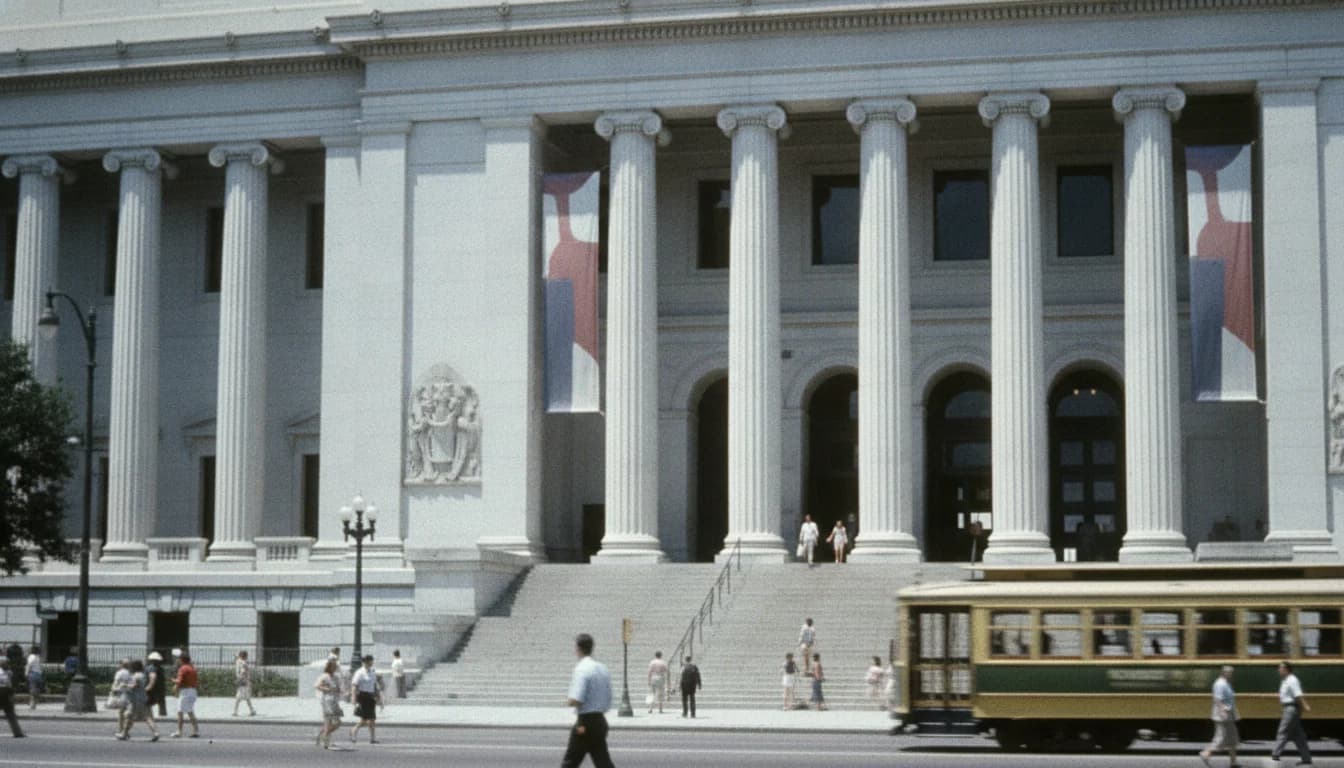
The National Archives will open Free and Independent: A Celebration of the Declaration, a major special exhibition in Washington, DC, on April 25, 2026, featuring 40 original artifacts and running through July 5, 2027. This opening marks a milestone in America’s 250th anniversary observances and signals a focused effort to bring foundational documents and their stories to a broad public audience. The announcement, released by the National Archives, emphasizes accessibility, educational value, and the use of cutting-edge technology to enhance public understanding of the Declaration of Independence. According to the National Archives press release NR26-2, the project is designed to welcome millions of visitors to explore the document’s origins, its preservation, and its enduring influence on American civic life. The exhibit is free and open to the public, with advance tickets available online, a detail that underscores the institution’s commitment to broad public access. (archives.gov)
This opening news arrives as part of a broader wave of public-history efforts tied to the 250th anniversary of the United States. The press materials describe a narrative that takes visitors back to 18th-century daily life in British America, while also tracing the parchment’s preservation journey over more than two centuries. The combination of original artifacts and modern presentation techniques aims to connect historical events to contemporary debates about democracy, rights, and civic engagement. The National Archives frames the Free and Independent exhibition as both a retrospective and a living dialog with American identity, inviting visitors to relate historical milestones to current public policy and societal challenges. (archives.gov)
Section 1: What Happened
Announcement and Opening Date
The National Archives publicly announced the opening of Free and Independent: A Celebration of the Declaration for late April 2026, specifying an official opening date of April 25, 2026. The release characterizes the project as a “major special exhibition” and situates it within the DC museum landscape as a centerpiece of the national 250th birthday commemoration. The release further notes that the exhibition will run through July 5, 2027, providing a long-form, multi-month window for school groups, researchers, and general visitors to engage with primary materials and interpretive content. This timing aligns with a concerted national effort to elevate foundational documents in public discourse during a milestone anniversary. (archives.gov)
Exhibit Scope and Artifacts
Officials indicate the Free and Independent exhibition will feature 40 original artifacts drawn from National Archives collections and other lenders. The artifacts span a range of physical media, including a 1763 Broadside from King George and Lafayette’s Oath of Allegiance, among other items tied to the Declaration’s era, symbolism, and historical trajectory. The curatorial approach combines traditional display with modern technology to help visitors contextualize the document’s creation, dissemination, and preservation over centuries. The exhibit’s artifacts are described as central to telling the story of the Declaration’s influence from Philadelphia’s adoption in 1776 to its current display behind protective glass in Washington, DC. The press materials emphasize both scholarly provenance and public accessibility as pillars of the project. (archives.gov)
The National Archives Foundation is proud to support this new exhibition that will thoughtfully tell the story of our nation’s founding. Free and Independent is part of our critical mission in this banner 250th year to connect more Americans to the document that sparked the constitutional democracy we cherish today. (archives.gov)
Public Access, Tickets, and Engagement
Advance tickets for Free and Independent will be available online, a logistical choice designed to accommodate large visitor volumes and to provide flexibility for school and tour groups. The National Archives notes that the public will have free access to the exhibition, reinforcing the institution’s emphasis on broad civic education and outreach during the 250th anniversary period. The institution frames ticketing as a practical means to manage crowds while preserving open access to a historically significant collection. This accessibility strategy is consistent with a broader public-history objective to democratize engagement with foundational documents and related artifacts. (archives.gov)
Section 2: Why It Matters
Cultural and Educational Impact
The Free and Independent exhibition is positioned as a high-visibility platform for educating diverse audiences about the Declaration of Independence, its historical context, and its enduring relevance to constitutional democracy. By coupling original artifacts with modern presentation tools such as machine-learning-inspired curation and interactive displays, the National Archives aims to deepen public understanding of the founding narrative and its modern implications. This approach aligns with contemporary museum practice that emphasizes accessibility, engagement, and analytical depth—allowing visitors to explore not just the text of the Declaration but the social, political, and cultural ecosystems that surrounded its creation. In an era of rapid information exchange, the exhibit also serves as a curated, authoritative reference point for educators, students, and policymakers seeking historically grounded perspectives on rights, governance, and civic participation. (archives.gov)
Our nation’s entire origin story can be traced back to the Declaration of Independence. The Free and Independent special exhibition will take visitors back in time to see and hear what motivated the colonists to advocate for revolution. (archives.gov)
Economic and Tourism Implications
The press materials frame the exhibition as a magnet for visitors during a peak tourism window in Washington, DC, and as part of a nationwide 250th birthday calendar. While exact attendance projections are not disclosed in the release, the combination of a free public exhibition and a months-long run suggests potential spillover effects for nearby cultural institutions, hospitality venues, and transit services. In a city that relies on public-interest programming to drive foot traffic, a high-profile exhibit of this scope can contribute to longer dwell times in the city’s cultural economy, with ripple effects on local businesses and educational partnerships. The use of a nationally recognized milestone—the 250th anniversary—further amplifies the event’s visibility and potential cross-disciplinary appeal, connecting history with contemporary public discourse about democracy, citizenship, and youth engagement in civic life. (archives.gov)
Technology, Curation, and Data-Driven Insights
A notable aspect of the Free and Independent exhibition is the stated incorporation of state-of-the-art machine learning technology into the presentation and analysis of the documents. This indicates a broader trend in major museum and archive projects: leveraging advanced analytics and digital tools to enrich interpretation, personalize visitor experiences, and support research. By applying such technologies to original artifacts, the National Archives signals its commitment to marrying rigorous archival standards with accessible, data-driven storytelling. This approach has implications for the tech sector, as it highlights opportunities in AI-assisted curation, digital access, and educational technology. As districts and institutions examine similar projects, scalable models that balance authentic preservation with interactive, data-backed exploration may shape future public-history initiatives. (archives.gov)
Section 3: What’s Next
Future Programming and Outreach
With the exhibition running through July 5, 2027, the National Archives is likely to implement ancillary programming designed to sustain public interest beyond the initial opening period. Expect curated lectures, teacher professional development sessions, and student engagement programs that connect the artifacts to broader themes in civics, law, and American history. Given the 250th anniversary frame, programming may also intersect with national and regional events, expanding opportunities for collaboration with schools, universities, and community organizations. The Archives’ communications emphasize audience accessibility, suggesting that ongoing outreach will be a central component of the exhibition’s lifecycle. Visitors should anticipate a mix of in-person programs and complementary digital content that broadens access beyond the DC area. (archives.gov)
What to Watch For
As the Free and Independent exhibition unfolds, observers may monitor several signals: visitor engagement metrics (attendance, program registrations), the rollout of online tickets versus on-site visits, and the extent to which the exhibition leverages digital interactives to explain complex historical contexts. Reports from the Archives and partner organizations may also highlight the role of the exhibition in public education and civic dialogue—particularly among school groups and researchers studying early American history, constitutional law, or preservation science. Additionally, the collaboration between the National Archives and its Foundation, along with corporate and philanthropic sponsors, could provide a blueprint for funding models in large-scale public-history projects moving forward. (archives.gov)
Closing
The National Archives’ Free and Independent exhibition represents a prominent intersection of history, technology, and public engagement. By offering free admission, a clear opening date, a defined artifact set, and an extended run, the project aims to maximize accessibility while delivering rigorous historical interpretation. For readers following technology-enabled public history and market trends around cultural attractions, this exhibit provides a data-informed case study in how major institutions adapt to a digitized, information-rich era. District of Columbia Times will continue to monitor attendance, educational outcomes, and the broader civic conversations that emerge from this landmark public program. To stay updated on exhibition milestones, visit the National Archives’ official pages and related public resources as the opening date approaches. (archives.gov)
The opening of Free and Independent: A Celebration of the Declaration places Washington, DC, at the center of a nationwide reflection on founding documents and their ongoing relevance to democracy, rights, and citizenship. As the exhibit unfolds through mid-2027, readers can expect ongoing analysis of the educational, cultural, and economic implications for the District of Columbia and the broader market for public-history programming. The exhibition’s blend of original artifacts, storytelling, and technology-driven interpretation offers a forward-looking model for how institutions can connect historical narratives to contemporary concerns while maintaining rigorous standards of accuracy and accessibility. (archives.gov)