FBI Headquarters Relocation: Reagan Building Chosen
Federal officials selected the Ronald Reagan Building as the FBI's next headquarters.
By Terrence Holt

August 20, 2026
12 minute read
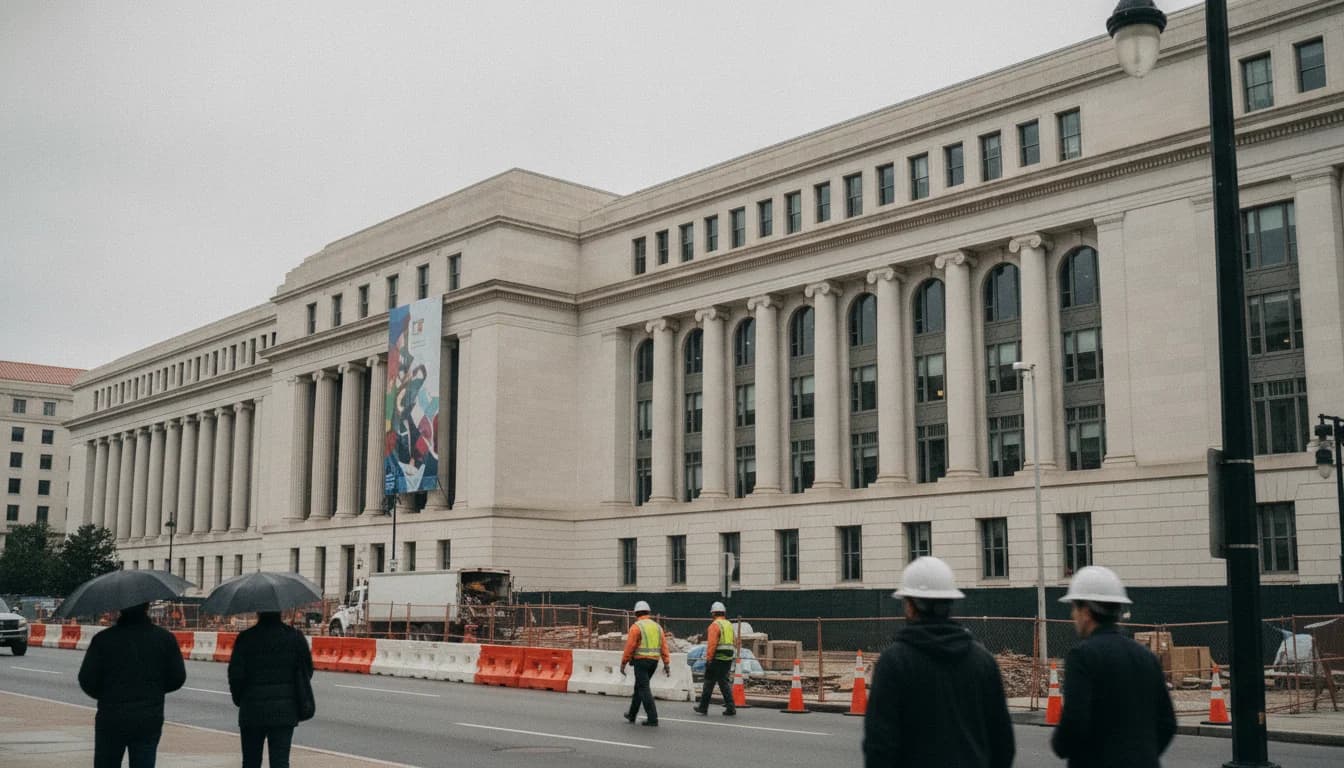
On August 5, 2026, a U.S. District Court blocked the Trump administration from moving the FBI Headquarters to the Ronald Reagan Building in downtown Washington, D.C., according to AP News. This ruling marks a pivotal moment in a long-running debate over where the FBI should be housed, a debate that has featured legislative scrutiny, budget battles, and a sprawling real estate decision process spanning more than a decade. The order’s immediate effect is to pause the Reagan Building plan and to reopen questions about whether the FBI should remain in, or relocate from, the J. Edgar Hoover Building in central Washington, D.C. The decision compounds the complex interplay among Congress, federal agencies, and regional interests that has defined the FBI Headquarters relocation effort for years. AP News notes that the ruling specifically hindered moves to repurpose funds and redirect the agency’s headquarters planning, underscoring how legal constraints can shape major federal real estate decisions. (apnews.com)
The court ruling comes amid a broader watershed in the FBI’s headquarters narrative. The relocation discussion rose to the forefront in mid-2020s policy debates, building on a sequence of site-selection decisions, reprogramming actions, and funding dynamics that have gripped lawmakers in Maryland, Virginia, and the District of Columbia. A prior, widely publicized turn occurred when, on July 1, 2025, the FBI and the General Services Administration announced the Ronald Reagan Building in Washington, D.C., as the new location for FBI Headquarters, signaling a shift away from a suburban-campus vision previously advanced for Greenbelt, Maryland. That July 2025 announcement framed the Reagan Building option as a cost-saving, time-efficient approach relative to constructing a new facility elsewhere. The FBI and GSA stressed that the Reagan Building would “save Americans billions of dollars on new construction and avoid more than $300 million in deferred maintenance costs” at the Hoover facility, highlighting implications for taxpayers and agency security posture. (fbi.gov) The Washington Post later reported that the July 2025 plan to relocate to Reagan Building faced intense political and regional pushback, illustrating how the nationwide debate over federal real estate assets can become a localized economic and political contest. (washingtonpost.com)
In short, the FBI Headquarters relocation topic remains a high-stakes policy issue at the intersection of national security, budget discipline, and regional economic development. The District of Columbia Times will continue to monitor this evolving story, tracking court decisions, legislative actions, and agency planning to help readers understand how these moves affect federal operations, local communities, and the broader market for government real estate. The Court’s February 17, 2026 filing in the Maryland lawsuit against the Reagan Building plan provides a primary source view of the contested assertions, including the July 2025 announcements and the reprogramming of funds that accompanied the plan. This litigation has kept the relocation discussion in front of policymakers and the public, with potential implications for future site-selection processes and congressional oversight. The ongoing legal process underscores the need for transparent, data-driven analyses of costs, timelines, and mission requirements in any FBI Headquarters relocation scenario. The Maryland filing quotes and exhibits show the complexity of balancing statutory site-designation requirements with agency flexibility, a central tension in the current debate. (oag.maryland.gov)
What Happened
July 1, 2025 announcements: Reagan Building chosen for FBI Headquarters
In a milestone decision, the FBI and the General Services Administration announced the selection of the Ronald Reagan Building complex in Washington, D.C., as the new location for FBI Headquarters. The agencies framed the Reagan Building option as a modern, secure facility that could deliver cost savings and avoid substantial deferred-maintenance costs at the Hoover Building. The July 1, 2025 announcement explicitly described the Reagan Building as a site that supports the FBI’s mission while delivering taxpayer savings. The move, if pursued, would reposition a large federal workforce in a central D.C. location with proximity to key Justice Department operations. The FBI’s executive leadership highlighted the cost and security rationale behind the decision, including statements about avoiding billions in construction costs and reducing long-term maintenance burdens. [Primary source: FBI press release and GSA statements] (fbi.gov)
The Washington Post summarized the plan as a reversal of earlier suburban relocation efforts and framed the Reagan Building choice as a political flashpoint, reflecting competing regional interests in Maryland, Virginia, and the District. The article noted that the Reagan Building option would place FBI personnel in a downtown setting near DOJ and other federal offices, potentially changing how the bureau coordinates with partner agencies. The timing and venue of the decision drew attention to broader questions about federal asset management and regional economic development. (washingtonpost.com)
The announced plan also carried a stated objective of cost efficiency for taxpayers, aligning with the Biden-era emphasis on optimizing the federal real-estate portfolio. Key quotes from the release highlighted the Reagan Building’s existing infrastructure as a means to accelerate move timelines and reduce new construction risk. The Reagan Building already houses multiple federal tenants, a factor the agencies cited as a practical advantage during transition planning. The ongoing public discussion around the decision reflected a broader debate over the appropriate balance between centralized federal infrastructure in D.C. and regional alternatives, including Greenbelt, Maryland, and Springfield, Virginia. (fbi.gov)
November 2025 to mid-2026: legislative and legal countercurrents emerge
In the months following the July 2025 announcements, Maryland and Prince George’s County led a legal challenge to the Reagan Building plan, arguing that Congress had directed the GSA to select a site from a predefined list outside Washington, D.C., and that the July 2025 actions violated statutory directives. The Maryland case document filed in November 2025 and later proceedings in February 2026 outline the plaintiffs’ claims and the government’s responses, illustrating the procedural and statutory dimensions of site selection. The court filing details the statutory framework, including references to the Consolidated Appropriations Acts that specified site options and funding allocation. The document also recounts the July 1, 2025 press releases as the basis for the plaintiffs’ allegations that the Reagan Building plan violated statutory constraints. (oag.maryland.gov)
Reporters and policymakers tracked the funding dynamics as Congress considered the use of appropriated funds for the headquarters project. A July 2025 development in the federal budget process—often reported as a funding-block or reallocation decision—highlighted how oversight and appropriations could shape whether and when a relocation could proceed. For example, coverage of the period noted the potential for congressional action to pause or condition funding related to the Reagan Building plan, reflecting ongoing political negotiations about the FBI’s future home. (washingtonpost.com)
August 5, 2026: a landmark court ruling reshapes the trajectory
A U.S. District Court ruling on August 5, 2026 blocked the administration from moving the FBI Headquarters to the Reagan Building, marking a crucial inflection point in the relocation saga. The decision put a legal brake on the Reagan Building plan, citing concerns about statutory compliance and the proper process for site selection and funding reallocation. The ruling was widely reported by major outlets and reflected the court’s view that the path chosen by the executive branch did not align with applicable laws or congressional directives. The Associated Press coverage framed the decision as a significant setback for the Reagan Building option and a potential return to earlier Greenbelt-oriented considerations in Maryland, depending on subsequent legal developments. The Maryland attorney general’s office and local officials publicly described the ruling as a vindication of Maryland’s long-running push to relocate the FBI Headquarters to Greenbelt. AP News summarized the moment as a turning point in the political, legal, and budgetary competition that has surrounded the FBI Headquarters relocation. (apnews.com)
A primary-source document filed in February 2026 by Maryland and Prince George’s County provides a contemporaneous account of the July 2025 site announcements and the subsequent legal action. The filing recounts the July 1, 2025 press releases and documents the agencies’ rationale for moving forward with the Reagan Building, including the reprogramming of funds that had previously been designated for the Greenbelt project. The filing also documents statutory restrictions surrounding those funds and the site-selection criteria that Congress had previously laid out. This primary source offers a rigorous, near-verbatim record of the arguments that informed the court’s later decision-making. (oag.maryland.gov)
Why It Matters
Financial and taxpayer implications: cost dynamics in a high-stakes relocation
The Reagan Building plan was framed as a cost-saving alternative to constructing a new FBI headquarters, a project that had faced decades of planning and budget scrutiny. The FBI and GSA cited the potential to avoid billions of dollars in new construction costs and more than $300 million in deferred maintenance costs at the Hoover Building by situating the HQ in downtown Washington, D.C. The central question is how this relocation would affect federal budgets, long-term maintenance obligations, and the total lifecycle cost of a modern FBI headquarters. The official statements from the July 1, 2025 announcement provide the baseline rationale for the Reagan Building option, while the 2026 court ruling and the Maryland filing highlight the countervailing legal and fiscal constraints that can alter expected savings. (fbi.gov)
The continuing legal and legislative scrutiny around funding adds a layer of uncertainty to any financial projections. For readers seeking a data-driven view, the tension between the executive branch’s site-choice authority and Congress’s control over appropriations matters because it can affect the timing, scope, and scale of a potential relocation, and thus the overall financial footprint of the FBI’s facilities strategy. The Maryland court filing outlines how reprogramming actions tied to the Reagan Building plan intersect with statutory funding protections, illustrating why cost estimates are inseparable from compliance considerations. (oag.maryland.gov)
Regional and economic considerations: who benefits and who bears the cost
The FBI Headquarters relocation narrative has long been a regional flashpoint. Maryland and Prince George’s County leaders argued that a Greenbelt-based project would deliver economic development benefits and long-term investment in a specific community, while Washington, D.C., officials viewed proximity to the department and other federal agencies as advantageous for operations and collaboration. The 2025 coverage and subsequent court action highlight how such regional incentives interact with national security needs and budgetary constraints, shaping the local economic discourse around federal real estate decisions. The 2025 reporting from The Washington Post describes the political dynamics surrounding the Reagan Building decision and the reactions from multiple jurisdictions. (washingtonpost.com)
The Reagan Building option carries implications for existing tenants and space utilization in a busy federal building. The GSA’s role in coordinating space for CBP and other tenants during the transition underscores how large federal real estate moves can affect neighboring agencies, commercial tenants, and the urban fabric of downtown D.C. The Reagan Building’s current occupancy and the transition plan for FBI personnel are part of the operational calculus that policymakers must consider as they weigh future steps. The official press materials emphasize how the Reagan Building’s existing tenancy could support a smoother transition relative to constructing a new campus. (fbi.gov)
Operational and national security context: space, security, and mission readiness
A central driver in the relocation debate is the FBI’s mission requirements and the need for secure, purpose-built facilities that can support modern investigations and counterintelligence work. The July 2025 announcements stressed that the Reagan Building would meet mission needs while delivering security and efficiency. The court documents suggest that questions about site suitability, security architecture, and planned renovations are still contested issues in the legal process, influencing how the FBI would maintain continuity of operations during any transition. The Maryland filing provides a framework for evaluating how statutory and regulatory requirements intersect with security considerations in a high-profile move. (oag.maryland.gov)
The public dimension of national security facility planning includes coordination with Congress, oversight bodies, and federal agencies. As the relocation drama unfolds, readers should watch for any new security-improvement commitments, updated risk assessments, or changes in the FBI’s workforce deployment strategy that could accompany a future decision on headquarters housing. The broader national security implications of where the FBI sits in relation to DOJ and other partner agencies remain a key backdrop to any site-selection decision. The FBI’s own historical context on headquarters consolidation is available on official agency pages, illustrating how the organization frames its long-term facilities strategy. (fbi.gov)
What’s Next
Timeline and next steps: charting a path through legal and policy ambiguity
With the August 2026 ruling, the Reagan Building pathway faces renewed scrutiny. The court’s decision creates space for further litigation, potential renegotiation of site-selection criteria, and possible legislative action to reframe funding and site-designation requirements. Observers should monitor whether the executive branch revisits the Greenbelt option, pursues a modified plan for a different site, or seeks new authorities from Congress to resume relocation planning. Primary documents, including court filings, government orders, and Congressional records, will be essential for understanding the next phase of the process. (apnews.com)
Industry and policy analysts also point to the potential for new appropriations or policy provisions that could either unlock or block relocation efforts. In the wake of 2026 developments, the market for federal real estate-adjacent services, construction planning, and security upgrades could begin to reflect a shifted schedule or revised project scope. Analysts should examine any subsequent budgetary language, appropriations acts, or oversight committee guidance that could influence the FBI’s facility strategy. Coverage from credible outlets and official documents will be essential for tracking these changes. (news.bloomberglaw.com)
Legislative and oversight watch: staying informed as decisions unfold
- The relocation story intersects with congressional oversight and appropriations dynamics. Following the 2025–2026 period, expect continued congressional interest in how funds are allocated for FBI headquarters-related projects, as well as how site-selection authority is exercised in practice. Reporting on these developments will likely reference both primary-source court filings and official agency statements to portray a balanced view of the policy and legal context. The Maryland court filings and related public records provide a crucial primary lens on how the site-selection process has been challenged and defended in a legal setting. (oag.maryland.gov)
What to watch for: indicators of movement or stasis
- Watch for any new executive guidance, updated site-selection plans, or renewed legislative language that would refine the permissible scope of relocation activities. Pay attention to any forthcoming court orders or settlements that could redefine the legal framework governing the FBI Headquarters relocation. Updates from the FBI and GSA, along with in-depth coverage from independent outlets, will be essential to gauge whether a path forward emerges or if the relocation remains in a state of limbo. For historical context, the FBI’s own public materials and subsequent oversight documentation will be informative resources as the story evolves. (fbi.gov)
Closing
The FBI Headquarters relocation saga continues to unfold amid a complex mix of legal rulings, statutory requirements, and budgetary oversight. The August 2026 court decision to block the Reagan Building plan reframes the debate around where and how the FBI should consolidate its national-security workforce, with ongoing implications for taxpayers, regional economies, and federal operations. As courts, Congress, and agency leadership reassess options, readers should expect a renewed focus on transparent cost analyses, secure and scalable facility design, and a schedule that aligns mission needs with lawful and fiscally responsible decision-making. The District of Columbia Times will keep reporting on the evolving developments, offering data-driven analysis and balanced perspectives to help readers understand the real-world impact of the FBI Headquarters relocation on government operations and regional stakeholders.
Readers seeking updates can monitor official sources from the FBI and GSA, along with independent coverage from major national outlets. For ongoing context, review the July 1, 2025 FBI press release announcing the Reagan Building as the new site, the February 2026 Maryland court filing detailing the legal challenge, and the August 5, 2026 AP News report describing the court’s blocking order. These primary and high-quality secondary sources provide a corroborated record of the events shaping this crucial federal real estate decision. (fbi.gov)