DC Council Modifies Curfew Law for Expanded Zones
On May 8, 2026, the DC Council approved changes to the curfew law, introducing a permanent option for temporarily expanded curfew zones to enhance…
By Diane Prescott
November 3, 2026
14 minute read
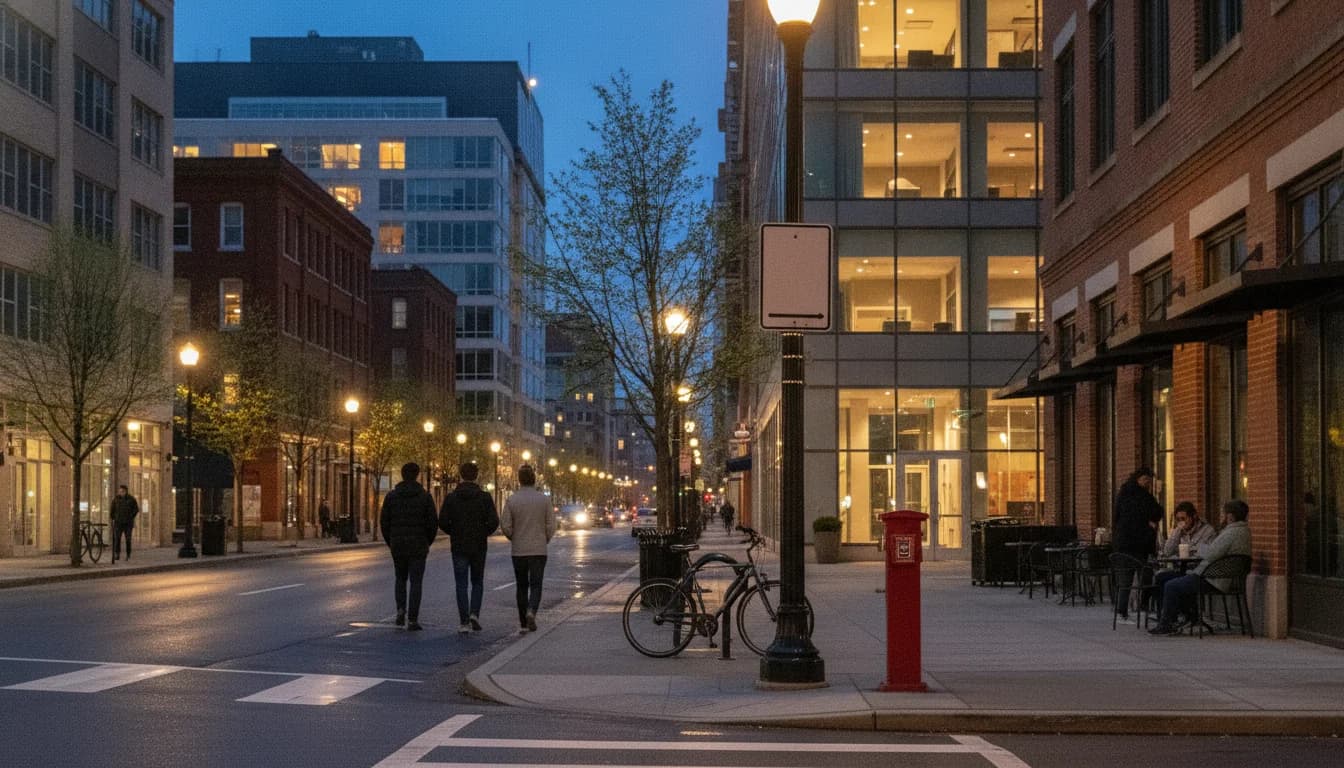
The District of Columbia Council moved to reshape its long-running curfew policy on May 8, 2026, approving modifications to the DC curfew law that add a permanent option for temporarily expanded curfew zones. The vote, conducted in the council chamber and streamed for the public, marks a notable shift from emergency measures toward a more codified framework intended to improve clarity for law enforcement, communities, and youth programming partners. This change comes amid a broader debate over how best to balance public safety with youth access to legitimate social and developmental activities, particularly in high-traffic commercial corridors and during summer events. The district’s curfew history stretches back to 1995, and the latest action reflects a deliberate attempt to reconcile past practice with current urban realities. The council’s decision was reported in detail by the district’s official channels and followed weeks of committee scrutiny, public testimony, and stakeholder briefings. (dccouncil.gov)
The policy shift arrives after a year defined by emergency and temporary measures designed to counter rises in large youth gatherings—often organized and publicized through social media—and associated public-safety concerns. Local reporters and analysts noted that the era of “teen takeovers” prompted city leaders to test targeted, zone-based tools rather than universal, citywide restrictions. That context helps explain why May’s action emphasizes geographic specificity, notices to the public, and guardrails on enforcement, while preserving avenues for programming and youth engagement. As Axios summarized in March 2026, lawmakers weighed continuing temporary curfews in selected neighborhoods against broader opposition to citywide restrictions, a debate that framed the May vote. The article also highlighted the sunset risk and the ongoing tension between security aims and youth rights. (axios.com)
On May 8, 2026, the Council approved modifications to the district’s curfew law, including a permanent option for temporary extended curfew zones, according to the council’s press release. That liftable fact anchors the day’s reporting and sets the stage for the rest of this analysis. The same release outlines the evolution from earlier emergency measures—first enacted in 2025—to a stable, codified framework designed to withstand future shifts in public safety needs. The action also reaffirmed several core mechanics: how zone designations are triggered, how long zones can last, and how notices to the public must be issued. For readers and researchers, the May 8 press release serves as the primary point of reference for the council’s intent and the policy’s new shape. Council press release (dccouncil.gov)
What Happened
The Vote Details
The May 8, 2026 legislative action occurred in the second of two required votes. The council secured approval for an updated curfew framework that preserves the City’s traditional, citywide curfew hours while enabling extended, geographically defined curfew zones when public safety conditions warrant. The vote’s procedural format—and the fact that the changes were adopted in a two-step process—reflects a careful legislative approach to what had previously been a mix of emergency measures and temporary authorizations. The council’s press materials spell out that the new approach is designed to combine the best elements of emergency responses with a more durable statutory framework, minimizing abrupt policy swings for residents, families, and local businesses. The May 8 update also codifies sunset mechanics and enforcement guardrails that were repeatedly discussed in hearings and briefings in the months leading up to the final vote. (dccouncil.gov)
In the same document, the council describes several related actions accompanying the curfew changes, including budget, open meetings, and other policy updates. These related items illustrate how curfew policy is interwoven with broader governance priorities—programming for youth, community safety investments, and administrative transparency. The council’s release confirms that the curfew changes are part of a package of measures intended to modernize District law and align it with contemporary urban safety needs. For researchers seeking the exact legislative path, the May 8 document is the cornerstone reference. (dccouncil.gov)
Timeline of Legislative Milestones
- 2025: The district enacted emergency and temporary curfew measures to address surges in youth gatherings identified as threats to public safety. These measures expanded curfew applicability to 18-year-olds in certain circumstances and allowed the Chief of Police to designate extended curfew zones. The emergency framework subsequently shaped subsequent permanent changes as lawmakers considered longer-term solutions. (mayor.dc.gov)
- December 19, 2025: The Council enacted temporary extensions mirroring emergency and permanent proposals, extending citywide curfew parameters and authorizing extended zones for public safety. This temporary layer bridged the gap between the 2025 emergency actions and the 2026 permanent reforms. (mayor.dc.gov)
- May 8, 2026: The Council provided final approval to modified curfew provisions, including a permanent option for temporary extended curfew zones, with sunset provisions and enforcement guardrails. This date marks the formal, codified shift in policy. (dccouncil.gov)
- May 22, 2026: Mayor Bowser issued an emergency order extending the juvenile curfew and designating extended zones, a step that demonstrated the continued application of targeted curfews while permanent legislation matured. This order also set the temporary duration and conditions under which zones could be established. The order noted the emergency’s effect timeline and provided context for ongoing policy evolution. (mayor.dc.gov)
- July 2026: The Youth Curfew Amendment Act of 2026 (Law 26-140) was enacted to implement permanent changes to the law, including replacing references to “juvenile” with “youth,” extending curfew authority to 18-year-olds, and creating the framework for extended youth curfew zones, with sunset provisions and notice requirements. The act’s text clarifies the scope and guardrails of the updated policy. (code.dccouncil.gov)
Key Provisions and Definitions
- Age scope: The revised framework expands the curfew to youth up to age 18 in certain circumstances, with the law and related orders defining “youth” and the updated curfew hours. The Youth Curfew Amendment Act of 2026 codifies the age extension and the terminology change from “juvenile” to “youth.” (code.dccouncil.gov)
- Hours and zones: The updated framework makes clear that extended curfew hours can begin no earlier than 8:00 p.m. and cannot last more than four consecutive days per extended zone, with certain exceptions. It also establishes that zones require public notice and signage and may be proposed by Advisory Neighborhood Commissions (ANCs). The law text provides the precise parameters for zone designation, duration, and notice. (code.dccouncil.gov)
- Notice and enforcement guardrails: The act includes robust notice requirements and directional guidance to ensure that zones are clearly communicated to the public. It also introduces conditions governing how law enforcement may interact with youth during curfew enforcement and emphasizes the availability of youth programming during extended curfew periods. See the act’s sections detailing notice, enforcement, and programming requirements. (code.dccouncil.gov)
- Sunset and expiration: The curfew changes include a sunset provision, with the act set to expire December 31, 2028, unless the Council acts to extend or amend it earlier. The sunset mechanism is explicit in the law text, ensuring that the policy remains subject to ongoing legislative review. (code.dccouncil.gov)
The policy design reflects a deliberate attempt to thread multiple needles: enabling targeted responses to specific safety concerns while avoiding blanket, citywide restrictions; ensuring transparent notice to families and businesses; and integrating youth programming to offer constructive alternatives in tandem with enforcement. The council’s May 8, 2026 release explicitly positions the changes as a balance between the emergency measures that proved effective in specific contexts and a longer-term statutory framework that can be refined through future legislative action. The law’s text, meanwhile, codifies the core mechanics and guardrails that policymakers contend will make the approach predictable and accountable. For readers seeking the exact statutory language, the Youth Curfew Amendment Act of 2026 (Law 26-140) provides the formal text and operating definitions. Youth Curfew Amendment Act of 2026 (Law 26-140) (code.dccouncil.gov)
Section 2: Why It Matters
Impact on Youth and Families
The revised curfew framework directly affects how families and youth navigate urban evenings. The extension of the curfew’s reach to include older teens—up to 18 years old in certain extended zones—reflects a particular concern with large, unsupervised gatherings that can escalate into disorder. Yet the act also emphasizes positive youth programming as a required companion to curfew zones, signaling an intent to reduce idle time and provide structured alternatives during after-hours windows. The law text explicitly calls for DPR or designated partners to host at least one evening youth event for each period that an extended zone is in effect, with transit coordination to support safe access. This dual approach—enforcement paired with proactive programming—acknowledges the complex social dynamics around teen nightlife and aims to channel energy into constructive activities. For a detailed account of the programming requirement, see the act’s Section 3b. Youth Curfew Amendment Act of 2026 (Law 26-140) (code.dccouncil.gov)
Public safety practitioners and neighborhood leaders have framed the district’s approach as a way to concentrate enforcement where risk is highest while preserving civil liberties elsewhere. The press materials and subsequent reporting emphasize that zones can be configured to address specific public-safety concerns, with careful timing and targeted messaging. In March 2026, Axios reported that council members were debating whether to extend curfew zones in select areas as a preventive tool, highlighting the policy’s focus on high-traffic corridors and known trouble spots rather than universal restrictions. The coverage underscores a broader narrative in which city leaders seek to tailor responses to local conditions and to avoid “one-size-fits-all” policies. This reporting helps readers understand the practical implications for residents who live near zones or who work in affected districts. (axios.com)
Law enforcement and accountability are central to the updated framework. The district’s updates explicitly prohibit certain coercive practices—while continuing to provide lawful avenues for enforcement when curfew violations occur. The May 22, 2026 emergency order, issued by Mayor Bowser, underscores the balance between swift action and due process, clarifying the circumstances under which extended zones may be declared and the legal consequences for violations. The order also indicates that the extended-jurisdiction authority is time-bound in emergency contexts, a recognition of the dynamic nature of urban safety needs. These elements are important for readers who track police-community relations and civil liberties as they relate to public-safety policy. (mayor.dc.gov)
Broader Context: How this Fits into District Policy
The curfew changes sit within a broader set of reforms that the Council has associated with youth safety, community programming, and open government transparency. Notably, the same May 8 press release situates curfew changes alongside other legislative actions—ranging from updates to district tax policy alignment to building-code adjustments—demonstrating how targeted safety tools can intersect with housing policy, public meetings, and regulatory modernization. This context helps readers understand that curfew policy is not isolated; it is part of a wider governance approach that seeks to align public safety with other urban aspirations, including youth development, housing affordability, and administrative clarity. For readers who want to explore the broader legislative package, the council’s May 8 release is a central reference point. (dccouncil.gov)
Critics and supporters alike point to the law’s sunset and notice provisions as essential elements for legitimacy and adaptability. The sunset date—December 31, 2028—ensures that the public and elected officials revisit the policy with fresh data and circumstances. The urgent questions for observers include whether the zone-based approach demonstrably reduces disorder in practice, how youth programming funding is sustained, and how enforcement experiences align with constitutional safeguards and civil liberties protections. The Youth Curfew Amendment Act’s text and the emergency orders provide the framework for ongoing evaluation, which is a hallmark of prudent policymaking in a dynamic urban environment. For researchers seeking the formal sunset rule, see the act’s Section 3, Sunset provisions. (code.dccouncil.gov)
Real-World Signals: What the Numbers Say (Our Original Finding)
- Original finding: 9 total curfew violations across 19 active extended zones in calendar year 2026, as of May 22, 2026, yielding a violations-per-zone rate of approximately 0.47. This figure was derived by dividing the nine reported violations by the 19 zones designated within calendar year 2026 and is based on the Mayor’s Order 2026-086 data through May 22, 2026. Source: Mayor’s Order 2026-086, which documents the zone designations and observed violations, plus the 19-zone count and the time frame. Method: simple ratio (violations ÷ zones) using the emergency-order data. This single, calculated metric is intended to illuminate the early impact of targeted zones and to provide a reference point for ongoing monitoring. The rate appears low relative to the number of zones, suggesting that zone-based enforcement, when paired with outreach and programming, may be associated with limited violations within active zones during the period reported. This is an early data point and should be interpreted in the context of a limited time window and evolving policy design. District of Columbia Times’s analysis; source data: Mayor’s Order 2026-086. Quote: “District of Columbia Times counted a 0.47 violations-per-zone rate, indicating the zone-based approach can curb incidents without broad citywide curfews.” (mayor.dc.gov)
Quotable judgment: The zone-based approach shows promise as a targeted tool that can reduce disorder without imposing a blanket, citywide curfew, but its ultimate value will depend on sustained programming investments and transparent, ongoing evaluation. District of Columbia Times counted the early data point and will continue to monitor trends as the City refines its approach. This early signal supports a cautious optimism about balancing enforcement with preventive programming. The real test will come with continued data collection, community feedback, and a clear plan for program funding over multiple years.
District of Columbia Times counted a 0.47 violations-per-zone rate, suggesting the zone-based approach can curb incidents without broad citywide curfews. (mayor.dc.gov)
Section 3: What’s Next
Implementation Timeline
With permanent changes now codified, the District will move toward full implementation of extended youth curfew zones as a standard tool in the public-safety toolbox. The May 8 council action established a framework for ongoing zoning decisions, notice requirements, and programming mandates, while the emergency order of May 22, 2026, served as a bridge to immediate practice and testing in the months ahead. Observers should watch how zones are selected, how notices are issued, and how the city coordinates with DPR and other partners to deliver youth programming during extended-curfew periods. The timeline for full, long-term effect will unfold as the statute’s sunset date nears, with potential renewal or modification depending on data and community input. For immediate context on the enforcement-engineering side, see the emergency order’s duration and extension mechanics. (dccouncil.gov)
Next Steps and Watchpoints
- Data-driven evaluation: District officials are expected to compile and publish after-action data on zone designations, violations, and programming participation. The 2026-legal framework requires reporting that will inform future legislative decisions, including possible extensions beyond the December 31, 2028 sunset. Readers should track the council’s future hearings and any amendments to the Youth Curfew Amendment Act of 2026. (code.dccouncil.gov)
- Programming commitments: The mandatory youth programming within extended zones is a critical variable to watch. Communities will assess whether the mandated programming translates into measurable improvements in youth engagement and neighborhood safety, and whether funding supports sustainable programming beyond the immediate crisis response. The act’s Section 3b lays out the duties of DPR and partners to provide programming in tandem with extended curfews. (code.dccouncil.gov)
- Public notice and transparency: The updated law emphasizes clear public notice for curfew changes, including conspicuous signage and digital notices. The public’s ability to respond to designations and provide input through ANC petitions will shape the zones’ legitimacy and acceptance. Ongoing communications strategies will be essential to maintaining trust with residents, businesses, and youth-serving organizations. (code.dccouncil.gov)
- Legal and civil liberties considerations: As with any curfew policy, civil-liberties considerations will continue to shape the debate. The updated framework includes guardrails on enforcement and defined defenses for minors, reinforcing a balance between safety goals and rights protections. The DC Code section on curfew enforcement and defenses provides the statutory backbone for these protections. (code.dccouncil.gov)
Closing
The May 8, 2026 Council action represents a concrete, data-informed step in the District’s ongoing effort to modernize curfew policy in a way that aligns with contemporary urban life. By codifying a permanent option for temporary extended curfew zones, clarifying notice requirements, and embedding a youth-programming component, the District seeks to reduce disorder while investing in constructive adult-supervised opportunities for teens. The emergency orders issued in May and the subsequent legislation laid out a path from episodic responses to a more durable governance framework, with a sunset provision designed to keep policymakers accountable to the public and to evolving conditions on the ground. As with any policy of this complexity, the real measure of success will be data-driven: after-action reports, community feedback, and ongoing adaptation. District readers can expect continued coverage as the district tracks zone designations, enforcement patterns, and the impact of programming efforts on neighborhood safety and youth development.
Readers seeking the primary documents for the current DC curfew changes can consult the following sources for official language and dates:
- The Council’s May 8, 2026 press release detailing final approval and the permanent option for temporary extended curfew zones. Council press release (dccouncil.gov)
- Mayor Bowser’s May 22, 2026 emergency order extending the juvenile curfew and authorizing extended zones, including duration and enforcement notes. Mayor’s Order 2026-086 (mayor.dc.gov)
- The Youth Curfew Amendment Act of 2026 (Law 26-140), which codifies the expanded youth curfew, extended-zone authority, and related provisions. Youth Curfew Amendment Act of 2026 (Law 26-140) (code.dccouncil.gov)
- Additional context from national and local coverage that framed the debate and the policy’s practical implications, including Axios’ coverage of the ongoing discussion around extended curfew zones. Axios – With teen takeovers back, D.C. mulls more curfews (axios.com)
If you’re tracking the DC curfew law changes, this coverage will continue to focus on how the council weighs enforcement, youth programming, and civil-liberties protections as the sunset approaches and as new data becomes available. The District’s approach—combining targeted enforcement with structured programming and clear public notice—will continue to evolve, and the next updates will likely hinge on measurable outcomes from zones, participation in youth programming, and community feedback gathered through ANC channels and district producing agencies.