Rooftop Dining Reshapes Capitol Hill's Skyline and Street Economy
A data-driven look at Capitol Hill rooftop dining, exploring new venues, tech-enabled service, and market shifts shaping DC's skyline.
By Diane Prescott

August 4, 2026
13 minute read
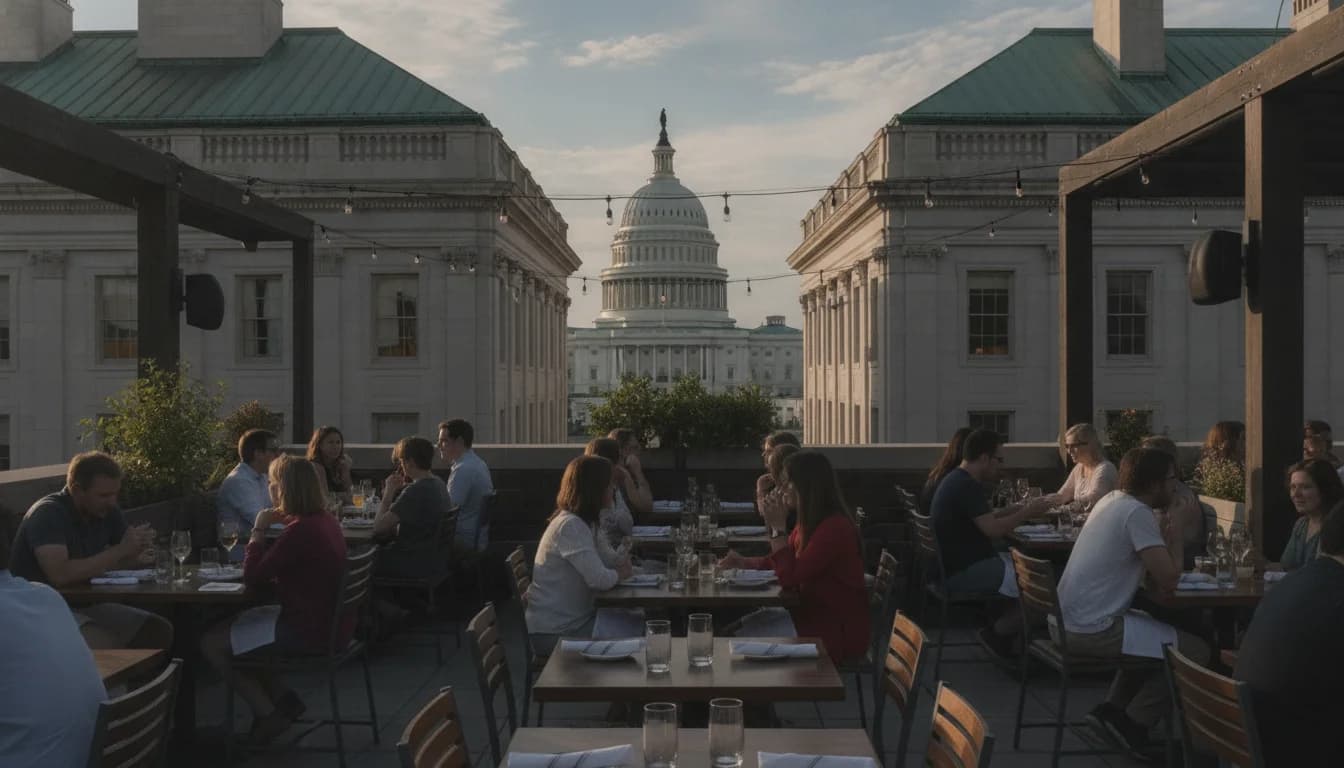
Capitol Hill rooftop dining is redefining how residents and visitors experience Washington, DC. In recent years, a growth spurt of elevated dining venues has transformed the skyline and the street-level economy, turning rooftops into year-round dining and social hubs. This trend isn’t just about views; it’s about how hospitality teams deploy technology, manage risk, and adapt to shifting city policies as outdoor spaces become an enduring feature of the capital’s dining scene. Industry observers note that DC’s rooftop dining culture sits at the intersection of hospitality innovation, real estate strategy, and urban policy—an equation that matters for neighborhood vitality and the broader local economy. Capitol Hill rooftop dining is not a niche curiosity but a barometer for how hotels, restaurateurs, and developers recalibrate space, service, and guest experience in an era of higher expectations for safety, accessibility, and digital convenience. (axios.com)
A notable milestone for Capitol Hill rooftop dining came with the opening of a premier hotel rooftop concept in close proximity to the hill’s core institutions. On January 11, 2023, Washington Marriott Capitol Hill debuted a new hospitality footprint that included Yara, a rooftop restaurant with expansive city views, and Ciel Social Club, a rooftop lounge perched above the district. The hotel, a 235-room property located at 175 L Street NE, DC 20002, marked a defining moment for Capitol Hill rooftop dining by blending cultural flair with a skyline-aligned dining and nightlife proposition. This launch signaled a broader push to convert high-rise and mixed-use rooftops into year-round culinary and social experiences, a move that would influence comparably situated venues across the city in the ensuing years. The announcement highlighted Yara as a chef-driven rooftop restaurant and positioned Ciel Social Club as a sophisticated rooftop lounge, signaling a new standard for elevated guest experiences on Capitol Hill-adjacent property. (ww1.prweb.com)
By spring 2025, Capitol Hill rooftop dining had gained momentum beyond the initial hotel opening. National outlets highlighted Capitol Hill-adjacent rooftops as part of a wider DC rooftop renaissance, with Ciel Capitol Hill identified as a notable new rooftop offering. Axios’ May 2, 2025 feature described Ciel Capitol Hill as a fresh rooftop at the Marriott Capitol Hill, emphasizing views, programming (DJ brunch, live jazz) and a social atmosphere that complements the day-to-night rhythm of Capitol Hill and the nearby NoMa corridor. This recognition came at a moment when DC’s rooftop landscape was expanding, with Sly at the Morrow Hotel in NoMa and other new or repositioned rooftops illustrating a city-wide trend toward outdoor dining as a vertical growth vector for hospitality. The recognition underscores how Capitol Hill rooftop dining fits into a broader DC trend of elevated outdoor spaces that attract both locals and visitors during peak seasons and shoulder seasons alike. (axios.com)
The Capitol Hill rooftop dining narrative sits within a broader DC context. A May 2025 Axios round-up of new rooftop bars highlighted Ciel Capitol Hill as part of a cluster of new rooftops, illustrating how national and local operators view rooftop dining as a strategic channel for guest engagement. Meanwhile, the city’s policy environment around outdoor dining has been evolving. In late 2025 and into 2026, DC’s streatery program—pioneered during the pandemic to support outdoor dining—began to transition toward a more permanent framework, with deadlines and compliance rules shaping how outdoor spaces are designed and operated. Observers note that rooftop spaces, while still buoyed by the city’s outdoor-dining appetite, must navigate a regulatory landscape that emphasizes accessibility, safety, and clarity of permits. The practical implications are that rooftop dining remains a dynamic, policy-influenced segment of the market, with Capitol Hill rooftop venues needing to align with rules that govern street-facing dining and rooftop configurations. (axios.com)
Section 1: What Happened
Capitol Hill rooftop dining makes a debut at a major hotel
The Washington Marriott Capitol Hill opened its doors on January 11, 2023, unveiling a mixed-use hospitality vision that included two rooftop components designed to captivate guests with city views and culinary storytelling. Yara, a spectacular rooftop restaurant, was introduced as part of the hotel’s skyline-facing dining concept, while Ciel Social Club emerged as a rooftop lounge that offered a sophisticated setting for sunset cocktails and light fare. The hotel’s rooftop dining illustration emphasized a vantage point just one mile from the Capitol Dome, with expansive vistas over the DC skyline and a schedule that included evening dining and live music arrangements. The project was anchored in a 235-room hotel located at 175 L Street NE, Washington, DC 20002, reflecting a deliberate strategy to anchor rooftop dining within a multi-story, mixed-use environment that leverages both hospitality and urban foot traffic. This launch represented a significant milestone for Capitol Hill rooftop dining by demonstrating how rooftop spaces can function as core dining and social venues within a hotel ecosystem. The press materials highlighted Yara’s Latin-inspired concept and Ciel Social Club’s rooftop lounge as signature experiences designed to draw locals and travelers alike. (ww1.prweb.com)
A second rooftop concept expands on Capitol Hill
The Capitol Hill rooftop dining story didn’t end with the 2023 launch. In the years that followed, a notable expansion occurred with Ciel Capitol Hill, a new offshoot of the Mt. Vernon Triangle concept, perched atop the same Washington Marriott Capitol Hill property. Market observers and national roundups began featuring Ciel Capitol Hill as part of a wave of rooftop openings that broadened the district’s outdoor-dining footprint. Axios’ May 2025 feature described Ciel Capitol Hill as a new rooftop experience on Capitol Hill, signaling the venue’s role in expanding the district’s rooftop dining catalog and its function as a social-lounge hub for weekend brunches, sunset cocktails, and live programming. The rooftop’s identity—tied to the “Ciel Social Club” name—emphasizes celestial, expansive views of the surrounding urban landscape and a dining concept designed to capitalize on the rooftop’s vertical integration with the hotel’s guest market. This expansion illustrates how a single property can host multiple rooftop dining propositions, cultivating cross-traffic between hotel guests, local residents, and office workers seeking an elevated downtown dining option. (axios.com)
The DC rooftop dining landscape grows beyond Capitol Hill
Capitol Hill rooftop dining sits within a broader DC rooftop ecosystem that includes a mix of hotel rooftops, independent rooftops, and neighborhood-located venues. In early 2025, national outlets highlighted multiple rooftop entries across DC, with Sly at the Morrow Hotel in NoMa and La’Shukran at Union Market rounding out the city’s rooftop slate. This broader landscape matters for Capitol Hill because it underscores a city-wide appetite for elevated dining experiences that can attract spillover visitation from adjacent neighborhoods and support a more diverse dining economy. As rooftop dining gains traction, Capitol Hill rooftop dining stands as a notable example of how elevated spaces are being leveraged to offer unique guest experiences, pair culinary storytelling with views, and create year-round revenue streams for hospitality operators. (axios.com)
In addition to hotel rooftops, the DC dining scene has highlighted new rooftop concepts and seasonal programming that resonate with Capitol Hill’s audience. The Eater DC roundup from May 2025 showcases Mélange DC (though located in a different part of the district) as part of a broader rooftop-venue movement, illustrating how city residents increasingly expect access to elevated dining and social spaces in both traditional and new neighborhoods. The takeaway for Capitol Hill rooftop dining is that a robust rooftop ecosystem is forming citywide, and Capitol Hill is increasingly part of that narrative as new rooftop concepts become part of the area’s dining economy. (dc.eater.com)
Section 2: Why It Matters
Capitol Hill rooftop dining as a growth vector for the DC hospitality scene
Capitol Hill rooftop dining represents more than just a scenic backdrop; it’s a strategic growth vector for DC’s hospitality sector. The rooftop restaurants and lounges atop key properties can drive incremental occupancy, extend guest dwell time, and elevate the perceived value of the property’s overall experience. The Washington Marriott Capitol Hill’s rooftop offerings—Yara and Ciel Social Club—demonstrate how rooftop dining can become a magnet for both hotel guests and the surrounding community, reinforcing the hotel’s role as a neighborhood gathering point. The rooftop restaurant and lounge’s location, at 175 L Street NE, aligns with a growing trend of rooftop dining’s proximity to transit corridors, business districts, and cultural amenities, allowing operators to capture foot traffic during lunch, dinner, and late-night hours. The hotel’s own communications emphasize rooftop dining as an integral part of the guest experience, signaling a deliberate design to blend hospitality, dining, and social activities in a compact urban footprint. (ww1.prweb.com)
The broader DC rooftop dining movement—of which Capitol Hill is a part—reflects a citywide appetite for outdoor and semi-outdoor experiences that pair striking views with culinary storytelling. A May 2025 Axios feature identifies Capitol Hill’s own new rooftop elements as part of DC’s rooftop renaissance, illustrating how operators are positioning rooftop dining as a core component of their brand, not a seasonal afterthought. This signals a maturation of the market, where rooftop dining becomes a central channel for guest acquisition, brand differentiation, and return-on-investment for real estate assets that can command premium-priced, experience-driven offerings. For Capitol Hill, this translates into a more vibrant local economy around dining, nightlife, and the tourism footprint—an effect that could influence rental values, employment, and neighborhood activity levels as rooftop venues scale and diversify their programming. (axios.com)
Technology and service innovations powering rooftop dining
Rooftop dining in Capitol Hill is also increasingly intertwined with technology and modern service models. At the Washington Marriott Capitol Hill, the rooftop concepts sit within a property that emphasizes a tech-enabled guest journey, including features like mobile check-in, loyalty integrations, and digital-first experiences. The property’s on-site communications flag Ciel Social Club as a rooftop lounge and note that guests can access elevated services and experiences in concert with the hotel’s broader digital-enabled guest journey. The presence of digital conveniences—such as Mobile Key and a connected guest experience—helps streamline service on busy rooftop nights, reduce friction for guests arriving from various mobility contexts, and enable live programming (live jazz, DJ brunch, etc.) that capitalizes on guest dwell time. These tech-enabled features align with a broader hospitality trend of integrating guest-facing technology to enhance safety, speed of service, and personalized experiences on rooftop spaces. (marriott.com)
From a market perspective, rooftop dining tech adoption matters because it supports efficient turnover during peak times, enables real-time capacity management for outdoor spaces, and enhances safety and accessibility—critical considerations for elevated dining areas that must negotiate weather, airflow, and crowd flow. While specific technology deployments at Yara and Ciel Social Club are not exhaustively documented in public materials, the hotel’s emphasis on a modern guest journey—tied to a high-end rooftop experience—implies a design where digital and contactless elements integrate with high-touch hospitality. This is consistent with broader industry patterns where rooftop venues leverage mobile payments, guest apps, and digital reservations to optimize guest experience and operational efficiency in outdoor settings. (ww1.prweb.com)
Regulatory context and outdoor dining design shaping Capitol Hill rooftop dining
Policy and regulatory environments matter for Capitol Hill rooftop dining because outdoor spaces are subject to city rules that govern use of public space, safety, accessibility, and structural design. DC’s streatery program—established to support outdoor dining during and after the pandemic—has evolved toward formalized rules and permanent guidelines. The city has published updates to street dining endorsements, including transitions to more permanent program structures and deadlines for existing streateries, which influence how rooftop and street-facing dining can operate during warm months and shoulder seasons. As DC continues to refine these rules, rooftop dining operators must navigate permit requirements, design standards, and safety considerations that can affect project timelines and operating hours. These regulatory developments are particularly relevant for Capitol Hill rooftop dining, where hotels and independent venues seek to maximize outdoor dining while staying compliant and accessible to all guests. (content.govdelivery.com)
The regulatory landscape is not a mere backdrop; it actively shapes how rooftop dining strategies are executed. For example, as DC moves toward permanent streatery rules, venues along the Capitol Hill corridor—plus nearby NoMa and other neighborhoods—face a landscape where design standards, safety requirements, and permit processes influence how rooftop patios are configured, heated, lit, and staffed. The practical implication for Capitol Hill rooftop dining is that operators must plan not only for menu and program but also for long-term space design, compliance costs, and the feasibility of year-round rooftop experiences. The city’s ongoing policy discussions—reflected in public briefings, agency communications, and stakeholder updates—are therefore part of the daily calculus for rooftop dining strategy in Capitol Hill. (ddot.dc.gov)
Who it affects and the broader context
Capitol Hill rooftop dining affects multiple stakeholders—hotel operators, restaurant teams, building owners, urban planners, local residents, and visitors. Hotels like Washington Marriott Capitol Hill are leveraging rooftop concepts to differentiate their value proposition and broaden their appeal to guests who prioritize memorable views and distinctive experiences. Local restaurateurs expanding onto rooftops gain access to elevated real estate with premium price points, enabling them to diversify revenue streams. For residents, rooftop dining can contribute to neighborhood vitality, while the policy environment around outdoor dining can influence noise levels, pedestrian experiences, and curb appeal. The interplay between the hotel’s rooftop programs and DC’s broader rooftop ecosystem—illustrated by venues like Sly in NoMa and the ongoing interest in rooftops across neighborhoods—suggests Capitol Hill rooftop dining is part of a citywide trend toward experiential, view-rich dining that leverages both hotel properties and standalone concepts to attract guests across dayparts. (axios.com)
Section 3: What’s Next
Timeline and next steps for Capitol Hill rooftop dining
What’s on the horizon for Capitol Hill rooftop dining appears to be a mix of continued expansion, programming diversification, and regulatory alignment. The Capitol Hill rooftop dining narrative has already shown a pattern of launching flagship rooftop concepts tied to major hotels, followed by offshoots or complementary rooftop experiences designed to broaden the guest mix and extend the seasonal window for rooftop dining. The Washington Marriott Capitol Hill’s rooftop offerings—Yara and Ciel Social Club—demonstrate the potential for the property to iterate on its rooftop program as guest preferences evolve. Given the city’s growing rooftop dining ecosystem and the appetite for elevated experiences, it seems likely that more hotel rooftops and mixed-use developments near Capitol Hill will prioritize rooftop dining concepts, whether for brunch, sunset cocktails, or late-night social scenes. Public-facing signals, including national roundups and local press coverage, indicate that Capitol Hill rooftop dining will likely continue to gain presence as part of the district’s overall hospitality growth strategy. (ww1.prweb.com)
What to watch for and potential developments
Industry watchers should monitor several indicators that could shape the trajectory of Capitol Hill rooftop dining in the near term. First, more hotels and residential towers in the Capitol Hill/NoMa corridor may pursue rooftop components, placing a premium on views, acoustics, and sustainable design that can withstand seasonal weather. The public press ecosystem—both local outlets and national roundups—will likely continue to spotlight rooftop openings and programming, providing early signals about which concepts resonate with DC diners and workers. The regulatory environment around outdoor dining will also influence the viability and design of rooftop spaces, particularly for spaces that blend public space with private venue control; keep an eye on updates to streatery rules, permits, and accessibility guidelines that could impact how rooftop dining is planned and executed. As the city balances safety, accessibility, and guest experience, Capitol Hill rooftop dining could see more integrated programs that combine food, beverage, and live entertainment, with a consistent emphasis on city views as a differentiator. (axios.com)
Next steps for readers and local businesses
For readers who are curious about Capitol Hill rooftop dining opportunities, the immediate next steps include checking hotel rosters and neighborhood restaurant calendars for rooftop programming—especially around weekends and seasonal transitions. Industry observers suggest that rooftop venues with strong programming—live music, DJ-led events, and seasonal menus—tend to perform well during shoulder months when indoor capacity is constrained by weather. For businesses, the message is to consider how rooftop dining can complement a broader hospitality strategy—blending unique culinary concepts with visual drama, technology-enabled service, and a design-forward approach to space that can sustain guest interest across multiple seasons. The DC dining ecosystem, including Capitol Hill rooftop dining, appears poised to continue evolving as operators experiment with programming, partnerships, and cross-promotion that leverages both the hotel environment and the surrounding urban fabric. (axios.com)
Closing
Capitol Hill rooftop dining is more than a trend; it’s a structural component of how DC’s hospitality and real estate sectors are evolving. With flagship venues like Yara and Ciel Social Club at the Washington Marriott Capitol Hill and a growing cadre of rooftop concepts across the city, elevated dining is redefining where and how people gather to eat, drink, and socialize in the capital. For residents and visitors alike, Capitol Hill rooftop dining offers a curated blend of views, cuisine, and programming that complements daily life in one of the city’s most historic neighborhoods. As the regulatory landscape stabilizes and operators refine their offerings, rooftop dining in Capitol Hill is likely to become an enduring facet of DC’s nightlife economy, with new venues and programs announced in the months ahead. Stay tuned for additional openings, seasonal menus, and rooftop programming that will continue to shape how locals experience the city from above. (ww1.prweb.com)