Smithsonian Dreams Immersive Public Art Experience Debuts

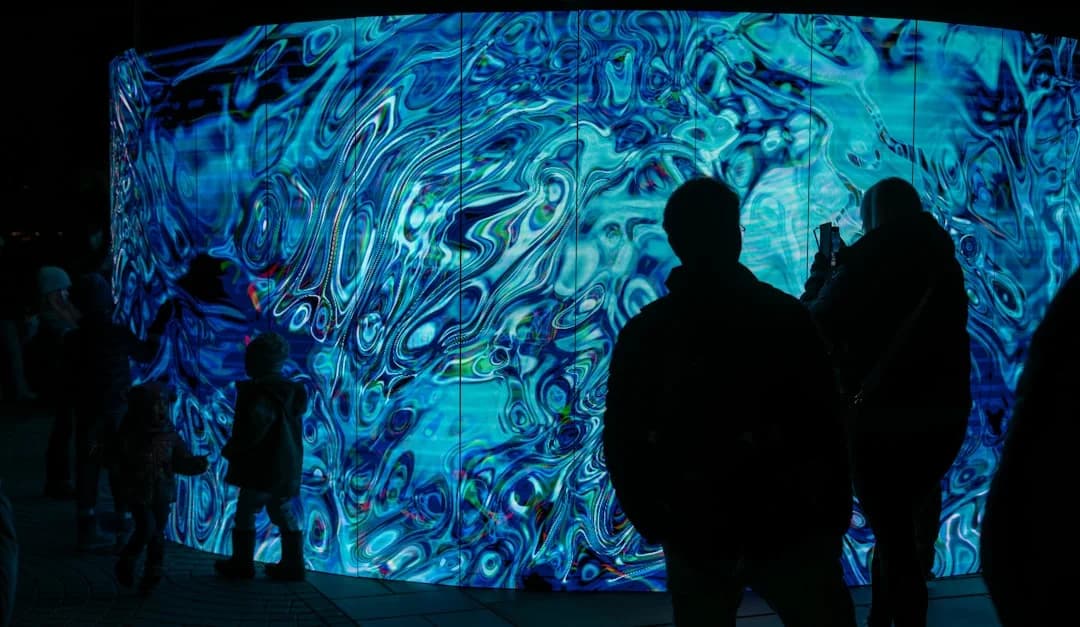
Photo by Gunnar Ridderström on Unsplash
The Smithsonian Institution is officially unveiling Smithsonian Dreams immersive public art experience, a large-scale AI-driven installation by Refik Anadol Studio, projected onto the Smithsonian Castle on the National Mall. The two-night event will take place on Friday, July 17, and Saturday, July 18, starting at 9:00 p.m. each night, with visitors encouraged to arrive by 8:00 p.m. to secure a spot along the Castle’s façade. The presentation is free and open to the public, marking a high-profile collaboration that merges museum collections, cutting-edge machine intelligence, and public space in a way that aims to reframe how visitors engage with knowledge, memory, and the archive. This development comes as part of a broader wave of AI-enabled public art installations that seek to democratize access to complex data through immersive media. (si.edu)
Smithsonian Dreams immersive public art experience is described as transforming the Castle into a living canvas, where data drawn from nearly two centuries of Smithsonian collections is reinterpreted through a custom AI system. The installation relies on millions of digitized items—specimens, manuscripts, photographs, artworks, and scientific records—reprocessed into a dynamic, multisensory show that unfolds across the red sandstone exterior and towered forms of the Castle. At the core of the work is a visualization system using a UMAP (Uniform Manifold Approximation and Projection) algorithm to map relationships within the collection data, enabling a continually evolving visualization rather than a static projection. In the artist’s words, data functions as a form of memory, and the project asks what might emerge if the Smithsonian’s vast archive could become dynamic, reflective, and dream-like. This project is presented by Refik Anadol Studio in collaboration with the Smithsonian Institution and is intended to be a landmark moment for how public spaces can host AI-driven cultural interpretation. (si.edu)
As a public event, Smithsonian Dreams emerges in a period of growing interest in immersive art experiences that leverage AI, data visualization, and large-format projection to engage broad audiences with science, history, and culture. The Smithsonian notes that its Museums, libraries, archives, and research centers collectively hold more than 157 million objects and specimens, about 2.1 million library volumes, and roughly 156,000 cubic feet of archival materials—numbers that underscore the scale of the archive at stake and the potential for a data-driven reimagining of its contents. The project also builds on prior installations and programs that position data as a medium for storytelling in public spaces, including the Studio’s DATALAND project and other AI-centered artworks that have toured globally. Free, open access to view Smithsonian Dreams aligns with the Smithsonian’s mission to increase and diffuse knowledge while inviting a wide public to participate in the contemplation of memory through technology. (si.edu)
The installation is not presented in isolation; it follows a broader ecosystem of AI-art public programs and partnerships that situate the work within a market-context of immersive experiences and museum-led experimentation. The Smithsonian notes that Smithsonian Dreams follows other public-facing AI art initiatives and that it sits alongside related explorations into AI-driven exhibitions organized or supported by the institution in collaboration with technology and creative partners. Industry observers have highlighted the rise of AI-augmented public art as a response to demand for new forms of experiential engagement that can scale to large audiences while offering a data-informed narrative. In parallel coverage from technology media and business press, AI-enabled immersive art has been discussed as a potent driver of audience interest and cultural debates about memory, authorship, and the role of algorithms in interpretation. (si.edu)
What Happened
Announcement Details
What Happened
Announcement and scope
The Smithsonian Institution announced Smithsonian Dreams, a large-scale, multisensory public art experience created by Refik Anadol Studio. The project will be projected onto the Smithsonian Castle on the National Mall in Washington, D.C., for two nights: Friday, July 17, and Saturday, July 18, beginning at 9:00 p.m. Each night, visitors are advised to arrive by 8:00 p.m. to secure a viewing spot. Admission is free and open to the public. The release also notes that the installation is a part of a broader effort to invite the public to engage with the Smithsonian’s vast repositories of knowledge through innovative media. These details come directly from the Smithsonian’s official Newsdesk release published June 26, 2026. (si.edu)
Technical framework
Smithsonian Dreams relies on a custom AI system designed to reinterpret nearly two centuries of Smithsonian collections and research. The system draws on millions of digitized items—encompassing specimens, manuscripts, photographs, artworks, objects, and scientific records—and reprocesses that material into a living, multimedia experience of light, sound, and visuals. The core visualization uses a Uniform Manifold Approximation and Projection (UMAP) algorithm to map relationships within the collection data, enabling a continually evolving narrative rather than a fixed sequence. This approach reflects a broader trend in AI-driven art where machine intelligence serves as a creative collaborator in presenting cultural data to a mass audience. (si.edu)
Context and supporting programs
The Smithsonian project sits within a broader ecosystem of AI art initiatives and public programming. The Newsdesk release highlights that Smithsonian Dreams follows the opening of DATALAND in Los Angeles, a project developed by Refik Anadol Studio and its collaborators, which centers on data-driven art as a new medium for museum and gallery experiences. The Smithsonian notes that the project received support from its own Our Shared Future: 250 initiative, with major support provided by Lilly Endowment Inc. and additional contributions from organizations such as Target, Caterpillar Foundation, and the Gates Foundation. The release also frames the work as an extension of the Smithsonian’s mission to increase and diffuse knowledge, highlighting the historical scale of the institution’s collections and their potential to be reinterpreted through AI-enabled visualization. (si.edu)
Why It Matters
Impact and implications
Why It Matters
Cultural access and memory
Smithsonian Dreams immersive public art experience represents a formal step in translating the institution’s extensive archives into a dynamic, living display accessible to a broad public audience. By projecting the Castle’s façade with AI-generated interpretations of two centuries of collections and research, the project invites visitors to experience history, culture, and science in a manner that blends archival material with contemporary media technologies. The Smithsonian emphasizes that the work is structured around thematical chapters tied to the institution’s founding and evolution, with themes of discovery, preservation, creativity, and collective memory unfolding on a public stage. The approach is intended to encourage visitors to see the Smithsonian’s vast knowledge in a new light and through a contemporary, technology-enabled lens. (si.edu)
AI as creative partner and public debate
A central feature of Smithsonian Dreams is its framing of machine intelligence as a creative collaborator rather than a replacement for human interpretation. In the project’s framing, data is treated as memory—an organic source that can be reinterpreted and dreamed anew by algorithms in collaboration with human curators and artists. This perspective aligns with broader conversations in the AI art community and cultural institutions about how to balance algorithmic interpretation with human storytelling, ensuring transparency about data provenance and maintaining contextual integrity. The artist’s own statements highlight the intention to transform an archive into a living experience where history and imagination unfold in new ways. (si.edu)
Market context and public interest in immersive AI art
The Smithsonian project arrives at a moment when immersive AI-driven art experiences have gained substantial public attention, with media coverage of AI art in major venues and collaborations with global brands and cultural institutions. Industry outlets have described AI data-driven installations as capable of drawing large audiences and generating significant engagement with complex subject matter. While Smithsonian Dreams is unique in its institutional scale and public setting, it is part of a broader market trend toward immersive, data-informed art experiences that appeal to both art enthusiasts and general visitors seeking novel ways to engage with science and history. This broader market context is reflected in parallel reporting and analyses of AI-driven exhibitions and the consumer appeal of immersive media. (time.com)
What’s Next
Timeline and next steps
What’s Next
Event timeline and immediate steps
The current official schedule for Smithsonian Dreams is clear: two nights, Friday, July 17, and Saturday, July 18, with viewing hours from 9:00 p.m. to 11:00 p.m. Each night offers a viewing window for the public along the Smithsonian Castle’s exterior, with a recommended arrival by 8:00 p.m. The event information section of the Smithsonian Newsdesk release provides these exact details, ensuring the public and media can plan accordingly. The project’s two-night format and public, free access signal an intent to maximize inclusive engagement with AI-generated cultural interpretation in a prominent national setting. (si.edu)
Long-term implications and potential follow-ups
While the press materials focus on this two-night engagement, the Smithsonian’s broader initiative and the Refik Anadol Studio’s ongoing work in AI-driven public art suggest ongoing interest in deploying similar formats in other venues or contexts. The collaboration’s emphasis on data-driven storytelling and public access implies potential for future iterations, additional partnerships, and extended outreach to schools, researchers, and the general public. Observers will be watching for how the Smithsonian publicly documents audience reception, the technical performance of the AI system, and any subsequent announcements about related programs or additional locations. (si.edu)
Closing
As the National Mall prepares to host Smithsonian Dreams immersive public art experience, District of Columbia Times will monitor public reception, technical performance, and the broader implications for how museums deploy AI-enabled storytelling in large-scale public spaces. This event underscores a trend in which cultural institutions experiment with data-driven media to expand access to knowledge and to spark conversations about memory, memory preservation, and the evolving role of technology in art and public life. Readers can stay updated through Smithsonian Institution press releases and District of Columbia Times coverage as new developments unfold and as similar initiatives are announced in the future. (si.edu)