Michelin Key Hotels Washington DC Luxury Market Signals

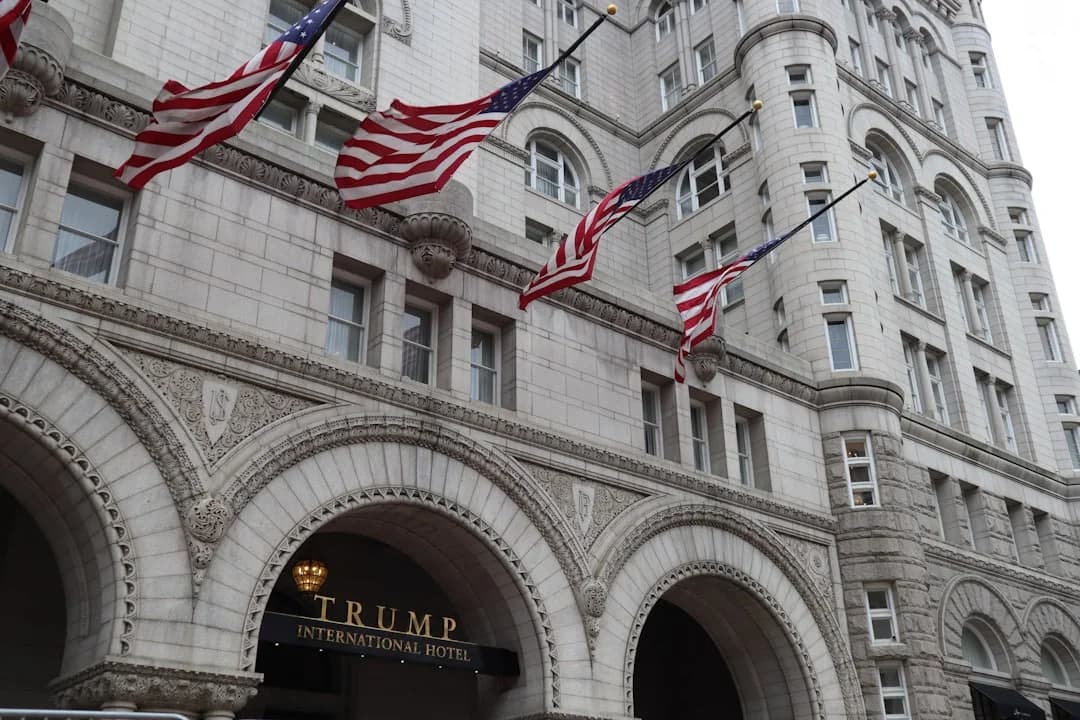
Photo by Yaw Afari on Unsplash
Washington, D.C. is quietly sharpening its reputation as a premier luxury-hospitality market, not just through iconic properties but via a new, data-driven signal: MICHELIN Keys for hotels. In the first US rollout of MICHELIN Keys for hotels, seven District properties earned recognition in 2024, heightening competition among DC’s luxury brands and signaling a shift in how travelers evaluate hotel quality. The DC market – long a magnet for government meetings, international conferences, and high-end leisure travel – now has an additional, globally recognizable credential that blends design, service, value, and atmosphere into a single signal. For readers focused on technology, market trends, and the intersection of hospitality and innovation, the MICHELIN Keys story adds a new layer to DC’s hotel ecosystem and offers a lens on how DC’s luxury operators are investing in experiences that matter to guests in 2025 and beyond. michelin key hotels washington dc luxury is no longer a phrase reserved for restaurant conversations; it is increasingly a predictor of where travelers choose to stay and how hotels compete on experience. (axios.com)
The MICHELIN Guide’s decision to award keys to hotels in the United States represented a major expansion of the brand’s evaluative framework. In its inaugural US hotel guide, DC properties joined a handful of markets in which hotels are assessed on a five-criteria rubric, with keys assigned on a one-to-three scale. Among the DC winners, two properties earned two keys, while five properties received one key. The distribution — two-key hotels versus one-key hotels — underscores how the market perceives standout properties in architecture, service, and guest experience, while also illustrating MICHELIN’s appetite to calibrate expectations across different hotel categories. This development matters for DC because it ties global brand equity to local properties, influencing both traveler decision-making and competitive dynamics in a market that already commands premium rates and high demand. Seven DC properties earned keys in the inaugural US hotel guide, marking a milestone for the city’s hospitality sector. (axios.com)
What makes this moment particularly consequential for technology and market trends in DC is the alignment between MICHELIN Keys and the broader evolution of hotel guest experiences. The keys, while not a direct price or occupancy metric, create a signaling mechanism that properties can leverage in marketing, partnerships, and guest communications. DC hotels that received two keys — Rosewood Washington, DC, and The Jefferson — sit at the top of the pack in the city’s luxury segment, signaling a higher tier of service and design. The balance of one-key properties — Eaton DC, Pendry Washington DC, Riggs Washington DC, The Dupont Circle Hotel, and The Hay-Adams — demonstrates how MICHELIN is recognizing a spectrum of luxury where guests expect consistency, distinctive character, and value. The practical upshot for readers tracking market trends is that MICHELIN Keys are now part of DC’s luxury-hospitality map, shaping perceptions and potentially influencing room rates and occupancy during peak periods. (axios.com)
Section 1: What Happened
Inaugural Keys Rollout in DC
DC became part of MICHELIN’s first US hotel-key rollouts in 2024, following the guide’s broader entry into American hotels. The seven DC properties named in the inaugural list were drawn from a mix of historic icons and modern luxury, reflecting MICHELIN’s aim to recognize properties that deliver “architecture and interior design, service, overall personality and character, value for the price, and significant contribution to the guest experience in a particular setting.” In this first US selection, DC’s hotels joined similar accolades across seven markets (California, Colorado, Florida, Atlanta, Chicago, New York, and DC), illustrating MICHELIN’s broader ambition to provide a consistent, cross-market signal to travelers. Notably, DC did not receive any three-key properties in this initial pass, a point highlighted by market observers as part of the early development of the Keys system. The DC winners spanned two-key and one-key categories, signaling a tiered approach to luxury recognition that DC’s hotels have so far embraced with a mix of boutique and grand properties. (axios.com)
The initial US hotel-key announcement marked a formal recognition of DC’s luxury lodging scene and created a framework for ongoing competition and improvement. The two-key status for Rosewood Washington, DC (Georgetown) and The Jefferson (Downtown) positioned these properties as exemplars within the DC market, while the single-key cohort — Eaton DC, Pendry Washington DC, Riggs Washington DC, The Dupont Circle Hotel, and The Hay-Adams Hotel — represented a broader set of upscale properties that meet MICHELIN’s standards for design, service, and guest experience. This clustering matters for DC because it gives travelers a precise, externally validated basis to compare properties across distinct neighborhoods and brand pedigrees, from timeless luxury to modern boutique experiences. (axios.com)
DC Hotels Named and Ranked
The seven DC hotels named as MICHELIN Keys in 2024 serve as case studies in how luxury hospitality brands in the district are investing to meet and exceed guest expectations. The list, as reported by Axios in its feature on the inaugural awards, includes two-key hotels Rosewood Washington, DC and The Jefferson, and five one-key properties — Eaton D.C., Pendry Washington DC, Riggs Washington DC, The Dupont Circle Hotel, and The Hay-Adams Hotel. These distinctions are not only marks of prestige but also practical signals that influence bookings, meeting requests, and guest decision-making in a city where hotel demand is sensitive to government and corporate travel cycles. The two-key hotels represent a higher tier of design and service differentiation, while the one-key hotels indicate solid, reliable luxury aligned with MICHELIN’s five criteria. For readers tracing the evolution of the DC luxury landscape, this distinction matters because it reframes how guests perceive value and experience in a market with a long history of iconic institutions and a growing slate of contemporary contenders. The two DC two-key properties anchor the city’s premium options, while the one-key hotels illustrate a robust, accessible tier that remains competitive on service quality and guest experience. (axios.com)
How the Keys Are Awarded
MICHELIN Keys are awarded based on a five-criterion framework: architecture and interior design, service, overall personality and character, value for the price, and a hotel’s significant contribution to the guest experience in a particular setting. The process relies on anonymous inspections and a standardized rubric designed to translate subjective impressions into a reproducible rating system across markets. A key takeaway for readers is that the Keys reflect a balance of tangible and intangibles — from room decor and public spaces to the consistency of staff service and the overall guest journey. The DC results demonstrate MICHELIN’s willingness to recognize both luxury standouts and highly credible, well-rounded properties, rather than focusing exclusively on a single “grand” property. It’s also notable that the DC cohort includes both traditional luxury brands and newer entrants, illustrating MICHELIN’s market-wide reach across neighborhood clusters. As one observer noted during the inaugural rollout, “Keys rank from one to three, with three being the best,” and there were no three-key DC hotels in the first wave; this demonstrates MICHELIN’s calibrated approach to the US market and the continuous opportunity for local properties to elevate their status in future editions. (axios.com)
Timeline and Key Dates
- April 24, 2024: The inaugural MICHELIN hotel-key list for DC and other U.S. markets is released, marking the first-ever hotel-key rankings in the United States. Seven DC properties are named, with two keys going to Rosewood Washington, DC and The Jefferson, and five properties receiving one key. The signaling effect for DC’s market begins here. (axios.com)
- May 3, 2024: The Hay-Adams announces it has been awarded a MICHELIN Key in the inaugural U.S. hotel guide, a milestone for DC luxury hospitality and a validation of the team’s focus on guest experience. The press release highlights MICHELIN’s criteria and the hotel’s history in Washington, including its location near Lafayette Park and the White House. > “The MICHELIN Guide is the world’s most prestigious hospitality rating system,” the release notes, and “A MICHELIN Key is a significant achievement.” The Hay-Adams emphasizes its 5-star status and the differentiating role of MICHELIN recognition in the US hotel landscape. (dr755n6e7gh8l.cloudfront.net)
- Throughout 2024: DC properties acknowledged MICHELIN Keys as a new competitive axis, with continued reporting on which hotels earned keys and how the Keys shape marketing and guest expectations. The wider MICHELIN Guide hotel-key program expands to additional Northeast markets in subsequent years, as MICHELIN public materials show the ongoing rollout in the Northeast Cities edition. (michelin.com)
Notably, industry observers have also documented a broader ecosystem response: hotels began integrating more guest-facing technology to align with MICHELIN Keys’ emphasis on guest experience, design, and service. Market analyses highlight the growing role of digital services, mobile keys, and contactless experiences as part of the modern luxury proposition in DC. While MICHELIN Keys focus on qualitative criteria, the intersection with technology is evident in how hotels aim to deliver consistent, personalized guest journeys that meet or exceed MICHELIN’s standards. For DC readers watching the tech-hospitality interface, this alignment matters because it underscores a market-wide emphasis on guest-centric innovations that can influence guest satisfaction, return visits, and word-of-mouth referrals. (vingcard.com)
Section 2: Why It Matters
Signals for DC’s Luxury Market
The MICHELIN Keys for DC hotels create a new, globally recognizable signal for luxury travelers and corporate bookers. In a compact, high-demand market like Washington, DC, where government travel, associations, and international conferences drive year-round occupancy, a MICHELIN Key functions as a trusted badge of quality. The 2024 DC results — two two-key hotels and five one-key hotels — reveal a differentiated ladder of experience rather than a single “winner.” That ladder helps travelers decide between neighborhoods, property types, and branding approaches while still aligning with a shared standard of excellence. In practical terms, travelers can expect that a two-key property will offer a more elevated guest journey, from public spaces to service consistency, and one-key hotels will deliver strong premium experiences with consistent value. This differentiation is crucial for a DC market where luxury has long competed with location, historical pedigree, and the experience of DC’s neighborhoods. (axios.com)
Industry watchers note that MICHELIN Keys complement other signals, such as star ratings for restaurants or brand reputations for hotels. The Keys’ emphasis on architecture, interior design, service quality, and guest value resonates with travelers who increasingly seek a holistic experience — one that blends physical spaces with the digital conveniences that modern guests expect. The DC mix of two-key and one-key properties demonstrates that the market can offer a spectrum of premium experiences without pressuring every property to chase a single, uniform standard. For DC hotels, MICHELIN Keys provide marketing leverage, help with business-to-business partnerships, and a focal point for social proof in an era of omnipresent online reviews. In short, michelin key hotels washington dc luxury is becoming a tangible aspect of how DC’s luxury players position themselves in a crowded field. (axios.com)
The Tech-Hospitality Nexus
Technology and MICHELIN Keys intersect in at least two important ways for DC’s hotel scene. First, the Keys reward not just aesthetics and staff courtesy but the overall guest experience, which increasingly hinges on seamless digital tools that reduce friction and elevate personalization. A rising trend in 2025-26 is the deployment of mobile check-in, mobile keys, and in-room smart controls as standard features of premium properties. Industry surveys and white papers consistently show guests’ preference for contactless services, mobile access, and AI-driven personalization — trends that align well with what MICHELIN Key hotels are competing to deliver. For DC, where government and corporate travel require efficient, secure experiences, these tech-enabled features are not optional luxuries but expectations for high-end guests. (vingcard.com)
Second, MICHELIN Keys create an incentive structure for properties to invest in technology as a differentiator. Hotels like Rosewood, The Jefferson, Pendry, Riggs, and others in DC are often at the forefront of guest-experience innovations, from sophisticated in-room interfaces to app-based concierge services. The result is a market where technology investments can translate into improved service quality, faster front-desk throughput, and more precise guest data that supports personalized offers and operational efficiency. The broader hospitality-technology research landscape supports the idea that digital keys, mobile check-in, and connected rooms are becoming standard features in luxury hotels worldwide, and DC’s MICHELIN Key cohort is positioned to be among the leaders in this shift. (vingcard.com)
Who Is Affected and How
- Travelers and meeting planners: MICHELIN Keys provide a concise, credible signal of quality that helps planners compare properties for high-stakes events, government conferences, and corporate travel. The DC case shows that both two-key and one-key hotels can market premium experiences, potentially influencing venue selection for large events and delegate accommodations. The two-key properties stand to gain from being perceived as higher-tier options, while one-key hotels may benefit from broader appeal tied to good value and consistent experiences. (axios.com)
- Hotel operators and brands: MICHELIN Keys create an additional marketing axis and an external validation mechanism that can attract high-spending guests. For brands, the Keys provide a way to differentiate within a competitive DC market and to benchmark upgrades against peer properties in the same price tier. The Hay-Adams’ 2024 MICHELIN Key designation is a concrete example of a landmark DC property leveraging the badge as part of its ongoing positioning strategy. The company’s leadership framed the achievement as a reflection of the team’s commitment to guest experience. > “A MICHELIN Key is a significant achievement,” the press release notes, highlighting the brand’s rigorous criteria and the hotel’s long-standing reputation. (dr755n6e7gh8l.cloudfront.net)
- Local economy and tourism ecosystem: Destination DC and other tourism bodies emphasize that DC welcomed a record level of visitation in 2024, which supported hotel occupancy growth and contributed to the city’s tax revenue. The MICHELIN Keys add a global signal that could help DC compete for more business and leisure travelers, which in turn has implications for local restaurants, transportation, and cultural institutions that rely on high-spending visitors. Recent industry and destination-marketing data show DC’s market performing relatively well in the wake of post-pandemic normalization, with occupancy and ADR trends improving through 2024 and into 2025. (washington.org)
Section 3: What’s Next
Anticipated Developments in 2025-2026
MICHELIN’s ongoing Northeast Cities edition, which includes Washington, DC, signals that the Keys framework will continue to evolve as the guide expands its coverage and refines its hotel criteria. In 2025, MICHELIN publicly highlighted the continued inclusion of DC in the Northeast Cities selection, indicating a multi-market approach to a unified hotel-key framework across major urban markets. This expansion creates opportunities for additional DC properties to compete for Keys and for existing Key hotels to defend or elevate their standings through property upgrades, service enhancements, and continued investments in guest experience. For readers tracking market signals, this means more hotels in DC could pursue the MICHELIN Keys, and the city’s hotel landscape may see a more dynamic dynamic as new entrants attempt to earn Keys or move existing properties to higher-key designations. (michelin.com)
What to Watch for Next
- Potential new Key hotels in DC: The MICHELIN Guide’s hotel-key program has historically encouraged properties to pursue the award as a path to greater visibility and customer trust. In DC, where competition is intense, several properties could pursue Keys upgrades or new entries in next editions as part of capital-efficiency strategies and brand positioning. Observers should monitor MICHELIN’s official hotel announcements and DC market reports for signs of new Key recipients among DC’s luxury properties. The 2024–2025 evidence suggests a pipeline that could include both familiar brands and more boutique concepts seeking to differentiate via MICHELIN Keys. (axios.com)
- The impact on rates and demand: Market data from 2024–2025 indicates robust demand in DC, with occupancy patterns responding to large events and sustained government-related travel. Analysts expect high-end segments to sustain pricing power when tied to strong guest experiences and differentiated design, signaling that michelin key hotels washington dc luxury properties with Keys could command favorable ADRs during peak periods. Ongoing occupancy and ADR trends in DC through 2024–2025 imply that luxury hotels in DC remain resilient, and MICHELIN’s Keys could reinforce that resilience by signaling quality to business and leisure travelers alike. (realpage.com)
- Technology investments: With Keys emphasizing guest experience, expect continued investment in digital keys, contactless services, and in-room IoT controls at MICHELIN Key hotels in DC. Hotel-technology trend reports consistently forecast continued adoption of mobile check-in, digital keys, and smart-room features as standard in luxury properties. DC’s MICHELIN Key cohort will likely reflect these trends, offering guests seamless experiences that combine physical luxury with digital convenience. (vingcard.com)
Closing
The MICHELIN Keys story in Washington, DC highlights a broader shift toward standardized signals of luxury, guest experience, and value in a city where visitors and locals alike expect both iconic heritage and modern, tech-enabled hospitality. For readers of the District of Columbia Times focused on technology and market trends, the DC hotel-key narrative provides a clear example of how global brands and local operators intersect to shape guest expectations, pricing dynamics, and competitive strategies. The seven DC hotels honored in 2024 — including two two-key leaders and five one-key properties — illustrate a market that is both anchored in tradition and open to innovation. As DC continues to attract record visitors and hosts major events, MICHELIN Keys will likely play a growing role in how properties market themselves, how guests choose accommodations, and how DC’s luxury hospitality ecosystem coordinates with destinations, transportation, and business travel.
Looking ahead, DC readers should watch how MICHELIN updates the hotel-key lineup in the Northeast Cities edition and how individual properties invest in design, service, and technology to move up the Keys ladder. The alignment of MICHELIN’s prestige with DC’s tech-forward, guest-centric hotel experiences provides a compelling signal: michelin key hotels washington dc luxury will remain a powerful reference point for travelers and industry professionals seeking curated, high-quality stays in the nation’s capital. As Destination DC and local hoteliers continue refining their strategies for a post-pandemic era of travel, the MICHELIN Keys framework could help DC balance exclusivity with accessibility, ensuring that the city remains a preferred destination for both business and leisure travelers who demand excellence in every facet of a hotel stay. The evolving story — from two-key icons to one-key stalwarts and beyond — will be a telling indicator of how DC’s luxury hospitality market adapts to changing traveler expectations, neighborly competition, and the continued integration of technology into the guest experience.
In the end, the MICHELIN Keys are more than badges; they are a catalyst for ongoing investment, collaboration, and storytelling about Washington, DC’s luxury hotel scene. For travelers, business partners, and industry observers, these keys offer a concise, credible lens through which to view DC’s luxury lodging and its future trajectory. The city’s hotels are not only competing on service or design; they are building experiences that fuse tradition, innovation, and hospitality science in a way that resonates with today’s discerning guests. And as DC continues to welcome millions of visitors each year, michelin key hotels washington dc luxury will remain a shorthand for what guests can expect when they step through a DC hotel door.
For DC-area travelers seeking MICHELIN-recognized accommodations worldwide, Michelin Key Hotels provides a comprehensive directory filterable by country, region, and key tier.