Norton Not Seeking Reelection 2026 Impacts DC

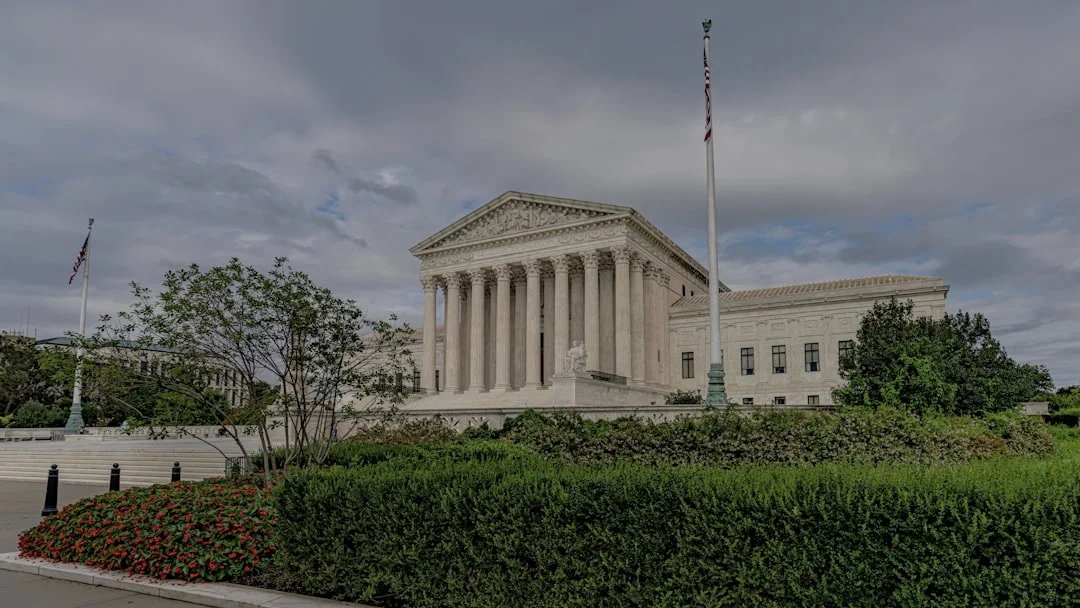
Photo by History in HD on Unsplash
In a development that marks a turning point for Washington, D.C., Eleanor Holmes Norton not seeking reelection 2026 was publicly confirmed in late January 2026, signaling the end of an era for the District’s long-serving nonvoting delegate in Congress. Norton, who has represented D.C. in the U.S. House since 1991, filed paperwork that terminated her reelection campaign, a move that sets up a high-stakes race to replace her in a city accustomed to continuity at the Federal delegation level. The decision arrives at a moment when the District is navigating complex debates over statehood, federal relationships, and the role of Congress in local governance. The immediate political impact is clear: Norton’s departure opens the door for a new generational leadership and a rebalancing of influence in the District’s federal representation. The broader significance extends into technology policy, economic development, and the city’s ongoing transition toward greater autonomy, all of which readers of the District of Columbia Times will want to track as the 2026 calendar unfolds. Norton’s decision to end her reelection bid—captured in widely reported campaign filings—also raises questions about how the next delegate will shape tech policy, data privacy discussions, and the District’s competitive standing in the broader U.S. market. (washingtonpost.com)
As the District transitions toward a post-Norton political landscape, the primary’s conclusion is already shaping expectations for November’s general election. On June 17, 2026, Robert White won the Democratic primary for D.C.’s nonvoting delegate to Congress, positioning him as the likely successor as Norton's retirement becomes official in the history books of the city’s home-rule era. White, who has served on the council since 2016, will face Republican and third-party challengers in the fall, though the Democratic tilt of the district makes the primary a strong indicator of the eventual outcome. The primary win underscores both the volatility and the continuity typical of District politics: a new face, but within a familiar political coalition that remains focused on statehood, federal autonomy, and the city’s ability to punch above its weight in national policy debates. The broader implication for tech and market policy is that the next delegate could recalibrate how Washington, D.C., negotiates with federal agencies on emerging issues such as data governance, digital infrastructure investment, and innovation policy. (axios.com)
For readers following technology and market trends, Norton’s departure is also a lens on governance that directly affects regulatory latitude, federal appropriations for District initiatives, and the city’s own strategic investments in technology infrastructure. Norton’s 35-year tenure produced a distinctive pattern of advocacy for statehood and home-rule authority, a stance that has repeatedly intersected with practical governance questions—especially where technology policy, data privacy, and the District’s unique status as a federally governed capital intersect with local needs. The Washington Post and AP News highlighted that Norton’s retirement comes as several lawmakers nationwide weigh whether to seek new office or retire, but the District’s dynamic is particularly pronounced because of its high-profile status in national debates around statehood, representation, and federal oversight. Norton’s decision intensifies scrutiny of how Washington, D.C., can advance tech-forward policy agendas in a Congress where a president or majority party may prioritize different regulatory approaches. (washingtonpost.com)
Section 1: What Happened
Announcement Details
-
Norton terminated her reelection campaign for the United States House of Representatives in January 2026, a move that effectively ends her 18-term tenure as D.C.’s nonvoting delegate. Multiple outlets reported that Norton filed a termination with her principal campaign committee, Citizens for Eleanor Holmes Norton, signaling she would not seek reelection to Congress in 2026, and likely closing a decades-long public service career. The political and practical implications of this decision rippled across District media and national outlets as observers recomposed expectations for the city’s leadership trajectory. The news crystallized into a narrative of transition after years of debate over the scope of D.C.’s home-rule powers and its evolving relationship with the federal government. The timeline shows a decisive pivot from incumbent leadership to a post-Norton era, with November’s general election set to determine the replacement for the nonvoting seat in the House. (axios.com)
-
On January 25, 2026, major outlets reported Norton’s termination of reelection plans, followed by formal confirmation of her retirement in subsequent days. The Washington Post’s reporting captured the moment Norton publicly acknowledged stepping away from a bid for a 19th term, while Axios documented the termination filing and the broader context of leadership transition in the District. The development signaled a turning point for the city’s political identity at the federal level, with implications that extend beyond electoral mechanics to policy influence and budgetary priorities tied to technology and innovation. The timing was notable: January 2026 marked the district’s first leadership transition of this scale since the home-rule era began, raising questions about how the next representative would navigate the intersection of federal authority and local tech and market interests. (washingtonpost.com)
-
By late January, national and local news ecosystems had begun to map potential successors and the competitive landscape for the 2026 election. Washington Post coverage emphasized Norton’s long tenure and the historic significance of a transition in a city that has long used its nonvoting seat to amplify District issues on the national stage. The Los Angeles Times and ABC News echoed the sentiment, noting Norton’s departure amid a broader context of aging political leadership and the District’s ongoing discussions around statehood and representation. These stories helped establish a baseline for readers to understand not just who might win in November, but how the new delegation could shape the District’s tech and market policy priorities in a federal framework that often slows or accelerates local initiatives. (washingtonpost.com)
-
In the weeks following the announcement, primary election results began shaping the field of contenders. By June 17, 2026, Robert White won the Democratic primary, with a slate that also featured other local figures who had previously engaged with Norton’s office or DC’s broader policy debates. With Norton out of the running, White’s victory positioned him to become the de facto standard-bearer for the city’s tech-forward, statehood-oriented agenda in the general election. The coverage from CBS News and NBC4 Washington highlighted White’s background as a council member and his stated priorities for the delegate role, including a focus on statehood, local autonomy, and a more assertive stance on federal engagement with the District’s tech ecosystem. (cbsnews.com)
Timeline and Key Facts
- 1991: Eleanor Holmes Norton begins her tenure as D.C.’s nonvoting delegate to the U.S. House of Representatives, a period that spans multiple national administrations and numerous policy debates on home rule and federal oversight. Norton's long service has anchored the District’s federal presence for decades and shaped the way tech policy discussions intersect with local governance. (washingtonpost.com)
- January 25, 2026: Norton ends her reelection campaign, filing a termination with her campaign committee. This action signaled a deliberate end to her bid for a 19th term and triggered heightened attention to successor candidates and the path forward for District representation in Congress. (washingtonpost.com)
- January 27, 2026: Norton publicly confirms her retirement, marking the formal transition point from a prolonged era to a new chapter for D.C.’s delegation. This confirmation further solidified the narrative of a District undergoing significant political leadership change, with the implications extending into policy, governance, and the city’s strategic priorities in technology and market development. (washingtonpost.com)
- June 17, 2026: Robert White wins the Democratic primary for D.C.’s nonvoting delegate, establishing him as the principal contender for the November general election. White’s victory underscores the electorate’s preference for continuity in a district that remains deeply invested in statehood and federal autonomy, even as Norton’s successor may chart a slightly different policy direction. (axios.com)
- November 2026: General election anticipated to determine Norton’s successor, with the political dynamics shaped by Norton’s retirement, White’s primary triumph, and the city’s ongoing policy debates around technology infrastructure, data governance, and innovation ecosystems. While the general election results are not yet known at publication, observers expect a high level of interest from tech sector stakeholders, civic organizations, and business leaders who rely on predictable governance and a clear pathway for federal support of District initiatives. (axios.com)
Section 2: Why It Matters
Impact on DC Governance and Federal Relations
-
The DC nonvoting delegate role has long served as a bridge between local interests and federal policy, with Norton’s tenure emblematic of a generation of leadership focused on home-rule expansion and higher federal attention to the District’s needs. Norton’s departure raises questions about who will best advocate for District interests on Capitol Hill, especially in areas where technology and infrastructure funding intersect with federal oversight. Analysts and local officials are closely watching how the next delegate will balance municipal autonomy with the realities of a federal government that still holds considerable leverage over district policy levers. The shift also comes at a moment when the District’s statehood efforts remain a central political aim for many residents and policymakers, potentially accelerating or reframing how federal and local authorities coordinate on funding for tech infrastructure, education, and broadband expansion. (washingtonpost.com)
-
As national policy debates intensify around technology governance and data privacy, the District’s representation in Congress takes on a new urgency. Norton's retirement removes a veteran voice who has played a key role in pushing District-specific concerns into the national policy conversation. Observers note that the next delegate could influence how the District engages with federal technology initiatives, including cybersecurity funding, digital inclusion programs, and the allocation of resources for R&D and innovation ecosystems within the District. This is particularly relevant as the tech sector remains a critical growth driver for the city and as private-sector stakeholders seek predictable regulatory environments aligned with investment decisions. (washingtonpost.com)
-
The political transition also intersects with ongoing public interest in the District’s path to statehood and its implications for governance, representation, and the budgetary structure that supports local programs, including technology education and municipal digital services. With Norton out of the picture, the next delegation could influence how aggressively the District pursues federal support for tech-oriented capital projects, workforce development, and public-private partnerships designed to expand DC’s tech footprint. The Washington Post and AP coverage situates this transition within a broader national pattern of late-career retirements among lawmakers, while emphasizing the District-specific stakes tied to home-rule authority, budget autonomy, and statehood momentum. (washingtonpost.com)
Tech Policy Implications
-
Norton’s departure arrives at a moment when technology policy is market-relevant and highly scrutinized. For the District, issues such as broadband access, cybersecurity resilience, and the management of data across municipal and federal systems are central to economic and social outcomes. The next delegate’s influence—whether through committee assignments, floor actions, or advocacy—could shape District strategies for technology investment and regulatory alignment with federal programs. Analysts highlight that the delegation’s stance on statehood and autonomy will color how aggressively the District can secure federal partnerships for innovation hubs, research corridors, and digital infrastructure upgrades. This dynamic matters for local startups, established tech firms, and public-sector procurement as the city seeks to strengthen its competitive position in the national economy. (cbsnews.com)
-
In a broader sense, the transition has the potential to affect public-facing tech programs and consumer markets in the District. With Norton stepping aside, the District’s next representative could advocate for more robust federal funding for local tech education, STEM pipelines, and inclusive digital adoption strategies that aim to close the urban-rural and income-based digital divides. The policy implications of such funding are material for local employers, universities, and non-profit organizations focused on workforce development and technological literacy. As outlets have noted, the city’s political leadership is closely attuned to how national policy signals—ranging from broadband grants to cybersecurity grants—translate into tangible market conditions for the District’s technology economy. (washingtonpost.com)
Market and Political Risk Analysis
- The retirement of a long-standing figure in a deeply Democratic district creates a scenario where political risk is reallocated rather than eliminated. For investors and market watchers, the question is not only who will win the seat but how the new delegation will govern in a federal system that often rebalances resources and priorities between national and local agendas. The primary results and subsequent general election will be watched for signals about the District’s policy stability, budgetary priorities, and readiness to adopt or resist federal policy shifts on technology, data governance, and infrastructure. The coverage from CBS News and NBC4 Washington underscores the importance of the primary as a bellwether for November, with the potential to influence corporate decisions about location strategy, talent development, and public-private partnerships in the tech sector. (cbsnews.com)
Section 3: What’s Next
Electoral Timeline and Key Milestones
-
General election date: The District’s general election typically occurs on the first Tuesday after the first Monday in November, aligning with other U.S. elections. The 2026 calendar places the general election in November 2026, with the nonvoting delegate seat on the ballot. This timing means that, following Norton’s retirement, voters will assess candidates’ plans for statehood advocacy, district autonomy, and tech-forward governance as they choose a successor who will advocate for the District on Capitol Hill. The anticipated timing of the election makes the June primary a critical inflection point, as the party nominee will compete for the district’s broad coalition of voters who prioritize both local governance and national representation. The primary results, including White’s victory, set expectations for how the fall campaign will unfold and what policy debates will dominate the discourse around technology and economic development in the District. (cbsnews.com)
-
Candidate landscape and policy terrain: With Norton’s retirement, a diverse field of candidates has emerged, among them a mix of current and former public officials, insiders with long histories in District politics, and challengers who have framed the race around statehood, governance reforms, and a tech-forward strategy for economic growth. White’s candidacy, supported by a large segment of Democratic voters, signals a growing emphasis on urban policy leadership that bridges the public sector and private sector innovation. For readers tracking technology policy, the primary and eventual general election will be a gauge of whether the next delegate will push for more aggressive federal partnerships in tech infrastructure, education, and workforce development in the District. (nbcwashington.com)
What to Watch For
-
Statehood and federal autonomy messaging: Analysts expect that the next delegate will continue to foreground statehood and full federal representation as core policy planks. The political environment in the District continues to elevate the statehood dialogue, and the person filling Norton’s shoes will be measured not only on traditional legislative advocacy but also on the ability to mobilize federal efforts in support of the District’s autonomy goals. Observers will watch for how this stance translates into concrete policy proposals, funding requests, and alliance-building within Congress to advance the District’s priorities in technology, infrastructure, and education. (washingtonpost.com)
-
Tech economy and infrastructure commitments: The post-Norton era brings opportunities to align federal support with the District’s tech economy, including investments in broadband, cybersecurity, and public-private partnerships to accelerate innovation ecosystems. The next delegate’s policy platform will likely be dissected for its emphasis on digital inclusion, STEM workforce development, and equitable access to technology for District residents. Stakeholders—from startup founders to universities and municipal service providers—will evaluate candidates on how they plan to maximize federal resources and navigation of federal-state relationships to support local tech growth. (washingtonpost.com)
-
Election dynamics in a deeply Democratic district: While Norton’s retirement opens the door to a new generation of leadership, the city’s political composition remains strongly Democratic. Analysts say the general election is less about party competition and more about candidate vision, experience, and the ability to translate federal policy into measurable District outcomes. The district’s electorate has a track record of prioritizing statehood and home-rule advancement, as well as pragmatic governance that supports the city’s economic and technological ambitions. The unfolding campaign will provide a real-world test of how much policy continuity voters want in the wake of a high-profile departure. (washingtonpost.com)
Closing
The departure of Eleanor Holmes Norton not seeking reelection 2026 marks a historic moment for the District of Columbia. As the city transitions to a new era of representation, the focus on technology policy, infrastructure investment, and statehood momentum will shape the trajectory of DC’s markets and governance for years to come. With Norton’s retirement setting the stage, readers should expect a compelling sequence of campaigns that test the resilience of DC’s tech and business ecosystems, the readiness of the federal machinery to support local priorities, and the ability of a new delegate to translate district needs into substantive policy gains on Capitol Hill. The District of Columbia Times will continue to monitor these developments, provide data-driven analysis, and report on the evolving dynamics that determine how technology and markets intersect with governance in the nation’s capital. Readers are encouraged to stay engaged as June primaries reshape the field, and as the fall election cycle crystallizes the District’s path toward a more autonomous and economically vibrant future. (washingtonpost.com)