District of Columbia home rule act: Tech Market Trends 2026
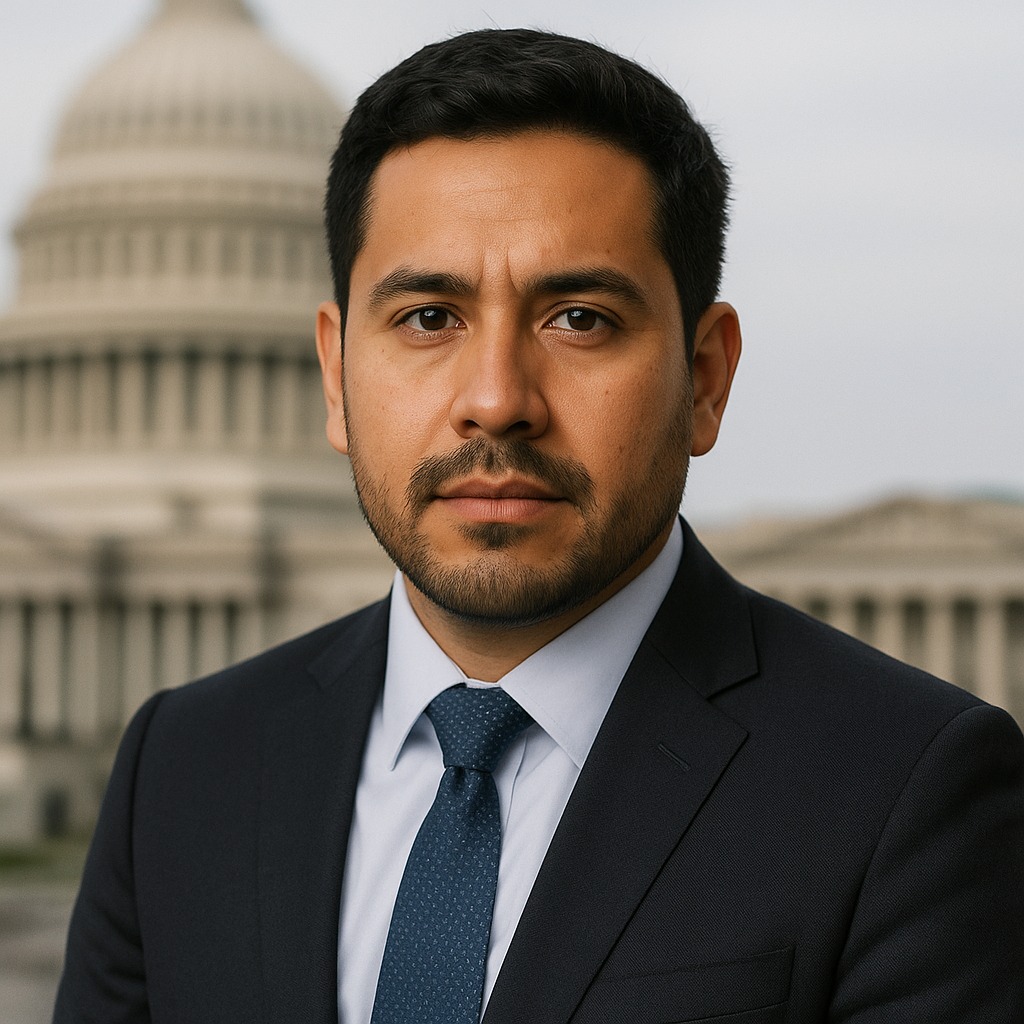

The District of Columbia home rule act stands as a foundational pillar of local governance in Washington, D.C. It created an elected mayor and a council empowered to set local policy, while maintaining a constitutional ceiling: Congress reviews and can disapprove local laws and, in many cases, controls the district’s budget. This dynamic—local autonomy paired with federal oversight—shapes not only politics, but also how the District invests in technology, procures services, and navigates the evolving tech economy. As DC businesses and tech firms recalibrate around changing policy signals, the district’s governance framework matters more than ever for strategy, risk, and opportunity. The 1973 act remains the legal backbone of this arrangement, even as lawmakers propose reforms that would alter the balance of power. (congress.gov)
Against a backdrop of rapid digital transformation and shifting federal-local policy boundaries, the question for stakeholders is not whether the home rule framework exists, but how it operates in practice to attract investment, govern data and security, and enable or constrain agile public-private initiatives. The District’s status as a federal capital with a sizable federal payroll and substantial federal funding complicates the autonomy narrative. In 2023, for example, federal payments to the District totaled about $791.9 million, a reminder that even under Home Rule, DC remains deeply intertwined with federal fiscal flows. At the same time, federal lawmakers have used the district-specific oversight mechanism sparingly but decisively at turning points—such as disapproval actions on criminal code changes—illustrating the enduring leverage of the District of Columbia home rule act’s override provision. (congress.gov)
Section 1 — What’s happening
Legal framework: local power with federal guardrails
The District of Columbia home rule act, enacted in 1973, established the current structure: an elected mayor and a 13-member council with legislative authority over local matters, including the budget submitted by the mayor. However, Congress retains a formal check on legislation and budget, creating a unique governance balance. The act’s text and the President’s signing confirmation frame this dual system, which remains the default operating model for DC governance today. For anyone tracking technology policy, procurement, or digital services in DC, this is the anchor: local decisions are real, but subject to federal override or disapproval during the congressional review process. (congress.gov)
Recent policy moves: notable disapprovals and reversals
Since 1973, Congress has used the disapproval mechanism to block DC laws on a few high-profile occasions, underscoring the ongoing federal influence over local DC policy. CRS data and subsequent coverage show that the special disapproval mechanism has been invoked sparingly, with four successful blocks since 1973, alongside numerous attempts that did not advance. This occasional, high-stakes intervention illustrates both the power and the risk of policy oscillation for DC’s technology strategies, from criminal justice reform to tax policy alignment. In the 2020s and into the 2020s, the district also faced attempts to modify or override local rules through budget riders or targeted disapprovals, reinforcing the idea that local tech and market activities operate within a broader federal compliance envelope. (congress.gov)
Tech markets: implications for procurement and investment
DC’s technology sector has benefited from a predictable, if constrained, policy environment. Local procurement rules, IT modernization projects, and data governance initiatives gain clarity from a stable charter, while risks arise when federal lawmakers unexpectedly intervene in local policy—such as in public safety, criminal justice, or tax policy—that can shift funding, regulatory costs, or project timelines. The combination of local authority and federal oversight means technology vendors and government contractors must plan for both local changes and potential federal disapproval, which can pause or reroute program deployments and budgets. Recent reporting on congressional action around DC tax policy and budget dissonance illustrates how even routine policy changes can become flashpoints for cross-government friction. (washingtonpost.com)
Who’s affected: businesses, residents, and government agencies
The transitional nature of DC governance—where local autonomy coexists with federal guardrails—has a broad impact. Tech firms competing for city contracts must navigate DC’s procurement standards, cybersecurity requirements, and data-sharing policies, all while understanding that certain local initiatives could be paused or altered by Congress. Residents experience the effects through services delivered by DC agencies, as well as potential shifts in taxation, subsidies, or public safety policy. Public sector workers in DC's civil service—particularly in IT, cybersecurity, and digital services—face a dynamic environment where policy shifts can change project funding, staffing, and program scope. The 2023 RCCA episode and the 2026 tax-policy debate both underscore the real-world consequences of policy tension for the local tech and services ecosystem. (apnews.com)
3+ cited statistics (selected data points)
- In FY2023, federal payments to the District of Columbia totaled $791.9 million, illustrating the ongoing role of federal funding in supporting local services and institutions. (congress.gov)
- Federal transfers accounted for approximately 37% of DC government revenues in FY2022, demonstrating the district’s heavy reliance on federal support relative to many states or municipalities. (usafacts.org)
- Since 1973, Congress has used the Home Rule Act’s disapproval mechanism to block four local DC laws, a reminder of the ongoing, if selective, federal oversight of DC policy. (congress.gov)
- The 2023 congressional action disapproved the Revised Criminal Code Act of 2022 (RCCA) after the DC Council overrode a mayoral veto, marking a high-profile example of federal override of local criminal justice policy. Public Law 118-1 (March 2023) nullified the RCCA, illustrating the enforceable reach of DC’s federal guardrails. (congress.gov)
- In early 2026, Congress advanced a resolution disapproving DC tax changes tied to decoupling from federal tax cuts, a move with potential multiyear revenue implications for DC’s budget. If enacted, the city could face substantial revenue shifts through 2029. This event highlights ongoing federal control over local DC fiscal matters via appropriations riders and disapproval mechanisms. (washingtonpost.com)
2 case studies: real-world implications
Case Study 1 — RCCA Block and the politics of DC criminal code reform In 2022–2023, Washington, DC advanced the Revised Criminal Code Act of 2022 (RCCA), seeking to modernize a legal framework that had stood largely unchanged since the early 20th century. Mayor Bowser vetoed the RCCA, citing public safety concerns, and the DC Council voted to override the veto. The federal response came quickly: Congress passed a resolution of disapproval, with President Biden ultimately signing the measure into law as Public Law 118-1 in March 2023, effectively blocking the RCCA from taking effect. This episode highlighted the potential for federal intervention to derail local criminal justice policy changes, even when locally elected officials and stakeholders advocate for modernization. It also underscored the risk and volatility that the DC tech and policy communities face when policy changes—such as data retention standards, surveillance policy, or court-administration workflows—are caught in the crossfire of federal oversight. The episode demonstrates the practical limit of home rule when sensitive policy areas intersect with national concerns. (cbsnews.com)
Case Study 2 — Tax policy and the 2026 congressional review era In February 2026, Congress moved to block Washington DC from decoupling its local tax code from federal tax changes, a move that would reverse elements of DC’s local tax reform and potentially reduce revenue by hundreds of millions over the next few years. The potential impact is substantial: local tax policies that support anti-poverty measures (e.g., child tax credits) and Earned Income Tax Credits expansion could be halted or rolled back, raising questions about DC’s ability to address income inequality through local fiscal policy. The decision illustrates how federal oversight can directly alter the economics of DC tech and business: tax policy changes influence business investment, consumer demand, and the availability of local incentives for tech startups and digital infrastructure investments. Local leaders warn that such federal overreach would destabilize budgeting during a period of uncertain federal funding and shifting federal workforce dynamics. This case underscores the continuing relevance of the home rule framework to DC’s market environment and the importance of planning for policy volatility in technology procurement and economic development strategies. (washingtonpost.com)
1 comparison table: current autonomy vs proposed changes
| Topic | Current framework under the District of Columbia Home Rule Act | Proposed changes under District of Columbia Legislative Home Rule Act (H.R.214, 2025–2026) |
|---|---|---|
| Congressional review of DC laws | Local bills become law only after a 30 legislative-day review (60 days for criminal provisions) in Congress; Congress can pass a joint resolution of disapproval to block. | Eliminate or significantly shorten the congressional review window, removing the formal disapproval path so DC laws can take effect more quickly unless other federal action is taken. (H.R.214 text and summary) (congress.gov) |
| Budget autonomy | Congress maintains authority over District budget; local budget proposals can be blocked through appropriations riders or disapproval actions. | Potentially greater local budget autonomy if congressional review is removed; federal appropriations riders would still be possible but direct veto-like blocks on local budgets would be less systematic. (CRS overview; H.R.214 summary) (congress.gov) |
| Criminal justice policy | Local criminal and civil law changes frequently require Congressional review; Congress has overridden major criminal code changes in the RCCA episode. | If review is removed, DC can implement revised criminal codes more rapidly; however, Congress could still act through other mechanisms (e.g., appropriations language) to curb or redirect policy. (RCCA case; CRS notes) (cbsnews.com) |
| Legal precedent and stability | The Home Rule Act creates a stable framework but with periodic federal overrides that create policy uncertainty. | The intent of legislative reform proposals is to reduce procedural uncertainty, increasing policy continuity for technology procurement and program delivery. (Norton press materials; CRS briefing) (norton.house.gov) |
| Practical impact for tech sector | Predictable yet constrained autonomy; procurement rules and digital services must align with local law but can be paused by Congress. | Potentially faster policy cycles for DC tech initiatives, but still subject to federal jurisdiction through non-disapproval channels (appropriations, federal mandates). (CRS analysis; RCCA case) (congress.gov) |
Section 2 — Why this trend is happening
Market and policy drivers: federal-local balance in a tech era
The District of Columbia home rule act anchors a powerful idea: local decision-making capacity is essential for targeted economic development, but the federal framework remains a constant, particularly in a city with a unique federal-fiscal role and high stakes public policy. The tech sector—from cybersecurity contracting to digital government services—depends on a stable, predictable policy environment. When Congress steps in via the disapproval mechanism or via budget riders, project timelines, procurement costs, and the political calculus around public-private partnerships can shift quickly. In 2023, for example, the RCCA episode illustrated how a long-simmering policy reform—the modernization of the criminal code—can become a focal point for federal intervention, with direct implications for how technology-enabled justice and public safety systems are funded, deployed, and regulated. (cbsnews.com)
Political dynamics: autonomy, accountability, and the federal role
The DC home rule framework has long been a bargaining chip in national politics, especially around who bears responsibility for outcomes in a densely interconnected federal district. The 2026 tax-policy episode demonstrates the ongoing political friction between local policy ambitions (e.g., tax credits for working families, local tax decoupling) and federal priorities communicated through Congress. The dynamic is not purely partisan; it reflects a governance design in which both levels of government have legitimate interests and tools. For technology markets, this means a need to hedge against policy shifts, understand the timing of potential overrides, and engage early with both DC and federal policymakers on budget and regulatory considerations. (washingtonpost.com)
Industry and technology forces: procurement cycles, data governance, and resilience
Technology procurement in DC is influenced by both local administrative capacity and federal oversight. The District’s heavy reliance on federal funding for many programs means that technology investments—cloud migrations, cybersecurity modernization, digital service delivery—must align with federal expectations as well as local priorities. The RCCA controversy showed how a policy domain (criminal justice reform) can trigger cross-jurisdictional negotiations that affect IT systems (case management, data sharing, court operations). Conversely, proposals to reduce federal oversight pressures could improve procurement efficiency and accelerate public-private partnerships if implemented carefully, balancing accountability with speed. The 2023 RCCA episode and 2026 fiscal-policy debates offer important data points for tech-market risk assessments and scenario planning. (apnews.com)
3+ cited statistics (additional data points)
- Federal payments to DC totaled $791.9 million in FY2023, highlighting the scale of federal financial influence on local services and tech-enabled programs. (congress.gov)
- In FY2022, federal transfers comprised about 37% of DC government revenues, underscoring the district’s reliance on federal funding that can complicate autonomy for technology investments. (usafacts.org)
- The RCCA override episode in 2023 demonstrates that Congress can nullify a locally enacted criminal code reform under the Home Rule Act mechanism, a concrete reminder of the framework’s limits. Public Law 118-1, enacted March 2023, nullified RCCA. (congress.gov)
- CRS analyses show the Home Rule Act’s override mechanism has been used to block four DC laws since 1973, illustrating the mechanism’s rarity but potential impact on policy and tech initiatives. (congress.gov)
2 case studies (continued)
Case Study 3 — 2026 fiscal friction and tech procurement implications The 2026 congressional intervention on DC tax policy is instructive for tech executives evaluating public-sector opportunities in DC. If Congress blocks local decoupling from federal tax policy, DC tax incentives and subsidies tied to tech investment (e.g., capital incentives, payroll credits, or city-backed innovation districts) could be reshaped midstream. For vendors and startups bidding for DC contracts, this underscores the importance of building flexible pricing and contracting strategies, as well as maintaining diversified funding sources to avoid overreliance on a single local policy signal. Washington Post coverage of the vote scenario and accompanying editorial perspectives illustrate that even seemingly technical budget decisions can carry broad market implications for DC’s technology economy. (washingtonpost.com)
Section 3 — What it means
Business impact: planning for policy risk and opportunity
The District of Columbia home rule act framework creates a unique risk-reward calculus for technology firms. On the risk side, the possibility of sudden federal disapproval or budgetary constraints can disrupt planned IT modernization programs, data-sharing initiatives, and public-facing services. On the opportunity side, DC’s stable political structure and ongoing digital-government initiatives present a strong market for cloud migrations, cybersecurity, data analytics, and civic-tech collaborations. The RCCA episode demonstrates how policy alignment with local priorities can profoundly affect the speed and direction of tech projects. The 2026 policy debate shows that the business community must prepare for fiscal policy volatility that can influence grant funding, tax incentives, and workforce development programs. (apnews.com)
Consumer and resident effects: service delivery and equity
For residents and small businesses, DC technology initiatives often translate into better online services, faster permit processing, and more accessible public data. However, federal intervention can delay or alter the rollout of new digital services, potentially prolonging pain points in areas like tax administration, social services, or criminal-justice technology platforms. The District’s share of revenue from federal transfers and the potential for changes in local tax policy directly affect the ability to fund social programs and technology-enabled public services that support low- and middle-income residents. The ongoing debates around budget autonomy and tax policy emphasize the need for transparent, data-driven communication about how policy moves translate into public services and tech-enabled outcomes. (usafacts.org)
Industry shifts: procurement models and partnerships
Technology vendors and system integrators operating in DC should monitor two interlocking trends: (1) the potential for faster local policy cycles if congressional review is reduced, and (2) the persistent possibility of federal overrides via budget language. Both dynamics can affect contract structure, risk allocation, and the timing of IT procurements. This is particularly relevant for large-scale public safety, health IT, and education technology programs that rely on multiyear funding streams and cross-government collaboration. Stakeholders should consider building modular, scalable architectures and robust governance frameworks that can adapt to policy pivots while preserving data security and interoperability with federal systems. (congress.gov)
3+ cited statistics (business/research context)
- DC’s substantial federal funding share (roughly 37% of total revenue in 2022) signals that federal policy and budget cycles directly shape local tech investment pace and program viability. (usafacts.org)
- The RCCA override in 2023 demonstrates that even major local policy changes can be reversed by federal action, underscoring the need for scenario planning in tech roadmaps tied to public-sector funding and policy. Public Law 118-1 documents this reversal. (congress.gov)
- The ongoing use of congressional disapproval and budget-related riders as levers indicates that the tech market in DC must be prepared for governance volatility, even if the frequency of interventions remains historically low. CRS analysis and congressional actions illustrate this dynamic. (congress.gov)
Looking ahead: 6–12 month predictions
- Policy signals around DC autonomy will likely remain a live issue in federal budget debates and DC political discussions. Expect continued attention to the balance of local control versus federal oversight, especially in areas like criminal justice reform, taxation, and digital service delivery. The 2026 debates around tax policy and revenue implications will be a focal point for lawmakers and business leaders. (washingtonpost.com)
- Tech procurement and infrastructure programs in DC may benefit from clearer timelines if a future reform reduces or reshapes the congressional review window. At the same time, any new appropriations language could introduce targeted protections or conditions that affect program scope. Vendors should budget for potential delays and build flexible procurement strategies that accommodate policy shifts. (congress.gov)
- The broader debates around DC status, including potential statehood or enhanced autonomy proposals, will influence investor sentiment and strategic planning for DC-based tech firms. While such proposals are not guaranteed to pass, they shape the policy climate and the calculus of risk and opportunity for market participants. (dccouncil.gov)
2–3 subsections: practical guidance for readers
- For executives and policymakers: map DC’s policy risk to project portfolios—identify critical programs with heavy reliance on federal funding, and develop contingency plans that keep essential services running even if a policy override occurs.
- For developers and IT teams: design with modular architectures and interoperable interfaces so that if a project’s governance or funding signals shift, the technical backbone remains adaptable and secure.
- For researchers and journalists: monitor congressional activity around the DC Home Rule Act and related reform bills (for example H.R.214 in the 119th Congress; see 2025–2026 updates) to understand how policy trajectories translate into market dynamics. (congress.gov)
Section 4 — Looking ahead: 6–12 month predictions, opportunities, how to prepare
Predictions for 6–12 months
- DC policy stability will hinge on the interplay between local reform proposals and federal budget decisions. Expect periodic pushes to simplify or accelerate the congressional review process, paired with targeted protections on sensitive policy areas like criminal justice or health services. The pace of action will likely be influenced by broader political dynamics in Congress and the White House. (congress.gov)
- Market opportunities will cluster around DC digital governance initiatives, cybersecurity partnerships, and public-private collaboration in smart-city projects, provided policy risk remains manageable. As DC increasingly emphasizes data-driven services, the demand for secure, compliant cloud, analytics, and data-sharing platforms should grow, with vendors able to demonstrate resilience to policy shocks. (congress.gov)
- The conversation around DC’s status—whether advancing toward statehood or expanding home-rule authority—will influence long-term investment narratives. While progress toward statehood is uncertain, the policy discussion itself can mobilize capital and talent toward DC’s technology economy. (dccouncil.gov)
Opportunities to act now
- For business leaders: build risk-adjusted roadmaps that separate core mission-critical services from policy-dependent components, enabling rapid re-prioritization if Congress intervenes in tax, funding, or regulatory policy.
- For policymakers: emphasize transparency and data-driven communication about how DC’s home rule act interactions affect service delivery, procurement cycles, and technology modernization programs to maintain public trust during periods of policy flux.
- For researchers and advocates: continue to document the operational realities of DC governance under the home rule act, including the costs and benefits of periodic federal overrides, to inform ongoing debates about autonomy and reform. (apnews.com)
Closing The District of Columbia home rule act remains a defining feature of local governance in the nation’s capital, shaping technology strategy, market dynamics, and public service delivery. As DC nurtures its tech economy and public-sector modernization, the balance between local autonomy and federal oversight will continue to drive both opportunity and risk. The best path forward for readers of the District of Columbia Times is to translate policy dynamics into practical strategies: build resilient tech programs that can weather policy shifts, engage with both local and federal stakeholders early and often, and leverage DC’s unique position to attract forward-looking technology and innovation. By grounding decisions in data and transparent forecasting, DC can maintain momentum in a rapidly evolving technology landscape while honoring the spirit of the District of Columbia home rule act.