DC Short-Term Rental Regulation Amendment Act 2026: Overview

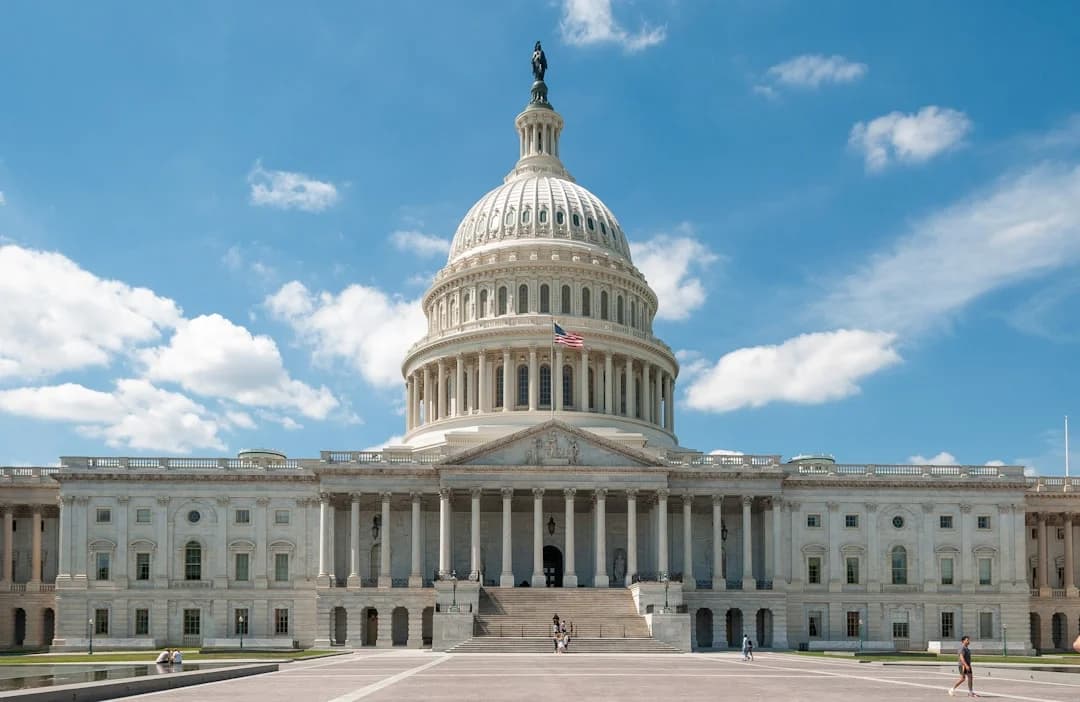
Photo by Stephen Walker on Unsplash
The District of Columbia is moving forward with a comprehensive rewrite of its short-term rental framework. On March 13, 2026, Mayor Muriel Bowser introduced the Short-Term Rental Regulation Amendment Act of 2026 (District of Columbia Bill 26-647) at the request of the Mayor, signaling a new era in how DC treats host-driven short-term lodging. The announcement, led by the Department of Licensing and Consumer Protection (DLCP) and reflected in a formal bill published by the Council, aims to clarify definitions, consolidate license categories, and create new pathways for DC residents to participate in the short-term rental economy. The move comes amid a broader push to align the District’s rules with regional practices while preserving neighborhood stability and consumer protections. As the administration framed it, the legislation is designed to reduce regulatory confusion, better protect tenants and neighbors, and open up new opportunities for residents who want to rent out space on a short-term basis. The city’s leadership characterized this as a way to balance opportunity with accountability in a lively, technology-enabled lodging market. (dlcp.dc.gov)
The draft act published by the Mayor’s Office—officially titled the Short-Term Rental Regulation Amendment Act of 2026—proposes a suite of fundamental changes. It would amend the Short-Term Rental Regulation Act of 2018 by redefining core terms such as “primary residence,” “short-term rental,” and “metropolitan area,” and by creating new license endorsements, including a Special Event endorsement that would permit temporarily expanded hosting during designated events. Crucially, the bill also allows DC residents to obtain a short-term rental license for a second property within the District, with specific occupancy and residency requirements. It would replace the existing dichotomy between current license categories with a streamlined endorsement framework and add new compliance measures for booking platforms. The act’s text outlines a rigorous set of requirements, from proof of residency to minimum insurance and “clean hands” certification, that hosts must meet to operate legally in the District. (mayor.dc.gov)
Mayor Bowser’s office framed the proposal as a modernization effort that would strengthen consumer protections while expanding economic opportunities. In the March 13 release, the mayor said, “Washington, DC is a city of homeowners, renters, and entrepreneurs — and this legislation works for all of them.” The release emphasizes that the act “opens new doors for District residents to build economic opportunity right from their own homes” and notes that the package includes a new Special Event license to accommodate major DC occasions. It also highlights a consolidation of license categories and updates to operational requirements to simplify compliance for residents who rent out space. The administration argues these changes will clarify the framework for hosts and booking services while supporting tourism and neighborhood stability. For more detail on the bill’s provisions, the joint press materials point to the bill’s official text and a summary of key provisions. (dlcp.dc.gov)
In parallel with the introduction, the Legislative Tracking and DLCP materials signal a structured path forward through the Council. The Office of the Tenant Advocate (OTA) and the Council’s legislative pages show Bill 26-647 moving through the standard committee process, with referrals to the Committee on Public Works & Transportation (or equivalent administrative committees) and ultimately to the Committee of the Whole. The Council’s agenda and circulating memos in late February 2026 framed the measure as a targeted update designed to make renters eligible to operate short-term rentals and to permit second properties to be covered under a District-wide framework. The Council notes that the act would be cited as the Short-Term Rental Regulation Amendment Act of 2026 and would introduce the endorsement-based licensing system, the 14-business-day notice requirements for certain ownership changes, and the prohibition on licensing for rent-stabilized units, among other provisions. This legislative pathway suggests a multi-month horizon for hearings, amendments, and potential floor votes. (ota.dc.gov)
What happened next is that the act’s text—the 14-page bill—lays out concrete changes to the 2018 Short-Term Rental Regulation Act, including new definitions, licensing mechanics, and operational rules. The core textual changes include:
-
Redefining “primary residence” and “short-term rental” and repealing the older “vacation rental” definition, while adding a “family member” and a precise “metropolitan area” concept. The bill redefines the terms so that hosting in DC can occur under a more uniform endorsement framework and with clearer residency requirements. The new definitions are spelled out in the bill’s Sec. 2 text. (mayor.dc.gov)
-
Allowing a host to obtain a short-term rental license endorsement for a property that is not their primary residence, subject to residency and ownership constraints. The bill creates a framework where a host can operate a short-term rental on more than one property under carefully specified endorsements. It also imposes rules if the host ceases to maintain a District residence or ownership status. These provisions are laid out in the bill’s formal text. (mayor.dc.gov)
-
Establishing new endorsement categories, including a “short-term rental endorsement” and a “special event endorsement.” The text specifies what each endorsement covers, including the possibility of a “special event rental” under a Special Event endorsement during events designated by the Mayor. The definitions for Special Event and Special Event Endorsement are included in the bill text. (mayor.dc.gov)
-
Requiring a basic business license with the short-term rental endorsement to operate; booking services (the platforms) would be required to hold a basic business license and display the host’s endorsement number on listings. The bill also adds an “a-1” subsection requiring booking services to obtain and display the license information, thereby increasing platform accountability for compliance. The bill’s text contains these licensing and platform-display requirements. (mayor.dc.gov)
-
Introducing limits and exemptions around occupancy, ownership, and the duration of stay for second residences. For example, a second residence may be endorsed for short-term rental only in conjunction with a primary residence endorsement, and occupancy parameters are defined within the bill’s sections on endorsements. The bill’s text provides granular detail on these limits and conditions. (mayor.dc.gov)
-
Excluding units that are already subject to rent stabilization from eligibility for short-term rentals. This is intended to preserve the protections provided by the DC rent stabilization program and to curb speculative, non-primary-residence activity in stabilized units. The text explicitly states this exclusion. (mayor.dc.gov)
-
Establishing compliance mechanics, including timely notifications to the Department of Licensing and Consumer Protection when ownership changes or leases terminate; and clarifying grounds for imposing civil infractions for noncompliance. The bill’s provisions cover these enforcement and notification requirements, along with the legal consequences of noncompliance. (mayor.dc.gov)
Alongside the act’s textual provisions, the administration’s press materials and the Council’s circulating memos emphasize a broader objective: to modernize DC’s STR regime to reflect the realities of a tech-enabled lodging marketplace, reduce ambiguity for hosts and platforms, and improve neighborhood stability through clearer enforcement channels. The official press release highlights key provisions such as renter eligibility to operate STRs, the consolidation of license categories, the creation of a Special Event license, and the simplification of the primary-residence rule, among others. The mayor’s statement reinforces the goal of aligning DC’s laws with regional practices while preserving protections for residents and guests. These policy aims are echoed in the legislative tracking materials, which outline the bill’s referral path and anticipated hearing schedule. (dlcp.dc.gov)
Section 1: What Happened
Bill introduction and official title
- The Short-Term Rental Regulation Amendment Act of 2026 (Bill 26-647) was introduced on March 13, 2026, by Council Chairman Phil Mendelson at the request of the Mayor. The bill would amend the 2018 Short-Term Rental Regulation Act and set forth a new endorsement-based licensing regime, redefine critical terms, and extend licensing opportunities to renters and second-property owners. The Mayor’s Office and OTA documents confirm the introduction date, sponsor, and intended scope. The DLCP press materials explicitly tie the introduction to the Act of 2026 and outline the fundamental changes. (dlcp.dc.gov)
Key provisions and definitions
-
Primary residence, short-term rental, and metropolitan area definitions are updated to reflect a broader, more precise geographic and residency framework. The act adds a family-member concept and redefines the metropolitan area to the Washington-Arlington-Alexandria DMCSA region as defined by the Office of Management and Budget. These definitional changes appear in the bill text, establishing the foundation for endorsements and eligibility criteria. (mayor.dc.gov)
-
A host may obtain a short-term rental license endorsement for a property that is not their primary residence, subject to residency and ownership requirements; and a host must provide notice to DLCP when selling their primary residence or terminating a lease. The bill lays out notice requirements and conditions for endorsement transfers, ensuring DLCP can track changes in ownership and occupancy. (mayor.dc.gov)
-
New endorsement categories, including “short-term rental endorsement” and “special event endorsement,” would give hosts defined pathways to operate in the District, including during special events designated by the Mayor. The definitions and endorsements framework are spelled out in the bill text. (mayor.dc.gov)
-
Booking services would be required to obtain a basic business license and to display the host’s endorsement number on listings. The law would also create an enforceable linkage between a listing and its endorsement, strengthening platform accountability. The bill text provides the licensing and platform-display provisions that would govern these practices. (mayor.dc.gov)
-
A 90-day maximum stay for certain second-residence endorsements and a prohibition on licenses for rent-stabilized units, with other occupancy-related rules, are embedded in the act. The bill’s text contains the conditional stay limits and the rental-status restrictions that affect licensing eligibility. (mayor.dc.gov)
Licensing and platforms
-
The act requires a basic business license with a short-term rental endorsement to operate in the District. It also sets out platform-related obligations, including the requirement that booking services list the host’s endorsement number and comply with licensing norms. The license structure would be renamed and consolidated under an endorsement system, with a two-year license duration for the STR endorsement. The DLCP materials and the bill text detail these licensing changes. (dlcp.dc.gov)
-
The ordinance explicitly excludes unlicensed or improperly registered units from operating as short-term rentals, with enforcement actions for noncompliance. The existing DLCP guidance and the bill’s enforcement provisions emphasize the consequences of operating without a valid endorsement. (dlcp.dc.gov)
Second properties and occupancy
-
The act would permit a host to operate short-term rentals on more than one property under a carefully designed endorsement system, with one endorsement for a primary residence and a second endorsement for a second residence in the District. However, the host must maintain the primary residence and comply with residency and ownership rules for the second property. In cases where the host ceases to maintain residency in the District, the second-residence endorsement would be void. The bill text lays out these nuanced rules. (mayor.dc.gov)
-
For second properties, there is a cap on nights if the property is unoccupied or not the host’s primary residence; the text specifies that a second residence can operate under a Short-Term Rental endorsement with the primary residence present, and that the second property’s use is contingent on ownership and residency status. These occupancy conditions are described in the act’s text. (mayor.dc.gov)
-
Rent-stabilized units are excluded from eligibility for short-term rentals, consistent with District policy to protect affordable housing and tenant protections. The act’s text establishes this exclusion. (mayor.dc.gov)
Timeline and status
-
The bill’s progression follows the Council’s standard pathway, with referrals to relevant committees and a committee-of-the-whole review process. OTA’s legislative updates indicate the bill’s sponsor and committee-track path, signaling a multi-stage review process ahead. The official circulation memo and OTA updates document the bill’s status as of late February 2026, with formal introductions and committee referrals continuing through the spring. (ota.dc.gov)
-
The official bill text is public, with a formal designation as the Short-Term Rental Regulation Amendment Act of 2026. The Council’s posting of the bill and the Mayor’s press release together provide the most authoritative, primary-source look at what the bill would do and why. (mayor.dc.gov)
Section 2: Why It Matters
Broader implications for residents and the market

Photo by Aaron Sousa on Unsplash
-
The Short-Term Rental Regulation Amendment Act of 2026 would broaden participation by allowing renters to operate short-term rentals at their primary residence and permitting second properties to be licensed. This shift could expand the pool of legal hosts and increase the supply of legally compliant listings during peak demand periods, potentially affecting occupancy rates and neighborhood dynamics. The Mayor’s release explicitly frames this as a way to create new economic opportunities for District residents and to align DC’s approach with regional practices. (dlcp.dc.gov)
-
By consolidating endorsement categories and introducing a Special Event license, the bill aims to reduce confusion around licensing, improve oversight during high-demand periods, and provide a framework for more predictable hosting activity during events such as the Cherry Blossom Festival and other Mayor-designated occasions. The Special Event concept is spelled out in the mayor’s release and the bill’s text, signaling a calibrated tool for event-driven hosting. (dlcp.dc.gov)
Platform accountability and consumer protections
-
A cornerstone of the act is platform accountability. Booking services would be required to obtain a basic business license and display the host’s endorsement number on listings, creating a direct link between listings and licenses. This change would help enforcement bodies identify unlicensed activity and ensure that guests see verified post-sale and occupancy information. The bill text makes these platform-oriented obligations explicit, while DLCP guidance emphasizes verification through Scout and related licensing platforms. (mayor.dc.gov)
-
On a consumer protection note, the act would require hosts to maintain certain safety and compliance standards, including proof of liability insurance and a clean hands certificate, and to post license information conspicuously on the premises. These requirements are designed to raise baseline safety and transparency for guests and neighbors alike. The DLCP operating page currently outlines similar requirements under the 2018 Act, which the amendment would build upon with updated rules. (dlcp.dc.gov)
Housing policy context and neighborhood impacts
-
DC’s housing landscape has long balanced the twin goals of encouraging legitimate short-term rental activity and protecting long-term housing stock. The act’s exclusion of rent-stabilized units from eligibility for short-term rentals preserves the District’s core commitment to tenant protections while enabling other residents to participate in the sharing economy under clear rules. This approach is consistent with a broader housing strategy that seeks to curb non-primary-residence exploitation while enabling legitimate, licensed hosts to operate. The bill text’s rent-stabilization exclusion and residency requirements illustrate this balance. (mayor.dc.gov)
-
Local policymakers and housing advocates are watching carefully for unintended effects on housing supply, neighborhood stability, and enforcement capacity. The DC Council’s historical experience with STR policy—balancing host opportunities with community concerns—suggests that the final legislative package may include adjustments after hearings. The OTA and Council materials emphasize a measured, data-informed approach to implementation and ongoing oversight. (ota.dc.gov)
What this means for renters, hosts, and communities
-
For renters who want to monetize a spare room or space, the amendment would lower barriers and expand eligibility, provided they meet residency and safety requirements and obtain the appropriate endorsement. This expansion could be especially meaningful for tenants in high-demand neighborhoods, giving them a route to participate in the city’s tourism economy while staying within a regulated framework. The March 13 release underscores this focus on renter eligibility and economic opportunity. (dlcp.dc.gov)
-
For hosts with multiple properties, the act outlines a path to license endorsements on more than one property, provided they maintain residency in the District for primary residence operations and meet ownership requirements. The bill text clarifies the conditions under which endorsements for second properties may be obtained and how occupancy should be managed. This creates a standardized path for multi-property hosts, potentially increasing legitimate inventory while imposing clear caps and conditions. (mayor.dc.gov)
-
For neighborhoods, the act’s emphasis on licensing, platform disclosure, and stay limits is designed to curb abrupt surges in activity, illegal listings, and noncompliant operators. The combination of enhanced platform accountability and residency requirements seeks to protect neighborhood character and safety while preserving the benefits of tourism revenue for residents. The DLCP’s existing guidance on STRs (including occupancy limits and licensing) provides a baseline that the amendment builds upon. (dlcp.dc.gov)
Section 3: What’s Next
Legislative trajectory and expected milestones
-
The next phase for the Short-Term Rental Regulation Amendment Act of 2026 involves committee reviews, public hearings, and potential amendments before a final vote in the Council. OTA’s legislative updates and the Council’s circulating memos outline the bill’s passage through the sequential process, with the Committee on Public Works & Operations and the Committee of the Whole anticipated to handle substantive review and debate. The timeline remains fluid, but the official materials indicate a multi-month process ahead in 2026. (ota.dc.gov)
-
In parallel, the Mayor’s Office and DLCP are likely to publish accompanying guidance and an implementation plan to help hosts, booking platforms, and residents understand the practical steps required to obtain endorsements, verify listings, and comply with the new framework. The DLCP licensing platform remains the central access point for licensing and renewal, with the existing “Apply for a Short-Term Rental License” flow and the new endorsement model expected to be harmonized with the 2026 amendments. The DLCP operating page provides the current application framework and steps to prepare. (dlcp.dc.gov)
Next steps for hosts, renters, and booking platforms
-
Hosts and renters should prepare now by reviewing the act’s definitions and licensing requirements, ensuring they can demonstrate District residency, obtain liability insurance, and secure the required “clean hands” certification. The DLCP guidance emphasizes the need for a District-based license, proof of residency, and other compliance documents as prerequisites for licensing. As the act moves through the Council, these groundwork steps will likely remain relevant, with any updates reflected in formal guidance documents. (dlcp.dc.gov)
-
Booking platforms should anticipate the act’s platform-display requirements, including listing endorsement numbers and license information. The bill text explicitly adds a subset of platform duties, and the OTA and Council updates indicate ongoing oversight of how platforms will implement these rules in practice. Host onboarding and listing verification processes will need to align with the new endorsement structure and identification requirements. (mayor.dc.gov)
-
Residents and neighborhood associations should monitor committee hearings and public discussions in the coming months to understand how the final legislation may differ from the introduced version. The Council’s memo and the OTA updates emphasize a data-driven approach and ongoing oversight, suggesting iterative adjustments could be part of the final package. (ota.dc.gov)
Closing
The DC Short-Term Rental Regulation Amendment Act 2026 represents a deliberate recalibration of the District’s STR regime, balancing expanded resident participation with stronger consumer protections and clearer platform accountability. By redefining core terms, consolidating licenses, and introducing new endorsements—including a Special Event category—the act seeks to create a more predictable, compliant, and neighborhood-conscious market for short-term lodging. As the Council proceeds through hearings and potential amendments, readers should expect a measured regulatory evolution rather than an abrupt policy shift, with implementation details and timelines clarified through DLCP guidance and official Council communications. For residents, hosts, and platforms, the key takeaway is clear: engage with the licensing process early, understand how endorsements map to each property, and prepare for a licensing ecosystem that ties listings directly to verified approvals. The District’s data-driven approach, supported by ongoing reporting and oversight, will determine how quickly the new rules translate into everyday practice across DC neighborhoods. Stay tuned to official DC government channels and the District’s primary news and policy briefings for the latest on timing, hearing schedules, and final provisions. (dlcp.dc.gov)

Photo by Arisa Chattasa on Unsplash