DC FY26 Green Book Sets $1.5B Small Business Spending Goal
Washington, DC — The District of Columbia quietly shifted into a higher gear for local procurement and technology-enabled contracting as the FY26 Green Book was released, signaling a sustained push to direct government spending to District-based small businesses. The FY26 Green Book, the District’s official Small Business Enterprise (SBE) Opportunity Guide, was unveiled in early February and anchors a bold forecast: more than $1.5 billion in small business spending with DC SBEs during Fiscal Year 2026. The rollout aligns with a broader strategy to leverage DC’s procurement power to spur local job creation, foster local tech and market capabilities, and accelerate inclusive economic growth across neighborhoods. The Green Book’s publication also foregrounds a high-profile opportunity linked to the RFK Memorial Stadium Campus redevelopment, a multi-phase project valued at roughly $3.7 billion that is expected to generate substantial contracting opportunities for DC-based CBEs in the years ahead. The release event occurred February 9, 2026, at Capital One Arena, underscoring the Bowser administration’s commitment to transparency, accessibility, and local supplier empowerment. (mayor.dc.gov)
The DC Green Book continues to evolve as a central planning tool for small businesses seeking to compete for District government contracts. Mayor Muriel Bowser and the Department of Small and Local Business Development (DSLBD) emphasized decades of progress in connecting CBEs to local opportunities, while signaling new pathways for tech-focused firms and other enterprises that want to scale with public-sector opportunities. The Green Book’s value proposition remains straightforward: it maps agency budgets, outlines spending goals, and highlights opportunities that are prioritized for CBEs, with a growing emphasis on data-driven insights and online accessibility. The 2026 edition builds on a 12-year trajectory that began with the Green Book’s launch in FY16 and reflects a persistent rise in annual SBE spending goals, including a shift from a $317 million baseline in FY16 to multi-hundred-million (and beyond) figures in subsequent years. A key feature of the current year is the emphasis on digital access and real-time spend data to help CBEs identify opportunities aligned with their capabilities. “The Green Book is one of my favorite deliverables to the people of the District of Columbia,” Mayor Bowser has said, underscoring the administration’s belief in a transparent procurement system that keeps dollars circulating within DC communities. (dslbd.dc.gov)
Opening
The newly released FY26 Green Book places a spotlight on a multi-year, data-driven approach to local procurement. It marks a continuation of the Bowser administration’s strategy to grow the District’s annual SBE spending goals in a manner that is transparent, predictable, and anchored in performance data. The Green Book serves as a roadmap for CBEs seeking to access hundreds of millions—if not more—in District opportunities, with the FY26 edition highlighting both traditional procurement channels and new initiatives tied to major development projects. The 2026 edition also features an interactive data layer that makes agency-level spending forecasts more navigable, enabling small businesses to calibrate their capabilities to the needs of specific departments and programs. The city’s forward-looking approach aligns with a broader national trend toward using procurement data to unlock small business growth, especially for technology vendors and service providers that can help modernize government operations and security, while also expanding workforce opportunities for District residents. In short, the FY26 Green Book small business spending narrative combines a sizable dollar target with improved access to information and a clearer path to success for CBEs across technology, professional services, construction, and related sectors. (greenbookdc.com)
Opening (cont’d)
The interlocking pieces of the FY26 Green Book—data transparency, targeted opportunities, and a focus on high-impact projects—signal that the District intends to accelerate the integration of local tech and market capabilities into public-sector programs. The RFK Memorial Stadium Campus redevelopment, flagged as a flagship opportunity in the FY26 Green Book, represents a long-haul investment with a projected total of $3.7 billion. The redevelopment is expected to create tens of millions in contracting opportunities for local CBEs over the next several years as design, construction, operations, and related services roll out. For technology firms, this means potential roles in IT infrastructure, cybersecurity, building management systems, and smart-city components that will be required to support a large, multi-use redevelopment. The combination of a substantial spending forecast and a high-profile, locally anchored project positions DC’s SBE ecosystem to scale more rapidly, provided CBEs can navigate the procurement process and access the right certifications and contract paths. The Green Book’s online data tools—tied to the Green Book DC website—are designed to help CBEs analyze opportunities by agency, product category, and other dimensions, which is especially valuable for small businesses trying to map a path through complex DC government solicitations. (mayor.dc.gov)
Section 1: What Happened
Launch event and public rollout (## Launch Details)
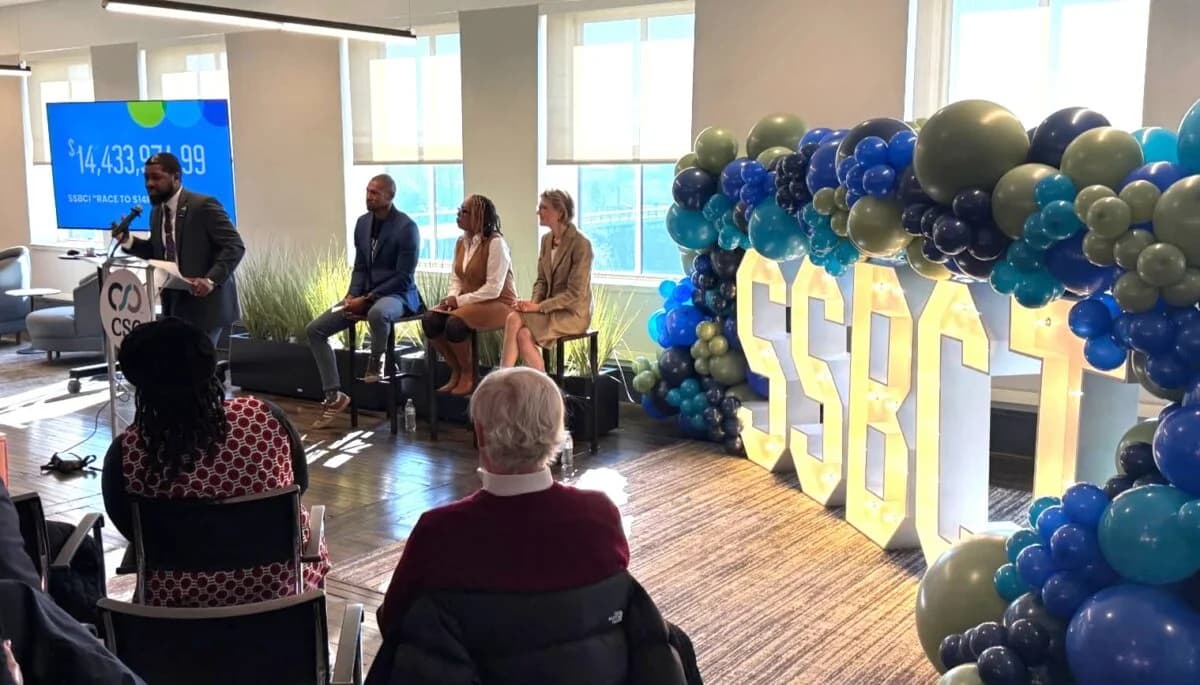
On February 9, 2026, the District’s leadership formally released the FY26 Green Book, described as the District’s official Small Business Enterprise (SBE) Opportunity Guide. The event took place at Capital One Arena in downtown Washington, DC, with Mayor Muriel Bowser and key DSLBD leadership presenting to an audience of CBE owners, industry stakeholders, and government staff. The release emphasized DC’s ongoing commitment to connecting local CBEs with District opportunities and highlighted the expanded use of real-time spend data to help firms target the most promising opportunities in FY26. The event’s timing and venue underscored the administration’s intent to demonstrate tangible progress on the Green Book’s core objective: increasing the share of District spending directed to local CBEs. The schedule and participants were announced by the Mayor’s Office ahead of the event, and coverage highlighted the presence of agency heads, council members, and DSLBD leadership in attendance. The event’s location at Capital One Arena also reflected a concrete example of CBE engagement in a large-scale redevelopment project, illustrating how public-private collaborations can translate into real contracting opportunities for DC-based businesses. (mayor.dc.gov)
RFK Stadium Campus redevelopment: a centerpiece for FY26 opportunities (### RFK Stadium Campus redevelopment)
One of the Green Book’s new highlights for FY26 is a dedicated section spotlighting procurement opportunities tied to the RFK Memorial Stadium Campus redevelopment. The redevelopment project is described as one of the District’s most significant public-private investments, with a projected total investment of approximately $3.7 billion. This multi-phase effort is expected to generate sizable contracting and procurement opportunities for DC-based CBEs across multiple industries, including construction, IT, security, facilities management, and professional services. The project’s scale and visibility add a critical dimension to FY26 planning, signaling to local firms that major public investment can align with a sustained and predictable opportunity pipeline. City officials framed the RFK Campus redevelopment as a proving ground for the Green Book’s mission to connect local CBEs with high-value contracts and to demonstrate the District’s capacity to recirculate tax dollars within DC communities. The briefing materials and the press coverage around the event emphasized this point, noting that the project’s governance and contracting structure prioritizes local participation and equitable access. (mayor.dc.gov)
Green Book’s longstanding mission and history (### Green Book’s purpose and history)
The Green Book’s origins trace back to FY16, when Mayor Bowser established it as a practical tool to help SBEs navigate District procurement opportunities. The Green Book has since evolved into a cornerstone of the District’s inclusive procurement strategy, providing transparency into government spending goals and serving as a critical planning resource for local business owners seeking to work with District agencies. DSLBD’s materials emphasize that the Green Book is designed to help CBEs “navigate the contracting process successfully,” with a focus on connecting businesses with meaningful opportunities and ensuring that local dollars circulate within the District. As part of the FY26 launch materials, city officials reiterated the Green Book’s role as a bridge between government spending plans and private sector capacity, a function that has become increasingly important as DC tech ecosystems mature and local firms scale to serve complex public-sector needs. Mayor Bowser’s public remarks underscore this ethos, describing the Green Book as a living instrument that empowers DC-based businesses to compete for government contracts while contributing to community-wide prosperity. The official communications also highlighted that the city’s annual SBE spending goals have grown substantially over time, with ongoing year-over-year increases that align with the Green Book’s data-driven approach. >“The Green Book is one of my favorite deliverables to the people of the District of Columbia,” Bowser said, reinforcing the tool’s centrality to DC’s procurement strategy. (greenbookdc.com)
Agency data and accessibility: a new digital backbone (### Data tools and online access)
Beyond the narrative of a rising dollar target, the FY26 Green Book emphasizes the District’s push to democratize access to procurement opportunities through advanced data tools. The Green Book DC platform offers a searchable, interactive interface that allows CBEs to filter opportunities by agency, product category, and other criteria, making it easier to align capabilities with the District’s upcoming needs. DSLBD’s materials note that the Green Book’s companion data initiatives include agency spend data organized by agency and, increasingly, by NIGP code (commodity classifications), so small businesses can anticipate demand and tailor offerings accordingly. The Green Book’s deployment of digital data dashboards and real-time spend visibility is framed as a key enabler for tech-savvy small businesses that rely on timely, granular information to shape go-to-market strategies, bid calendars, and capacity planning. The Green Book DC site explicitly states that agency spend data is now more accessible and searchable, and that the program’s spend data dashboards provide a real-time view of procurement opportunities. This shift toward data-driven decision making is a hallmark of the FY26 edition and is expected to influence technology investments within DC SBEs and partner firms as they adapt to a more transparent procurement environment. (greenbookdc.com)
What happened in numbers (### Snapshot of key figures)
The Green Book’s current messaging stresses the scale of DC’s SBE investment in FY26. The Green Book DC platform proclaims that “More than 1.5B will be spent with DC Small Business Enterprises (SBEs) in FY 2026.” This figure represents a sizable continuation of the district’s historical trajectory toward higher local procurement, anchored by a series of high-profile opportunities and a robust, transparent data infrastructure designed to match CBEs with public-sector opportunities. Historical context provided by the administration shows a steady climb in annual SBE spending goals since the Green Book’s inception, with FY16’s initial target of $317 million evolving into multi-hundred-million-dollar targets in subsequent years and surpassing $1B in several years. For example, the FY25 year saw an initial goal around $1.41B, with preliminary spending reported around $1.27B as of a given reporting window, illustrating the dynamic nature of the data and the ongoing process of reconciliation and auditing. These figures frame a story of ambitious policy design combined with real-world results that continue to unfold as the FY26 cycle advances. The RFK Stadium Campus redevelopment’s $3.7B total investment further cements the idea that large-scale, locally focused opportunities can serve as catalysts for broader SBE participation in DC’s procurement ecosystem. (greenbookdc.com)
Section 2: Why It Matters
Impact on DC CBEs and local tech firms (## Why this matters for CBEs)
The FY26 Green Book small business spending target of approximately $1.5B in SBE opportunities matters for DC CBEs across multiple sectors, including information technology, health services, security, professional services, and construction. The Green Book’s explicit focus on agency spend data and opportunity areas helps CBEs identify where demand is likely to materialize and to anticipate the scale of potential contracts. For technology firms, the agenda is especially consequential: IT infrastructure, cybersecurity, software services, and data analytics offerings are positioned to align with District agency needs as DC accelerates digital modernization and safe, efficient public services. The emphasis on the RFK Stadium Campus redevelopment—an anchor project with a multi-billion-dollar investment—provides a concrete entry point for local tech firms to deliver systems integration, facilities-management technology, and smart-city components. The combination of a sizeable annual target and a high-profile project creates a powerful signal to the local business community that DC will continue to prioritize homegrown talent and local investment inside the procurement pipeline. The Green Book’s digital tools provide an essential lane-change mechanism for tech startups and small-scale vendors to connect with the District’s procurement teams in real time, supporting more agile engagement with agencies and enabling faster responses to solicitations. The data-driven orientation of the Green Book can help CBEs benchmark performance, plan capacity, and optimize bidding strategies in response to forecasted demand. The overall effect is a more vibrant, technology-enabled local supplier ecosystem that can contribute to longer-term community resilience and innovation. >“The Green Book is one of my favorite deliverables to the people of the District of Columbia,” Bowser has noted, reinforcing the strategic role of local procurement in building resilient communities and sustaining local employment. (greenbookdc.com)
Broader economic context: procurement as a growth lever (### Economic growth and equity)
The Green Book’s emphasis on local spend is part of a broader policy framework designed to stimulate inclusive economic growth in the District. By design, the Green Book’s targets and opportunities emphasize access for CBEs, with a focus on diverse businesses—particularly minority-owned and women-owned firms—that contribute to employment and community wealth. The City’s narrative centers on keeping dollars local and recirculating them through the District’s economy, a theme reinforced by the administration’s public statements about the importance of an equitable procurement ecosystem. The RFK Stadium Campus redevelopment is presented as a microcosm of this strategy: a large-scale investment that can create thousands of jobs and a sustained pipeline of DC-based contracts, while offering CBEs exposure to high-value contracting opportunities and capacity-building experiences. This approach aligns with nationwide discussions about how cities can leverage public spending to advance inclusive growth, particularly in technology-enabled sectors where the District seeks to attract and retain homegrown talent. The city’s leadership highlights the measurable progress: steadily rising annual SBE spending goals since FY16 and consistent over-performance relative to initial targets in successive years, a pattern that helps to sustain confidence among local businesses and financiers about DC’s procurement commitments. (mayor.dc.gov)
Data transparency as a market enabler (### Digital tools and market visibility)
A centerpiece of the FY26 Green Book is the enhancement of data transparency and market visibility for CBEs. The Green Book DC platform emphasizes that agency spend data are now more accessible and searchable, enabling firms to filter opportunities by agency, category, and other dimensions. This data-first approach transforms procurement from a primarily observational exercise into an active planning tool for small businesses seeking to scale. For technology vendors, such tools can facilitate more accurate forecasting, more precise targeting of solicitation timelines, and better alignment with procurement calendars. The Green Book’s real-time spend dashboards and opportunity data are expected to reduce information asymmetries and improve bid success rates for CBEs that leverage the platform effectively. The emphasis on data-driven opportunities reflects broader trends in public-sector procurement toward “procure-to-pay” maturity, where suppliers can monitor demand signals, track contract statuses, and align product roadmaps with public sector needs. The overarching objective is to foster a more efficient, competitive market for local CBEs, with the potential to spur innovation and drive down procurement costs over time. The administration’s communications underscore that these data tools are not mere add-ons; they are core to achieving the Green Book’s mission of equitable access and sustainable, local growth. (greenbookdc.com)
Why this matters for technology and market trends (### Tech-driven procurement and trends)
The DC FY26 Green Book small business spending narrative sits at the intersection of technology adoption and procurement strategy. As city agencies modernize operations, they increasingly require vendors that can deliver cloud services, cyber defense, data integration, and smart-building technologies. The Green Book’s emphasis on data transparency helps technology firms forecast demand more accurately, plan hiring, and assemble capable teams that can respond quickly to DC solicitations. The RFK Stadium Campus redevelopment signals a broader appetite for digital infrastructure and smart-city capabilities, including building automation, energy-management platforms, and digital twin applications that help manage complex urban environments. The DC market’s trend toward local vendor participation—coupled with a strong data backbone—aligns with investor and entrepreneur expectations that public investment can catalyze private-sector growth, particularly for small and mid-sized technology firms that historically faced barriers to government contracting. The Green Book’s ongoing evolution—its online data tools, real-time dashboards, and ongoing engagement with CBEs—suggests a maturation of DC’s procurement ecosystem, one that is more accessible to technology-driven small businesses and better aligned with the region’s long-term talent and innovation goals. (greenbookdc.com)
Section 3: What’s Next
Next steps for CBEs and local firms (## What’s Next)
CBEs and other DC-based small and local businesses should prepare to engage with FY26 opportunities by leveraging the Green Book’s digital resources and data dashboards. DSLBD’s guidance notes that the Green Book’s companion Worksheet is a practical tool designed to help SBEs understand procurement processes, track opportunities, and prepare for bidding. The worksheet, along with the Green Book’s online portal, provides a structured pathway for firms to translate opportunities into actionable bids. For businesses seeking to maximize the benefits of the FY26 Green Book small business spending program, the key steps include certifying with the District’s Certified Business Enterprise program, regularly reviewing agency spend data, and participating in DSLBD-sponsored programs such as SmallBiz Assist, which offers one-on-one guidance to navigate procurement opportunities and contracts. The SmallBiz Assist program is highlighted as a direct channel for DC-based entrepreneurs to connect with opportunities and gain tailored guidance on certification and contracting readiness. Firms that take advantage of these resources can build capacity, align offerings with district needs, and position themselves to win contracts tied to major initiatives like the RFK Stadium Campus redevelopment. (dslbd.dc.gov)
Strategic watch-list and sectors to watch (### Opportunity areas and sectors)
The Green Book’s “Top 10 industries with high opportunity” section identifies sectors with substantial SBE opportunities, including Health Services, Information Technology, Transportation, and related services. For technology and market trend analysis, these data points provide critical signals about where the District expects demand to grow and which CBEs are most likely to benefit. While the dollar figures in the Green Book DC presentation give a sense of scale, the real value for firms is the actionable guidance on where to focus efforts, which kinds of certifications are advantageous, and how to align capabilities with agency priorities. The 2026 edition’s emphasis on RFK Stadium Campus and the associated data-backed opportunities reinforces the trend toward large urban redevelopment projects that necessitate close coordination among agencies, developers, and CBEs. Engaging with the Green Book’s recommended opportunities, using the Green Book Worksheet, and accessing the Real-Time Spend Data dashboard will help firms map a credible pipeline for FY26 and beyond. (greenbookdc.com)
What’s next for policy and program delivery (### Policy continuity and future updates)
Looking ahead, the District is expected to continue iterating on the Green Book through annual updates that incorporate feedback from CBEs, procurement professionals, and agency partners. The Green Book’s long-standing trajectory shows a pattern of expanding opportunities and refining processes to make the procurement system more inclusive and efficient. The ongoing expansion of digital access, including improved agency spend dashboards, will likely be complemented by programmatic enhancements—such as targeted outreach, training for CBEs on bid preparation, and more transparent reporting on SBE utilization and outcomes. Public statements and press materials from the Bowser administration point to ongoing commitments to these goals, with the RFK Stadium Campus redevelopment functioning as a high-visibility demonstration of what a robust, locally grounded procurement ecosystem can achieve. As the FY26 year unfolds, observers will monitor whether the $1.5B spending target translates into realized contracts and whether the Green Book’s data tools yield measurable improvements in bid success rates for DC CBEs. (mayor.dc.gov)
What to watch for in the coming months (### Timeline and milestones)
- February 9, 2026 — FY26 Green Book launch event at Capital One Arena, with announcements about opportunities and new sections on RFK Stadium Campus redevelopment. The event’s timing and location were announced ahead of the release. (mayor.dc.gov)
- Ongoing FY26 — District agencies begin implementing the Green Book’s guidance, with agency spend data feeding into quarterly or periodic updates to CBEs and the public. The Green Book DC platform is designed to provide ongoing visibility into opportunities as contracts move from planning to procurement to award. (greenbookdc.com)
- RFK Stadium Campus redevelopment milestones — As the $3.7 billion project progresses through design, permitting, and construction phases, DC-based CBEs will have an increased cadence of contracting opportunities in construction, IT, security, and related services. The redevelopment is framed as a major driver of local contracting in FY26 and beyond. (mayor.dc.gov)
- End-of-year review — The District is expected to publish year-end SBE spending totals, providing insight into whether the FY26 target of $1.5B in SBE spending was achieved and how the program performed against the Green Book’s projections. The Green Book’s data dashboards are designed to facilitate such retrospective assessments. (greenbookdc.com)
Closing
The FY26 Green Book small business spending strategy highlights a clear and sustained commitment to local procurement, with a projected $1.5B in SBE opportunities for CBEs in FY26 and a landmark focus on the RFK Memorial Stadium Campus redevelopment. The District’s approach blends large-scale development with data-driven, accessible tools designed to level the playing field for small and local firms—particularly in technology-rich sectors that can help modernize government operations and deliver improved public services. If DC remains true to its stated goals, the Green Book should continue to serve as a practical, marketer-friendly roadmap that connects small businesses to the city’s biggest opportunities, while also providing a transparent benchmark for accountability and progress. For readers and firms seeking to stay ahead, regular engagement with the Green Book DC platform, follow-up with the SmallBiz Assist program, and monitoring of agency spend data dashboards will be essential as FY26 unfolds and new opportunities emerge. The District’s public announcement of the Green Book’s launch, the RFK redevelopment spotlight, and the ongoing expansion of data-driven procurement collectively point toward a more inclusive, competitive, technology-enabled DC economy—one in which local firms have a clearer path to growth and resilience in the years ahead. (mayor.dc.gov)