Congress tariffs national emergency February 2026: Trends

The political and economic terrain around Congress tariffs national emergency February 2026 is unfolding with outsized implications for technology supply chains, investment decisions, and consumer prices. In the wake of a year marked by executive tariff actions justified under the International Emergency Economic Powers Act (IEEPA) and the National Emergencies Act, Congress has stepped back into the spotlight to challenge, or even terminate, a © national emergency that was used to justify broad duties across multiple sectors. This moment matters for DC-area policymakers, tech firms navigating global supply chains, and investors watching market signals that link policy risk to technology deployment and market performance. As a data-driven outlet, District of Columbia Times will track the legal, economic, and market dynamics, and translate them into practical takeaways for readers who rely on precise, verifiable information.
The House’s February 2026 vote to counter or terminate tariffs tied to a declared national emergency crystallizes a broader pattern: Congress is reasserting its oversight role in tariff policy while markets weigh the costs and benefits of continuing or ending emergency-based duties. Legal analyses explain the authorities and limits in play, while economic research quantifies how tariff policies affect prices, budgets, and corporate planning. The ongoing negotiation and potential termination of the emergency declared last year—along with the associated tariff framework—could redefine how technology manufacturers source components, how hardware prices move, and how foreign suppliers participate in the U.S. market. This article synthesizes current data, case studies, and forward-looking scenarios to offer a practical, data-driven perspective on what happens next. For readers tracking the intersection of policy and tech markets, the February 2026 developments are not a sideshow—they shape the economics of innovation and the resilience of U.S. tech supply chains. The following sections present what’s happening, why it’s happening, what it means for business and consumers, and how to prepare in the coming 6–12 months.
What’s Happening Now
Current Tariff Landscape
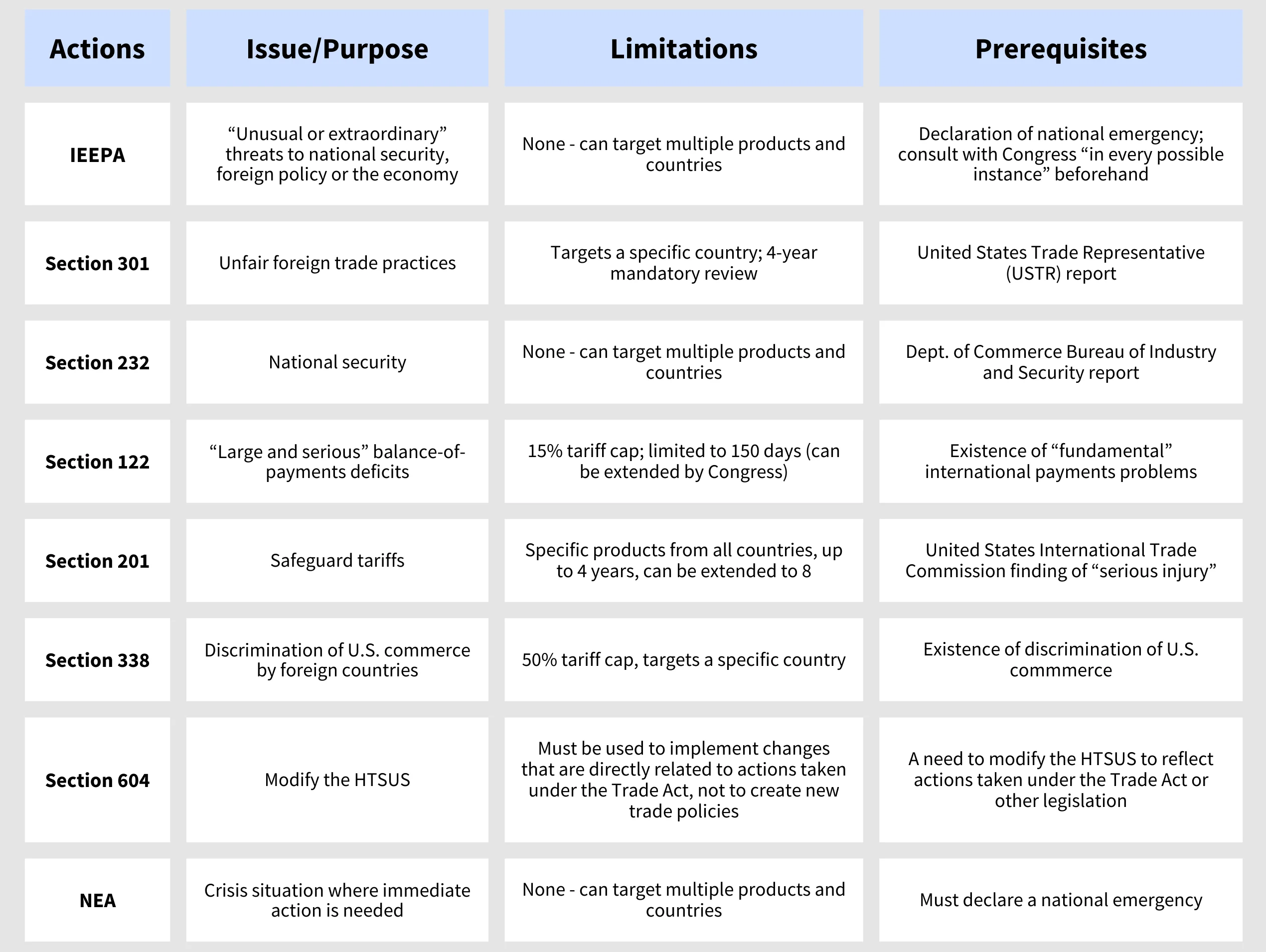
Tariff policy in early 2026 remains tightly linked to a national emergency regime that Congress has begun to scrutinize more openly. The central debate revolves around whether the emergency declarations used to justify tariffs—some of which were issued as recently as 2025—will be allowed to stand, be revised, or be terminated by Congress. The key legal instrument—the International Emergency Economic Powers Act (IEEPA)—grants the executive branch broad powers during declared emergencies, but it also creates checks and balances, including congressional consultation and possible disapproval mechanisms. In late 2025 and early 2026, congressional actions intensified, with legislation and floor votes focusing on revoking or limiting presidential tariff authorities tied to specific national emergencies. The latest legislative movement culminated in S.J.Res.88, a joint resolution terminating the national emergency that had justified certain tariffs, a move that gained momentum in the Senate and then the House, and drew public commentary about the proper balance between executive authority and legislative oversight. The official record confirms that the Senate passed the measure and the House took up a related resolution in February 2026, signaling a potential shift in how such emergencies are managed going forward. (congress.gov)
From a market and technology perspective, the current landscape is characterized by high tariff levels in force for multiple categories, with ongoing debates about the pass-through of costs to consumers and businesses. Independent analyses paint a nuanced picture: while tariff revenues have been substantial, pass-through to prices and productivity varies by sector and by household expenditure category. For example, research from the Federal Reserve and academic affiliates highlights pass-through ranges that imply meaningful, if not uniform, price effects for consumer goods and components used in advanced manufacturing. These dynamics are especially pronounced for sectors reliant on global supply chains for semiconductors, batteries, and other critical inputs for high-tech manufacturing. The policy pendulum—whether tariffs stay, rise, be rolled back, or be repealed—will ripple through component costs, contract pricing, and capital expenditure decisions in the tech ecosystem. (atlantafed.org)
Key Statistics You Need to Know
- Baseline tariff levels across 2025 and into 2026 create an overall price basket effect estimated in high-quality macro studies. A prominent analysis projects the baseline average tariff rate reaching the high-teens percent range, with the price-level impacts translating into measurable consumer price inflation under certain pass-through assumptions. This underscores how tariff policy translates into daily costs for households and firms alike. (budgetlab.yale.edu)
- A New York Fed study indicates that roughly 90% of tariff costs were borne by U.S. businesses and consumers in the recent episode, challenging the view that foreign exporters would shoulder most of the burden. This pass-through pattern is a critical input for corporate strategy and for understanding consumer price trajectories. (ft.com)
- Independent micro-data research from the Atlanta Fed demonstrates that even a single tariff scenario can lift CPI over a multi-quarter horizon by roughly 0.8% to 1.6%, depending on pass-through and basket composition. The Canadian/Mexican component in particular has outsized price effects due to exposure in essential consumer goods and intermediate inputs used in technology manufacturing. (atlantafed.org)
- A comprehensive, forward-looking projection from the Yale Budget Lab estimates that 2025 tariff episodes could yield large gross revenues but come with sizable macro costs: a baseline of roughly 17.4% as the average effective tariff rate if current measures persist, with meaningful GDP and unemployment impacts depending on policy continuity. The analysis also demonstrates the sensitivity of outcomes to how Congress treats IEEPA-based tariffs and related authorities. (budgetlab.yale.edu)
Real-World Examples
- Canada tariffs under the IEEPA framework became a focal point of congressional scrutiny in early 2026. A legislative track and public reporting show that the tariffs—imposed in 2025 to address concerns about illicit drug flows and border policy—were the subject of a House resolution seeking termination in February 2026. This example illustrates how a national emergency-based tariff regime can become a battleground for executive-legislative balance, with direct implications for cross-border trade and technology supply chains that rely on North American components. (congress.gov)
- The broader 2025–2026 trade policy arc also involved reciprocal or escalated tariffs tied to national emergencies, including actions that invoked IEEPA to address perceived strategic risks. Legal analyses from Congress.gov’s CRS product outline how IEEPA provides the primary vehicle for such tariffs, while also noting the ongoing legal and political contests that surround these authorities. This case study helps readers understand how policy design affects tech procurement, supplier risk, and price dynamics in a high-tech economy. (congress.gov)
Who’s Affected
- Tech manufacturers and suppliers: Companies across the semiconductor, electronics, and general manufacturing sectors rely on global supply chains that are sensitive to tariff-induced price changes and sourcing disruptions. Research from the IT policy community and industry groups highlights how tariffs can increase input costs, alter supplier choices, and shift production footprints. In the current climate, technology firms are actively evaluating dual-sourcing, regional manufacturing, and supplier diversification to mitigate tariff risk. (itif.org)
- Consumers and households: Tariffs are borne by households through higher prices for consumer electronics, appliances, and related goods. Several credible research efforts—ranging from micro-level expenditure analyses to macro price indicators—point to a non-trivial pass-through to consumer prices, particularly for goods with global supply chains dependent on international inputs. The math is complex, but the direction is clear: tariffs are part of the price environment households navigate daily. (atlantafed.org)
- International partners and supply chains: Tariffs and emergency-based duties create ripple effects for cross-border collaboration, especially among North American neighbors where integrated supply chains are most exposed. This has implications for joint R&D projects, cross-border manufacturing, and regional tech clusters that rely on predictable tariff regimes.
Why It’s Happening
Market Forces Driving Tariff as Policy Tool

Tariffs tied to national emergencies have become a renewed instrument in the policy toolkit for addressing perceived security, labor, and strategic concerns. The legal architecture—IEEPA and the National Emergencies Act—gives the executive branch broad latitude, but Congress has tools to check or terminate such authorities. The current cycle illustrates a tension between executive flexibility in moments of perceived threat and legislative insistence on democratic accountability. Legal analyses detail how IEEPA works, what triggers it, and how Congress can disapprove or terminate emergencies through joint resolutions. At the same time, market analysts emphasize that tariff uncertainty itself creates risk premiums in investment decisions, influencing where firms locate production, how they price products, and how they plan capital expenditures. The combination of law and market dynamics explains why February 2026 is a critical inflection point: a moment when lawmakers push back, and markets recalibrate in response. (congress.gov)
Tech and Global Supply Chains
Technology supply chains are uniquely sensitive to tariff policy because many components are sourced internationally and assembled in a few hubs. Tariffs on semiconductors, electronics inputs, and related goods can feed through into device pricing, performance constraints, and the pace of product rollouts. Industry analyses underscore how tariff regimes interact with broader technology supply chain resilience goals, including diversification away from single-country dependencies and investment in domestic or regional fabrication capacity. Private-sector analyses and think-tank work emphasize that tariff mitigation strategies—such as reshoring, nearshoring, or building multi-sourcing networks—become strategic imperatives as policy uncertainty persists. The policy approach in 2025–2026 illustrates not only the risk of higher costs but also the opportunity for tech firms to align procurement and manufacturing strategies with long-run resilience. (mckinsey.com)
Policy and Legal Dynamics
The current cycle features a defining set of legal questions: Where does executive power end and legislative oversight begin in the context of national emergencies used to justify tariffs? Is termination of an emergency feasible via joint resolutions, and what does it mean for ongoing trade relationships? The Congress.gov CRS analysis lays out the framework for IEEPA authority, the termination pathway for emergencies, and the procedural steps for legislators to disapprove or adjust tariffs tied to emergencies. The evolving dialogue—exemplified by joint resolutions and floor votes in February 2026—signals a rebalancing that could constrain or reconfigure the use of tariffs as a policy lever for national security or economic objectives. (congress.gov)
What It Means
Business Impacts
- Cost structures and pricing strategies: Tariffs translate into higher input costs for manufacturers and higher final prices for consumers. The macro research indicates that even moderate pass-through can lift consumer prices across a broad basket of goods, with the largest effects concentrated in sectors with heavy import exposure for components and consumer electronics. Firms must decide whether to absorb, pass through, or reengineer products to maintain margins while staying competitive. The 2025–2026 tariff episodes provide a clear evidence base that the cost burden often lands on businesses and households rather than foreign suppliers. (atlantafed.org)
- Strategic sourcing and supply chain redesign: The manufacturing sector response has shifted toward incremental, iterative supply-chain adjustments rather than wholesale overhauls, as indicated by industry surveys. Firms are prioritizing supplier diversification, regional sourcing, and closer supplier integration to weather tariff volatility. This approach dovetails with broader resilience strategies that many tech and manufacturing firms have pursued since the early 2020s. (manufacturersalliance.org)
- Investment pacing and capital allocation: Policy uncertainty around tariffs and emergency powers has the potential to alter investment timelines—especially in capital-intensive tech infrastructure and semiconductor fabrication. Market research and macroeconomic simulations show that continued tariff uncertainty can weigh on long-run investment trajectories, even if domestic demand remains stable. (spglobal.com)
Consumer Effects
- Price levels and inflation expectations: The pass-through of tariff costs to consumer prices is uneven, but credible micro-data analyses point to meaningful pressure on common consumption items, including electronics and general goods. In scenarios with persistent tariffs, price indices such as the CPI could experience higher headwinds in the near term, with longer-term effects contingent on the policy trajectory and global supply response. (atlantafed.org)
- Real income and living standards: Even modest tariff-induced price increases can reduce real purchasing power, especially for lower- and middle-income households that spend a larger share of income on imported goods. Long-run projections from independent budget studies illustrate potential welfare losses under sustained tariff regimes, underscoring the importance of policy stability for household budgets. (budgetlab.yale.edu)
Industry Changes
- Northern-hemisphere collaboration and regionalization: The Canada tariff episode—tied to a declared national emergency—highlights how cross-border policy can reshape regional industrial ecosystems. Expect continued pressure toward regionalized supply chains, joint development projects, and cross-border investment in critical tech sectors such as semiconductors and AI-enabled devices. (cfr.org)
- Government–industry dialogue on national emergencies: As Congress debates the legitimacy and scope of emergency-based tariffs, industry players anticipate a potential shift toward more transparent legislative checks and clearer sunset provisions. This evolving dynamic could influence how tech firms plan risk management, regulatory compliance, and scenario planning for 2026–2027. (congress.gov)
Looking Ahead
6–12 Month Predictions

- Policy trajectory will hinge on congressional action and court challenges. If Congress continues to push for termination or reform of emergency-based tariffs, price pressures on consumer electronics and intermediate goods could ease modestly, while business uncertainty declines—though any reinstatement or adjustment of tariffs remains possible via alternative authorities or new emergency declarations. Expect continued, measured legislative action rather than sweeping reforms in the near term, with a high emphasis on sunset provisions and clearer accountability mechanisms. This assessment aligns with ongoing congressional activity and legal analyses of IEEPA and emergency powers. (congress.gov)
- Tariff-related price signals and inflation dynamics will remain data-driven and sector-specific. While some sectors may experience price relief if tariffs are rolled back or capped, others—especially those tied to North American supply chains or critical high-tech inputs—may continue to bear elevated costs. Microdata from federal and academic sources suggests that price effects will be concentrated in certain consumer baskets and manufacturing inputs, with distributional implications across households and firms. (atlantafed.org)
- Corporate strategy will continue to adapt around supply chain resilience. Expect more emphasis on regional diversification, supplier dual-sourcing strategies, and investments in domestic manufacturing capacity for critical inputs. This shift aligns with industry surveys showing incremental but persistent changes in physical supply chains as firms seek to reduce exposure to tariff volatility. (manufacturersalliance.org)
Opportunities for Tech Firms
- Nearshoring and regional production could unlock efficiency gains and reduce tariff risk. Firms with global or regional footprints can experiment with incremental regionalization, leveraging North American supply chains to minimize disruption and maximize speed to market for AI-enabled devices and other advanced technologies.
- Policy-informed product design and sourcing optimization can yield cost savings. Companies that adopt dynamic sourcing strategies, diversify suppliers, and optimize inventory will be best positioned to absorb shocks from tariff shifts, while maintaining product quality and price competitiveness.
- Collaboration with policymakers on data-driven frameworks for emergency tariffs could improve predictability. Industry groups and tech associations should push for transparent criteria, sunset clauses, and independent cost-benefit analyses to help firms plan for uncertainty while maintaining national competitiveness in technology sectors.
How to Prepare (Operational Playbook)
- Build tariff-aware procurement plans: Maintain visibility into supplier price curves, service terms, and transit times under multiple tariff scenarios. Use scenario analysis to quantify price impact on key product lines and to forecast material cost trajectories for the next 12–24 months.
- Invest in supply chain transparency: Map critical inputs and suppliers, especially in the semiconductor ecosystem and other high-tech components. Develop contingency roadmaps, including alternative sourcing regions, to reduce single-point dependencies.
- Monitor legislative and judicial developments: Establish a policy intel cadence to track Congressional actions related to IEEPA, NEA, and emergency-based tariffs. Maintain a database of relevant bills, committee hearings, and court rulings to inform strategic decision-making.
- Communicate with stakeholders: Develop clear, data-driven communications for customers, investors, and employees about tariff policy, price expectations, and resilience strategies. Use plain language to explain the policy landscape and how the business is adjusting.
Closing
The February 2026 moment—framed by Congress’s renewed scrutiny of tariffs tied to national emergencies—highlights a fundamental tension: how to balance robust national security and regulatory authority with the needs of modern technology markets and consumer welfare. The data points are unambiguous about one thing: tariff policy in this era cannot be treated as a static backdrop. It is a dynamic, high-stakes variable that alters costs, timelines, and strategic choices across technology sectors. Policymakers, businesses, and workers alike must understand that the choices made now—whether to terminate, reform, or sustain emergency-based tariffs—will reverberate through the tech economy, the cost of devices for everyday users, and the pace at which the United States can maintain leadership in critical technologies.
For DC readers, the path forward is clear: demand policy clarity, insist on transparent, evidence-based decisions, and prepare for a market where tariff risk remains a real consideration for supply chains and investment plans. The convergence of legal constraints, economic modeling, and industry intelligence suggests that the next 6–12 months will be decisive in shaping how the United States uses, limits, or ends emergency-based tariff powers—and how technology and markets respond in kind.