Closed-loop Urban Agriculture Anacostia 2026: DC Update
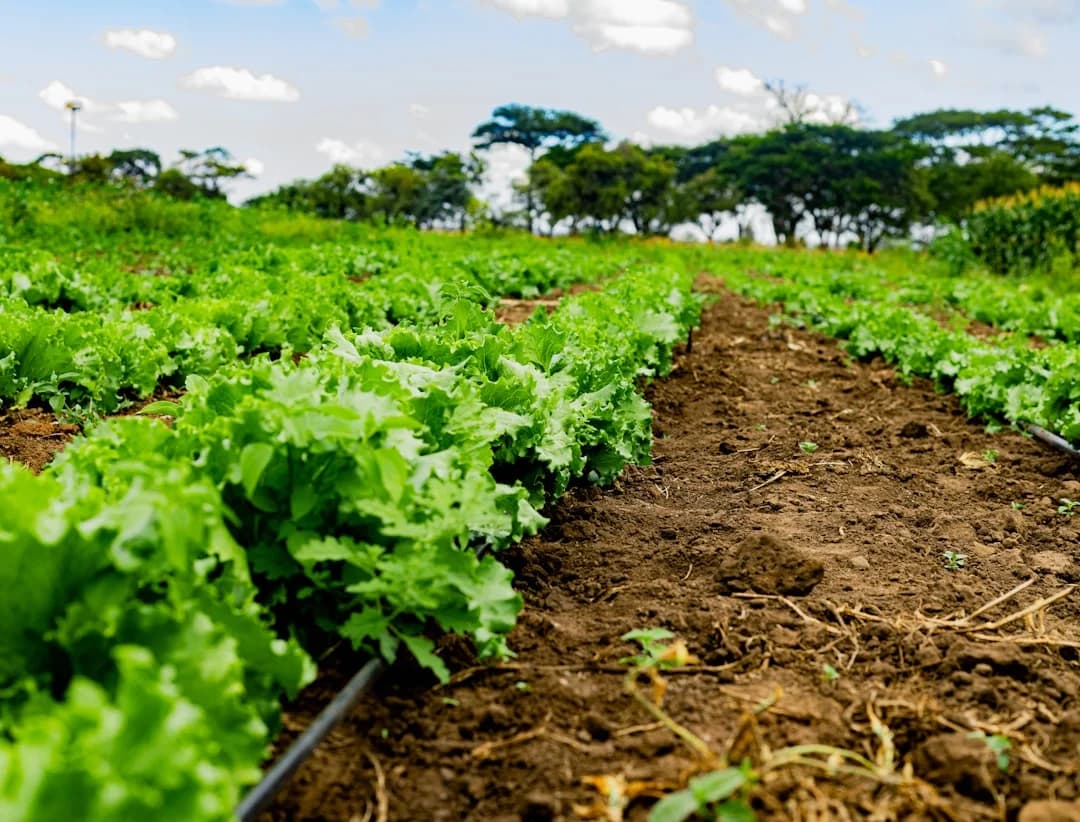
Photo by Divaris Shirichena on Unsplash
The District of Columbia is weighing a bold concept in 2026: Closed-loop urban agriculture Anacostia 2026. As city officials, researchers, and local organizations intensify studies on urban farming technologies, District readers will want a clearly reported picture of what this could mean for food security, local economies, and the science behind closed-loop systems. While a formal citywide rollout of a program explicitly branded as “Closed-loop urban agriculture Anacostia 2026” does not appear in publicly issued press releases to date, the momentum around urban farming, water reuse, and nutrient cycling in and around Anacostia has grown noticeably. This report surveys the latest data, projects, and policy signals shaping the landscape, with a focus on technology trends, potential market dynamics, and the practical implications for residents and businesses east of the Anacostia River. It centers on public information from federal and local agencies, museums, and community groups that illuminate how a closed-loop approach could unfold in Anacostia and the broader District in coming years. (epa.gov)
Across Anacostia and adjacent neighborhoods, civic and institutional actors are already testing and describing components of a circular, resource-efficient urban agriculture framework. For example, the Environmental Protection Agency’s East Capitol Urban Farm Project highlights how urban farming interfaces with watershed health and community involvement in nearby Ward 7, illustrating a pathway for integrating urban agriculture with citywide environmental goals. The EPA project and related watershed work underscore a shared aim: to turn small-scale farming into a multiplier for public health, local access to fresh produce, and environmental stewardship. This context matters as policymakers and community groups discuss scalable, equity-focused food systems in 2026. (epa.gov)
Meanwhile, museums, universities, and local business associations have stepped forward to document and promote urban agriculture and sustainability in the Anacostia area. The Smithsonian’s Anacostia Community Museum hosted Earth Month programming, including gardening workshops and a farm stand, signaling ongoing public-facing interest in urban farming education, soil health, and local markets that could feed into more formal, closed-loop approaches over time. Local business organizations, such as the Anacostia BID, have highlighted sustainability-focused initiatives and regional food networks that could provide the social and economic scaffolding for future closed-loop strategies. Together, these activities help explain why 2026 has felt like a inflection point for Anacostia’s agricultural and environmental agenda. (si.edu)
Technology and market trends are also accelerating discussions around closed-loop urban agriculture. In the broader research and industry literature, closed-loop and recirculating water systems for urban farming—whether through hydroponics, aquaponics, or fully integrated circular-water approaches—are repeatedly described as enabling higher yields with lower freshwater inputs, plus the recovery of nutrients from waste streams. Academic and industry sources describe the potential and limits of these systems, including the management of water, nutrients, and energy in dense urban contexts. These insights help explain why Anacostia stakeholders are exploring the topic with particular attention to local soils, energy costs, and the value of near-source food production. (sciencedirect.com)
The following sections lay out what has occurred on the ground in 2025–2026, why it matters for Anacostia’s future, and what to watch for next as technology, policy, and markets evolve. Throughout, the focus remains on data-driven analysis, practical implications for residents, and the potential pathways toward a more closed, circular urban food system in the District.
What Happened
Announcement signals and government statements Public documentation of a formal, citywide “Closed-loop urban agriculture Anacostia 2026” program branded as such does not appear in publicly accessible records as of May 16, 2026. That said, official signals in 2025–2026 show a statewide and city-level interest in closing nutrient loops, expanding urban farming, and aligning food systems with resilience goals. For example, the District of Columbia’s 2026 Consolidated Request for Proposals (RFP) and related procurement activity indicate ongoing funding and programmatic emphasis aimed at revitalizing neighborhoods, supporting water and watershed projects, and advancing sustainable urban development. While not a standalone “closed-loop” program, these efforts create the policy and funding environment in which a closed-loop approach could be tested, scaled, or folded into broader urban agriculture initiatives. (dhcd.dc.gov)
Pilot projects and neighborhood-scale actions Public records and agency reporting point to several neighborhood-focused efforts that align with closed-loop and circular economy principles. The East Capitol Urban Farm Project, spearheaded in partnership with the U.S. EPA’s Urban Waters program, is a concrete example of how urban farming interfaces with watershed health and community education. The project emphasizes nutrient recovery, wastewater reuse concepts, and the potential for integrating farm activities with environmental monitoring and community engagement. While the East Capitol project is not described as a districtwide closed-loop system, it provides a tested model for nutrient stewardship and water-efficient farming in an urban setting that could inform a wider Anacostia deployment. (epa.gov)
Cultural and educational components that could underpin broader adoption Educational and cultural initiatives around urban agriculture are evident in Anacostia’s community institutions. The Anacostia Community Museum (ACM) has hosted Earth Month programs featuring gardening workshops and farm stands, highlighting community interest in soil health, local food access, and hands-on learning. These activities help build public capital and local capacity—critical prerequisites for any larger-scale, closed-loop agricultural program that would rely on resident participation and local markets. Public engagement signals like ACM Earth Month activities can be precursors to more formal closed-loop agricultural strategies should policymakers decide to pursue them. (si.edu)
Broader urban development context in Anacostia Beyond farming-specific programs, Anacostia has been the focus of revitalization discussions and projects that could intersect with food systems and urban farming. Local reporting and planning documents note redevelopment plans along the Anacostia River and surrounding neighborhoods, including waterfront redevelopment and community engagement processes that could accommodate urban agriculture pilots within a larger framework of sustainable, transit-accessible neighborhoods. While these efforts are not specifically labeled as closed-loop agriculture, they create the land-use and infrastructure context—a necessary backdrop for future closed-loop food systems. (hillrag.com)
Timeline fragments from 2025–2026
- Early 2025 to mid-2025: DC and federal partners emphasize watershed restoration and urban agriculture education as precursors to more integrated sustainability initiatives. The Anacostia River projects and related partnerships illustrate how water management and urban farming can converge in local policy discussions. (epa.gov)
- Spring 2026: ACM’s Earth Month programs, including a gardening workshop and a farm stand, reinforce ongoing community momentum around urban agriculture and local food access, informing the social readiness for future closed-loop concepts. (si.edu)
- February–April 2026: Local coverage highlights ongoing redevelopment conversations around the Anacostia Riverfront and adjacent neighborhoods, signaling that infrastructure and community opportunity are aligning with sustainability goals that could enable closed-loop farming models in the longer term. (washingtoninformer.com)
In addition, the District’s planning and sustainability literature underscores a broader appetite for urban agriculture as part of climate resilience and local economic development. While not a single, labeled program, the cumulative actions—ranging from pilot farm projects near the river to educational and market-supportive activities—form a foundation upon which a formal closed-loop urban agriculture strategy could be built if policymakers decide to pursue it. That context is essential to understanding what “Closed-loop urban agriculture Anacostia 2026” could become if and when a formal program is announced. (planning.dc.gov)
Why It Matters
Local food security and resilience A closed-loop approach to urban agriculture in Anacostia would emphasize local food production, crop diversification, and supply-chain resilience in a city with persistent food access challenges in certain wards. Urban farming technologies that recycle water and nutrients can reduce dependence on distant supply chains and help stabilize prices for fresh produce in neighborhoods where shopping options are limited. The literature on urban agriculture and water reuse identifies the potential for recirculating irrigation water and reusing nutrients to improve efficiency and reduce external inputs, which could be especially impactful in dense urban environments where water scarcity or wastewater management are considerations. These dynamics are central to any discussion of a formal closed-loop program in Anacostia. (sciencedirect.com)
Resource circularity, waste reduction, and environmental benefits Closed-loop farming concepts aim to minimize waste and maximize resource efficiency, aligning with European and global best practices on urban agriculture. The European Circular Economy context highlights closed-loop irrigation as a core strategy for onsite nutrient reuse and water conservation in urban farming settings. In practice, this means developing systems that capture and reuse nutrients (for example from composting or urban waste streams) and recycle water within a farm, reducing the need for external inputs and lowering environmental footprints. For Anacostia, such approaches would dovetail with watershed protection and city carbon-reduction goals while supporting local jobs and education. (circulareconomy.europa.eu)
Technology trends enabling scalable closed-loop systems A range of technologies could support Closed-loop urban agriculture Anacostia 2026 if pursued as a formal program. Controlled Environment Agriculture (CEA), vertical farming, aquaponics, and hydroponics are central to many closed-loop configurations, enabling high-density production with controlled inputs. Urban agriculture research and practice show how CEA reduces water use, improves yields, and enables crop choices suitable for urban markets. While these technologies require upfront investment and operational expertise, they offer a pathway to scale in urban corridors like Anacostia where space is at a premium and demand for fresh produce is high. (urbanag.uga.edu)
Community, economic, and equity considerations A successful closed-loop urban agriculture strategy would need to center community access, ownership, and economic opportunity. Local organizations, schools, and small businesses can become producers, educators, and market channels within a closed-loop framework. The availability of public engagement programs and local market activity—the farm stand and educational programs described in ACM Earth Month events, for example—suggest a readiness in the community to participate in more sophisticated, resource-efficient farming models. Aligning a potential Anacostia program with equity goals and ensuring meaningful benefits for residents will be crucial to its legitimacy and endurance. (si.edu)
What’s the Value to DC’s broader market and policy environment From a market-analysis perspective, a successful Closed-loop urban agriculture Anacostia 2026 program could create demonstration sites that attract research partnerships, funding, and private capital focused on urban farming technologies. The federal and local procurement landscape in 2026 shows ongoing opportunities for public-private collaboration in areas like environmental sustainability, urban development, and food systems. If a program advances, it could leverage existing DC channels for grants, innovation accelerators, and community engagement to accelerate adoption. The DC government’s RFP and related program documents illustrate the city’s openness to funding and piloting innovative urban development ideas, which could include a closed-loop farming framework in Anacostia should a formal plan emerge. (dhcd.dc.gov)
Technologies and methods that could underpin such a program
- Recirculating hydroponics and aquaponics systems that minimize water use and allow nutrient reuse from waste streams.
- Controlled environment agriculture (CEA) to maximize yields in limited urban footprints.
- Onsite water treatment and nutrient recovery technologies integrated with farm operations to close water and nutrient loops.
- Waste-to-resource approaches, composting, and urban organic waste recycling feeding closed-loop inputs for crops.
- Data-driven monitoring and sensors to optimize irrigation, nutrient delivery, and energy use, enabling scalable performance across multiple sites.
These ideas are consistent with current research and industry practice in urban agriculture and closed-loop systems, even when not yet deployed as a single, citywide program in Anacostia. For readers who want to go deeper, recent studies and practitioner literature outline the potential and challenges of closed-loop strategies in urban contexts, including water reuse, nutrient cycling, and energy considerations. (sciencedirect.com)
What’s Next
Next steps for policymakers, community groups, and investors
- Define a clear policy and funding framework. The District’s 2026 Consolidated RFPs and related procurement processes indicate ongoing opportunities to fund urban development projects with sustainability components. If a closed-loop urban agriculture program is pursued, it would likely be designed within or alongside these funding channels, with explicit targets for water use reduction, nutrient recovery, and local food production. Stakeholders should monitor DC government solicitations and interagency collaborations for signals of a potential pilot or scalable framework. (dhcd.dc.gov)
- Identify pilot sites and community partnerships in Anacostia. The East Capitol Urban Farm Project demonstrates how pilots can integrate farming with watershed goals and community programs. Translating that approach into a closed-loop network would require careful site selection, stakeholder buy-in, and cost-benefit analyses that address equity, access, and economic viability. Community anchor institutions, schools, and local businesses could serve as initial partners to test systems and market connections. (epa.gov)
- Align with planning and infrastructure investments along the river. Anacostia’s waterfront redevelopment and related infrastructure planning create natural opportunities for integrating urban farming facilities with drainage, energy, and transportation infrastructure. The Anacostia Waterfront Framework Plan and related planning documents provide the policy lens through which any future closed-loop farming network would need to navigate zoning, permitting, and capital planning. (planning.dc.gov)
- Build a data-driven, community-centered evaluation framework. Given the emphasis on data-driven analysis in District reporting, any formal closed-loop program should include metrics for water-use efficiency, nutrient recovery, crop yields, cost per pound of produce, employment effects, and community health indicators. Scholarly work and industry practice offer indicators and methodologies for measuring environmental and economic performance in urban farming systems, which can guide the design of pilot evaluations and scale-up decisions. (sciencedirect.com)
Timeline and expectations If policymakers decide to advance a formal Closed-loop urban agriculture Anacostia 2026 initiative, the path could unfold in a staged sequence:
- Phase 1 (6–12 months): Stakeholder mapping, feasibility studies, and initial site assessments; development of a pilot concept with defined success metrics; securing seed funding through DC’s RFP channels and potential federal partners.
- Phase 2 (12–24 months): Pilot installations at one or more sites in Anacostia with monitoring and performance data collection; community engagement programs to build local skill and job opportunities; early market development for locally grown produce and value-added products.
- Phase 3 (24–60 months): Scale-up and replication across additional sites, refinement of technology stacks to optimize resource use and costs, and broader integration with city planning and infrastructure investment.
Next steps would depend on the city’s appetite for risk, the availability of capital, and the strength of community partnerships. The broader urban agriculture field has demonstrated that closed-loop approaches are technically feasible but require sustained investment, careful governance, and robust community engagement to achieve long-term resilience and equity outcomes. The mix of public programs, university research, and local nonprofit activity described in the 2026 landscape provides a plausible foundation for such a transition, should the District decide to formalize it. (urbanag.uga.edu)
Closing
The district’s evolving approach to urban farming and resource recovery signals a persistent interest in local food security, sustainable land use, and resilient infrastructure for communities like Anacostia. While a standalone program explicitly titled “Closed-loop urban agriculture Anacostia 2026” has not been publicly documented in the way a formal press release would appear, the surrounding actions—pilot farm projects, watershed-focused collaborations, educational programming, and a planning context that prioritizes sustainability—point toward a future in which closed-loop principles could be embedded in Anacostia’s food system strategy. As DC policymakers and community actors continue to test, learn, and invest, District readers can expect more concrete milestones to emerge, including site selections, funding announcements, and public reporting on performance metrics. The path forward will hinge on deliberate collaboration, transparent measurement, and a shared commitment to equity and local opportunity, ensuring that any closed-loop urban agriculture approach serves all residents.
In the meantime, residents and stakeholders are encouraged to stay engaged with continuing earth-month programming, local farm stands, and watershed initiatives that already color the city’s approach to sustainable urban farming. These activities—though not a single branded plan—offer a window into what a fully realized closed-loop model could look like in Anacostia: a community-rooted, data-informed system that recycles water, reuses nutrients, and strengthens local food networks for years to come. Residents can follow updates from the Anacostia Community Museum, the EPA’s urban farm projects near East Capitol, and District planning channels for new phases, pilot announcements, and opportunities to participate in the design and testing of next-generation urban agriculture in the nation’s capital. (si.edu)