Planners Weigh 230-Acre Southwest DC Redevelopment
Federal and local planners are weighing a long-term redevelopment of 230 acres in Southwest Washington.
By Julio Sandoval
August 12, 2026
12 minute read
A quiet summer of discussion about the federal enclave in Southwest D.C. is giving way to a more public, data-driven conversation about how the area between the National Mall and the Southwest Waterfront could be reshaped. In July 2026, national and local planners are weighing a bold, multi-decade idea to reimagine a 230-acre swath of land that has long been described as desolate, imposing, and difficult to navigate. The discussion comes as the District of Columbia seeks to shift a downtown office-heavy footprint toward a more mixed-use, tech-enabled urban core. This Southwest DC redevelopment conversation is unfolding alongside established plans like the SW Ecodistrict and the ongoing RFK Campus revitalization, signaling a broader City-for-all approach to redevelopment that ties infrastructure, housing, culture, and sustainability into a single, long-range vision. As policymakers, developers, and residents watch, the outcomes could reshape land use, transit, and community life for decades to come. (axios.com)
Two major threads anchor the current discourse. First is the high-level concept of splitting the 230-acre area into three distinct neighborhood configurations—western residential, a cultural axis near the Smithsonian complex, and an eastern office-forward footprint—an idea that DC officials describe as transforming a single, sprawling site into “three new neighborhoods.” This framing was highlighted by city officials in recent coverage, noting the scale and the need for a phased, governance-friendly approach to redevelopment. The comparison frequently cited is stark: the nearby Wharf development covers 27 acres, illustrating how a large-scale, transit-connected redevelopment can unfold in more manageable chunks. (axios.com)
Second is the portfolio of connected plans and projects already shaping Southwest DC, including the Anacostia Waterfront Initiative, the SW Ecodistrict Plan, and the RFK Campus revitalization. These efforts establish the policy context for a 230-acre redevelopment by emphasizing sustainability, connectivity, and multi-use outcomes. The SW Ecodistrict Plan frames a 110-acre federal precinct transformation with district-scale energy, water, and waste strategies designed to showcase high-performance environmental outcomes. The AWI broadens the context, aiming to revitalize riverfront corridors and connect neighborhoods through parks, transportation investments, and cultural destinations. Taken together, these frameworks underpin today’s conversations about Southwest DC redevelopment and its potential to serve as a model for data-driven urban transformation. (ncpc.gov)
What Happened
Announcement Context and Scope
A new, comprehensive discussion about redeveloping a 230-acre swath of Southwest D.C. entered a more formal, public-facing phase in mid-2026. The focal point is transforming a federally dominated enclave into multiple mixed-use districts that balance housing, cultural amenities, and office space. The proposal’s scale—roughly three times the size of a single large development like The Wharf—has drawn attention to how the District might approach governance, financing, and long-range planning for such a large urban transformation. The Axios summary frames the discussion as a once-in-a-generation opportunity to reimagine a large urban precinct bridging the Mall and the Southwest waterfront. It also notes the critical challenge: to avoid treating the area as a monolith and instead create interoperable, walkable districts with clear anchors. “230 acres is not a project. That’s three new neighborhoods, basically,” said DC Deputy Mayor Nina Albert during a planning discussion. (axios.com)
The plan sits within an ecosystem of established initiatives that already influence Southwest DC redevelopment. The National Capital Planning Commission’s SW Ecodistrict Plan describes a long-range vision to connect the National Mall with the Southwest Waterfront through a 110-acre federal precinct, emphasizing sustainability and district-scale performance. The plan outlines environmental targets, new public spaces, and governance structures intended to mobilize public and private partnerships over a 20-year horizon. This context is essential for understanding how any 230-acre expansion would be coordinated with federal priorities and city objectives. (ncpc.gov)
In parallel, the RFK Campus revitalization offers a concrete, near-term path for large-scale district-level redevelopment. The RFK Master Plan, launched in 2026, focuses on transforming a 180-acre site along the Anacostia River into a mixed-use neighborhood anchored by a new stadium for the Washington Commanders, with housing, retail, parks, and improved waterfront connections. The plan explicitly notes that, beginning in February 2026, the master planning process would outline citywide visions, land uses, amenities, and zoning designations for the site, coordinating with surrounding neighborhoods and the riverfront. Public engagement and updates are ongoing, with channels like ourrfk.dc.gov and the DC Office of Planning coordinating communications. (planning.dc.gov)
Public engagement and timelines anchor the near-term activity. The District has signaled that community input will shape RFK Campus redevelopment and related Southwest strategies. In early 2026, officials opened channels for input, and in 2025 Congress enacted enabling legislation to transfer RFK’s administrative jurisdiction to the District, underscoring the federal-to-local transition that many observers see as critical to accelerating redevelopment iterations in the area. These steps illustrate how Southwest DC redevelopment is moving from concept to public process, with multiple stakeholders contributing to the planning and approval pipeline. (planning.dc.gov)
Site-Specific Context and Comparators
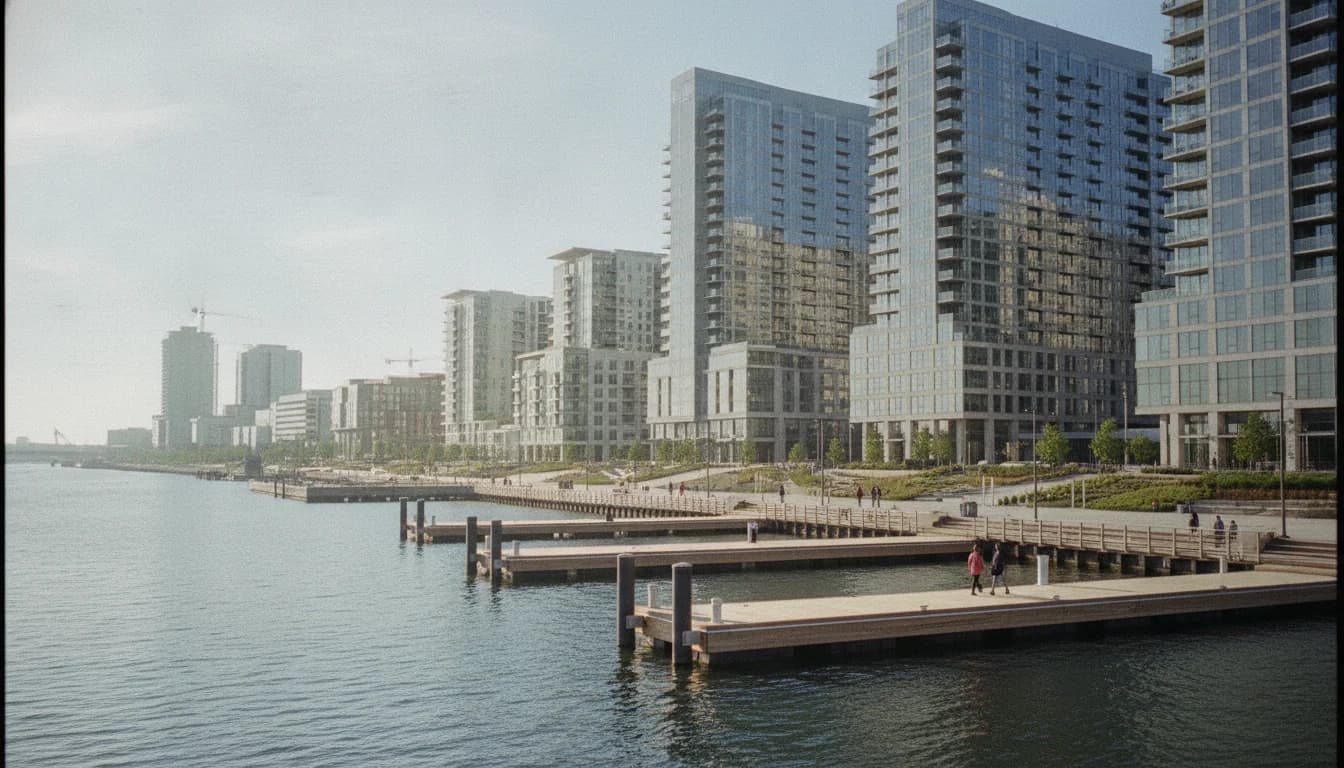
The Wharf stands as a real-world reference point for ambitious waterfront redevelopment in Southwest DC. The Wharf project spans 27 acres and includes about 3.2 million square feet of mixed-use development, with a phased approach that delivered roughly 1.6 million square feet in Phase 1 and ongoing components of residential, office, retail, and cultural uses. The financing and development details published by the District’s Office of the Chief Financial Officer illustrate the scale and public financing structures commonly used to support large mixed-use waterfront projects in the District. The Wharf’s evolution offers a tangible benchmark for what a much larger Southwest DC redevelopment could aspire to achieve in terms of density, multimodal access, and program mix. (cfo.dc.gov)
The broader policy and planning landscape surrounding Southwest DC redevelopment emphasizes sustainability and resilience as core levers. The SW Ecodistrict Plan and AWI seek to integrate energy and water efficiency, transit improvements, and public realm enhancements as foundational elements of future redevelopment. As the District analyzes a 230-acre redevelopment concept, these frameworks provide a set of tested objectives and governance mechanisms that could help translate large-scale ambition into implementable projects. In particular, the SW Ecodistrict Plan foregrounds environmental performance and district-scale measures as critical success metrics, setting a template for how future phases might be evaluated. (ncpc.gov)
The RFK Campus revitalization adds a near-term lens to the Southwest DC redevelopment conversation. The plan’s February 2026 kickoff signals a distinct but complementary track that could influence land use assumptions, transportation strategies, and waterfront access in adjacent neighborhoods. The master plan’s scope—housing, retail, parks, and a stadium—demonstrates how a single, anchor-focused project can catalyze broader district-level development. The relationship between RFK, The Wharf, and a wider 230-acre redevelopment concept will depend on aligning timelines, financing, and public engagement across multiple public and private partners. (planning.dc.gov)
Why It Matters
Economic and Market Implications
A 230-acre Southwest DC redevelopment carries significant implications for the city’s economic fabric. The scale invites new patterns of land use, density, and mixed-use zoning that could attract tech-enabled employers, startups, and cultural institutions seeking proximity to federal assets and the riverfront. The Axios analysis frames the opportunity within a downtown shift toward mixed-use environments—an important strategic pivot for a city that has seen shifts in federal workforce needs and agency relocations. The discussion around an anchor tenant strategy and the potential for multiple districts suggests a market-wide recalibration of expectations for office and residential space, with implications for rent levels, construction timelines, and financing structures. While exact market forecasts will depend on decisions by city leaders, developers, and federal partners, the scale alone signals a potential catalyst for neighborhood-level growth and investment in adjacent transit and infrastructure. (axios.com)
The district’s approach to governance, financing, and phasing will shape how quickly market forces translate into tangible development. The Wharf example demonstrates how phased delivery can stagger capital requirements and reduce risk, while maintaining a continuous stream of activity and job creation. The formal financing details for The Wharf illustrate how public subsidy and private investment can align to support large waterfront projects, a pattern that could inform similar approaches for a broader Southwest DC redevelopment. As the city weighs options for a Downtown Revitalization Fund and other incentives, the interplay between public revenue, tax policy, and private capital will be central to whether lessons from The Wharf translate into a successful multi-neighborhood strategy for Southwest DC redevelopment. (cfo.dc.gov)
Technology and Sustainability Dimensions
The Southwest DC redevelopment discussion is deeply linked to technology-enabled and sustainability-forward planning. The SW Ecodistrict Plan positions a future district as a high-performance environmental showcase, with a focus on energy, water, and waste reductions, and on upgrading infrastructure to support a more efficient, climate-resilient urban area. Implementation would likely involve performance metrics, district-scale energy management, and waste-water strategies that could influence building design, street networks, and public spaces. This emphasis on sustainability aligns with broader national and regional trends toward greener, smarter urban development and could serve as a differentiating factor in attracting tenants and residents who value resilience and efficiency. (ncpc.gov)
The RFK Master Plan adds a technology- and amenities-forward dimension to Southwest DC redevelopment by prioritizing modern stadium design, transportation integration, and accessible open spaces. The plan’s emphasis on upgrading connectivity to the Anacostia River and surrounding neighborhoods highlights how technology-enabled mobility and public realm investments can change commuter patterns, accessibility, and the user experience for residents, workers, and visitors. While the master plan is still in early stages, its emphasis on data-driven land-use decisions and coordinated design is consistent with a broader trend toward tech-enabled urban planning that seeks to optimize movement, energy use, and place-making in tandem. (planning.dc.gov)
Community Impact and Equity Considerations
A redevelopment of this scale naturally raises questions about housing affordability, displacement risk, and equitable access to new amenities. While specific numbers are not yet published in the current public materials, the strategic framing around three neighborhoods and the emphasis on a connected riverfront system suggests an intent to balance residential, cultural, and commercial uses. The Anacostia Waterfront Initiative and the Maryland Avenue SW planning efforts provide a broader context for integrating parks, transit, and cultural destinations into a cohesive urban experience that serves a diverse population. The district’s approach to governance, partnerships, and community engagement will be critical in ensuring benefits are broadly shared across neighborhoods and income groups. (planning.dc.gov)
Public engagement channels for RFK and related Southwest initiatives show a deliberate push to incorporate resident input into development decisions. The DC planning department’s invitation for community participation in RFK’s master plan underscores the city’s intent to maintain an open dialogue with stakeholders as plans evolve. These engagement efforts are essential to understanding how the Southwest DC redevelopment will affect longtime residents, new arrivals, and local businesses, and to ensuring that the growth aligns with community needs and expectations. (planning.dc.gov)
What’s Next
Timeline and Next Steps
The RFK Campus redevelopment is explicitly moving into an active master-planning phase. Beginning in February 2026, the RFK Master Plan process is designed to outline the District’s vision for the entire campus, establish land uses and development programs for housing and retail, identify amenities that serve residents, and provide design and zoning guidance for the site. This process will be coordinated with stadium-related development and the broader riverfront network to ensure cohesive connections to surrounding neighborhoods and to the waterfront. The schedule emphasizes a formal, community-informed approach to land-use planning, underscoring that the plan will unfold over multiple years with ongoing public updates. (planning.dc.gov)
The larger Southwest DC redevelopment discussion continues to gather input from federal and local partners, developers, and residents. The Axios reporting from July 2026 frames the ongoing conversations as a broad, collaborative effort to reimagine a 230-acre district in a way that links government assets to private investment, cultural institutions, and transit improvements. The ongoing dialogue includes considerations of governance structures, potential districts, and phasing strategies, with a focus on avoiding a one-size-fits-all approach and instead developing a flexible, multi-neighborhood framework. As the city works through these questions, the timeline will depend on policy decisions, funding, and the pace of private investment. (axios.com)
Community engagement around RFK and related Southwest plans is expected to continue. The DC Office of Planning’s RFK Master Plan page and associated communications channels invite ongoing input from residents and stakeholders, signaling a public-facing process that will produce updates, public meetings, and draft plans before formal approvals. This process is critical to ensuring that the Southwest DC redevelopment remains transparent and responsive to community needs as plans move from concept to design and implementation stages. (planning.dc.gov)
What to Watch For
Governance and financing arrangements will be a key area to monitor. The Axios piece highlights the debate over whether a dedicated redevelopment authority is needed, with some city leaders advocating for a downtown development corporation to coordinate planning. The ultimate structure will influence decision-making speed, financing terms, and the ability to harmonize multiple projects across a broad geographic area. Observers should track any formal announcements about governance models, funding mechanisms, and public-private partnership frameworks as Southwest DC redevelopment advances. (axios.com)
Anchors, incentives, and anchor tenants will shape early momentum. The discussion about anchor tenants—potential museums, cultural institutions, or government headquarters—could help attract private investment and catalyze adjacent development. The Axios coverage notes the importance of an anchor to unlock developer interest, a pattern seen in other large urban transformations. While specifics remain under negotiation, keeping an eye on negotiations around anchors will provide a sense of the redevelopment’s pace and scale. (axios.com)
Transportation and public realm improvements will influence project viability. The SW Ecodistrict and AWI emphasize mobility corridors, transit capacity, and waterfront access as core components of the redevelopment’s long-term success. Progress on rail and roadway improvements, pedestrian connections, and waterfront programming will be critical indicators of how the projects will integrate with the city’s broader mobility network. The plan documents outline the kinds of integration that planners will seek to implement, from enhanced parks to new transit options. (ncpc.gov)
Market signals and investment activity will shape the pace of development. A redevelopment of this scale will generate a mix of public and private sector activity, with implications for real estate markets, job creation, and local business vitality. The Wharf example demonstrates how phased development can attract sustained economic activity, while the broader Southwest DC redevelopment would test the ability of public incentives to attract private capital for a multi-neighborhood, multi-decade program. Investors and neighborhood groups will be watching the District’s ability to align incentives, streamline approvals, and deliver community benefits in a timely manner. (cfo.dc.gov)
Closing
As Southwest DC redevelopment conversations advance, the city’s aim is to craft a future that couples sustainability with opportunity—an urban transformation that could reshape the region’s tech economy, housing options, and cultural life. The ongoing RFK Campus revitalization and the SW Ecodistrict plan provide concrete baselines for what a large-scale, data-driven redevelopment could look like when paired with a disciplined public process and robust private investment. For readers of the District of Columbia Times, the next several years are likely to bring a steady stream of announcements, community meetings, and design iterations as officials translate bold ideas into physical places along the river and across the three imagined neighborhoods. Stay tuned for further updates as public engagement progresses, timelines firm up, and new details emerge about how Southwest DC redevelopment will unfold, what it will cost, and how it will affect residents, workers, and businesses in the District.
To stay updated, follow District planning announcements, attend community meetings, and monitor official channels for RFK Master Plan updates, SW Ecodistrict progress, and The Wharf-style benchmarks that illustrate how large-scale redevelopment can be delivered in a phased, community-centered way.